Health and Nutrition
How to heal a foot abrasion without worsening the injury
Cleans, protects, and reduces friction to prevent infection and pain, with useful guidelines for walking or running.

The abrasion on the foot usually begins as a subtle burning sensation and ends, if ignored, as an injury that forces you to change your gait, stops a walk, or ruins a workout. The damage appears because of repeated friction, heat, and moisture, and can progress until it forms a blister with clear or blood-tinged fluid. Treating it properly from the start reduces pain, lowers the risk of infection, and prevents the skin from continuing to peel away with every step.
In practice, the most useful care combines cleaning, disinfecting, and protection from rubbing. When the injury is already open or the blister has burst, the priority is to keep it from being contaminated by sweat, sand, dust, or the sock itself. If it is intact and small, often it is enough to monitor and protect it; if it is large, very bothersome, or makes walking difficult, it is advisable to drain the fluid using clean technique without removing the skin covering it, because that layer acts as a natural dressing.
How the injury forms and why it hurts so much
The skin on the foot withstands constant impacts, temperature changes, and pressure in very specific areas, especially the heel, forefoot, and toes. When the shoe, sock, or even the way you walk repeats the rubbing in the same spot, the epidermis separates from the deeper layers and fluid accumulates between them. That small pocket is a defense mechanism of the body, but it also explains why every step feels like a notch over a raw area.
Not all abrasions arise from the same mechanism. Some occur because of footwear that is too tight, others because of a model that is too loose and moves against the foot, generating friction, and others because of accumulated moisture that softens the skin until it becomes fragile. Hydration habits, sock seams, a sudden change in activity, or a longer-than-usual distance also play a role. In runners, hikers, and people who spend many hours on their feet, the combination of pressure and sweat creates the perfect setting.
There is a detail that often goes unnoticed: the skin gives warning before it breaks. First local warmth appears, then redness and a fine discomfort when rubbed. Later the area softens, the surface rises, and the blister becomes visible. Recognizing that early moment makes it possible to act before the injury opens and turns into a more delicate wound.
What to do in the first few hours
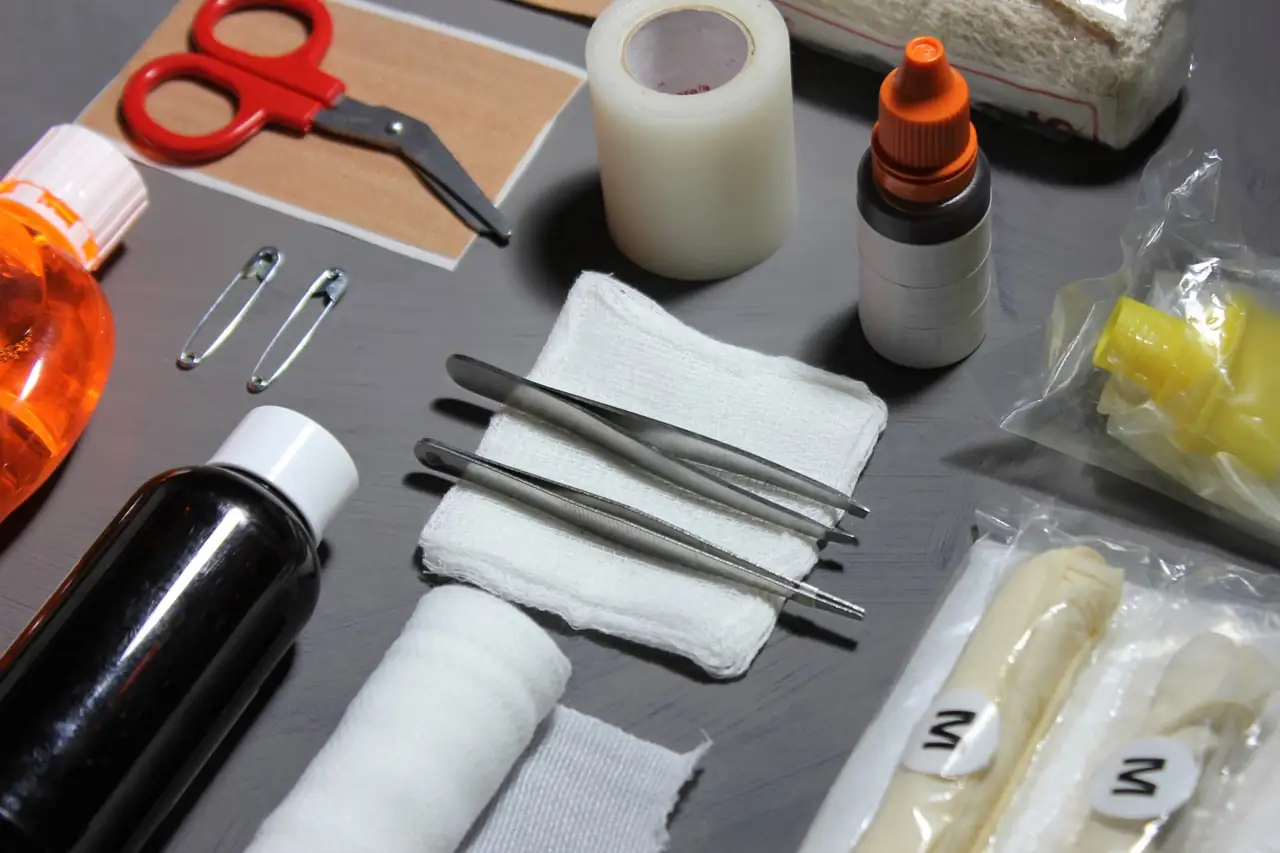
The safest response starts by washing the area with lukewarm water and soap, drying it gently, and disinfecting it with an appropriate antiseptic, such as chlorhexidine or povidone-iodine. The goal is not to harm the skin, but to lower the germ load and remove traces of sweat or dirt. From there, the choice of dressing matters a lot: a non-adherent gauze or a material that does not stick to the injured surface prevents newly formed tissue from being torn off when changing it.
When the blister is still closed and is not causing intense discomfort, sometimes the best strategy is to protect it and let it evolve on its own. The upper skin acts like a biological roof. Puncturing it routinely, without reason, can unnecessarily open the door to bacteria. On the other hand, if the pain is strong, pressure prevents you from putting weight on it, or the size is large, controlled drainage relieves it quite a bit and reduces internal tension, always keeping the skin covering in place.
If the skin has broken spontaneously, the treatment changes focus. It is no longer about draining, but about cleaning, drying, disinfecting, and covering. In that stage, exposed skin is more sensitive than intact skin, so any adhesive placed directly on the wound can tear it again when removed. The dressing should act as a gentle barrier, not as another source of pulling.
When it is advisable to drain it and when to leave it alone
The decision depends on the size, the pain, and the state of the skin. A small, stable, and mildly bothersome blister can be left alone if it is well protected. A large, tense lesion or one located in a constantly weight-bearing area often causes trouble when walking, because pressure turns it into a painful balloon. In those cases, draining the fluid with a sterile needle, after properly disinfecting the skin, may be the most reasonable option.
The key point is not to remove the blister roof. That skin film still protects the underlying area, reduces rubbing, and acts as a natural barrier against infection. After drainage, it is enough to gently release the fluid, leave the skin where it is, and cover it with a dressing that cushions contact. Drainage done roughly, or the habit of cutting away the excess skin, usually makes the outcome worse rather than helping.
Harsh remedies should also be avoided. Alcohol, hydrogen peroxide, or irritating products can sting a lot and do not always provide a real advantage over antiseptics that are gentler on the skin. In small, clean lesions, the priority is not to punish the tissue, but to keep it stable and free from friction. Good care is the kind you barely notice while it works very well.
How to protect the area for walking or running
Once the injury has been cleaned and dried, the challenge is to prevent it from rubbing further. This is where hydrocolloid dressings, so-called second skin, and non-adherent gauze come into play. Their function is to isolate the wound and distribute pressure, creating an intermediate layer between the sensitive skin and the shoe. On long hikes or sporting events, that difference can mean the choice between keeping going or stopping because of pain.
The bandage should also adapt to the context. For a short outing, a simple covering may be enough. For prolonged exertion, it is wise to reinforce the dressing so it does not shift with sweat or with the foot’s continuous flexing. The goal is for the material to remain stable, without squeezing too much and without creating new wrinkles that become another friction point.
There is a common mistake worth avoiding: covering the injury with adhesive tapes directly on damaged skin. When removed, the pull can tear off the newly formed surface layer or reopen the area. It is better for the adhesive to stay on the perimeter, not on the center of the lesion. On feet punished by miles, the gentleness of the dressing matters almost as much as the cleaning itself.
Signs that the wound is not doing well
A simple abrasion usually improves progressively once the rubbing stops. If pain increases, the skin around it becomes redder, persistent warmth appears, there is discharge, or there is a bad smell, the wound may be infected. Increased tenderness to pressure and changes in appearance are more useful signs than waiting until the discomfort becomes unbearable. In such cases, evaluation by a professional is the most prudent option.
Also deserving attention are lesions that keep recurring in the same spot. The heel, the base of the big toe, or the sole are classic conflict areas. When the problem returns again and again, there is usually more than just bad luck with the shoe: gait, load distribution, a toe deformity, or a wide forefoot that cannot find enough space may be involved. The foot does not just suffer the rubbing; often it negotiates it with every step.
People with diabetes, poor circulation, low immunity, or wounds that take a long time to close should be especially vigilant. In them, a small injury can become complicated more easily. This is not about causing alarm, but about understanding that the skin on the foot does not always have the same response capacity. What is a passing annoyance for a healthy person can require a more careful review in other cases.
The role of footwear, socks, and moisture
A large part of prevention is decided before leaving home. Footwear should fit the foot, not force it into submission. A model that is too short crushes the toes; one that is too roomy shifts and rubs; one that is tight in the toe box turns every step into a small abrasion. That is why it makes sense to try shoes on at the end of the day, when the foot is more swollen, and not trust that they will sort themselves out with use.
Socks matter more than they seem. A technical fabric, without bothersome seams and with good breathability, reduces moisture and slipping. In summer they remain useful, especially when running or walking long distances. Moist skin becomes more vulnerable, like a wet sheet of paper that tears easily. An unsuitable sock, wrinkled or too thick, can turn a calm walk into a sequence of micro-tugs.
Petroleum jelly or anti-chafing creams help in specific situations, especially when the foot has already given warnings in a particular area. Their function is to reduce friction between skin, sock, and footwear. They do not solve a poorly chosen shoe or a biomechanical imbalance, but they can reduce mechanical punishment on long outings. Using them sensibly matters more than using too much.
Why some people suffer from them again and again
Repetition is a clue, not an accident. When the injury appears in the same spot every time, the foot is usually telling a story of poorly distributed loads. Sometimes the origin is anatomical; other times, it is a running motion, a poor size, or a sole that does not work with the foot strike. The visible friction is often just the final scene of a problem that started much earlier.
In such cases, a gait biomechanics study can help explain why a particular area bears more pressure than it should. Custom insoles, when properly indicated, redistribute loads and can reduce the appearance of friction injuries in specific areas. There are also custom lasts that help the foot adapt to the shoe when the forefoot is wide or the toes easily collide.
In sports, especially running, it is best not to normalize a blister as a badge of effort. It is often a sign of imperfect fit between foot, shoe, and training load. The runner pushes through, yes, but the tissue protests. Listening to that protest in time saves days of discomfort and prevents a small friction point from turning into an unnecessary stop.
What to do after a route, a race, or a long day
After exertion, carefully removing the bandage and cleaning the area helps reduce the risk of infection. Water and soap, gentle drying, and antiseptic again form the basic sequence. If the foot is very strained, a short cold bath can ease the throbbing sensation and reduce inflammation a bit. It does not heal on its own, but it lowers the local temperature and makes recovery more tolerable.
Afterwards, it is advisable to leave the foot exposed to air for as long as possible, as long as the environment is clean. Moisture trapped under a closed dressing encourages skin maceration and delays recovery. If the lesion is already open, controlled drying and clean protection are more useful than covering it for hours unnecessarily. The balance lies between protecting and ventilating, not in sealing the area as if it did not exist.
If the injury was large or appeared during a competition, relative rest is usually wise for a few hours or a day, depending on the discomfort. Forcing weight-bearing on a painful wound changes walking mechanics and can overload other parts of the body. The foot tries to avoid the pain and, in doing so, sometimes passes the problem on to the ankle, knee, or hip.
The difference between a passing annoyance and a problem that deserves evaluation
Not every abrasion requires the same response, but neither do all of them resolve on their own with time. A small, well-cleaned and protected blister usually heals well. An open, painful lesion that oozes or keeps coming back deserves a more serious look. In podiatry, the problem is often not the wound itself, but the pattern that causes it.
The most solid prevention combines simple habits and observation. Regular hydration, appropriate socks, proper footwear, gradual adaptation to new models, and attention to moisture are pieces of the same puzzle. Added to that is a basic idea: the foot tolerates gradual demands better than sudden ones. What today seems like a simple irritation may tomorrow be the crack through which the whole problem enters.
In an article like this, the takeaway is not spectacular, but it is useful: an abrasion treated properly rarely leaves more than a short memory; an ignored abrasion can become infected, open further, and alter the way you walk for days. The best care is not a heroic gesture, but an orderly sequence of cleaning, protection, and common sense applied in time.
When the skin on the foot asks for a pause
The foot speaks with brutal frankness. First it warns with warmth, then with redness, then with pain, and finally with a blister that forces you to slow down. Listening to that progression makes it possible to intervene before the injury worsens. Properly healing an abrasion on the foot is not a trick or a miracle recipe; it is avoiding further friction, protecting the skin, and not rushing to remove what the body uses to defend itself.
In daily life, on a walking trip, or on a long run, the difference between a controlled irritation and a problematic wound is often in the details. A seamless sock, the right size, a dressing that does not stick, and basic hygiene are worth more than any improvisation. When those details are missing, the skin notices immediately. And the foot, which silently تحملs almost everything, eventually makes you pay for it just when there is no other choice.
Medical reference: Abrasions (scrapes), Cleveland Clinic.



How to prevent thigh chafing: causes and real solutions

Women’s running windbreakers: seven jackets and how to choose

Do more workouts get rid of soreness? A guide for runners

Jaén Half Marathon 2026: Record 3,800 Runners Registered

Men’s short running tights: how to choose the right pair

World Triathlon confirms data breach involving medical data

Izan Edo targets podium at Miyazaki World Cup

María Pérez ranks ninth in World Athletics’ 2026 top ten

Dos Santos, Duplantis and Sawe: World Athlete of the Year finalists

San Silvestre Vallecana 2026: 42,000 places, prices and start times

 Races3 months ago
Valencia Half Marathon 2027: date and registration

 Races3 months ago
Valencia Marathon 2026: entry, ballot and course

 Reviews and Comparisons4 months ago
Asics Gel-Roadmiles 3 for men: review and current price

 Reviews and Comparisons4 months ago
Asics Gel Sonoma 8 Gore-Tex: complete analysis for trail and rain

 Sneakers3 months ago
Saucony Endorphin Pro 4: full review and verdict

 News5 months ago
Strava API 2026: what changes for clubs, challenges and runner apps?

 Reviews and Comparisons5 months ago
Nike Alphafly 3: opinions, sensations, and real key points

 Reviews and Comparisons4 months ago
Under Armour running shoes review 2025-2026: models and key features

 Sports Equipment4 months ago
Shoe sizes in cm: a clear guide to getting the right fit for your footwear

 Sneakers3 months ago
Skechers GO RUN Consistent 2.0 analysis: comfort and limits

 News5 months ago
Valencia Marathon 2026 route: key tips to train and run better

 Sneakers4 months ago
Adidas Adizero Boston 13 for men: review and verdict