Health and Nutrition
How to heal chafing between the thighs: a complete and practical guide
Relieve friction, protect the skin, and prevent irritation from coming back with simple, effective measures.

Repeated friction between the inner thighs can turn a normal day into a constant discomfort: burning while walking, reddened skin, a stinging sensation and, in more intense cases, small wounds that itch and hurt when they touch clothing.
In practice, recovery depends on two simple but decisive ideas: eliminating rubbing and repairing the skin barrier. When the area is no longer exposed to sweat, heat and pressure, the skin usually responds quickly; if it is also protected with suitable products, relief comes sooner and the risk of infection or the injury recurring the next day is reduced.
What is really happening in the skin
Chafing in the groin is neither a minor issue nor a summer oddity. It happens when the skin wears down through repeated contact, as if a thin sheet of paper were rubbed again and again against a rough surface. Sweat acts as an amplifier: it moistens, softens the outer layer and makes friction leave a greater mark.
Heat, humidity and unsuitable clothing make up the most common trio behind this condition. The way a person walks, how long they spend standing, prolonged exercise and each person’s anatomy also play a role. You do not need to be overweight to suffer from it, although the closeness between the thighs can increase the likelihood of it appearing.
There is another important detail: a chafe does not always begin as an open wound. Many times it starts with simple redness, a burning sensation or skin that is more sensitive to the touch. If at that moment rubbing is reduced and the area is dried well, the outcome is usually much better.
How to relieve irritation in the first few hours
When the skin is already irritated, the first useful step is to wash the area gently using lukewarm water and a neutral cleanser, fragrance-free and without rubbing. The goal is not to disinfect forcefully or scratch the surface, but to remove sweat, cream residue, dirt and salts that may keep irritating the area. Afterward, it is best to dry with gentle pats, never dragging the towel.
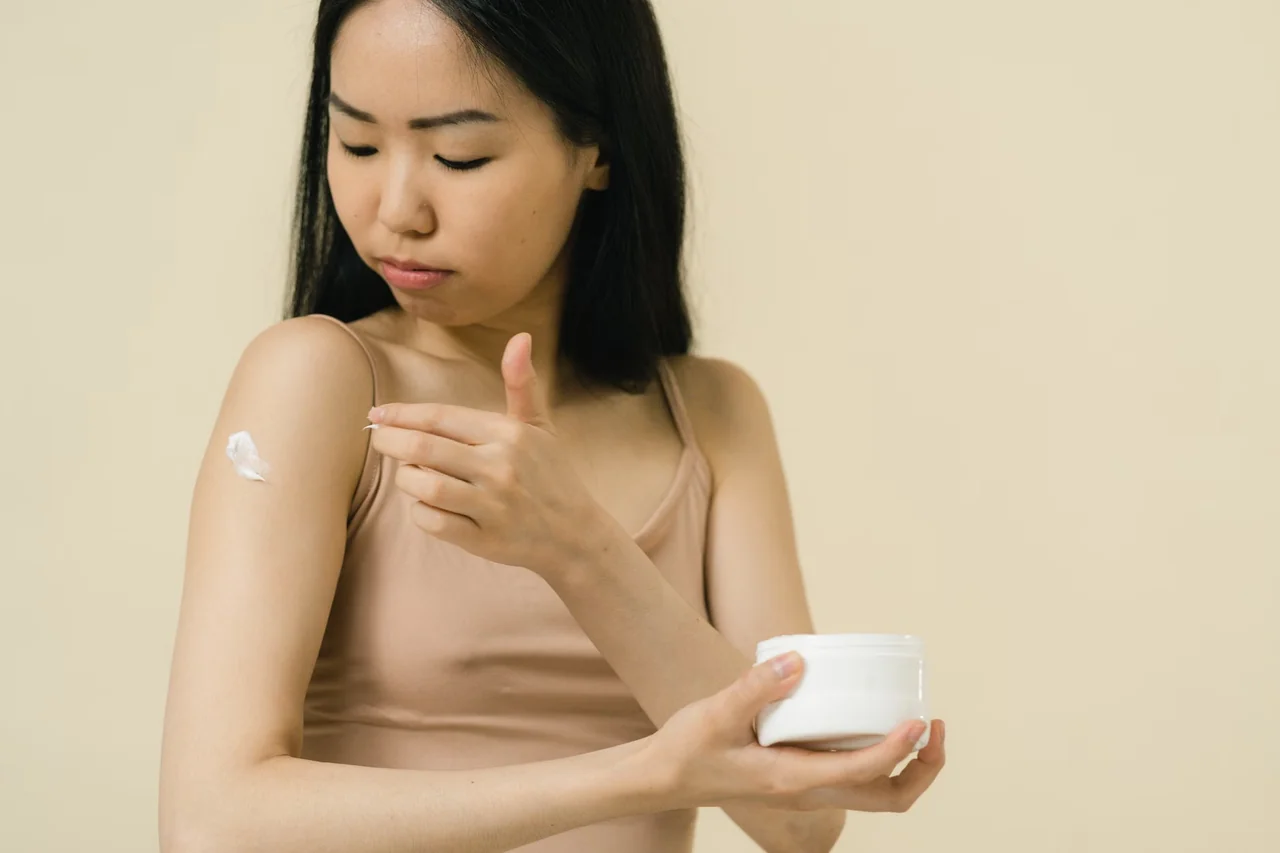
Once clean, the skin benefits from a thin layer of products that help rebuild the damaged surface. Panthenol, glycerin, allantoin, aloe vera and zinc oxide often appear in formulas designed to soothe, hydrate and protect. They are not miraculous, but they do create a kinder environment so the skin no longer feels exposed.
If friction has been intense, a barrier cream can make a difference. Thicker formulas, based on petroleum jelly or emollient derivatives, form a physical film that reduces contact between both inner thighs. At this stage, less is more: an even layer is usually enough, because applying too much product can feel heavy and stain clothing without adding more effectiveness.
Products that usually really help
When repairing a chafe, both ingredients and texture matter. Balms and ointments with an oily base adhere better to the skin and resist sweat a little longer, while gels and light creams absorb faster and are more comfortable for those who do not tolerate greasy sensations. The choice depends on the moment: treating already irritated skin is not the same as preventing rubbing for several hours of movement.
Zinc oxide stands out when there is moisture and the skin is very sensitive, because it helps dry and protects from direct contact. Dexpanthenol or panthenol is useful when the priority is to soothe and promote repair. Aloe vera provides a refreshing sensation that can be pleasant if there is burning, although it is best used in formulas without alcohol or harsh fragrances. And calendula often appears in products with a gentler profile, designed for reactive skin.
There are also anti-chafing sticks that work like an invisible film. They are practical in small bags, easy to reapply and less cumbersome than a thick cream when you are away from home. Their usefulness is mainly preventive, because once the skin is open or very painful, the priority stops being glide and becomes protecting and letting the area rest.
In pharmacies, it is not uncommon to find repair ointments formulated with madecassoside, bisabolol, hyaluronic acid or complexes with zinc and copper. These ingredients are aimed at soothing, helping restore the skin barrier and reducing the feeling of tightness. For a minor injury, they may be enough; for a more pronounced injury, it is sensible to pay more attention to how it evolves than to the promise on the packaging.
What to avoid while the skin recovers
A chafe gets worse when the area remains trapped in the same loop: moisture, rubbing and more heat. That is why non-breathable fabrics, overly tight clothing and garments that soak through and take a long time to dry do not help. Cotton can be comfortable for resting, but during intense activity it often retains sweat; breathable technical fabrics, well fitted and with soft seams, usually perform better during movement.
It is also not advisable to keep using exfoliants, harsh soaps, colognes or fragranced creams on the irritated area. Damaged skin defends itself poorly and any chemical excess can increase itching or burning. In the same way, rubbing with sponges, brushes or rough towels only adds more damage to a surface that is already close to its tolerance limit.
Very greasy home remedies may relieve things briefly, but not all of them are appropriate. Plain petroleum jelly, for example, works as a barrier, but in some people it feels too heavy for everyday use; talc, on the other hand, may seem useful because it dries, although on open or very sensitive skin it is not always the best idea. The key is not to confuse dryness with healing: a dry area can still be very irritated.
Why some people suffer from it more than others
Thigh chafing does not happen only because of walking a lot. Anatomy clearly matters: some people have thighs that touch more, others have a narrower gait, and others sweat more in the groin area. Context also matters. In July, with high humidity and a long walk, the skin is at a disadvantage; on a cool afternoon and wearing technical clothing, the same person may notice nothing.
Skin sensitivity adds another level. Those with dermatitis, dry skin or a tendency to react easily may notice the stinging earlier and take longer to recover. Seemingly small habits also play a role, such as not changing after exercising, wearing underwear with hard seams or staying for hours in damp clothing after sports.
In runners and active people, friction usually concentrates on the inner thigh, but that is not the only affected area. Long runs, trail running on warm days, urban walks in summer and treadmill workouts with heavy sweating can leave an almost abrasive sensation. Running does not cause the problem by itself; it is caused by the combination of rubbing and moisture when the skin’s protection fails.
When the injury is no longer just a simple chafe
Most cases improve with local measures and relative rest, but there are signs that require attention. If pus appears, there is persistent bad odor, intense heat, increasing pain or fever, we are no longer talking about simple mechanical irritation. Infection changes the picture and may require medical assessment and specific treatment.
It is also advisable to seek advice if the area does not improve after several days of consistent care, if it recurs very frequently or if there are underlying conditions that complicate healing, such as diabetes or previous skin problems. In these situations, the skin does not respond the same way and it is worth ruling out intertrigo, a fungal infection or an additional dermatitis.
Another sign to be cautious about is repeated bleeding or the appearance of scabs that break open again and again due to movement. At that point, friction stops being a one-off episode and becomes a wound that needs a more stable environment to close. Stopping the rubbing is as therapeutic as any cream.
Prevention that works when the heat is on
The best strategy usually starts before it hurts. Applying a barrier product before going out, choosing breathable fabrics and changing as soon as clothing becomes soaked greatly reduces the chances of irritation. On hot days, even small changes make a big difference: technical shorts, a less aggressive seam or an anti-chafing cream applied to the inner thigh can prevent hours of discomfort.
Hygiene also matters, though it should be gentle. Showering after exercise, drying skin folds very well and avoiding leaving sweat trapped for long periods help maintain the skin’s balance. Sustained moisture is the perfect ground for chafing to come back, so prevention does not end when you go for a run or return from a long walk.
Those who repeat the problem every summer usually benefit from a simple, consistent routine rather than extreme solutions. Keeping the skin hydrated daily, using fragrance-free products and checking how the area responds to different fabrics or protection formats helps fine-tune what works best in each case. Sometimes the difference between an uncomfortable afternoon and a normal day is something as basic as the fabric of the underwear or the exact amount of cream applied.
The skin asks for less friction and more rest
Thigh chafing is usually not serious, but it does affect one of the most sensitive parts of everyday life: walking, running, sitting, climbing stairs. What at first glance seems like a minor issue can limit movement and, if ignored, prolong discomfort longer than necessary. The good news is that the skin, once it stops being battered, tends to recover quickly.
The most reliable approach combines gentle cleansing, barrier protection, moisture control and monitoring of warning signs. There is no need to overtreat the area or turn every rub into a drama; it is enough to act early and with common sense. The groin does not ask for grand gestures, only rest, drying and discreet defense against the rubbing that irritates it.
In that balance, recovery is usually much simpler than it seems. The skin warns before it tears completely, responds when left alone and appreciates well-chosen basic care. And that is, in essence, the core of the problem and its solution: preventing a passing rub from turning into a persistent wound.
Medical reference: Blisters, MedlinePlus (U.S. National Library of Medicine).



How to prevent thigh chafing: causes and real solutions

Women’s running windbreakers: seven jackets and how to choose

Do more workouts get rid of soreness? A guide for runners

Jaén Half Marathon 2026: Record 3,800 Runners Registered

Men’s short running tights: how to choose the right pair

World Triathlon confirms data breach involving medical data

Izan Edo targets podium at Miyazaki World Cup

María Pérez ranks ninth in World Athletics’ 2026 top ten

Dos Santos, Duplantis and Sawe: World Athlete of the Year finalists

San Silvestre Vallecana 2026: 42,000 places, prices and start times

 Races3 months ago
Valencia Half Marathon 2027: date and registration

 Races3 months ago
Valencia Marathon 2026: entry, ballot and course

 Reviews and Comparisons4 months ago
Asics Gel-Roadmiles 3 for men: review and current price

 Reviews and Comparisons4 months ago
Asics Gel Sonoma 8 Gore-Tex: complete analysis for trail and rain

 Sneakers3 months ago
Saucony Endorphin Pro 4: full review and verdict

 News5 months ago
Strava API 2026: what changes for clubs, challenges and runner apps?

 Reviews and Comparisons5 months ago
Nike Alphafly 3: opinions, sensations, and real key points

 Reviews and Comparisons4 months ago
Under Armour running shoes review 2025-2026: models and key features

 Sports Equipment4 months ago
Shoe sizes in cm: a clear guide to getting the right fit for your footwear

 Sneakers3 months ago
Skechers GO RUN Consistent 2.0 analysis: comfort and limits

 News5 months ago
Valencia Marathon 2026 route: key tips to train and run better

 Sneakers4 months ago
Adidas Adizero Boston 13 for men: review and verdict