Health and Nutrition
Overloaded calves: what to do to relieve the overload
Causes, warning signs, and useful measures to relieve tension in the calf without aggravating the discomfort.

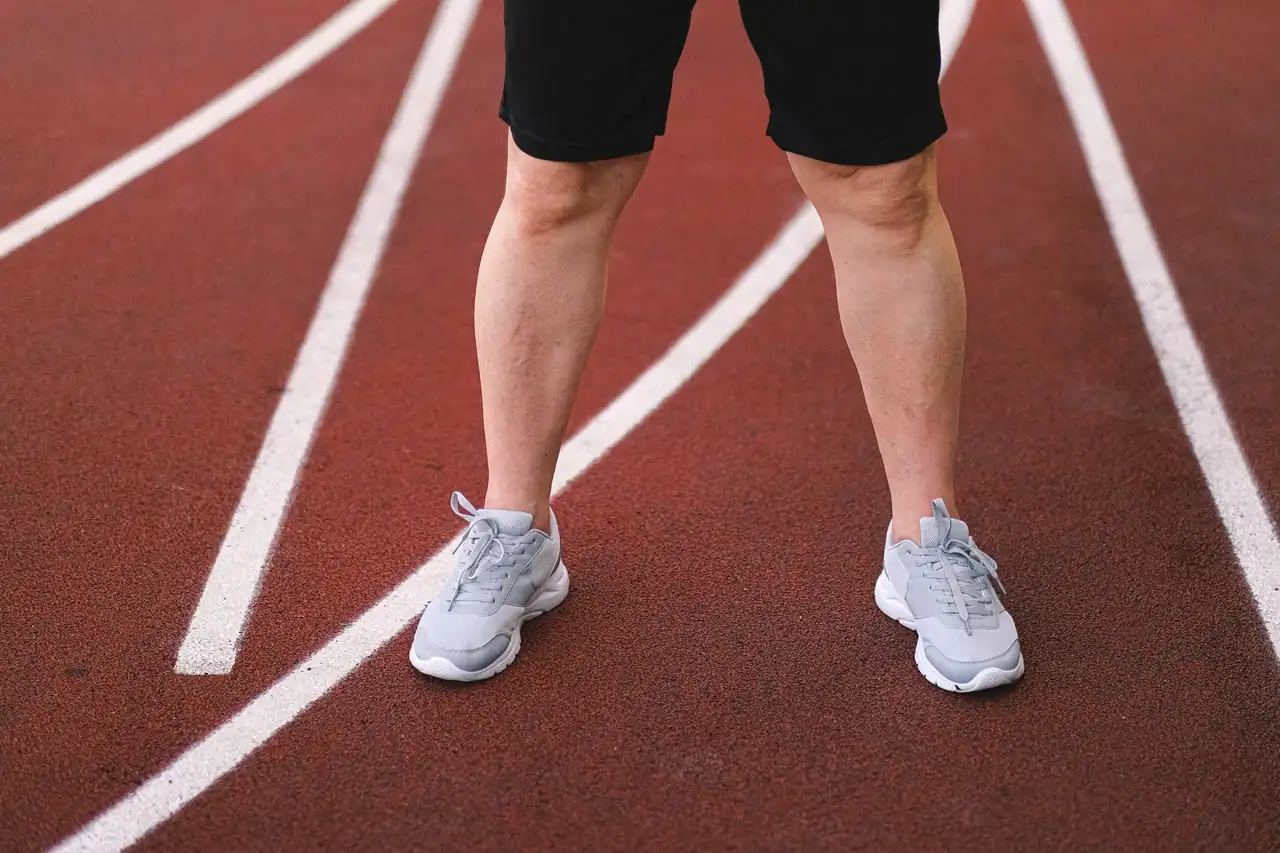
A heavy, tight calf that feels hard to the touch usually appears after running more than usual, climbing hills, or stringing together several days of effort. It is not always a serious injury, but it is a clear sign that the muscle has exceeded its recovery capacity and needs to ease off.
In most cases, the discomfort is due to a muscular overload of the triceps surae, the group made up of the gastrocnemius and soleus. The key is to distinguish normal fatigue from a bigger problem, because forcing that area can prolong the pain or open the door to a tear, Achilles tendon irritation, or a more persistent condition.
Why the calf complains before other areas
The calves work like a spring with every stride. They propel the body forward, stabilize the ankle, and absorb part of the impact when the foot hits the ground. When running, that task is repeated thousands of times; on a long run, the count skyrockets and the muscle starts to pay the price. The more abrupt the change in load, the greater the likelihood they will become overloaded.
Overload often appears after a sudden increase in mileage, a return to training after a break, or a session that is too intense for your actual fitness level. It is also very noticeable on hills, pace changes, intervals, and hard surfaces. Asphalt does not just punish the joints: it forces the posterior chain to bear part of the work that under other circumstances would be better distributed.
There is another silent factor: footwear. Switching to shoes with a smaller heel-to-toe drop, or using a worn-out model that no longer cushions as well, can increase the load on the calf. The same happens when moving from a more heel-striking pattern to a more forefoot strike without a transition. The muscle does not complain out of caprice; it warns that something has changed too quickly.
What is usually felt when it is just overload
The typical discomfort is usually not a sharp stab or a sudden inability to walk. What is most common is a feeling of hardness, tightness, heaviness, or stiffness that increases at the end of the workout or in the hours afterward. Sometimes the pain appears when you go up on tiptoe, climb stairs, or start running cold. The area feels like a tight rope that has lost its elasticity.
With normal overload there is usually no bruise or obvious swelling. Nor is it common to hear the popping sound that many people describe with a muscle tear. Even so, the body can react with major functional limitation if the same area is repeatedly stressed over several days. The practical rule is simple: if the discomfort allows movement but gets worse with load, it is wise to reduce it before it becomes chronic.
Context clues also help. If the sensation appeared after a hard workout, a long walk, a full day on your feet, or a jump in volume, it is most likely muscle fatigue. If it came on suddenly, with very intense pain and a whiplash-like feeling, it is no longer just a simple overload. The origin of the pain matters as much as the pain itself.
When the discomfort is more than a bad afternoon
The line between overload and injury is not always clear, but there are signs that require attention. Pain that prevents you from continuing to run, a rapid increase in swelling, a bruise, or the inability to perform a heel raise normally suggest a tear or another tissue problem. In that scenario, pushing through does not help.
It is also worth being cautious when stiffness does not ease after a few days or when it keeps returning in the same spot, almost like a broken record. That repetition may hide poor load management, a biomechanical issue, weak glutes and ankles, or ankle mobility limitations that force the calves to work harder than they should. What repeats is almost never a coincidence.
The Achilles tendon deserves a separate mention. If the pain is located very low, near the heel, and is worse during the first part of weight-bearing or when lifting the foot, the discomfort may be coming from there and not only from the muscle. The difference matters because it changes management and because the tendon handles sudden overexertion worse than a simple contracture.
What to do in the first hours so it does not get worse
The first useful decision is to reduce the load. There is no need to dramatize or immobilize the leg all day, but it is wise to step away from what irritated it: intervals, hills, fast paces, jumps, or long sessions. Absolute rest is usually not the best recipe; relative rest works better, with gentle movement and no clear pain provocation.
If the discomfort is recent, cold can be useful to calm the pain and reduce the initial irritation, especially in the first 24 to 48 hours. After that, many people feel more relief with gentle heat, a warm shower, or a heating pad for a while. The point is not to choose one side forever, but to use the option that best fits the phase of the problem.
Walking a little, moving the ankle, and doing very gentle cycling can help more than staying completely stiff. The idea is to keep circulation going without adding stress. An overloaded calf behaves like an overextended rubber band: it needs tension to be released, not more pulling.
Stretching, massage, and mobility: what usually helps
Gentle stretching can be useful, but not as a show of painful patience. In recent overload, the goal is to recover length and a feeling of fluidity, not to force the muscle as if trying to tame a rope by brute force. The intensity should be low and the movement progressive.
A classic stretch with the knee straight places more emphasis on the gastrocnemius, while one with the knee bent targets the soleus better. Both can be held for a few seconds, without bouncing and without seeking pain. If the area is very irritated, gentle ankle mobility, controlled heel raises, or even very light jogging after a prudent amount of time may work better.
Massage can also provide relief. It does not need to be deep or aggressive; in fact, pressing too hard can leave the area more sensitive. A self-massage with a foam roller, a soft ball, or your hands, always with good judgment, helps create a sense of release. The goal is not to beat up the muscle, but to restore its elasticity.
What raises and lowers the risk among runners
In running, the calves suffer especially when preparation falls short of what the session demands. This often happens in beginners who want to progress too quickly, but also in experienced runners who string together intense weeks without unloading. The body handles a staircase better than a leap.
Surfaces matter too. Soft sand demands a lot from the calf, downhill running increases the braking phase, and hills multiply the propulsive work. A route that seems easy for the heart can be a small trap for the calves. Not all fatigue is felt in the same place.
Rest matters more than an impatient runner usually admits. Sleeping too little, chaining hard sessions, or ignoring accumulated fatigue reduces the muscle’s ability to recover. Sometimes the problem does not start in the session that hurts, but in the three or four before it, which left the area with no margin.
The role of calories, hydration, and footwear in recovery
Muscle recovery does not depend only on what is done to the leg. Drinking enough water, eating regularly, and covering the day’s energy needs helps tissue repair better. A fatigued muscle with too little energy defends itself worse, and that is noticeable when the load is repeated.
Hydration is especially important if the discomfort appeared after heat, heavy sweating, or a long session. Although not all overloads are explained by a lack of fluids or minerals, poor hydration can worsen the feeling of stiffness and promote cramps that are mistaken for overload. In practice, it is best to look at the whole picture, not just one detail.
Footwear deserves a review when the problem keeps coming back. A very low drop, a very worn sole, or a recent model change can shift the work toward the triceps surae. There are also cases where insoles, if not well adjusted, alter the distribution of load. What changes your stride also changes muscular effort.
How to get back to running without relapsing into the same discomfort
The return should be gradual. If the area is still sensitive when walking, climbing stairs, or going up on tiptoe, running too soon is usually a bad bet. Before recovering pace, you need to recover tolerance. That means the tissue can handle simple movements, changes in support, and small increases in effort without complaining.
When the acute phase has passed, strength work becomes worthwhile. Heel raises, exercises with the knee straight and bent, single-leg work, and ankle control help the calf handle impact better. A strong muscle is not one that never gets overloaded, but one that tolerates load better.
It is also worth reviewing running technique and weekly progression. Sometimes it is enough to better distribute hard days, avoid abrupt volume changes, and not pile hills and intervals into the same week. The runner who learns to pace themselves goes farther than the one who confuses progress with haste.
Signs to ask for an assessment and stop improvising
If the pain is intense, if it came on suddenly, if there is bruising, if the leg swells, or if the discomfort persists without clear improvement, a professional evaluation is needed to rule out a more serious injury. It is also wise to do this when the problem keeps repeating without an obvious explanation. Persistence completely changes the meaning of the symptom.
Among runners, the big difference between a passing overload and a long-lasting injury usually lies in how the first warnings are addressed. A well-managed load calms down; an ignored load hardens. That is why observing the pain, the training context, and the evolution in the following days is more useful than any shortcut.
The calf speaks a very simple language: tension, hardness, stiffness, fatigue. Listening to it in time avoids weeks of stopping and turns a common discomfort into a brief episode. Caution does not slow progress; it makes it more sustainable.
When the calf warns you, the problem is almost never just the calf
Behind overloaded calves there is usually a combination of factors: too much load, too little rest, unsuitable footwear, demanding technique, or neighboring muscles not doing their share. The good news is that once understood, that combination is often quite correctable. The bad news is that repeating the same thing the next week only turns it into routine.
Overload does not have to be dramatic to be serious. It often starts as a small, almost banal gesture, and ends up affecting the stride, posture, and mood of the runner. That is the real warning: when the stride changes to avoid pain, the body is already compensating.
That is why, when faced with a tight and painful calf, the wisest approach is usually to lower intensity, ease it without aggressiveness, let the area recover, and review what led it there. In running, as in almost everything that depends on the body, the margin between moving forward and breaking down is sometimes just a matter of centimeters.
Medical reference: Sprains and strains, MedlinePlus (U.S. National Library of Medicine).



How to prevent thigh chafing: causes and real solutions

Women’s running windbreakers: seven jackets and how to choose

Do more workouts get rid of soreness? A guide for runners

Jaén Half Marathon 2026: Record 3,800 Runners Registered

Men’s short running tights: how to choose the right pair

World Triathlon confirms data breach involving medical data

Izan Edo targets podium at Miyazaki World Cup

María Pérez ranks ninth in World Athletics’ 2026 top ten

Dos Santos, Duplantis and Sawe: World Athlete of the Year finalists

San Silvestre Vallecana 2026: 42,000 places, prices and start times

 Races3 months ago
Valencia Half Marathon 2027: date and registration

 Races3 months ago
Valencia Marathon 2026: entry, ballot and course

 Reviews and Comparisons4 months ago
Asics Gel-Roadmiles 3 for men: review and current price

 Reviews and Comparisons4 months ago
Asics Gel Sonoma 8 Gore-Tex: complete analysis for trail and rain

 Sneakers3 months ago
Saucony Endorphin Pro 4: full review and verdict

 News5 months ago
Strava API 2026: what changes for clubs, challenges and runner apps?

 Reviews and Comparisons5 months ago
Nike Alphafly 3: opinions, sensations, and real key points

 Reviews and Comparisons4 months ago
Under Armour running shoes review 2025-2026: models and key features

 Sports Equipment4 months ago
Shoe sizes in cm: a clear guide to getting the right fit for your footwear

 Sneakers3 months ago
Skechers GO RUN Consistent 2.0 analysis: comfort and limits

 News5 months ago
Valencia Marathon 2026 route: key tips to train and run better

 Sneakers4 months ago
Adidas Adizero Boston 13 for men: review and verdict