Health and Nutrition
Iron looks fine but ferritin is low: what runners should know
Iron reserves depleted even though blood iron levels are normal: key points for interpreting this lab result.

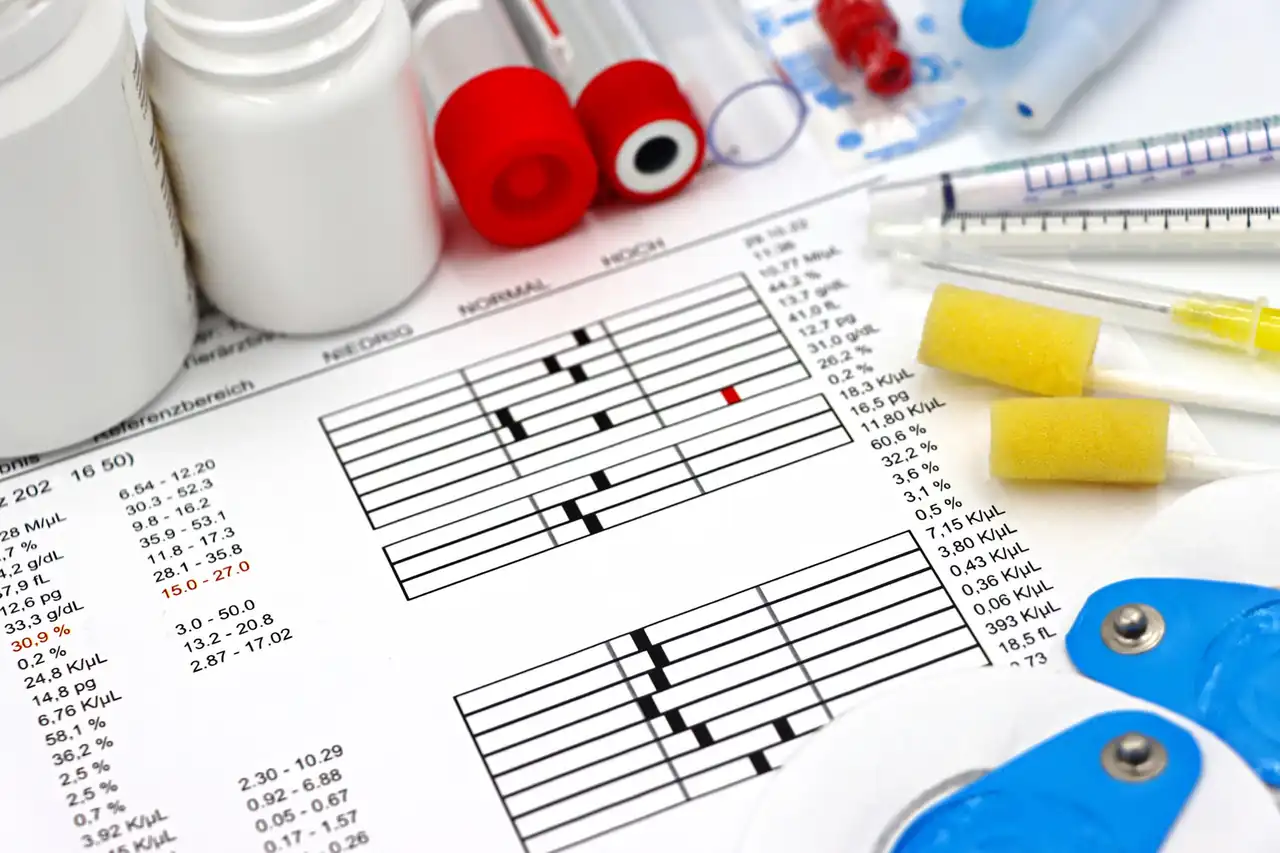
If you run and your test shows normal serum iron but low ferritin, it is usually not a lab oddity: it can be an early sign that your iron stores are running low. Your body may still keep iron circulating at an apparently steady level, while beginning to draw on its reserves. It is like seeing the fuel gauge on reserve while you keep running without a hitch.
In clinical practice, that pattern fits with iron deficiency in the initial phase, before anemia appears. That is why there may be fatigue, hair loss, brittle nails, lower exercise tolerance, or restless legs even with a normal hemoglobin. The useful reading is not in a single result, but in the full picture: ferritin, hemoglobin, transferrin saturation, serum iron, and the patient’s context.
Ferritin: the storehouse you do not see in a quick test
Ferritin is the protein that stores iron inside cells and releases it when the body needs it. It does not measure the iron circulating at that moment, but the amount stored in the liver, spleen, bone marrow, and other tissues. That is why it is a much more stable indicator of actual reserves and, in many cases, changes earlier than hemoglobin.
This difference explains why a person may be told their iron is fine and yet have low ferritin. Blood iron changes with food, the time of day, inflammation, or even the biological stress of a recent illness. Ferritin, by contrast, provides a clue that is closer to the state of the storehouse. When it falls, it is usually because the body is already using its savings to sustain basic functions.
The problem is not just anemia or no anemia. There is an intermediate zone, very common, in which hemoglobin has not yet collapsed, but the iron stores have been depleted enough to affect energy, concentration, and physical performance. In athletes, women with heavy periods, and people on restrictive diets, this scenario appears especially often.
Why iron can be normal and ferritin not
Serum iron is a snapshot measurement. It reflects the mineral circulating in the blood at that moment, not what the body is saving for tomorrow. It can rise or fall temporarily because of recent food intake, daily biological rhythms, or temporary changes in iron transport. Ferritin, on the other hand, usually falls when consumption, loss, or poor absorption have been eroding reserves for some time.
That mismatch between both parameters is very common in early stages of deficiency. Before giving up, the body redistributes resources and sustains red blood cell production as long as it can. But the price of that apparent balance is gradually emptying the storehouse. That is why the result seems contradictory only on the surface; in reality, it tells a very coherent story of progressive wear and tear.
Correct interpretation requires looking beyond serum iron. A doctor will usually also assess transferrin saturation, total iron-binding capacity, hemoglobin, and, in many cases, markers of inflammation. That last piece is important because ferritin can also rise with inflammation, infection, or liver disease, so a normal or high value does not always mean good reserves. But when it is low, the message is usually quite clear: the storehouse is shrinking.
Which values guide us and which ones usually raise concern
Ferritin ranges vary according to the laboratory, age, and sex, but there are thresholds used as clinical references. In adults, values below 15 ng/mL are usually considered clearly low in many guidelines, and below 30 ng/mL one can already speak of compromised stores, especially if there are symptoms or risk factors. In active women or those with menstrual losses, figures at the lower end of the range may be insufficient to sustain daily effort.
In adult men, a low value is more notable because the physiological margin is usually broader. In premenopausal women, interpretation requires more context, since menstruation introduces a monthly loss that greatly alters the balance. In children and adolescents, growth accelerates iron demand and makes ferritin interpretation even more cautious.
The isolated number does not decide everything on its own. A ferritin of 20 ng/mL may be irrelevant in someone without symptoms and with good intake, but in another person with fatigue, heavy periods, and intense training it can explain much of the discomfort. The lab informs; the context decides.
When the body warns before anemia appears
The advantage of detecting low stores in time is that the body usually warns before hemoglobin changes. Persistent fatigue is one of the most repeated signs, but it does not come alone. There is also reduced exercise tolerance, a feeling of shortness of breath with moderate exertion, headache, pallor, nails that break easily, and hair loss more intense than usual.
In sports, the picture can be more subtle and misleading. A runner may keep completing training runs, but notices that the heart rate rises sooner, the legs feel heavier, or the usual pace is harder to maintain. This is not a lack of fitness or a bad week: sometimes it is a system running slowly because it lacks the reserves to produce energy efficiently.
The symptom is not always dramatic; often it is persistent. Someone living with low ferritin often describes a fatigue that does not fully improve with rest, a kind of fog that gets in the way of the day. In some people, restless legs syndrome also appears, a classic sign of iron deficiency that, although not exclusive, deserves attention because of its relationship with iron metabolism.
The most common causes behind low ferritin
Iron loss through bleeding is the most common cause. In women, heavy menstrual periods top the list; in other cases, the problem is found in more discreet but ongoing digestive losses, such as ulcers, polyps, hemorrhoids, or hidden intestinal bleeding. Frequent blood donation should also be considered, as it can gradually deplete stores without the person noticing right away.
Insufficient intake also matters, especially in very restrictive or poorly planned diets. Eating healthily is not enough; iron intake must be covered and the body must be able to absorb it. Vegetarian or vegan diets can be perfectly compatible with good reserves, but they require more planning because non-heme iron is absorbed less efficiently than iron from animal sources.
Poor absorption is another key factor. Celiac disease, inflammatory bowel disease, bariatric surgery, hypothyroidism, atrophic gastritis, and some medications can reduce iron uptake. In those cases, diet alone may fall short, because the problem is not only what is eaten, but what actually enters circulation and is stored.
The relationship between low ferritin and endurance sports
In runners, cyclists, and other endurance disciplines, iron is put under pressure through several pathways at once. Repeated exertion increases the demand for red blood cells and, therefore, for iron. In addition, mechanical impact, sweating, muscle microtrauma, and post-exercise inflammation can favor losses or alter the mineral’s availability. It is no coincidence that iron deficiency without anemia is more common in athletes than in sedentary people.
That scenario has a silent effect on performance. When reserves fall, the body holds up for a while, but it stops responding with the same spark. Recovery takes longer, effort feels harder, and the sense of lightness disappears. In training, that translates into a lower ceiling, even though on paper the person keeps doing everything the same.
The most common mistake is to blame it only on accumulated fatigue. Training hard, sleeping a bit worse, and living with stress can already explain part of the wear and tear, but if ferritin is low it is worth considering a specific biological factor that limits adaptation. It is not a matter of willpower, but of cellular fuel and oxygen transport.
Which tests complete the picture
Ferritin should never be read alone when iron deficiency is suspected. Hemoglobin shows whether anemia is already present; serum iron indicates what is circulating; transferrin and its saturation help explain how the mineral is transported; and total iron-binding capacity adds another layer of context. Together, these tests draw a much more reliable map than a single isolated value.
Inflammation also matters. Ferritin rises as an acute-phase reactant, so an infection, an inflammatory disease, or a liver problem can falsely push its reading upward. That is why high ferritin does not always mean excess iron, just as a normal value does not completely rule out problems if active inflammation is present. In contrast, low ferritin rarely misleads: it usually points to truly scarce reserves.
Well-interpreted lab work prevents common mistakes. It is not unusual to see people with normal serum iron who feel reassured too soon, when the real problem is already in the internal pantry. The key is to understand the full process, not just an isolated and deceptively normal snapshot.
What is usually done when iron circulates well but ferritin does not
The clinical response depends on the cause. If there is heavy menstrual bleeding, that source must be assessed; if digestive loss is suspected, the focus changes; if the problem is dietary, the approach will be different; and if there is malabsorption, the priority will be correcting the underlying disorder. Without resolving the reason, ferritin may rise temporarily and fall again later, like water coming in from one side while the drain remains open.
In many cases, iron supplements are used, but their use should be individualized. Not every low ferritin requires the same strategy, and not everyone tolerates oral iron in the same way. Sometimes it causes digestive discomfort, constipation, or nausea; other times, poor absorption means another route must be considered. The decision is made based on lab results, symptoms, history, and expected response.
Supplementation does not cover up the underlying problem. It can rebuild stores, yes, but the clinical story remains. If low ferritin is due to ongoing losses, partial relief without investigating the source leaves the door ajar for relapse. That is why effective correction always combines replacement and search for the trigger.
Why it is not a good idea to normalize fatigue without further thought
We are used to explaining fatigue with haste, stress, or lack of sleep. Sometimes that is true. Other times, that quick explanation hides a deficiency that has been draining energy for weeks or months. Low ferritin belongs precisely to that territory of ambiguous symptoms: it does not always shout, but it wears you down. And when the storehouse is empty, the body starts charging interest.
The consequences are not limited to fatigue. Iron participates in hemoglobin production, energy metabolism, and multiple cellular reactions. That is why a low reserve can affect the brain, muscle, and overall condition long before a basic blood test shows anemia. The person keeps functioning, but like a house with an electrical system under strain.
Interpreting these results correctly changes the response time. Detecting low ferritin early makes it possible to act before anemia, which is more visible and slower to correct, takes center stage. That anticipation has clinical value and practical value too: less fatigue, less loss of performance, and fewer weeks lost to a problem that, in many cases, does leave room for intervention.
A small sign with considerable clinical weight
The combination of normal iron and low ferritin is not a contradiction, but a warning that the body is still maintaining appearances while the storehouse is being emptied. Understanding it helps us read very common symptoms better and avoid confusing a reassuring number with a truly optimal state. In health terms, the reserve matters just as much as the flow.
That detail changes the conversation about fatigue, sport, menstruation, diet, and intestinal absorption. It also forces us to take borderline values seriously and to give context to lab work that, without explanation, may seem clean. In reality, low ferritin often speaks before the rest of the blood count does, and when it is heard properly, it offers a clear advantage: getting there in time.
The most useful interpretation is not of the isolated number, but of the whole picture. When iron circulates normally but reserves are falling, the body is not lying; it is warning you. And that warning, in medicine and in everyday life, is worth far more than an apparent normality.
Low ferritin and running: what it may mean for training
For runners, a serum iron result within the reference range does not rule out falling iron stores. Ferritin reflects stored iron and can drop before anaemia develops. When reserves are low, some people notice fatigue, reduced tolerance for effort, or that their usual easy runs feel harder. These symptoms are not specific to low ferritin; training load, sleep, nutrition and other factors may also play a part.
Look for a persistent change rather than one difficult day: needing more effort to hold an easy pace, taking longer to recover, or having low energy that affects your sessions. Make a note of how you feel and whether it coincides with higher mileage, harder workouts, a recent race or changes in your diet. While you work out what is going on, avoid trying to make up for fatigue by adding intensity. Adjust training to how you feel and give recovery priority. You do not automatically need to cancel every run, but persistent or worsening symptoms deserve attention.
Discuss the result with a healthcare professional, who can interpret it alongside haemoglobin, transferrin saturation and your wider health context, and consider possible causes. Diet and iron losses may be part of that assessment. Do not assume on your own that ferritin explains everything or start supplements without professional advice. If fatigue or reduced exercise tolerance persists, seek advice before continuing to increase your training load or racing; a single test result is not enough to decide what to do.
Medical reference: Iron, MedlinePlus (U.S. National Library of Medicine).



How to prevent thigh chafing: causes and real solutions

Women’s running windbreakers: seven jackets and how to choose

Do more workouts get rid of soreness? A guide for runners

Jaén Half Marathon 2026: Record 3,800 Runners Registered

Men’s short running tights: how to choose the right pair

World Triathlon confirms data breach involving medical data

Izan Edo targets podium at Miyazaki World Cup

María Pérez ranks ninth in World Athletics’ 2026 top ten

Dos Santos, Duplantis and Sawe: World Athlete of the Year finalists

San Silvestre Vallecana 2026: 42,000 places, prices and start times

 Races4 months ago
Valencia Half Marathon 2027: date and registration

 Races4 months ago
Valencia Marathon 2026: entry, ballot and course

 Reviews and Comparisons4 months ago
Asics Gel-Roadmiles 3 for men: review and current price

 Reviews and Comparisons4 months ago
Asics Gel Sonoma 8 Gore-Tex: complete analysis for trail and rain

 Sneakers4 months ago
Saucony Endorphin Pro 4: full review and verdict

 News5 months ago
Strava API 2026: what changes for clubs, challenges and runner apps?

 Reviews and Comparisons5 months ago
Nike Alphafly 3: opinions, sensations, and real key points

 Reviews and Comparisons4 months ago
Under Armour running shoes review 2025-2026: models and key features

 Sports Equipment4 months ago
Shoe sizes in cm: a clear guide to getting the right fit for your footwear

 Sneakers3 months ago
Skechers GO RUN Consistent 2.0 analysis: comfort and limits

 News5 months ago
Valencia Marathon 2026 route: key tips to train and run better

 Sneakers4 months ago
Adidas Adizero Boston 13 for men: review and verdict