Health and Nutrition
Pain behind the knee when running: causes and what to do
Common causes, warning signs, and what to do to avoid making a discomfort that is closely linked to sports and overuse worse.

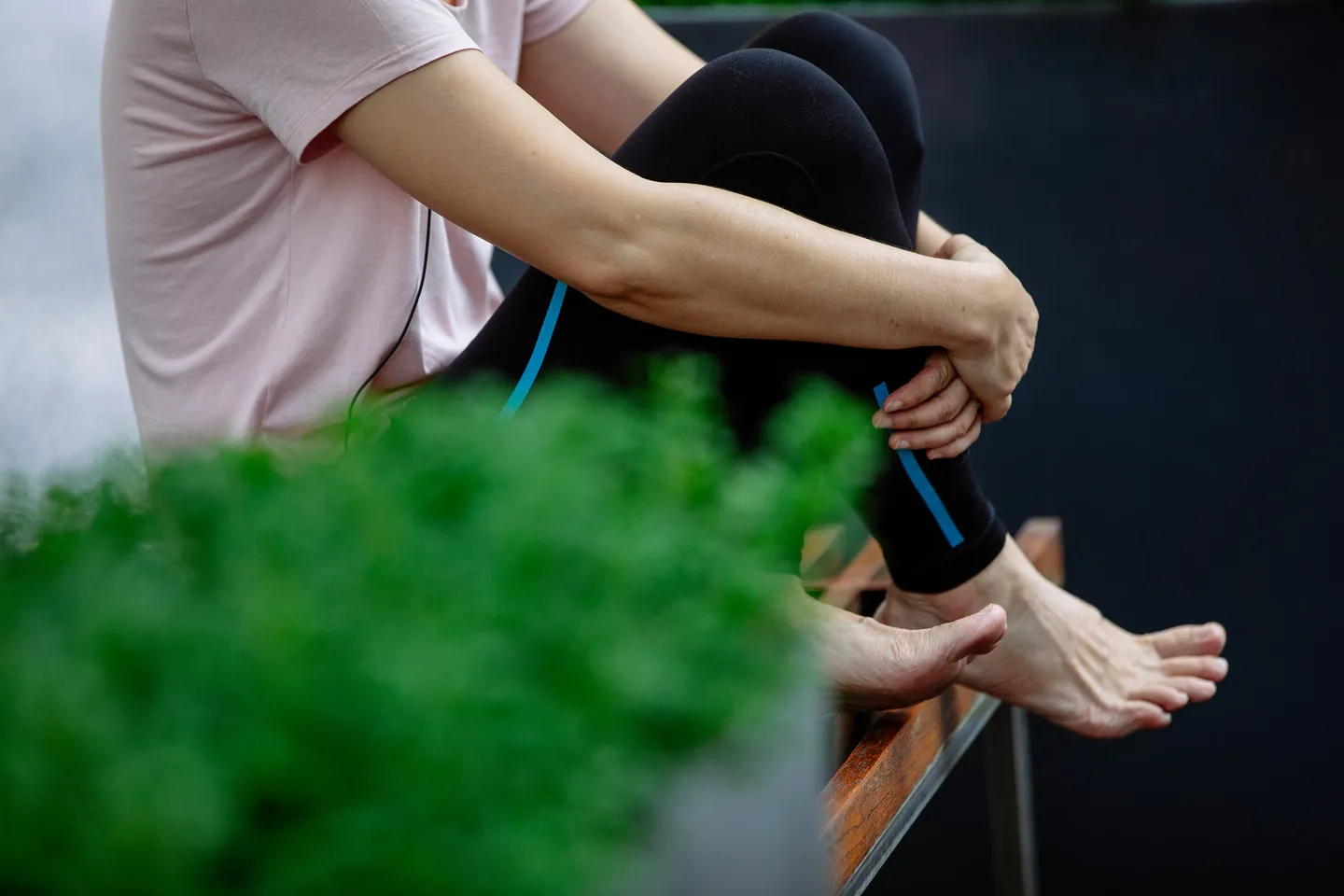
Imagen: Michelle Leman / Pexels
Pain at the back of the knee can result from overload, inflammation, or a mechanical injury involving tendons, menisci, ligaments, or the joint itself. For runners, it may follow an increase in mileage, a change of pace, or accumulated fatigue; it can also come on while walking, going downstairs, or standing for long periods.
The key is not just noticing the discomfort, but reading its pattern: if it hurts when straightening, when bending, with a lump, with stiffness, or with swelling, each nuance points to different causes. Some are mild and temporary; others require prompt medical evaluation, especially if there is locking, instability, heat, redness, or calf pain.
What a pain in the back of the knee reveals
The knee is a complex hinge that does not work alone. Behind it, the hamstring tendons, the calf muscle, structures in the popliteal fossa, blood vessels, and nerves, as well as the joint capsule, all converge. That is why discomfort in this area rarely has a single clean explanation; it is more like an alarm from several systems at once.
In practice, when the pain appears is very revealing. If it shows up when extending the leg, there is often tension or irritation in the posterior chain. If it worsens when bending, squatting, or climbing stairs, suspicion shifts toward the meniscus, synovitis, a popliteal cyst, or joint wear. When the problem flares while running, especially uphill or during pace changes, the source is usually tendon or muscle overload.
The terrain also matters. A workout on an incline, a set of intervals, a match with sudden turns, or a long hike with a backpack can alter how loads are distributed. The back of the knee does not complain for no reason; it usually does so when some structure is absorbing more stress than it can tolerate.
Common causes behind the discomfort
Among the most common causes is hamstring tendinopathy, an inflammation or irritation of the tendon on the back of the thigh near the knee. It usually causes localized pain, sometimes sharp, that gets worse when running, braking, going uphill, or straightening the leg after sitting. In athletes, it often appears after increasing training load without enough adaptation.
Another common source is bursitis, inflammation of small fluid-filled sacs that reduce friction between tissues. Although in some cases it is more associated with the inner part of the knee, it can also cause discomfort in the posterior area, with a feeling of rubbing, tightness, or local warmth. Repeated movement, kneeling, or bending the knee over and over can irritate it.
Baker’s cyst deserves its own section. It is an accumulation of synovial fluid that forms a kind of bulge behind the knee. It does not always hurt, but when it grows it can create pressure, stiffness, and difficulty bending. It is usually the visible consequence of another problem inside the joint, such as osteoarthritis, synovitis, or a meniscal injury, rather than an isolated disease.
There are also meniscal injuries, especially in the posterior horn of the meniscus. These can cause deep pain, clicking, a catching sensation, or even locking. They often hurt when crouching, twisting on one leg, or going downstairs. Not all meniscal tears are dramatic, but when pain is combined with locking or instability, medical assessment becomes more urgent.
The posterior ligaments and the structures that stabilize the knee can also be injured by a blow, a fall, or hyperextension, that is, when the knee goes backward more than it should. In that case, pain usually appears suddenly, along with swelling and a feeling that the leg may give way when bearing weight. In sports injuries, that detail of the injury mechanism matters almost as much as the pain itself.
Osteoarthritis and rheumatoid arthritis also belong on this list. The former wears down the cartilage and may hurt more when walking or when standing up after rest; the latter adds morning stiffness, swelling, and discomfort that improves with movement, at least for a while. In both, the back of the knee can hurt because of joint effusion or an associated Baker’s cyst.
Less commonly, it is worth thinking about varicose veins or even deep vein thrombosis if the pain comes with a swollen, red, hot, or very tense calf. It is not the most common cause, but it is one of the few that cannot be delayed. A knee may seem to be the source of the problem when in fact the clue lies in circulation.
How the pain changes depending on the movement
Pain when bending usually points to internal compression. When the knee bends, the posterior space narrows and any inflamed structure can get trapped between tissues. That is why Baker’s cyst, synovitis, or a posterior meniscal injury causes so much trouble in squats, stairs, or when sitting with the leg very bent.
Pain when straightening usually fits better with overload of the posterior chain. The hamstrings and calf work like cables stretched behind the joint; if they are irritated, full extension pulls on them like a rope that has become too short. While running, that feeling is often noticed when accelerating the stride or trying to fully straighten the leg after exertion.
When pain appears while running, the context matters. If it starts at the beginning and then eases somewhat as you warm up, it is more likely stiffness or overload. If it appears at the end, with fatigue and loss of technique, it may be a sign that the structure cannot tolerate the volume. If your gait also changes, the body begins to compensate and the discomfort may move to the hip, calf, or lower back.
The knee also speaks through sounds, although not all of them mean damage. An isolated click may not matter, but clicking with locking or deep pain deserves a checkup. The difference between a trivial sound and one that is clinically relevant lies in what the knee does afterward: if it keeps moving normally, that is one thing; if it gets stuck, that is something else entirely.
What to do in the first few hours
When the discomfort is recent and there are no warning signs, relative rest usually helps. That does not mean complete immobility, but rather avoiding for a few days the movements that trigger pain: intervals, hills, deep squats, jumps, or long strides. The knee benefits from lowering the noise, not from being wrapped in total stillness that makes it stiffer.
Cold can help if there is inflammation, heat, or an acute injury. Fifteen to twenty minutes, several times a day, is usually enough, always with a cloth between the ice and the skin to protect it. Gentle compression and elevating the leg can also help when the knee feels swollen or heavy.
If the area is more stiff than inflamed, gentle heat before moving may feel better. Even so, a prudent rule applies: nothing that reproduces a sharp twinge. Forcing intense stretches during an irritated phase can turn a manageable discomfort into a more persistent problem.
Painkillers and anti-inflammatory drugs, used under medical guidance, can relieve symptoms, but they do not solve the cause. Masking the pain without understanding it is like lowering the volume of an alarm without checking for smoke. This is especially delicate in sports, because false improvement often tempts people to return too soon and worsen the injury.
When a medical checkup is no longer optional
How long the pain lasts matters. If it persists for several days despite reducing the load, or if it returns every time you try to train, it needs an examination. The same applies if it hurts a lot when walking, climbing stairs, or carrying your normal daily load. The knee is not designed to become a patience test.
There are symptoms that increase urgency. A knee that will not bend or straighten, a feeling of locking, visible deformity, fever, tingling, or significant swelling of the calf do not fit simple overload and deserve attention. The same is true if the joint gives way when bearing weight, as if it briefly loses its anchor.
In the clinic, the physical examination is usually the first filter. The specialist looks at range of motion, stability, the presence of effusion, and the exact point of pain. From there, depending on the suspicion, they may order X-ray, ultrasound, or magnetic resonance imaging. X-rays help identify osteoarthritis or bone abnormalities; ultrasound is useful for tendons, bursae, and cysts; MRI for menisci, ligaments, and cartilage.
When the problem is vascular, the evaluation shifts direction and a specific venous test may be needed. Not all pain behind the knee is orthopedic, and that distinction helps avoid mistakes. The location is the same, but the cause can be very different, like clock parts that seem to fail in the same place but actually have different gears at fault.
The weight of training, rest, and technique
In people who run, cycle, or exercise regularly, the back of the knee often complains because of poor load management. Suddenly increasing mileage, adding hills, or training while fatigued is a very common recipe for irritating tendons and muscles. The body can tolerate effort, yes, but it needs room to adapt.
Technique matters too. An excessively long stride, abrupt braking, or repeated changes of direction can load the posterior chain like a cable stretched to its limit. In the gym, the problem often appears when moving too quickly into deep squats, deadlifts, or explosive exercises without a sufficient base.
Rest, often underestimated, acts like silence between notes. Without recovery, the tissue does not bounce back from accumulated stress and each session adds another layer of irritation. Posterior knee pain in sports does not always mean stopping forever; often it means fine-tuning volume, spacing sessions better, and giving the joint a more sensible progression.
Body weight also matters. Every extra kilogram increases the work on the knees, especially when going upstairs or downstairs and when running. It is not a sentence, but it is a clear mechanical factor. A joint that has less unnecessary load usually responds better and with less underlying inflammation.
Why the source may be higher up or lower down
The knee receives impact from the hip, ankle, and foot. Weakness in the glutes, hamstrings, or calves alters how the load is distributed and can end up concentrating stress right behind the joint. Sometimes pain that seems local is actually the result of a poorly aligned chain.
The foot matters too. An over-collapsed support, a messy stride, or worn-out shoes change walking mechanics and make the popliteal area work overtime. This is not about demonizing a shoe, but about understanding that a poor foundation can end up taking a toll higher up.
That is why some pains do not improve with rest alone. If the cause is biomechanical, the knee will complain again as soon as the same movement is repeated. That is why diagnosis should not be limited to asking where it hurts, but should also look at how the entire lower limb moves.
In practice, this explains why two people with the same discomfort receive different recommendations. One needs tendon unloading; another, treatment for an effusion; another, a meniscal injury assessment; another, vascular issues ruled out. The symptom is shared, but the internal map is not.
Discomfort that should not be normalized
Pain, stiffness, and functional limitation form a trio that deserves respect, especially when it repeats. The back of the knee may seem like a minor corner of the body, but it is where tissues that bear far more than they appear to all come together. Ignoring a small warning in this area can sometimes make recovery take much longer than it should.
In runners and recreational athletes, the most common mistake is to keep stacking sessions in the hope that the body will adapt on its own. Sometimes it does, but often it does not. The line between an overload that settles on its own and an injury that becomes chronic is thin, like a crack in the asphalt that is barely visible at first and later forces a large section to be redone.
The best reading is specific: if there is swelling, a lump, locking, instability, fever, calf pain, or progressive worsening, a checkup is needed. If the pain appears only with certain movements and calms down when the load is adjusted, we are probably dealing with overload or tendinopathy. If the pain settles in, wakes you at night, or changes the way you walk, the picture deserves more attention.
Pain in the back of the knee is rarely random. Behind that discomfort lies biomechanics, inflammation, wear, or injury, and almost always a very specific way the body has been loaded. Understanding that language makes it possible to act in time and prevent a brief twinge from turning into a long interruption.
Pain behind the knee when running: how to adjust your training
If you feel pain behind your knee when running, note when it starts and what makes it better or worse: during an easy run, when speeding up, on hills, or when bending or straightening your leg. Check whether it lingers afterwards, whether there is stiffness or swelling, and whether walking or going downstairs feels uncomfortable. These details can help you explain the problem to a healthcare professional, but they cannot identify the cause on their own.
Don’t try to finish a session if the pain is increasing, changing your stride, or making you limp. Stop that workout and avoid intervals, hills, and sudden pace changes; don’t switch to another activity if that also causes pain. Return to running only when everyday activities feel comfortable and you can run without the discomfort worsening. Start with an easy, short run, then assess how your knee responds during and afterwards before building back towards your usual training. Don’t try to make up missed miles all at once.
Consider whether the pain began after increasing mileage, changing terrain, or stacking hard sessions, and allow time to recover between runs. If the discomfort persists or comes back when you resume running, speak to a healthcare professional before increasing your training load. Seek prompt medical advice if you have locking, a feeling of instability, heat, redness, or swelling; calf pain also needs attention. A lump behind the knee or difficulty bending it are further reasons to ask for advice. Don’t treat pain as normal just because you can finish a run.
When the knee speaks, the rest of the body listens
The back of the knee is a meeting point: muscle, tendon, capsule, joint fluid, and circulation. That is why its pain is often more revealing than it seems. It does not just point to one joint, but to the way the body has been moving over the last few days or weeks.
Taking it seriously does not mean panicking. It means distinguishing between overload that calls for caution and an injury that needs diagnosis. Reading the symptom well avoids dangerous automatic responses, from continuing to run in pain to assuming everything will be fixed with ice and patience.
Discomfort behind the knee is clearer when the context is observed: how it started, what makes it worse, what eases it, and whether it is accompanied by swelling, a lump, or locking. With that information, the knee stops being a vague unknown and becomes a problem with a shape, and therefore, with a solution.
In joint health, as in almost everything, time makes the difference. Listening to the first warning is usually much cheaper than chasing down an injury once it is already established.
You may also like: Pain in the back of the knee: causes and warning signs.
Medical reference: Pain behind the knee, Cleveland Clinic.



How to prevent thigh chafing: causes and real solutions

Women’s running windbreakers: seven jackets and how to choose

Do more workouts get rid of soreness? A guide for runners

Jaén Half Marathon 2026: Record 3,800 Runners Registered

Men’s short running tights: how to choose the right pair

World Triathlon confirms data breach involving medical data

Izan Edo targets podium at Miyazaki World Cup

María Pérez ranks ninth in World Athletics’ 2026 top ten

Dos Santos, Duplantis and Sawe: World Athlete of the Year finalists

San Silvestre Vallecana 2026: 42,000 places, prices and start times

 Races3 months ago
Valencia Half Marathon 2027: date and registration

 Races3 months ago
Valencia Marathon 2026: entry, ballot and course

 Reviews and Comparisons4 months ago
Asics Gel-Roadmiles 3 for men: review and current price

 Reviews and Comparisons4 months ago
Asics Gel Sonoma 8 Gore-Tex: complete analysis for trail and rain

 Sneakers3 months ago
Saucony Endorphin Pro 4: full review and verdict

 News5 months ago
Strava API 2026: what changes for clubs, challenges and runner apps?

 Reviews and Comparisons5 months ago
Nike Alphafly 3: opinions, sensations, and real key points

 Reviews and Comparisons4 months ago
Under Armour running shoes review 2025-2026: models and key features

 Sports Equipment4 months ago
Shoe sizes in cm: a clear guide to getting the right fit for your footwear

 Sneakers3 months ago
Skechers GO RUN Consistent 2.0 analysis: comfort and limits

 News5 months ago
Valencia Marathon 2026 route: key tips to train and run better

 Sneakers4 months ago
Adidas Adizero Boston 13 for men: review and verdict