Health and Nutrition
Walking with knee pain: when it helps and when it doesn’t
Walking can relieve stiffness and improve mobility, although it is not always advisable. These are the keys.

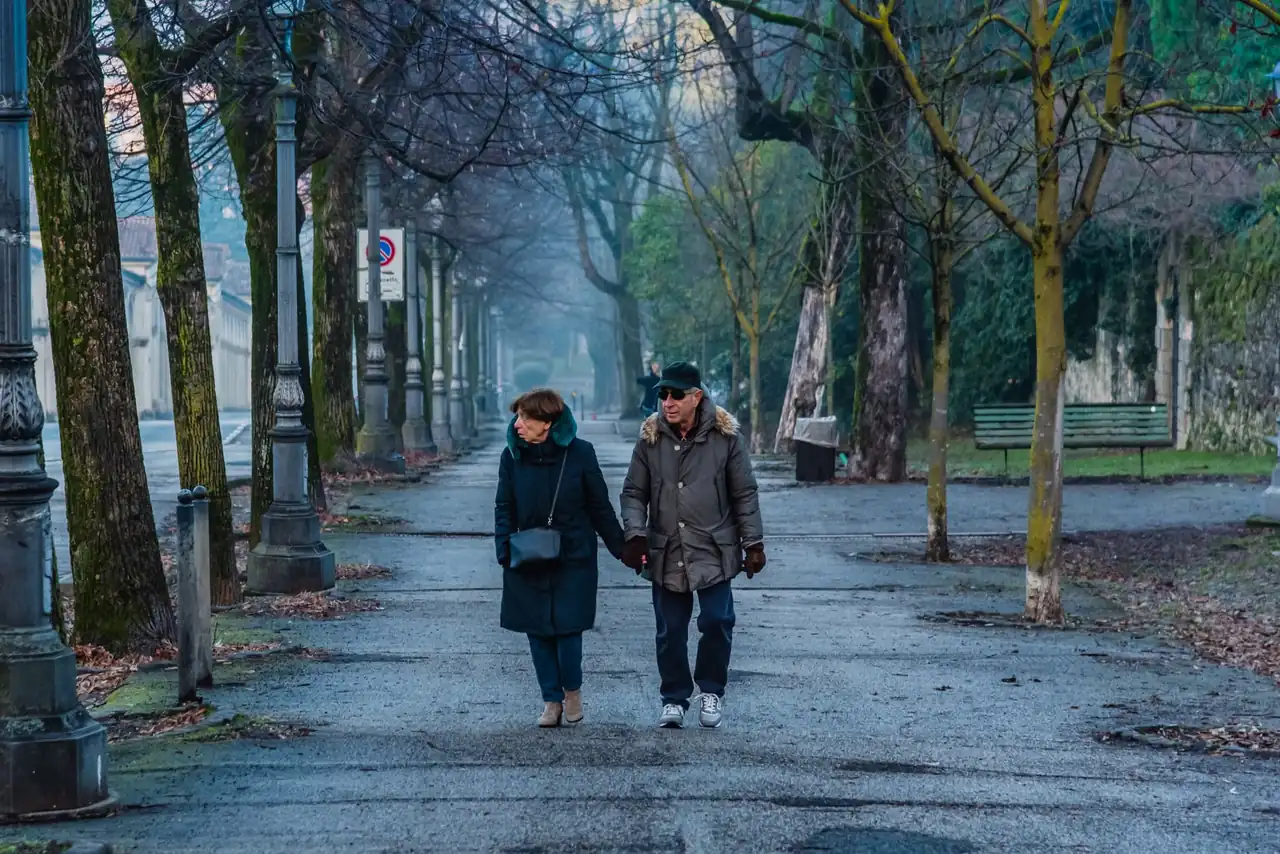
Walking is often one of the most useful ways to keep the knee moving when mild or moderate pain appears, especially if the cause is osteoarthritis. The goal is not to force the joint, but to avoid prolonged rest turning it into a rusty hinge: stiffer, tighter, and more sensitive to the simplest movement.
The key is dosage. A short, slow walk on a forgiving surface can help reduce stiffness, improve circulation, and preserve strength in the muscles that stabilize the joint. By contrast, a long, fast walk or one on hard ground can worsen discomfort when the knee is already irritated or inflamed.
Walking can be an ally, but not always in every context
The knee responds better to movement than to prolonged immobility, especially when pain comes from degenerative processes such as osteoarthritis. When walking, the joint receives a moderate load that promotes internal lubrication and activates muscles such as the quadriceps, hamstrings, and glutes, essential components for distributing effort more effectively.
That effect is neither magical nor immediate. Improvement usually comes gradually, almost silently, like turning down the volume on a persistent noise. Morning stiffness may lessen, the feeling of locking may ease, and everyday movements, from stepping off a curb to standing up from a chair, may feel less rough.
The problem appears when the pain is not mechanical but reactive: a swollen, hot knee with visible inflammation or sharp pain after a bad twist does not always welcome a walk. In those cases, pushing through can increase irritation and prolong recovery. The body, although sometimes overly dramatic in its complaints, usually gives fairly clear warning when discomfort has turned into a serious alert.
Why gentle movement usually relieves more than it harms
Walking improves circulation in the area, helping tissues receive more oxygen and nutrients. It also promotes fluid drainage, which is important when the knee feels heavy or swollen. A joint that moves smoothly behaves better than one that stays still all day and then wakes up with a jolt.
In addition, regular walking helps maintain a more stable body weight, a decisive factor because every extra kilo increases the load on the knees. In a joint already worn down by wear and tear, that difference is felt like taking a too-heavy backpack off: each step still asks for effort, but it hurts less.
The muscular benefit is no small thing either. Muscles act as shock absorbers and take on part of the impact that would otherwise fall on cartilage and bones. When they are active and reasonably strong, the knee moves with more security. When they weaken through inactivity, the joint loses part of that small natural shield.
When walking can make the knee worse
Not every painful knee appreciates walking. If pain appears during the walk and increases with each set of steps, if there is a pronounced limp, or if swelling grows after the walk, the signal is clear: the load is exceeding the tissue’s tolerance. In those cases, activity is not helping, it is adding stress.
It is also wise to stop when the discomfort comes from an acute injury, a recent twist, a fall, or an episode with a feeling of instability. Walking does not replace medical evaluation in a knee that gives way, locks, or does not allow weight-bearing. Movement can be medicine, but if not properly dosed it becomes fuel for pain.
There is an important nuance in knee pain due to osteoarthritis: mild or moderate discomfort usually tolerates walking better than sharp or disabling pain. The difference between an overworked knee and a damaged one is not always obvious at a glance, but it becomes clear when walking, going downstairs, or standing up after sitting for a long time.
The balance between rest and activity makes the difference
Total rest is only useful for short, very specific periods. Spending too many hours without moving the joint encourages stiffness and makes the first step in the morning feel like starting an old door. By contrast, spreading out small periods of activity is usually more effective than being trapped on the sofa waiting for everything to fix itself.
That balance does not mean walking out of obligation. It means adapting the load to the knee’s condition. There are days when a ten- or fifteen-minute walk is enough, and others when half an hour split into two outings is more reasonable than one long walk. The joint has more to say than the clock.
With osteoarthritis, consistency matters more than heroics. Regular walks, short at first and gradually longer, are usually more valuable than a one-off, excessive effort. The knee appreciates gentle repetition, like a hinge kept gradually oiled rather than hit with a sudden, messy stream.
What signs indicate it is best to slow down
If pain changes clearly in intensity during the walk, that information is more valuable than any general recommendation. Discomfort that is tolerable at the start may be acceptable, but if it turns into increasing pain, limping appears, or the gait has to be altered, the sensible thing is to stop and reassess the load.
Persistent swelling also calls for caution. A knee that is more swollen at the end than at the beginning suggests that the joint is not handling the effort well. The same is true when pain takes hours to subside or leaves a heavy feeling that carries into the next day. The walk was supposed to help, not leave a hangover.
The quality of the terrain matters as much as the distance. A park, a smooth track, or a stable path are usually better allies than hard asphalt, inclines, or uneven ground. Every bump forces small corrections that multiply the load on the knee, almost as if the joint had to negotiate the ground step by step.
Knee osteoarthritis and the real role of the daily walk
In osteoarthritis, well-dosed movement is part of the usual conservative treatment. It does not cure cartilage wear, but it does improve function and can reduce the feeling of locking. Walking, along with other low-impact exercises, helps the joint perform better in daily life.
Relief depends not only on the knee, but on the whole body. The hip, ankle, thigh muscles, and balance control all influence how the load is distributed. That is why two people with the same diagnosis may respond very differently: one tolerates a half-hour walk well, while another needs shorter segments to avoid triggering pain.
Age and overall physical condition also matter. A person accustomed to moving may tolerate walking better than a more sedentary one, even if the osteoarthritis is similar. The knee’s story is not written in a single visit: it builds up over the years, with pauses, extra kilos, and repeated movements that seem harmless until they leave a mark.
How the knee usually responds when the walk is well adjusted
A well-planned walk usually leaves a feeling of looseness, not punishment. The knee may feel somewhat loaded during the effort, but it should recover within a reasonable time. The goal is not to finish unscathed, but to end with the sense that the joint is still functioning and has not shrunk from fear of movement.
When the pace is moderate, the support is stable, and the duration is sensible, walking acts almost like a functional lubricant. It does not eliminate the cause of pain, but it improves the environment in which the joint lives. That explains why so many specialists still recommend movement over absolute rest in chronic problems.
By contrast, a clear worsening after walking is a bad sign. If the next day the knee wakes up stiffer, more swollen, or more painful than before, the volume or intensity was too high. The practical rule is simple: a useful activity leaves the joint worked, not irritated for hours.
What other activities usually coexist better with a sensitive knee
Not all low-impact exercise behaves the same way. Stationary cycling, swimming, or walking in water usually unload the joint more than a prolonged walk on pavement. These are common alternatives when the knee needs to move without receiving so much impact with each step.
It is also worth remembering that prolonged sedentary behavior rarely improves the outlook. The human body was not designed to sit still for hours and then ask a cold, stiff knee to perform. Gentle, well-chosen movement usually gives better results than rest as a general rule.
Footwear matters more than it seems. A worn-out shoe, with no cushioning or little support, can turn a reasonable walk into a small mechanical torture. By contrast, a stable, comfortable model reduces part of the impact and helps the knee avoid paying the bill for every step.
When it is wise to consult and stop improvising
There are symptoms that do not fit a simple overuse ache. A knee that will not bear weight, that locks, gives way, is very swollen, or hurts persistently even at rest deserves professional evaluation. Walking with these signs can delay the diagnosis of a more serious problem.
The same caution applies if the pain appears after a trauma, if there is fever, marked redness, or swelling that grows rapidly. Those clues no longer point to a poorly dosed walk, but to a condition that needs another look. The knee, after all, is a weight-bearing joint; when it complains without room for doubt, it is worth listening carefully.
In practice, the question is not only whether walking helps, but which knee is receiving that walk. A joint with stable osteoarthritis usually tolerates it well; an inflamed, injured, or unstable knee may worsen. The difference between those situations explains why the same recommendation can be helpful for some and counterproductive for others.
The knee appreciates movement that respects its limits
Walking can be a valuable tool for knee pain when the problem is chronic, mild, or moderate, and there are no signs of acute injury. It promotes mobility, keeps active the muscles that protect the joint, and helps prevent inactivity from worsening stiffness. In that context, walking is more like a key that opens the hinge than a sporting effort.
But the same activity, if poorly chosen or excessive, can also become an unnecessary burden. Hard surfaces, high speeds, long distances, or increasing pain completely change walking’s role. The knee does not ask for permanent immobility; it asks for judgment, moderation, and an honest reading of its signals.
The best decision is often the most restrained: move enough to avoid losing function and rest just enough not to irritate the joint further. At that middle point, walking retains its most useful value, the kind that makes no noise but is felt in every step that hurts a little less.
Walking as a complement to running training
For runners, walking can be a gentle way to stay active on recovery days or when easing back after mild knee discomfort. It is not a substitute for training and will not necessarily make the pain go away, but a short, easy walk may help limit stiffness from sitting still for too long. Choose comfortable ground and keep the walk relaxed rather than turning it into a demanding outing.
Pay attention to how your knee responds: if the pain worsens as you walk, you start limping, or swelling increases afterwards, reduce the load or stop rather than trying to make up for it by running. A hot or markedly swollen knee, or pain after a twist, calls for particular caution. If pain or other symptoms persist, consult a healthcare professional before returning to training; build back to running gradually and within your tolerance.
You may also like: Best shoes for knee osteoarthritis: what to look for.
Medical reference: Knee pain, NHS.



How to prevent thigh chafing: causes and real solutions

Women’s running windbreakers: seven jackets and how to choose

Do more workouts get rid of soreness? A guide for runners

Jaén Half Marathon 2026: Record 3,800 Runners Registered

Men’s short running tights: how to choose the right pair

World Triathlon confirms data breach involving medical data

Izan Edo targets podium at Miyazaki World Cup

María Pérez ranks ninth in World Athletics’ 2026 top ten

Dos Santos, Duplantis and Sawe: World Athlete of the Year finalists

San Silvestre Vallecana 2026: 42,000 places, prices and start times

 Races4 months ago
Valencia Half Marathon 2027: date and registration

 Reviews and Comparisons4 months ago
Asics Gel-Roadmiles 3 for men: review and current price

 Races4 months ago
Valencia Marathon 2026: entry, ballot and course

 Reviews and Comparisons4 months ago
Asics Gel Sonoma 8 Gore-Tex: complete analysis for trail and rain

 Sneakers3 months ago
Saucony Endorphin Pro 4: full review and verdict

 News5 months ago
Strava API 2026: what changes for clubs, challenges and runner apps?

 Reviews and Comparisons5 months ago
Nike Alphafly 3: opinions, sensations, and real key points

 Reviews and Comparisons4 months ago
Under Armour running shoes review 2025-2026: models and key features

 Sports Equipment4 months ago
Shoe sizes in cm: a clear guide to getting the right fit for your footwear

 Sneakers3 months ago
Skechers GO RUN Consistent 2.0 analysis: comfort and limits

 News5 months ago
Valencia Marathon 2026 route: key tips to train and run better

 Sneakers4 months ago
Adidas Adizero Boston 13 for men: review and verdict