Health and Nutrition
Is it good to exercise with sore muscles when you run?
Movement helps in mild cases, but severe pain requires rest. Key tips for distinguishing normal discomfort from injury.

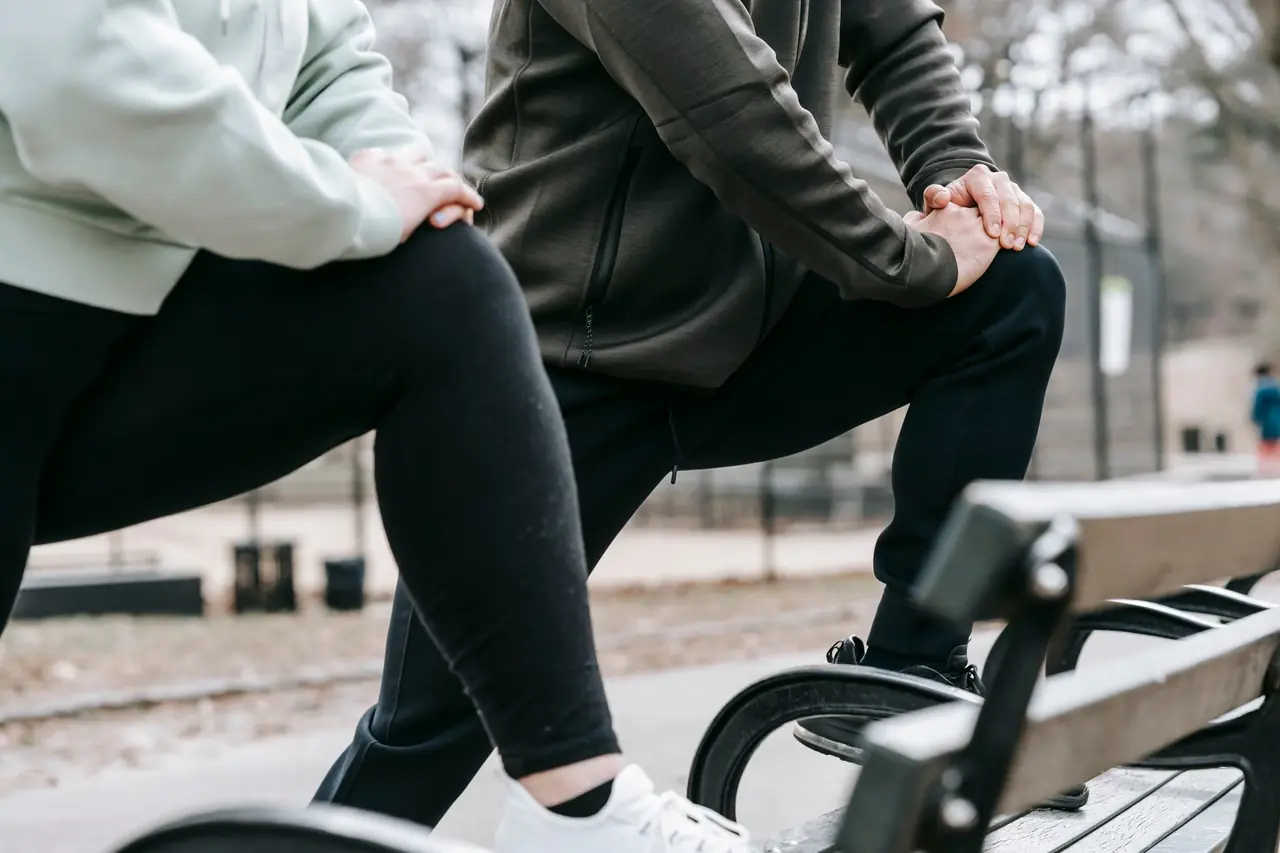
Sore muscles are not a sign of weakness or a punishment for running: they usually appear 12 to 24 hours after an effort the muscles were not used to, peak between 24 and 72 hours, and then gradually subside. If the soreness is mild, keeping moving is usually more helpful than staying still: gentle activity, such as walking or an easy jog, promotes blood flow and may reduce stiffness.
The key lies in the nuance, which is where the debate almost always gets lost. Not all muscle pain means the same thing, and not every ache allows you to train in the same way. Light training can help recovery, while repeating a hard session on an already loaded muscle can prolong discomfort and increase the risk of injury. The useful answer is not yes or no, but what kind of movement, at what intensity, and in what real condition the body is in.
What happens in the muscle when they appear
The usual picture is known as delayed-onset muscle soreness. It is often related to micro-tears in muscle fibers and a normal inflammatory response after eccentric efforts, routine changes, returning to sport after a break, or sessions more intense than usual. That feeling of tightness, heaviness, or stabbing pain does not always completely limit function, but it can alter technique and coordination if pushed too far.
For years, simplistic explanations were repeated, such as lactic acid buildup, but today it is known that this mechanism does not accurately describe what happens. What is felt is a mix of microscopic damage, inflammation, and tissue sensitization. That is why the discomfort is often more intense when going downstairs, sitting down, or doing controlled contractions, and why in some cases it also improves with gentle, steady activity.
Intensity is not identical in every body or in every session either. A runner who adds hills, a person who returns to the gym after several weeks off, or someone trying a strength class for the first time will not react the same way. Adaptation rules: the less prepared the muscle is for a stimulus, the more likely it is that noticeable soreness will appear the next day.
When movement really helps
If the pain is mild or moderate and does not seriously affect walking, posture, or execution, low-intensity activity is usually a good idea. Walking, gentle cycling, swimming slowly, or doing joint mobility work can ease stiffness by improving circulation and keeping the muscle active without demanding high effort. In the end, the body appreciates the gesture of continuing to function without being pushed to the limit.
That explains why active recovery is talked about so often. It is not a fad, but a sensible way of not turning the machine completely off. A long walk, a very easy cycling session, or a few minutes of comfortable jogging can be more useful than an afternoon motionless on the sofa, especially when the goal is to become functional again without adding more load to already irritated tissue.
In endurance sports, the principle is especially visible. A runner with mild soreness after a demanding long run will often tolerate an easy recovery session better than prolonged complete rest, as long as the movement pattern does not fall apart. The feeling is similar to loosening a tight rope with careful hands, not tightening it again with force. More movement does not mean more intensity, and that is the difference that protects you.
When to stop and not force the issue
There is a line worth respecting. If the pain is sharp, localized, asymmetric, or accompanied by clear loss of strength, visible swelling, limping, or limitation in normal tasks, it is no longer appropriate to talk about sore muscles as if they were just a minor inconvenience. In that scenario, there may be a muscle, tendon, or joint injury, and the priority becomes resting and assessing the case with clinical judgment.
There are also situations in which continuing to train clearly worsens the condition. If the technique breaks down, if the body compensates clumsily, or if every stride becomes an uncomfortable negotiation with pain, exercise stops being recovery and starts irritating the area more. Forcing it out of a misunderstood sense of discipline usually comes at a high cost: a manageable ache can turn into a problem that lasts much longer.
Everyday life itself offers clues. Going upstairs, standing up from a chair, bending down, or walking at a normal pace should not become an ordeal. When that happens, the tissue is asking for real rest, not heroics. In running, this difference matters even more, because poor compensation while running shifts the load to other areas, and what started in the quadriceps can end up bothering the calves, hips, or lower back.
What kind of training fits best
Not all sessions are equal when the body is protesting. The best option is usually a short, gentle session with no high impact. Fast walking, swimming, stationary cycling with little resistance, or mobility exercises can keep you active without adding an aggressive stimulus. If you want to run, the sensible choice is an easy jog, with no pace changes, no hills, and special attention to technique.
Strength sessions can also be adapted, but cautiously. Reducing load, volume, and range of effort is preferable to trying to repeat a heavy routine on an already fatigued muscle. Instead of chasing performance, the goal becomes moving blood, not breaking records. That shift in focus is often what makes the difference between clean recovery and an unnecessary setback.
In the runner’s world, this translates into something very simple: if the soreness comes after a run with elevation gain, a quality session is usually not the best companion the next day. It is better to choose an easy run, a brisk walk, or rest if the discomfort does not ease. The schedule should not dictate more than the body does, because a well-designed plan also knows when to ease off.
Heat, cold, and other real aids
Cold can bring relief in the first few hours if there is a feeling of overload or inflammation, although it does not completely remove the discomfort. Used with common sense, it helps reduce pain in the most sensitive area. Heat, on the other hand, can be useful later to promote muscle relaxation when there is no longer such clear acute irritation. They are not magic solutions, but they are complementary tools.
Gentle massage and foam rolling can also provide relief, as long as the area is not turned into a battlefield. Moderate pressure, controlled movement, and calm breathing are usually enough. If the massage hurts too much, you are probably going too far. Recovery is not about crushing tissue, but about giving it stimuli that do not inflame it further.
Hydration and sleep matter more than is sometimes acknowledged. Sleeping too little or being poorly hydrated worsens the perception of fatigue and makes the muscle less able to tolerate the next day’s effort. Added to that is nutrition, which must support recovery with enough energy and protein. There is no need to overdramatize the details, but it is worth accepting that the body repairs better when it has fuel and rest.
Why repeating the hard session is usually a bad idea
One of the most common mistakes is believing that doing exactly the same session again speeds up recovery. In some cases, a very softened version of the effort helps; repeating the original dose does not. The fatigued muscle does not need a second wave of punishment, but time to adapt to the initial stimulus. If the session was hard, repeating it exactly can deepen the damage and prolong the pain.
In endurance sports this is especially clear. After an intense hill or gym strength session, running again at the same pace, with the same stride and the same load can turn a manageable ache into a technical problem. The runner no longer pushes in the same way, lands worse, and compensates with other structures. Efficiency breaks before willpower does.
That does not mean giving up, but rather reading the signals better. Real progress is not measured by stringing together hard workouts without a break, but by arriving fresh for the important blocks and maintaining continuity. Often, two days of light activity are worth more than one day of misguided stubbornness, especially when the body is still negotiating adaptation to the previous effort.
How to tell normal soreness from a warning sign
Sore muscles are usually diffuse, often bilateral, and related to prior effort. They hurt when moving, but still allow you to keep functioning with some limitations. By contrast, sharp, deep, very localized pain or pain that appears suddenly during activity deserves a different reading. The progression also gives clues: normally, discomfort rises, peaks, and then gradually decreases; abnormal pain usually worsens or changes pattern.
For runners, one very useful clue is the stride. If the step shortens noticeably, if a leg is avoided, or if the pain changes the mechanics, it is wise to ease off. The body compensates with poor efficiency when something is wrong, and that compensation can shift the problem to other tissues. The worst combination is pain plus altered technique.
Context also matters. A new effort, returning to training after illness, a sudden increase in volume, or a week of insufficient rest all raise the likelihood of muscle pain. So rather than obsessing over the word sore muscles, it is better to look at the whole picture: load, rest, recent history, and the body’s response. The muscle does not complain at random.
What sensible sports practice usually recommends
In real sporting routine, the most sensible thing is to keep the body moving when the discomfort is tolerable and to set aside effort when the pain stops being functional. Less intensity, more control, and no rush to prove anything. That formula, as simple as it is unglamorous, is usually the one that best matches the physiology of effort and recovery.
It also helps to progress without sudden jumps. The body adapts better to gradual increases in load than to violent week-to-week changes. In running, this applies to volume, elevation, surfaces, and pace. In the gym, it applies to weights, repetitions, and technique. Adaptation loves patience, even if the mind sometimes wants shortcuts.
The good news is that sore muscles, by themselves, are not a bad sign. They indicate that there was a stimulus and that the organism is responding. The bad news comes when that warning is taken as permission to keep pushing without restraint. Then the muscle stops learning and starts to suffer. Recovery is not passive rest: it is part of training, as real as the set or the run.
How to train when running leaves you sore
If the soreness is mild and you can walk normally, you do not automatically need to cancel all activity. Try a walk, gentle mobility or a very easy run, provided the discomfort does not worsen as you warm up and your stride stays natural. Active recovery is not about adding miles or making up for a missed workout; the aim is to move without placing a demanding load on your muscles.
Save intervals, faster running, hills and long runs for another day. It is also sensible to avoid hard strength work for sore muscles, especially movements that involve lowering or braking, which can add stress while the tissue is sensitive. If you run, shorten the session or switch to walking or very gentle cycling. Pay attention during and after the workout: stop if the pain increases, changes your form or makes you limp.
Soreness often feels like general muscle stiffness or tenderness, sometimes after a new or harder-than-usual session. Sharp, localised pain, visible swelling, a clear loss of strength or difficulty with everyday tasks are reasons not to treat it as ordinary soreness. Do not run just to test how much you can tolerate: rest, and consult a healthcare professional if symptoms are severe or persist.
When you return to training, build the workload back gradually and allow time to recover. Introducing hills, strength work or extra mileage step by step gives your body a chance to adapt. An easy day or a rest day is part of training, too.
Smart rest is also part of performance
The culture of effort has given a lot to sport, but it has also left a legacy of overinterpretation. Not all progress comes from pushing harder. Sometimes it comes from refining better. Resting wisely is not going backward; it is allowing the body to turn the stimulus into real improvement, instead of accumulating fatigue with no clear benefit.
For recreational runners, this idea has a very concrete translation. A day of heavy legs after a demanding session does not necessarily require total immobility, but it does require intelligence. Walking, easy spinning, or even stopping for a few hours may be the best way to train well again tomorrow. Performance, in the end, is more like a curve than a straight line. It goes up, down, and up again.
That is why the most honest answer is that it can be good to exercise with sore muscles, as long as they are mild, the movement is gentle, and the technique remains clean. When the pain is intense, localized, or clearly limiting, training stops being recovery and becomes an unnecessary gamble. Between the two there is a fine line, and listening to it is often the difference between gaining adaptation or creating an injury.
In the end, the body usually speaks quite clearly. The problem is that it is not always listened to in time. Those who understand that sore muscles are a temporary signal, not a command to be punished, learn to move better, rest better, and return sooner with confidence. Caution also trains, even if it makes no noise and draws no applause.
Medical reference: Exercising with muscle soreness, Cleveland Clinic.



How to prevent thigh chafing: causes and real solutions

Women’s running windbreakers: seven jackets and how to choose

Do more workouts get rid of soreness? A guide for runners

Jaén Half Marathon 2026: Record 3,800 Runners Registered

Men’s short running tights: how to choose the right pair

World Triathlon confirms data breach involving medical data

Izan Edo targets podium at Miyazaki World Cup

María Pérez ranks ninth in World Athletics’ 2026 top ten

Dos Santos, Duplantis and Sawe: World Athlete of the Year finalists

San Silvestre Vallecana 2026: 42,000 places, prices and start times

 Races3 months ago
Valencia Half Marathon 2027: date and registration

 Races3 months ago
Valencia Marathon 2026: entry, ballot and course

 Reviews and Comparisons4 months ago
Asics Gel-Roadmiles 3 for men: review and current price

 Reviews and Comparisons4 months ago
Asics Gel Sonoma 8 Gore-Tex: complete analysis for trail and rain

 Sneakers3 months ago
Saucony Endorphin Pro 4: full review and verdict

 News5 months ago
Strava API 2026: what changes for clubs, challenges and runner apps?

 Reviews and Comparisons5 months ago
Nike Alphafly 3: opinions, sensations, and real key points

 Reviews and Comparisons4 months ago
Under Armour running shoes review 2025-2026: models and key features

 Sports Equipment4 months ago
Shoe sizes in cm: a clear guide to getting the right fit for your footwear

 Sneakers3 months ago
Skechers GO RUN Consistent 2.0 analysis: comfort and limits

 News5 months ago
Valencia Marathon 2026 route: key tips to train and run better

 Sneakers4 months ago
Adidas Adizero Boston 13 for men: review and verdict