Health and Nutrition
Left groin pain: causes, signs, and diagnosis
Pain on the left side of the groin can come from the muscle, the hip, the abdomen, or the urinary system and requires nuance.

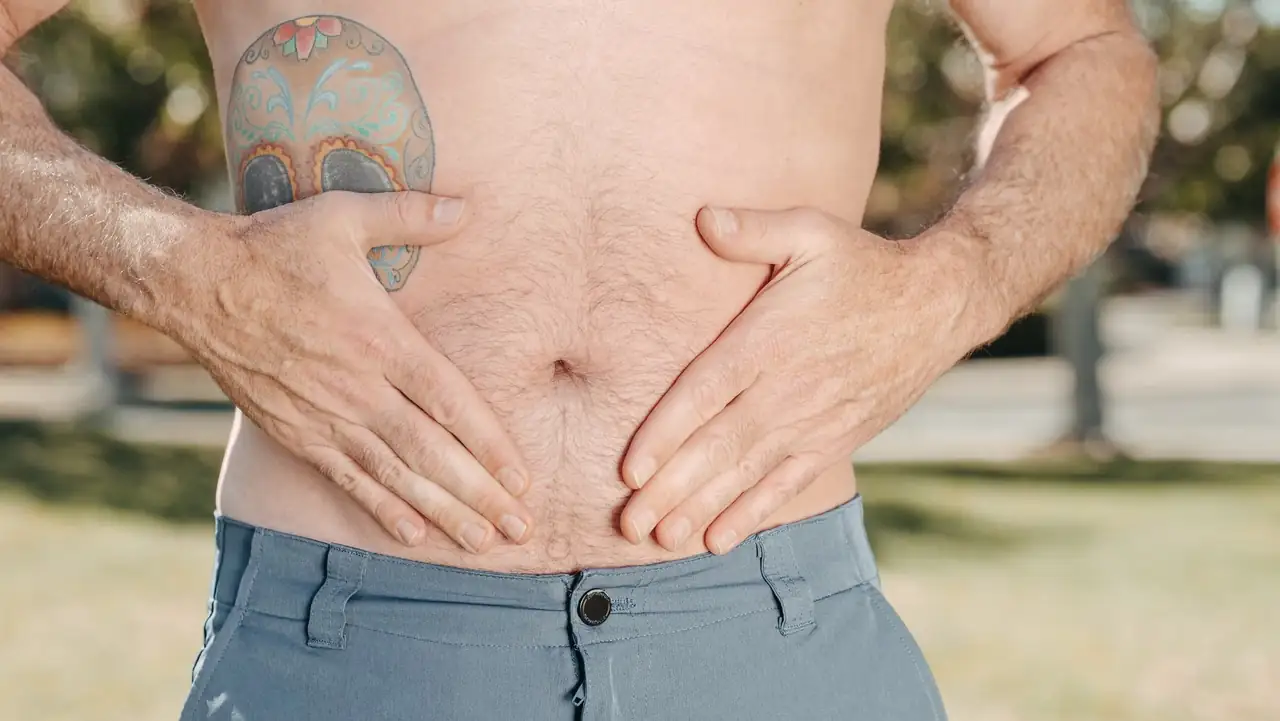
Pain in the left side of the groin is rarely explained by a single cause. That narrow, heavily used anatomical strip acts as a hinge between the abdomen, hip, thigh, and pelvis. Muscles, tendons, nerves, lymph nodes, and internal structures run through it and can cause very different kinds of discomfort, from tightness while walking to a sudden stab that forces you to stop.
The key is context: a pain that appears after running does not mean the same thing as one accompanied by fever, a lump, nausea, or difficulty urinating. Duration, the type of pain, and whether it worsens when coughing, turning the leg, climbing stairs, or sitting for long periods also provide clues. In an area shared by so many structures, the exact location matters as much as the intensity.
What a problem in that area usually hides
The source of left groin pain often follows several recurring patterns. The first and most common is muscle strain or injury, especially in the adductors, the psoas, and other pelvic stabilizers. A sudden movement, a poorly executed sprint, or a more intense-than-usual training session can leave a strain that is noticed when opening the leg, walking briskly, or changing direction.
Inguinal hernias are also common, showing up as pressure, tightness, or a bulge that increases with exertion. At the same time, the hip may be the real culprit even though the pain is felt higher up or more in front than expected. Osteoarthritis, femoroacetabular impingement, tendinopathies, and other joint disorders can project pain into the groin as if the problem were somewhere else.
There are also causes that do not originate in the musculoskeletal system. Digestive problems in the left colon, such as diverticulitis in adults, can cause pain in the lower, lateral abdomen that is confused with groin discomfort. In women, some gynecological conditions and, in men, various urological or testicular disorders can also radiate to that area. In that sense, the groin acts as a clinical crossroads.
Why a muscle injury is so common
Muscle-related discomfort is so common because that region takes part in almost every everyday movement. Running, stopping, turning, jumping, or even standing up from a chair requires coordination between the abdomen, hip, and inner thigh. When that chain fails, a sensation of pulling, burning, or stabbing appears, usually concentrated in the inner part of the groin crease and sometimes extending down toward the thigh.
In athletes, the picture usually worsens with long strides, changes of pace, or adduction movements, meaning when the leg moves toward the body’s midline. In less active people, poor posture, lifting weight, a forced movement, or a full day of household effort can also trigger it. What is deceptive is that, at first, it seems minor; later, every stair comes with a cost.
A muscle injury usually improves with relative rest, local cold application in the early stages, and a gradual return to loading when pain allows. Even so, persistent discomfort, bruising, or the inability to bear weight properly on the leg should raise suspicion of something more than simple overuse. In the groin, repeated symptoms without a clear explanation should not be normalized.
When the pain points to the hip or pubis
The hip can convincingly mimic groin pain. This happens because it shares nerve pathways with the front of the pelvis and because its movement directly affects the groin crease. A joint problem can feel like a sharp pain when getting into the car, crossing the leg, or standing up and starting to walk. Osteoarthritis is not the only possibility; labral injuries, impingement, and periarticular inflammatory conditions also exist.
The pubis, on the other hand, tends to cause more diffuse and persistent symptoms. In physically active people, repeated loading on the pubic symphysis can produce pain that shifts between the groin, the lower abdomen, and the inner thigh. It is a particularly tricky area in runners, soccer players, and those who practice sports with frequent changes of direction, where the pelvis works like a bridge under constant vibration.
When the pain worsens with coughing, laughing, or straining the abdominal muscles, suspicion of a problem in the groin wall becomes stronger. If a feeling of emptiness, unsteadiness while walking, or a visible bulge also appears, medical assessment stops being a convenient option and becomes a reasonable necessity. Not all groin pain starts in the muscle; sometimes it only imitates it.
Why left and right side pain does matter
Laterality provides guidance, although it does not diagnose by itself. Pain in the left groin may be related to structures different from those on the right side, and that helps narrow things down. In the lower left abdomen, the descending colon and, in some women, the left ovary converge. That is why discomfort in that area may come from a digestive episode, an ovarian cyst, or a musculoskeletal disorder that projects forward.
In men, left-sided pain can also be associated with epididymitis, varicocele, spermatic cord irritation, or testicular problems. When the discomfort starts in the testicle and travels to the groin, patients often describe it as a dull pressure or heaviness that is hard to pinpoint. That radiating pain can be misleading, but it should not be dismissed, especially if there is swelling, color change, or tenderness when touching the area.
On the other side, right groin pain more readily raises concern for appendicitis or other abdominal causes. By contrast, the left side more often directs attention to the colon, the abdominal wall, and some pelvic structures. The side does not tell the whole story, but it does reduce the map of possibilities, and in medicine that narrowing matters more than it may seem.
Pain in men, women, and active people
The basic anatomy is shared, but some diagnoses carry more weight depending on sex and activity level. In women, pain may be influenced by the menstrual cycle, ovarian cysts, endometriosis, or pelvic processes that are reflected in the groin. If the discomfort is related to menstruation, exertion, or sexual intercourse, the source may be lower than the initial impression suggests.
In men, by contrast, urological and testicular causes become more prominent. An infection, inflammation of the epididymis, or testicular torsion can begin as vague groin discomfort and progress quickly. When the pain is accompanied by a raised testicle, extreme sensitivity, nausea, or intense malaise, the condition requires urgent attention because of the risk of loss of blood supply.
Among athletes, the list shifts toward overuse injuries. Pubalgia, adductor discomfort, and psoas pain are names that come up repeatedly in runners, soccer players, cyclists, and sports that involve frequent changes of direction. Under millions of repetitions, the body ends up speaking the language of mechanical irritation. In those cases, the groin is the loudspeaker.
Signs that mean it is more than a simple strain
Some pains allow observation, while others demand prompt action. Fever, vomiting, rapid worsening, extreme tenderness to touch, or a hard, painful lump are findings that do not fit well with a simple muscle spasm. Also concerning are unexplained weight loss, blood in the urine or stool, or abdominal swelling that does not subside.
Difficulty walking, being unable to bear weight properly on the leg, or pain that wakes you at night and does not improve with rest warrant a broader evaluation. In clinical practice, persistence matters as much as intensity. A mild but recurring pain that lasts for days or weeks may hide a stress injury, a hernia, or a joint problem that is continuing to progress silently.
It is also wise to distrust symptoms that do not match a mechanical cause. If the pain appears without any relation to exertion, changes location, or is accompanied by burning when urinating or significant digestive discomfort, the explanation may lie outside the musculoskeletal system. The groin is not always the main stage; sometimes it is only where a neighboring organ sends its signal.
How the diagnosis is guided without guessing
Diagnosis begins with a careful medical history and a thorough physical examination. The clinician usually asks about when the pain started, its relationship to movement, coughing, exertion, sport, or urination. Then the area is palpated, hip mobility is checked, tender points are sought, and the presence of a lump, inflammation, or asymmetry is assessed. That first reading often reveals more than it seems.
Depending on what the exam suggests, additional tests may be ordered. Ultrasound helps assess hernias, soft tissues, and some muscle injuries; X-rays provide guidance about the hip and pelvis; magnetic resonance imaging is useful when a deep injury, bone stress, or complex joint disease is suspected. Blood and urine tests are used if infection, inflammation, or urinary problems are being considered.
There is no single test that works for everything. Medicine in this area works like a flashlight that opens up layers: first the skin and muscle, then the joint, then the abdomen, and if needed, the urinary or gynecological system. The combination of symptoms and examination is worth more than any shortcut, because it avoids blind treatments and late diagnoses.
What role sport plays in this type of pain
Running, soccer, and impact sports subject the groin to constant shearing and braking forces. Each stride creates a small negotiation between the hip and pubis; each weight shift adds tension to the adductors and flexors. When the load increases too quickly or technique deteriorates because of fatigue, the tissue sends a warning. First as discomfort, then as pain.
In runners, pain may appear during intervals, hill work, or long outings in which the stride lengthens more than usual. In cyclists, a sustained position and prolonged hip flexion can irritate structures in the front of the pelvis. The problem is not always training intensity, but the sum of repetitions that the body does not tolerate well. The body does not protest for no reason; it protests when the balance tips.
That is why, in sport, the exact pain location matters a lot. A sharp pain localized at the insertion of an adductor is not the same as a deep discomfort rising from the hip or descending from the abdomen. In a demanding physical setting, distinguishing between muscular, joint, or abdominal origin helps avoid hasty decisions, such as stopping completely when reducing load may have been enough, or continuing to train when a more serious injury was already present.
What treatment is used depending on the cause
The approach changes completely depending on the source. In a mild strain, treatment usually involves relative rest, activity adjustment, pain control, and a progressive recovery of range of motion. In adductor injuries or psoas overload, a structured return to strength and hip control is often useful. The most common mistake is confusing relief with recovery: just because it stops hurting for a day does not mean the tissue is ready to handle the same load as before.
When the cause is a hernia, treatment may require surgery, especially if pain persists, the bulge enlarges, or there is a risk of complications. In digestive or urinary problems, the plan depends on the specific diagnosis and may include antibiotics, hydration, monitoring, or treatment of the underlying disease. In women, some gynecological causes require specialist evaluation to decide whether follow-up is enough or whether additional treatment is needed.
Hip and pubic conditions require a more refined assessment. Sometimes they are resolved with physiotherapy and load management; other times, with deeper orthopedic evaluation. Not every groin pain needs the same prescription, and that is precisely the value of an accurate diagnosis. Treating an abdominal wall, a joint, or a digestive system as if they were the same only prolongs the problem.
What the body usually says before things get complicated
The groin rarely shouts right away. It whispers first. A slight pull when going out for a run, discomfort when climbing stairs, pain when standing up from the sofa, an odd sensation while coughing. These are small, almost everyday warnings that are often minimized because they allow you to keep going through the day. But the body does not always warn dramatically; sometimes it uses discretion so that it is heard too late.
That is the value of watching how it evolves. If the pain changes, intensifies, stops being mechanical, or is accompanied by general symptoms, the message is no longer trivial. The left groin is a crossroads, not a diagnosis. It can point to muscle, yes, but also to the hip, colon, urinary tract, genitals, or abdominal wall. Good medicine begins right there: in not assuming what has not yet been proven.
So when pain persists or returns, caution is not alarmism. It is method. And in anatomy as shared as the groin’s, method saves mistakes, useless treatments, and weeks of uncertainty. The symptom may be small; the map it opens is not.
A discomfort that deserves clinical assessment, not shortcuts
Pain in the left side of the groin may originate from an overloaded adductor, an irritated hip, a hernia, an intestinal problem, or a urological or gynecological disorder. That variety explains why it should not be reduced to a quick label. In that corner of the body, organs and tissues overlap and behave in similar ways when something goes wrong.
Urgency depends not only on how much it hurts, but on how it behaves: whether it appears suddenly, worsens over the hours, is accompanied by fever, a lump, vomiting, bleeding, or difficulty walking. The left-sided location provides guidance, but the full history is what matters. That combination of signs is what separates a common overload from a problem that needs immediate attention.
Looking at pain from that perspective, without downplaying it but without dramatizing it at the outset, is the most sensible way to read an area that functions as a boundary. The left groin, in the end, does not speak on its own: it translates what is happening around it. And listening to it in time makes all the difference.
Medical reference: Hip injuries and disorders, MedlinePlus (U.S. National Library of Medicine).



How to prevent thigh chafing: causes and real solutions

Women’s running windbreakers: seven jackets and how to choose

Do more workouts get rid of soreness? A guide for runners

Jaén Half Marathon 2026: Record 3,800 Runners Registered

Men’s short running tights: how to choose the right pair

World Triathlon confirms data breach involving medical data

Izan Edo targets podium at Miyazaki World Cup

María Pérez ranks ninth in World Athletics’ 2026 top ten

Dos Santos, Duplantis and Sawe: World Athlete of the Year finalists

San Silvestre Vallecana 2026: 42,000 places, prices and start times

 Races3 months ago
Valencia Half Marathon 2027: date and registration

 Races3 months ago
Valencia Marathon 2026: entry, ballot and course

 Reviews and Comparisons4 months ago
Asics Gel-Roadmiles 3 for men: review and current price

 Reviews and Comparisons4 months ago
Asics Gel Sonoma 8 Gore-Tex: complete analysis for trail and rain

 Sneakers3 months ago
Saucony Endorphin Pro 4: full review and verdict

 News5 months ago
Strava API 2026: what changes for clubs, challenges and runner apps?

 Reviews and Comparisons5 months ago
Nike Alphafly 3: opinions, sensations, and real key points

 Reviews and Comparisons4 months ago
Under Armour running shoes review 2025-2026: models and key features

 Sports Equipment4 months ago
Shoe sizes in cm: a clear guide to getting the right fit for your footwear

 Sneakers3 months ago
Skechers GO RUN Consistent 2.0 analysis: comfort and limits

 News5 months ago
Valencia Marathon 2026 route: key tips to train and run better

 Sneakers4 months ago
Adidas Adizero Boston 13 for men: review and verdict