Health and Nutrition
Pain in the back of the knee when bending it: key causes
From overuse to Baker’s cyst: warning signs, common causes, and when the pain warrants medical evaluation.

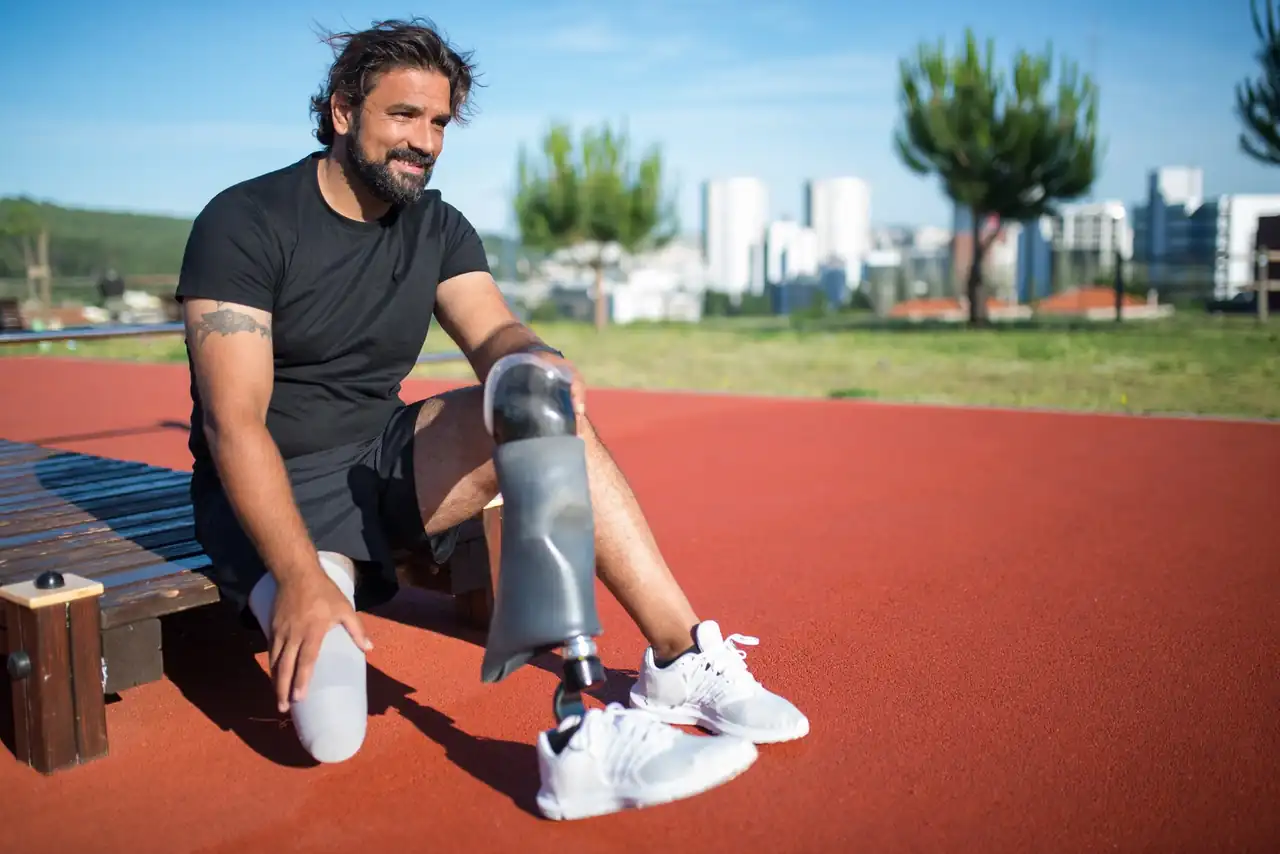
Pain in the back of the knee when bending it usually arises from an uncomfortable mix of overuse, inflammation, and small injuries that everyday walking gradually amplifies. In runners, cyclists, and people who spend many hours standing, that discomfort often appears as a sharp pain when flexing, tightness when going downstairs, or a soft blocking sensation that makes it hard to fully trust the leg.
Location matters, because the popliteal area is no ordinary corner: tendons, ligaments, menisci, blood vessels, and synovial bursae all converge there. When something goes wrong, the pain may be felt in the back, but its source may be in the front, the side, or even the hip. That is why it is best to read this symptom as a clue, not as a definitive diagnosis.
A heavily stressed joint, especially in those who run
The knee bears high forces with every stride, and those loads soar with pace changes, downhill running, sharp turns, and accumulated training without enough recovery. In running, the back of the joint often complains when the flexion movement is repeated again and again, as if a hinge were starting to squeak from overuse.
That pain is not always related to a major injury. Sometimes it is a warning sign of hamstring tendinitis, soft tissue irritation, or biomechanics that are asking for a break. Other times, however, it points to a more defined injury, such as a Baker’s cyst, a meniscal tear, or a ligament problem that requires a more careful medical assessment.
Intensity does not tell the whole story either. There are mild discomforts that reveal a significant injury and very noticeable pains that are due to temporary inflammation. What truly guides the diagnosis is the whole picture: when it appears, what movements trigger it, whether there is swelling, whether the knee locks, whether it creaks, or whether the person feels instability when bearing weight.
The most common causes behind the knee
The most common explanation is overuse of the posterior tendons, especially the hamstrings. In runners, soccer players, and cyclists, these tendons work like taut cables to brake and stabilize the leg. When they become irritated, the pain appears when bending the knee, accelerating, or going uphill, and it often improves somewhat with rest, although it returns as soon as the strain comes back.
Another very common cause is bursitis, an inflammation of the small sacs that reduce friction between structures. In this area, inflammation can create a feeling of pressure behind the knee and tenderness when touching or bending the leg. The condition usually worsens after repetitive activities, prolonged kneeling, or lifting weight with poor mechanics.
Ligament injuries also come into play, especially after a violent twist, a blow, or a fall. In those cases, pain rarely comes alone: it is usually accompanied by swelling, limited ability to bend or straighten, and a feeling that the joint does not respond firmly. In sport, that detail changes the map of the problem considerably, because the knee stops being reliable just when it is needed most.
Baker’s cyst: the swelling that fools you
Baker’s cyst is one of the best-known causes of pain in the back of the knee. It forms when synovial fluid accumulates in the popliteal area and creates a bulge that may be felt as a tense lump, sometimes more visible when the knee is extended or after physical activity. It does not always hurt, but when it does, bending can become uncomfortable and stiff.
The important thing is that it rarely appears on its own. It is often the result of another injury or an underlying inflammatory process, such as osteoarthritis, rheumatoid arthritis, or a meniscal injury. In other words, the cyst is not always the main problem; sometimes it is only the visible foam of an inflammation coming from higher up in the system.
In active people, this finding deserves attention because it can limit stride length and alter gait. If the knee does not bend properly, the body compensates with the hip, ankle, and back. And that is where a chain of small adaptations begins that, like a row of dominoes, ends up loading other areas that were not meant to bear that extra work.
Meniscus, osteoarthritis, and other internal injuries
Meniscal injuries usually cause a deeper pain, sometimes on the inner or outer side of the knee, although it can also be felt in the back when flexion compresses the joint. The classic clue is worsening with squats, twists, stairs, or torsional movements. If locking, clicking, or a catching sensation also appears, the meniscus becomes a stronger suspect.
Knee osteoarthritis can also cause discomfort in the back, especially when wear affects the more posterior part of the joint. Its pattern is more diffuse: mechanical pain, stiffness when getting up, worsening with loading, and relative relief after moving around for a while. In people over 50, or in those who have accumulated years of impact, that possibility quickly enters the clinical discussion.
Rheumatoid arthritis, less common than osteoarthritis, can inflame the knee and make it stiff on waking. In that case, pain usually goes hand in hand with morning stiffness and a feeling of local warmth. The difference may seem subtle, but it changes the approach: not all pain in the back of the knee comes from exertion; sometimes it comes from an inflammatory disease that goes beyond the joint itself.
When the symptom comes from running: technique, load, and fatigue
In running, back-of-knee pain when bending it is often related to excess load and insufficient recovery. A sudden increase in mileage, long hills, track intervals, or changes in terrain can overload the hamstrings and the posterior chain. The discomfort does not always appear during the workout; sometimes it shows up afterward, when the area is already inflamed and the body has cooled down.
Technique matters too. A very long stride, low cadence, or a rigid landing can increase the workload on the posterior tendons. You do not need obviously bad form to irritate the knee: a small, repeated accumulation of details is enough, like a constant drip that eventually fills a bucket without anyone noticing.
Footwear, although it does not explain everything, can play a role. A worn-out shoe, with little cushioning or inappropriate for the type of foot strike, does not create the problem on its own, but it can add stress to an already sensitive knee. In runners, prevention depends as much on strength as on load management, two pieces that usually go together and are rarely assessed with the same attention.
Warning signs that should not be downplayed
There are situations in which the pain stops looking like simple overuse. If the knee swells significantly, cannot bear weight, locks, or if deformity appears, the likelihood of a structural injury rises quite a bit. The same applies when the discomfort is accompanied by heat, redness, fever, or an unusual sensation in the calf.
Progression is also important. If the pain lasts for several days, worsens with normal activities, or returns every time running is resumed, the problem is asking for an evaluation. In practice, a knee that does not tolerate stairs, turns, or full flexion usually will not improve with patience alone if a meniscal, ligament, or highly active cyst is behind it.
The sensation of instability also deserves attention. When the knee gives way going down a curb, turning suddenly, or moving from standing still to walking, the message is usually more serious. The joint, which normally acts as a system of hinges and tensioners, begins to behave like a door with a misaligned lock.
What the medical examination usually indicates
Clinical assessment is not limited to looking at the painful knee. A professional will usually also examine the hip, ankle, posterior thigh muscles, and gait, because the source of the symptom may be higher up or lower down than it seems. In many injuries, the pain history already provides a lot of guidance before tests are ordered.
When more precision is needed, the most useful tools are X-rays to assess bone and osteoarthritis, and MRI when menisci, ligaments, or soft tissues are suspected. Ultrasound can be useful for cysts, bursae, or fluid collections, especially if there is a localized, mobile swelling in the popliteal area.
The goal is not to assign a name just for the sake of it, but to distinguish between an inflammatory, mechanical, and vascular or neurological problem. That difference completely changes treatment. A knee that hurts because of a tendon is not managed the same way as a knee that hurts because of the meniscus, and both require different decisions if the patient wants to move normally again.
What really helps in mild cases
In mild overuse discomfort, the sensible first move is to reduce the demand. Cutting back on running, avoiding hills, and not forcing deep flexion usually breaks part of the irritation cycle. Ice can help during the first few days, especially if there is inflammation or a feeling of heat, always with short applications and a cloth in between.
Gentle compression and elevation help when there is some swelling. It is also worth reviewing sports technique and weekly load, because many knees do not fail after one single session, but rather from the accumulation of several weeks of too much volume or too much impact. Real improvement in these cases usually does not come from a miracle fix, but from modest and consistent adjustments.
Anti-inflammatory drugs can relieve symptoms, but they do not correct the cause. That is why their role is limited and should be used cautiously, especially if the pain keeps coming back. If the discomfort comes from a Baker’s cyst or a meniscal injury, masking the symptom without understanding the mechanism can delay diagnosis and prolong recovery.
Why posterior pain can also come from circulation
The area behind the knee contains important blood vessels, and not all pain in that region is muscular or joint-related. Varicose veins and other circulatory problems can cause heaviness, pressure, and discomfort that worsens at the end of the day or after standing for a long time. They do not always show up as large bulging veins; sometimes the symptom begins as a subtle, persistent discomfort.
In runners or very active people, venous overload is not usually the first explanation, but it is part of the differential diagnosis when the sensation is more of tightness than stabbing pain. If the pain is accompanied by calf swelling, color change, or unusual tenderness, greater caution is needed. Not everything in that area is muscle, and forgetting that can be costly.
The key is not to lump all discomfort together. An irritated tendon, an inflamed vein, and a synovial cyst speak different languages. The clinical challenge is to listen to which one is speaking in each case, without assuming that all painful knees behave the same way.
The knee as a boundary between load and rest
The back of the knee works like a kind of silent hinge: it functions, yields, stabilizes, and barely gets noticed when everything is going well. Only when something irritates it does it begin to demand attention with every flexion, every stride, or every change of position. That is the value of the symptom: it warns that the mechanics have become unbalanced.
In sport, the most useful interpretation is not just what hurts, but when it hurts and what makes it worse. That pattern helps distinguish a temporary overload from an injury that needs investigation. It also prevents common mistakes, such as continuing with intervals, stairs, or hills when the knee has already begun to take its toll.
Recovery, when it comes, usually asks for something less heroic than a race against pain: relative rest, cleaner technique, well-distributed strength, and time. The posterior knee usually does not solve its problems by making a fuss, but by reducing the noise around it. And in that calm, the mobility that had been lost often begins to return.
When discomfort stops being a detail and becomes a signal
If the pain appears only with one specific movement and fades quickly, the case may be mild. But if it repeats, limits normal activities, or comes with swelling, stiffness, or locking, the situation changes category. The body usually does not insist on the same area by chance for very long.
In the knee, behind every flexion there is a sum of small loads. When a structure becomes inflamed, tears, or fills with fluid, the joint responds with a pain that has its own logic. Understanding that logic avoids blind treatment and helps distinguish a simple sports ache from an injury that deserves more attention.
Pain in the back of the knee when bending it can have multiple causes, but there is almost always a common thread: overuse, inflammation, or internal damage. Reading that thread in time makes the difference between a passing episode and a discomfort that becomes chronic because it was not addressed when it should have been.
Medical reference: Pain behind the knee, Cleveland Clinic.



How to prevent thigh chafing: causes and real solutions

Women’s running windbreakers: seven jackets and how to choose

Do more workouts get rid of soreness? A guide for runners

Jaén Half Marathon 2026: Record 3,800 Runners Registered

Men’s short running tights: how to choose the right pair

World Triathlon confirms data breach involving medical data

Izan Edo targets podium at Miyazaki World Cup

María Pérez ranks ninth in World Athletics’ 2026 top ten

Dos Santos, Duplantis and Sawe: World Athlete of the Year finalists

San Silvestre Vallecana 2026: 42,000 places, prices and start times

 Races4 months ago
Valencia Half Marathon 2027: date and registration

 Reviews and Comparisons4 months ago
Asics Gel-Roadmiles 3 for men: review and current price

 Races4 months ago
Valencia Marathon 2026: entry, ballot and course

 Reviews and Comparisons4 months ago
Asics Gel Sonoma 8 Gore-Tex: complete analysis for trail and rain

 Sneakers3 months ago
Saucony Endorphin Pro 4: full review and verdict

 News5 months ago
Strava API 2026: what changes for clubs, challenges and runner apps?

 Reviews and Comparisons5 months ago
Nike Alphafly 3: opinions, sensations, and real key points

 Reviews and Comparisons4 months ago
Under Armour running shoes review 2025-2026: models and key features

 Sports Equipment4 months ago
Shoe sizes in cm: a clear guide to getting the right fit for your footwear

 Sneakers3 months ago
Skechers GO RUN Consistent 2.0 analysis: comfort and limits

 News5 months ago
Valencia Marathon 2026 route: key tips to train and run better

 Sneakers4 months ago
Adidas Adizero Boston 13 for men: review and verdict