Health and Nutrition
Platelet-rich plasma in the knee: what runners should know
What does this biological treatment contribute, in what cases is it used, and what nuances does the scientific evidence provide?

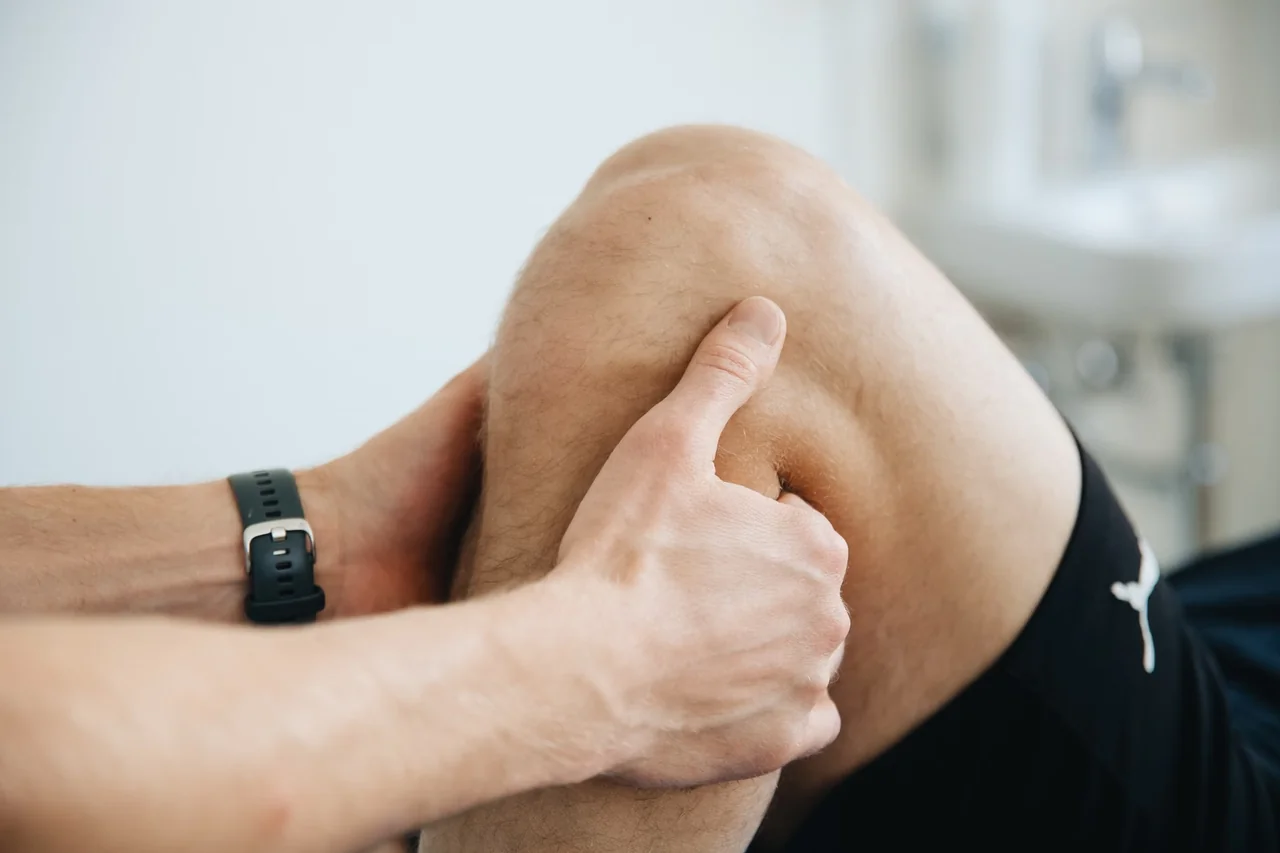
Injecting concentrated autologous plasma into the knee is one of the most talked-about biological options for joint pain and some cartilage, meniscus, or patellar tendon injuries—problems that can disrupt training and racing. The plasma comes from the patient’s own blood, is administered as an outpatient procedure, and aims to stimulate the body’s natural repair mechanisms without introducing foreign material.
Its best setting is mild or moderate osteoarthritis and certain recent degenerative injuries, where studies describe improvements in pain, function, and quality of life, although there is no identical response for all patients nor a universally superior formulation. The available evidence points to real benefits in specific profiles, but it also makes clear that it does not, on its own, regenerate highly destroyed cartilage or replace surgery when structural damage is advanced.
What is inside a knee that is starting to fail
The knee works like a hinge bearing the body’s weight, but also like a precision mechanism. Each step distributes forces across cartilage, menisci, ligaments, and tendons, and when one of those elements deteriorates, the rest begins to compensate. Articular cartilage has a very limited capacity for repair, because it lacks blood vessels and a strong biological response to wear and tear. That is why, when it is damaged, pain can become persistent and inflammation an unwelcome companion.
This fragility explains why knee osteoarthritis is so common as the years go by, but also why it appears earlier in physically demanding people. Runners, soccer players, cyclists, workers who spend many hours standing, or patients with prior injuries do not experience wear and tear in the same way. The knee usually does not fail all at once; more often it does so through a combination of micro-injuries, low-grade inflammation, and progressive loss of tolerance to effort.
In this context, biological therapies have gained ground because they do not aim only to shut down pain, but to modulate the environment of the injured tissue. Platelet-rich plasma fits here as a tool designed to activate repair signals, reduce local inflammation, and promote a more orderly functional recovery. That is the promise. The reality, as in medicine, depends greatly on the type of injury, the degree of wear, and the timing of the indication.
How platelet-rich plasma works
The idea is simple, although the technique has nuances. Blood is drawn from the patient, it is centrifuged to concentrate the platelets, and a fraction with more platelets than normal blood is obtained. Platelets release growth factors and other molecules involved in tissue repair, cell signaling, and inflammation control. They are not a magic button; they are more like a biological spark in an inflamed or degenerative environment.
The scientific literature describes platelet concentrations several times higher than baseline levels, although the exact figure changes depending on the preparation technique, the system used, and the center’s protocol. That detail matters a great deal. Not all plasmas are the same, not all have the same amount of leukocytes, nor the same platelet density, nor the same ability to activate healing processes. The final composition conditions part of the clinical outcome, and that heterogeneity remains one of the major problems when comparing studies.
In the knee, application is usually done by intra-articular injection and, in some cases, with ultrasound guidance or with more specific techniques when dealing with meniscal or tendon injuries. The session is usually brief and outpatient. In the practice reported by different groups, the procedure may last around 20 minutes between blood draw, preparation, and application, a short time that contrasts with the biological complexity it tries to trigger.
What the evidence says about knee osteoarthritis
The largest body of studies focuses on osteoarthritis. That is where platelet-rich plasma has found its strongest, though still imperfect, setting. Reviews and comparative trials have generally observed improvement in pain and joint function, especially compared with some alternatives such as hyaluronic acid, although not all studies find clear differences and methodological quality varies considerably.
The most cited studies usually show a similar pattern: in patients with mild or moderate osteoarthritis, relief may be felt in the first few weeks and persist for months, with a gradual decline if follow-up is long. There are series and trials in which the best response appears in younger people, with a lower degree of wear and less advanced symptoms. That finding is repeated so often that it has become part of the clinical reading of the treatment. The less damaged the terrain is, the more room biology has to respond.
Comparison with hyaluronic acid has been a recurring theme. In several trials, concentrated autologous plasma has shown a greater response in pain, function, and quality of life, although not always decisively and not always with a statistical advantage in all parameters. There are also studies in which both groups improve, but the difference between them narrows. That does not invalidate the treatment; rather, it reminds us that osteoarthritis is a heterogeneous process and that no injection solves every case equally.
Duration of effect is another important point. Studies with longer follow-up show that the initial improvement may be lost over time. That does not mean the treatment does not work, but that its benefit may be temporary and depend on the biological state of the knee. In degenerative injuries, time also erodes the response, just as it does cartilage.
Which knee injuries it fits best
Beyond osteoarthritis, platelet-rich plasma has been used for cartilage injuries, meniscal tears, ligament injuries, patellar tendinopathy, and some slowly evolving bone conditions. Not all of those indications have the same support or the same level of evidence. The real usefulness depends on whether the lesion has healing capacity, whether there is sufficient stability, and whether the tissue still preserves a reasonably usable structure.
In cartilage injuries it is used with the intention of slowing degeneration and modulating inflammation, especially when wear has not yet reached a terminal stage. In meniscal injuries, some teams apply it under ultrasound guidance at the tear site to stimulate more orderly healing. It is an approach of particular interest in athletes, where an injured meniscus can become a chain of problems if the knee continues to absorb impacts and twists.
In the case of the anterior cruciate ligament, plasma usually appears as support, not as a substitute. It can accompany surgical repair to improve graft integration and reduce postoperative pain and inflammation. Something similar happens with the medial collateral ligament in partial tears or strains: infiltration seeks to favor healing and provide biological support to injured tissue, but it does not replace the lost mechanical function when the damage is severe.
Patellar tendinopathy deserves its own section. It is one of the most frequent knee injuries in jumping and running sports. When the tendon undergoes inflammation or fiber degeneration, plasma can be injected directly into the tendon in an attempt to improve pain and the repair process. It is not an immediate or uniform solution, but it is one of the most reasoned biological applications in knee pathology.
What can be expected and what cannot
The most useful answer is also the most sober: platelet-rich plasma can relieve, modulate, and accelerate certain repair processes, but it does not make a badly worn knee disappear nor reconstruct a lost cartilage by sleight of hand. Its role is more convincing in early or intermediate stages, when there is still tissue capable of responding. At the opposite end, when bone is already rubbing against bone and the joint is severely damaged, the biological promise narrows.
Another important issue is the time frame of expectations. In several studies, improvement comes after the first applications and may last for months, but not always indefinitely. Some patients experience a gradual drop in benefit and require clinical reassessment. That does not make the treatment a failure; it simply places it within the logic of symptomatic and modulatory therapies, not definitive solutions.
It is also worth separating pain from structure. A patient feeling less pain does not necessarily mean the cartilage has completely regenerated. Sometimes the improvement comes from inflammatory modulation, better tissue tolerance, or reduced local irritation. Clinical symptoms can improve before imaging does, and in the knee that is common. MRI and X-rays do not always move at the same pace as the patient’s sensations.
Safety, discomfort, and adverse effects
One of the reasons for its spread is its safety profile. Because it is an autologous product, the risk of rejection is practically nonexistent and the chance of disease transmission is very low. Reviewed studies usually describe a well-tolerated procedure, with temporary local pain as the most common discomfort. In general, serious complications do not repeatedly appear in the available literature.
That does not mean it is harmless in absolute terms. Any injection can cause post-procedure pain, local inflammation, or, in exceptional cases, infection or tissue irritation. The difference compared with other injectable treatments is that the adverse event profile is usually limited and comparable to that of other joint injections. Even so, long-term safety is still being studied, especially when applications are repeated or preparations with different compositions are used.
There is also a technical debate that should not be ignored: not all preparations have the same leukocyte load or the same biological behavior. The biology of plasma can change depending on the collection system, and that influences the inflammatory response, regenerative potential, and possibly patient tolerance. That is why the results of one study cannot always be transferred directly to a different protocol.
Why not all patients respond the same
Age and degree of degeneration are two variables that carry a lot of weight. Younger patients, with less advanced injuries and more recent symptoms, tend to achieve better results. By contrast, when the degenerative process has been evolving for years, when there is mechanical deformity, or when the knee has lost a great deal of usable surface, the response is usually poorer. The treatment does not correct a fundamentally bad mechanics, and that is an important clinical boundary.
The type of physical activity also matters. A knee punished by repeated impacts does not behave the same as a joint affected by a purely degenerative process. In runners, for example, excessive load, technique, injury history, and the condition of the muscles around the joint can make a difference. Plasma may help calm the fire, but it does not change the architecture of the building on its own.
In comparative trials, age often appears as a factor associated with better response, along with a lower degree of wear. That does not mean older patients cannot benefit, only that the odds decrease. Regenerative medicine in the knee still obeys a simple and harsh law: the earlier the intervention, the greater the chance of influencing the course of damage.
Real evidence versus commercial enthusiasm
Platelet-rich plasma has been presented for years with an aura of modernity that, at times, has run ahead of science. Media attention, especially in elite sports, made it a familiar term to the general public. However, the more rigorous literature maintains a much more cautious tone. There are benefits, yes, but there is also uncertainty about the best formulation, the optimal dose, the ideal number of injections, and the real duration of the effect.
Trials and reviews agree on one essential point: the evidence is more favorable for mild or moderate osteoarthritis than for advanced osteoarthritis. It also suggests usefulness in certain tendinopathies and some meniscal or condylar injuries, but methodological heterogeneity remains a major obstacle. There are small studies, different populations, different response criteria, and protocols that are not always comparable. In clinical research, that carries a lot of weight.
The positive side is that knowledge has gradually become more refined. There are increasingly more data on which patients benefit most, what injection intervals seem reasonable, and in which situations plasma can be a useful support within a broader plan. The less comfortable part is that long, homogeneous studies with well-standardized preparations are still lacking. Biology promises more than evidence can universally certify, and that gap is precisely where this treatment lives.
Platelet-rich plasma in the knee: what it means for runners
For runners, knee pain can affect everything from easy runs to hill sessions, intervals, and long runs. Platelet-rich plasma is used for some joint problems and injuries, but the response depends on the type and extent of the damage. It cannot guarantee a pain-free return to running or, by itself, restore severely damaged cartilage. Before considering an injection, get a clinical assessment that identifies the problem and takes your training history and previous injuries into account.
If a clinician has recommended the procedure, ask how to manage activity afterwards and which signs should guide your return to running. There is no one-size-fits-all timeline. Continuing to run through pain, increasing your workload too soon, or entering a race just to “test it” can make symptoms harder to monitor. As you resume training, you may need to temporarily adjust distance, pace, hills, or harder sessions. Progress should reflect how your knee responds and the advice you have been given, rather than a fixed date or pressure to get back to your plan.
Keep an eye on worsening pain, swelling, changes in your running stride, or difficulty with everyday activities. Make a note of when symptoms occur—for example, during a run or the following day—and discuss them at follow-up. A temporary improvement alone does not mean you are ready to race. Treatment also does not replace any rehabilitation or training-load changes recommended by your healthcare team. If symptoms persist, get worse, or prevent you from running normally, consult a healthcare professional before returning to training or competition.
What a knee treated in time reveals
In clinical practice, platelet-rich plasma is best understood as a transitional tool rather than a final solution. It can help buy time, reduce inflammation, improve function, and delay more aggressive decisions in selected cases. In a knee with early wear, that margin can be valuable. In a knee that has already collapsed, the margin is much smaller and expectations must be adjusted honestly.
Its current place lies between biology and prudence. The evidence supports its safety and shows repeated signs of efficacy in specific profiles, but it does not allow identical or permanent results to be promised. The knee responds better when there is still tissue left to listen. And that, in the end, is the key message: the sooner the real scope of the treatment is understood, the more useful it can be. Not as a miracle, but as a biological intervention with purpose, limits, and an increasingly well-defined role.



How to prevent thigh chafing: causes and real solutions

Women’s running windbreakers: seven jackets and how to choose

Do more workouts get rid of soreness? A guide for runners

Jaén Half Marathon 2026: Record 3,800 Runners Registered

Men’s short running tights: how to choose the right pair

World Triathlon confirms data breach involving medical data

Izan Edo targets podium at Miyazaki World Cup

María Pérez ranks ninth in World Athletics’ 2026 top ten

Dos Santos, Duplantis and Sawe: World Athlete of the Year finalists

San Silvestre Vallecana 2026: 42,000 places, prices and start times

 Races4 months ago
Valencia Half Marathon 2027: date and registration

 Races4 months ago
Valencia Marathon 2026: entry, ballot and course

 Reviews and Comparisons4 months ago
Asics Gel-Roadmiles 3 for men: review and current price

 Reviews and Comparisons4 months ago
Asics Gel Sonoma 8 Gore-Tex: complete analysis for trail and rain

 Sneakers4 months ago
Saucony Endorphin Pro 4: full review and verdict

 News5 months ago
Strava API 2026: what changes for clubs, challenges and runner apps?

 Reviews and Comparisons5 months ago
Nike Alphafly 3: opinions, sensations, and real key points

 Reviews and Comparisons4 months ago
Under Armour running shoes review 2025-2026: models and key features

 Sports Equipment4 months ago
Shoe sizes in cm: a clear guide to getting the right fit for your footwear

 Sneakers3 months ago
Skechers GO RUN Consistent 2.0 analysis: comfort and limits

 News5 months ago
Valencia Marathon 2026 route: key tips to train and run better

 Sneakers4 months ago
Adidas Adizero Boston 13 for men: review and verdict