Health and Nutrition
Footwear for posterior tibial tendinitis: keys to getting it right
Arch support, stiffness, and heel fit are decisive when the posterior tibial tendon becomes irritated.

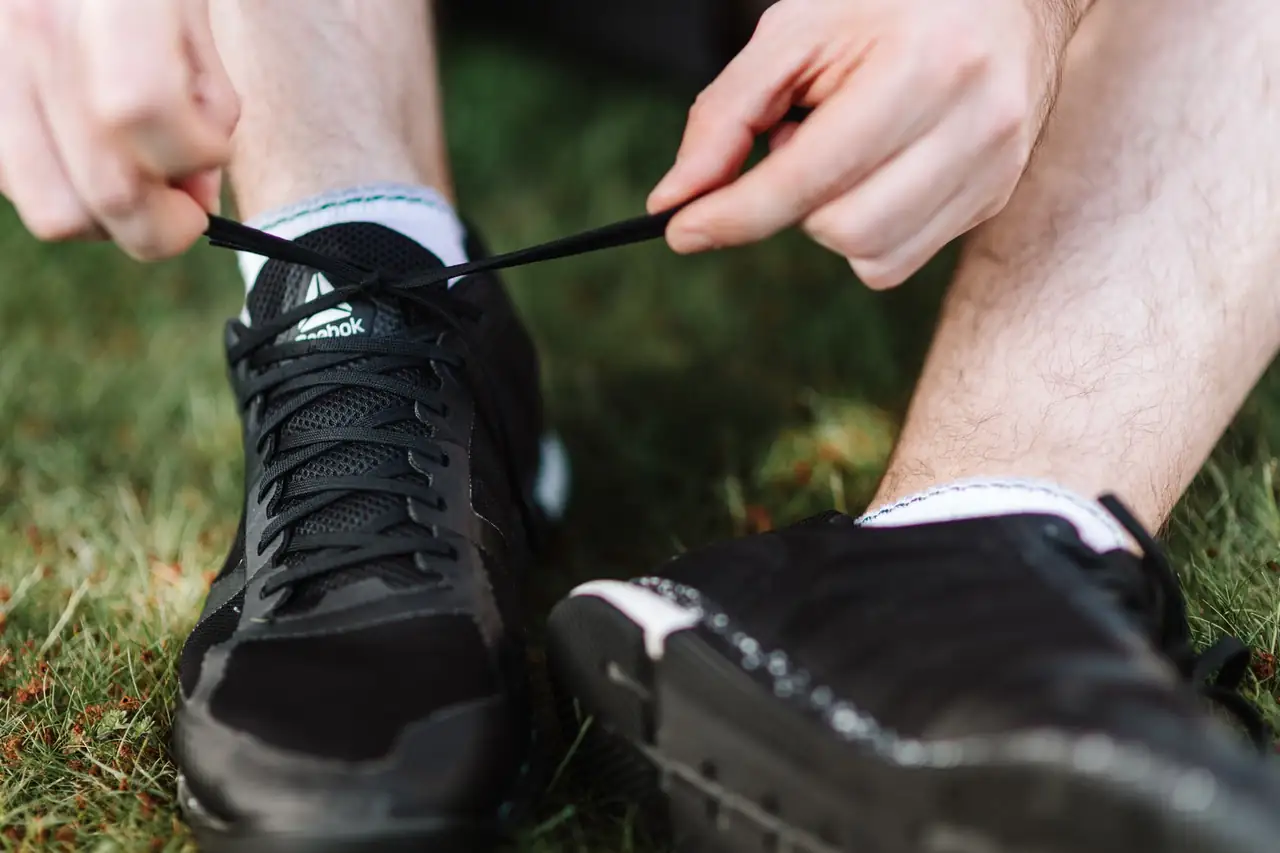
The choice of footwear for posterior tibial tendinitis is no minor detail: it can reduce the load on a tendon that supports the inner arch of the foot or, on the contrary, turn each step into a small lever against inflammation. In runners and people who spend many hours on their feet, the difference is usually noticeable on the inner side of the ankle, where the tendon works like a tension cable that prevents the plantar arch from collapsing.
When that structure is overloaded, the foot tends to pronate more than it should and the arch loses firmness. That is why the shoe matters as much as relative rest or orthotics when they are indicated. A model with good midfoot support, a stable heel counter, and a not-too-flexible outsole helps reduce the effort that tendon must make with every landing, especially while running and during prolonged walking.
Why a shoe can worsen or ease the pain
The posterior tibial muscle does not work in isolation. It participates in foot inversion, plantar flexion, and, above all, supporting the inner longitudinal arch. If the footwear allows the heel to shift, the midfoot to sink, or the sole to bend too easily at the wrong point, the tendon compensates as best it can. It is a silent gesture, repeated hundreds of times per kilometer, that eventually ends up paying the price in pain and inflammation.
In runners, this problem becomes more visible with fatigue. Technique falls apart, pronation increases, and the foot looks for stability where it cannot find it. A shoe that is too soft or unstable may feel comfortable at first, but it often places more load on the inner part of the foot as the effort continues. The goal is not to immobilize the foot, but to give it a firmer base so the tendon does not have to do everything on its own.
The type of use also matters. A shoe for walking around the city is not the same as a running shoe for intervals, nor is a neutral trainer the same as an option with pronation control. The right choice depends on the stage of the injury, the shape of the foot, and whether or not there is arch collapse. In injuries with a fallen arch or marked pronation, stability becomes more important than pure lightness.
What the right footwear should have
The first quality is inner arch support. It does not have to be aggressive or rigid like a board, but it should help prevent the midfoot from sinking. A well-guided arch distributes load better and reduces stress on the tendon, especially during prolonged weight-bearing and repeated turns.
The second key is sole stiffness. A model that twists too easily encourages the foot to work harder than necessary. In this context, a midsole that is too forgiving may feel pleasant at rest, but it is poor when the goal is to control excess pronation. A somewhat more stable base usually performs better than an extremely soft foam.
The heel counter also matters. If the back of the shoe holds the heel bone well, the foot moves less inside the shoe and the whole setup becomes more predictable. That fit should not cause rubbing or a feeling of compression, but it should provide clear anchoring. At the same time, it is advisable to have a last that leaves enough room in the forefoot to prevent the toes from being squeezed and altering mechanics.
Cushioning is still important, but not as a synonym for softness without control. The goal is to absorb impact without letting the foot sink like in wet sand. In posterior tibial problems, balanced cushioning works better than an overly plush feel, because it keeps the platform more stable and reduces internal ankle sway.
How to tell if a model suits you
There is a very common scene in the store: the shoe feels good when you put it on, but after walking a few meters, an arch drop or heel twist appears, revealing a lack of support. That little collapse can be enough to irritate an already sensitive area. By contrast, when the shoe works with the foot instead of letting it spill inward, the stride feels cleaner and more orderly.
The right fit is noticeable in three points: secured heel, contained midfoot, and free forefoot. If the foot moves inside the shoe, the inner muscles have to work overtime to stabilize the whole system. If it is too tight, pressure creates compensations and the runner ends up altering their gait. The balance between support and room is an essential part of the issue.
It is also worth thinking about the usual terrain. Asphalt, treadmill, compact dirt, or standing for hours at work do not require exactly the same thing. A running shoe for easy paces and a shoe for everyday use may share support criteria, but not necessarily the same feel underfoot. The upper, midsole height, and forefoot flexibility all change the experience and can tip the scale toward one option or another.
Running shoes, everyday use, and work: the same rules do not apply
In running, the most common mistake is being drawn to very light and soft models because they seem more dynamic. For a tendon that is already suffering, that can be a false shortcut. The priority should be a stable base, with a reasonable transition and a platform that does not allow the ankle to roll inward with every landing. Runners with marked pronation usually appreciate a shoe with more control, even if the feel is less cushioned.
In everyday life, the criterion changes slightly. If the discomfort appears while walking around or standing for many hours, a comfortable shoe is useful, but with good internal structure. Extremely flat or overly flexible soles often worsen the problem in people with fallen arches, because they leave without support an area that is already worn down by the end of the day.
In work environments with many hours of standing, arch support and heel stability are even more valuable. The foot does not only run; it also تحملs load. In those contexts, accumulated fatigue can be as important as athletic impact. Inappropriate footwear acts like a wobbly chair: for a while it goes unnoticed, but after hours the body complains with increasingly clear discomfort.
Orthotics, fallen arch, and the role of customized support
The right footwear is not always enough on its own. When there is excessive pronation, an acquired flat foot, or a more advanced posterior tibial dysfunction, custom orthotics or plantar orthoses may be a central part of conservative treatment. Their role is to support the foot structure and distribute load better, not replace it completely.
In practice, a well-designed orthotic is combined with a shoe that has enough room and a stable base. If the model is too narrow or too flexible, the orthotic loses effectiveness. If, on the other hand, the shoe has a firm platform and reasonable internal volume, the whole setup works more coherently. It is a kind of mechanical alliance between the shoe and the support, not a sum of isolated parts.
It is worth remembering that customized support is not a decorative extra. In cases with a very dropped arch or persistent pain on the inner side of the ankle, it may be the piece that marks the shift from lingering discomfort to cleaner functional recovery. Even so, its use should fit the clinical assessment and the tendon’s real progress.
Common mistakes when buying footwear if the inner ankle hurts
One of the most repeated mistakes is choosing a shoe based only on a soft feel. Thick foam gives a pleasant first impression, but if it does not offer lateral control or midfoot support, the foot sinks and the tendon is forced to stabilize every step. Another common mistake is buying the wrong size, with the foot cramped in the toe box or floating too much around the heel.
It is also wise to be skeptical of models that promise a natural feel but lack structure. In runners with a sensitive posterior tibial tendon, natural should not be confused with unstable. A foot that needs containment gains nothing from a wavering platform. Biomechanics benefits from less spectacle and more coherence.
Another common misstep is changing footwear during an acute painful phase without allowing time for adaptation. Even a good shoe can cause discomfort if the jump from the previous model is huge. When the tendon is irritated, sudden changes come at a cost. It is better to introduce them gradually, observe the response, and avoid intervals or long runs until it is clear that the whole setup truly works.
Signs that the problem is no longer just about footwear
If pain appears even at rest, if the inner ankle area swells easily, or if standing on tiptoe becomes increasingly difficult, the shoe is no longer the only thing to consider. These signs point to a more evident tendon involvement and possible functional deterioration. At that stage, footwear helps, but it does not solve on its own an injury that is no longer in its early stages.
When the arch begins to visibly collapse or the heel tilts inward, the foot changes its architecture. That deformity alters weight-bearing mechanics and can lead to an acquired flat foot in adults. Progression matters: the sooner load is reduced, the sooner accumulated damage is limited. Continuing to run with the same pattern and with unstable footwear usually feeds the vicious cycle.
The combination of inner pain, fatigue when walking, and difficulty supporting body weight on one leg deserves a specific evaluation. Sometimes the problem is accompanied by swelling, sometimes by morning stiffness, and other times by a burning sensation that rises through the hindfoot. In any case, the shoe stops being just a purchase and becomes part of a unloading strategy.
What usually works best in runners and active people
In active profiles, a stable-base shoe often performs well, with good heel support, a smooth but not overly soft transition, and enough room to use a custom orthotic if needed. For lots of walking, the feeling of support should remain even when fatigue appears. For running, it is best to avoid models that encourage midfoot collapse during the stance phase.
Models with some medial structure, a firm midsole, and a consistent heel counter are usually more useful than extremely minimalist options. This is not a matter of fashion, but of mechanical behavior. A foot with a sensitive tendon needs less whip and more bridge. That image sums it up well: better a stable walkway than a taut rope.
Rotating footwear also makes sense. If the same pair is used all the time, the same load pattern is repeated without rest. Alternating between two compatible models can spread the stress, as long as both maintain stability criteria. It is a simple way to avoid pounding the same support point over and over, which is especially helpful during phases of persistent discomfort.
A small choice that changes the load of every stride
Posterior tibial pain does not usually begin with a single big event, but with a sum of small concessions: a somewhat unstable shoe, a longer run, fatigue that is not noticed in time. That is why footwear matters so much. The right shoe does not cure on its own, but it can reduce the pressure on a structure that is exhausted from supporting the inner arch of the foot.
In practice, the best decision is the one that combines support, fit, and stability without fanfare. Neither foam that sinks nor a rigid shell that punishes. What an irritated tendon wants is order. And footwear, when chosen well, can give it exactly that: a predictable base, a secured heel, and an arch less exposed to collapse with every step.
When that equation is solved, the foot stops fighting the ground with every landing. And in an injury like this, where mechanics are almost everything, that discreet relief can be worth more than any flashy promise on the shoe box.
Medical reference: Tendinitis, MedlinePlus (U.S. National Library of Medicine).



How to prevent thigh chafing: causes and real solutions

Women’s running windbreakers: seven jackets and how to choose

Do more workouts get rid of soreness? A guide for runners

Jaén Half Marathon 2026: Record 3,800 Runners Registered

Men’s short running tights: how to choose the right pair

World Triathlon confirms data breach involving medical data

Izan Edo targets podium at Miyazaki World Cup

María Pérez ranks ninth in World Athletics’ 2026 top ten

Dos Santos, Duplantis and Sawe: World Athlete of the Year finalists

San Silvestre Vallecana 2026: 42,000 places, prices and start times

 Races4 months ago
Valencia Half Marathon 2027: date and registration

 Races4 months ago
Valencia Marathon 2026: entry, ballot and course

 Reviews and Comparisons4 months ago
Asics Gel-Roadmiles 3 for men: review and current price

 Reviews and Comparisons4 months ago
Asics Gel Sonoma 8 Gore-Tex: complete analysis for trail and rain

 Sneakers4 months ago
Saucony Endorphin Pro 4: full review and verdict

 News5 months ago
Strava API 2026: what changes for clubs, challenges and runner apps?

 Reviews and Comparisons5 months ago
Nike Alphafly 3: opinions, sensations, and real key points

 Reviews and Comparisons4 months ago
Under Armour running shoes review 2025-2026: models and key features

 Sports Equipment4 months ago
Shoe sizes in cm: a clear guide to getting the right fit for your footwear

 Sneakers3 months ago
Skechers GO RUN Consistent 2.0 analysis: comfort and limits

 News5 months ago
Valencia Marathon 2026 route: key tips to train and run better

 Sneakers4 months ago
Adidas Adizero Boston 13 for men: review and verdict