Health and Nutrition
Pubalgia recovery time: timelines, phases, and risks
Realistic timelines, healing phases, and key points for returning to sport without lingering pain or relapses.

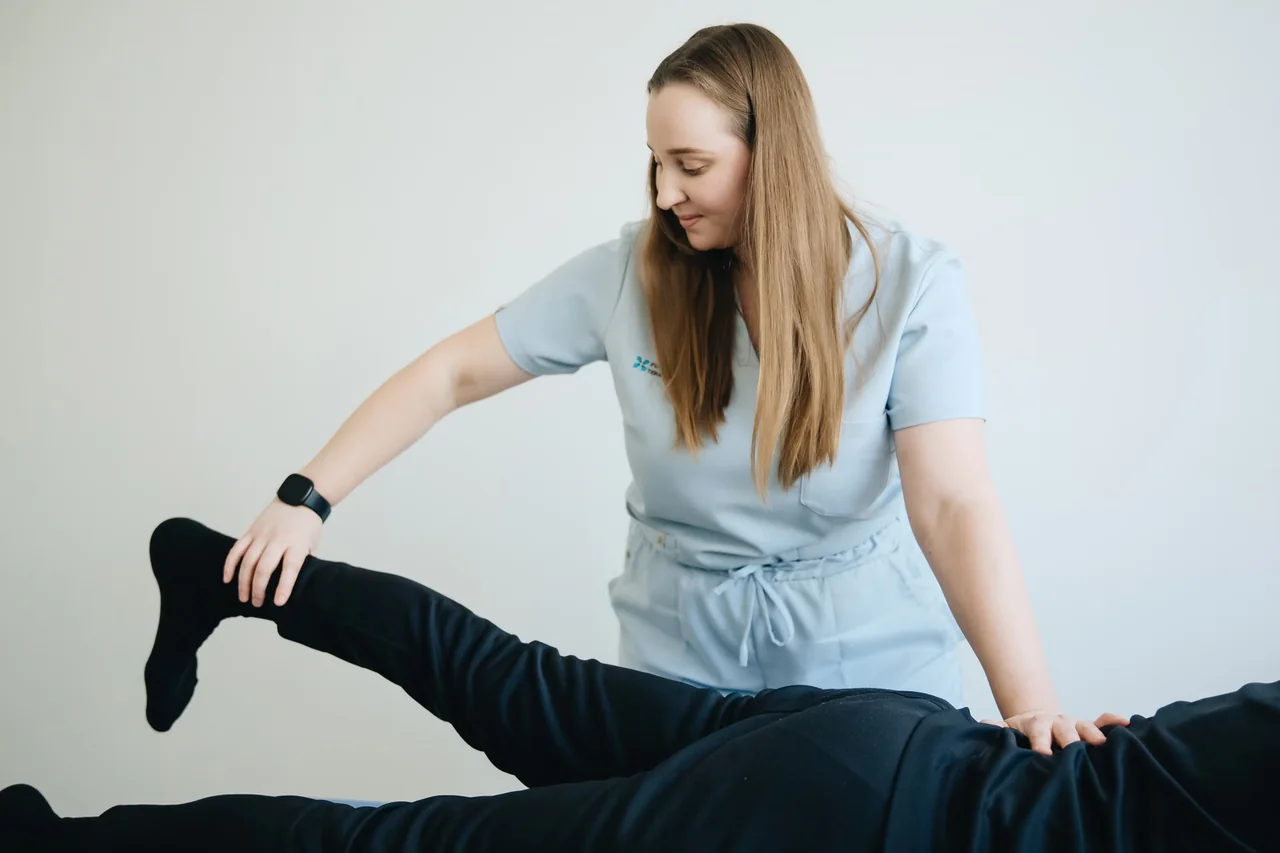
The recovery time for pubalgia is not measured in days, but in the combination of pain, load, and tissue response. In mild cases, improvement can come in just a few weeks; in more stubborn cases, a full return to sport can stretch over months. The difference is not determined only by the diagnosis, but by how effort is managed, which structures are affected, and whether the runner keeps feeding the injury with repeated impacts.
In running, this problem usually appears as a sharp twinge low in the groin, a dull ache in the pubic area, or a feeling of tightness that flares up when accelerating, climbing hills, or increasing pace. The dangerous thing is that it often warns in a low voice: the athlete cuts back one outing, reduces volume for a few days, and believes everything has been resolved. But the injured tissue can remain sensitive long after the pain subsides, like a string that stops sounding even though it is still tense.
Why recovery does not follow a fixed schedule
Pubalgia is not a single injury, but a pain syndrome in the pubic and groin area. It can involve the adductors, lower abdominal muscles, the pubic symphysis, or a mixture of all of them. That is why recovery time varies so much from one runner to another. A mild overload is not the same as irritation maintained for weeks, nor is a one-off discomfort after a training spike the same as a condition with pain when walking, coughing, or standing up from a chair.
The key lies in accumulated load. Running punishes precisely the structures that stabilize the pelvis: each stride transfers forces between the trunk and the legs, and when there is an imbalance between the adductors, glutes, and core, the pubic area ends up paying the bill. If the injury is detected early and the activity that triggers it is reduced, the outcome is usually shorter. If the athlete insists on intervals, hills, or pace changes, the clock runs longer and the injury gains ground.
The type of pain also matters. Pain that appears only while running and disappears at rest usually has a better prognosis than pain present in daily life. When the discomfort creeps into the routine — walking, climbing stairs, turning in bed — recovery usually takes more time, more patience, and a more careful return to activity. At that point, talking about isolated weeks falls short, and it is more reasonable to think in phases.
The most common timelines in athletes and runners
In clinical practice, a mild case can improve in 4 to 6 weeks. That range does not mean automatic healing, but rather a clear reduction in pain and the possibility of resuming basic tasks without discomfort. When the overload is greater, the usual timeline is between 8 and 12 weeks, provided the loads are respected. In complex or poorly managed situations, the process can extend for several months and, in some cases, recur again and again if the factors that caused it are not corrected.
It is important to distinguish improvement from sports clearance. A drop in pain does not mean the runner is ready to train as before. The tissue may tolerate walking, cycling, or light strength work much earlier than it can handle intervals, pace changes, or long runs. That difference explains why many athletes rush: they feel relief, return too soon, and the pubic area starts complaining again like an over-compressed spring.
There is one fact that often goes unnoticed: complete rest is usually not the solution. What is recommended is relative rest, meaning reducing or modifying the load that causes pain without stopping physical activity altogether. For runners, that usually means temporarily stopping what creates clear impact or tension in the area and keeping what does not irritate it. Staying somewhat active helps avoid losing fitness and stiffness, but always with caution.
What makes the injury take longer to heal
The biggest enemy of recovery is continuing to run through the pain. Sometimes the discomfort is bearable and the athlete learns to live with it, but the body does not interpret endurance as a sign of strength, but as continued exposure to damage. Every run in which the area becomes irritated adds microstress and delays tissue repair. In that scenario, an injury that could have resolved in weeks becomes a heavy season-long companion.
The specific area involved also changes the picture. If the injury is mainly in the adductors, the response is usually different from pubalgia with a greater abdominal component or irritation of the pubic symphysis. The runner may feel pain in the same spot, but the mechanical origin is not identical. That is why treatments should not be copied mechanically: the same symptom can hide different recovery paths.
Overall fitness matters more than it seems. An athlete with good trunk control, sufficient strength in the glutes and adductors, and a well-structured training base usually tolerates the process better. By contrast, chronic fatigue, a sudden increase in mileage, or training on very demanding surfaces creates the perfect setting for the injury to become entrenched. The body, like a road with heavy traffic, needs unloading periods to avoid collapsing.
How to recognize pubalgia that is already slowing the return to training
The most typical pain is concentrated in the pubic area, groin, or lower abdomen. It usually worsens when running, accelerating, changing direction, or lifting the knee forcefully. It can also appear when squeezing the legs together, doing traditional crunches, or standing up after sitting for a while. In runners, a common warning sign is that the usual pace starts feeling harder without any clear explanation in the training plan.
Another useful sign is stiffness when starting the day or beginning a session. Sometimes the runner sets out feeling fairly good and, after a few minutes, the pain settles in like a small but persistent stone. Other times it is the opposite: the warm-up seems to improve the area and then, when intensity rises, the discomfort returns with more force. That fluctuating behavior is very typical of overload injuries.
When the pain radiates toward the inner thigh or there is a feeling of weakness when stabilizing the pelvis, the condition is usually more advanced. It is not unusual for the athlete to start compensating: shortening stride, rotating less, avoiding pace changes, or shifting more weight onto one leg. That adaptation, although it allows the athlete to keep functioning, ends up altering technique and spreading the problem to other areas such as the hip or lower back.
The first phase: reducing inflammation without immobilizing the body
In the early stages, the priority is to stop the movement that causes pain. This is not about immobilizing completely, but about removing stimuli that maintain irritation. For runners, that usually means temporarily pausing the most aggressive sessions and switching to activities that do not create discomfort. The goal is simple and difficult at the same time: give the tissue room to recover without losing function altogether.
Cold can be useful during acute pain or after a specific load. It does not cure the injury, but it helps modulate discomfort and control the sensation of inflammation during the most sensitive hours. Likewise, anti-inflammatory medications do not solve the underlying problem on their own; they may relieve symptoms, but they do not repair the cause. Real recovery begins when the area stops being hit by stimuli it cannot tolerate.
This stage requires special attention to everyday movements. Taking stairs two at a time, doing deep lunges in the gym, or insisting on poorly designed abdominal exercises may seem minor, but for an irritated pubic area it can be like pouring gasoline on embers. Pain matters more than the calendar, and that is one of the least popular but most useful messages in this type of injury.
The controlled loading phase: where time is truly gained
When pain decreases, the work that most speeds recovery begins. The idea is not to simply rest, but to rebuild tolerance. That means gentle, well-dosed exercises for the adductors, abdominals, and glutes, along with lumbopelvic stability work. In simple terms: teaching the pelvis to handle force without protesting. Without this stage, returning to running is usually a brief visit with a quick return to square one.
Isometrics are often a useful entry point. These are sustained contractions without visible movement and, when applied properly, they allow the muscles to activate without overloading them too much. More dynamic exercises can then be introduced, with slow and controlled progressions. The order matters a lot: skipping steps and going straight from the couch to intervals is a well-known recipe for setbacks.
This phase also reveals a crucial detail: how pain responds after exercise. If discomfort spikes for hours or worsens the next day, the load is too high. If the runner finishes the session with a manageable sensation and the area remains stable after 24 hours, the progression is on the right track. Pubalgia recovery is less like a straight line and more like a thermometer: its changes must be read precisely.
When to run again and which signs set the pace
Returning to jogging should not depend only on motivation, but on functional criteria. The runner should be able to walk, go up and down stairs, do basic strength work, and move the hip without pain flaring up. If it still hurts when squeezing the legs together, doing a single-leg support, or accelerating slightly, the return to impact is not ready. Running too early does not save days; it usually adds them.
The return to running usually begins with very easy runs and volume control. Intensity is the last step, not the first. It is often wise to start with even surfaces, comfortable paces, and short sessions, leaving hills, sudden changes, and intervals for later. The tissue needs to hear the music of impact again, but at a low volume and without harshness.
There is a practical rule that reduces mistakes: if pain appears during the session or increases the next day, there is still not enough room. That delayed response is very valuable because it shows whether the pubic area accepts the load or only tolerates it for a few minutes. In athletes with a history of similar injuries, caution should be greater, since pubalgia tends to recur if the symptom is silenced without correcting the source.
Why some cases of pubalgia become chronic
Chronicity usually arises from a series of small bad decisions. Pain is reduced with partial rest, training resumes too soon, the tissue is irritated again, and the cycle repeats. On top of that, the pelvic area is a complex hinge, with forces coming from above and below at the same time. When one part fails, the rest compensates, and that compensation eventually leaves a mark.
A precise diagnosis also matters. Not all groin pain is the same. Sometimes it is overloaded adductors, other times a hip problem, other times referred low-back pain, or even a hernia mistaken for a sports injury. If the real cause is not identified, treatment becomes incomplete and recovery is unnecessarily prolonged. In sport, treating the fog as if it were the cause of the accident rarely works.
The runner’s psychological profile is no small factor. Some tolerate pain and keep training out of habit, some panic at any warning sign, and some alternate between both extremes. The most stable recovery usually happens when the process is taken seriously, but without drama. Neither minimizing the injury nor turning it into a sentence: pubalgia responds better to consistency than to impulse.
What role do physiotherapy and sports rehabilitation play
Physiotherapy brings order to an injury that tends toward chaos if left alone. Its value is not only in relieving discomfort, but also in dosing the load, improving mobility, and restoring capacity to the structures involved. Massage, manual therapy, or unloading techniques can help, but the center of recovery is usually well-chosen exercise and proper progression. That is where real progress is made.
Sports rehabilitation is the bridge between no longer hurting and returning to competition. In that phase, the runner must recover strength, coordination, and impact tolerance step by step. Feeling less pain is not enough; the pelvis has to prove it can handle what training demands. That nuance separates partial improvement from a solid return. It is an invisible difference from the outside, but decisive for preventing recurrence.
When the injury drags on, work on running technique and load distribution becomes very important. An overly long stride, poor trunk stabilization, or poorly managed fatigue may be behind an apparently inexplicable relapse. The runner does not always need to run more; sometimes they need to run better, with less mechanical noise and more economy.
A realistic timeframe to keep perspective
The most useful range for understanding pubalgia recovery time in runners is 4 to 12 weeks in common cases, although it may extend to several months if the injury persists. That range is not a promise, but a realistic reference. The sooner overload is stopped and the progression organized, the more likely the return will be reasonable. The longer the athlete keeps running through pain, the more the process resembles a door being pushed from the wrong side.
The goal is not to return quickly, but to return with margin. A well-resolved pubalgia leaves the runner with less pain, more strength in the core area, and better pelvic control; a poorly managed one leaves a kind of echo, a discomfort that returns with every increase in load. In running, where seasons are built by accumulating weeks, recovering well matters more than shaving a few days off the clock.
Caution does not mean endless braking. It means respecting the biology of the tissue and accepting that healing needs phases. The pubic area does not repair itself by wishful thinking, but through graded load, enough rest, and a return to impact that does not skip steps. That is the difference between an injury that fades away and one that settles into the calendar like an unwelcome guest.
When pain gives way, but the injury is still talking
In pubalgia, silence does not always mean healing. Sometimes pain disappears before the structure regains tolerance, and that makes the runner feel betrayed by their own body. The important signal is not only whether it hurts today, but whether it can handle tomorrow. If the area tolerates a logical progression without overreacting, the process is moving in the right direction. If not, it still needs time.
The best understanding of the problem is the one that combines symptoms, load, and sporting context. A runner who develops the injury after weeks of high volume, hills, pace changes, and accumulated fatigue does not need a generic response, but a strategy that respects their training history. Pubalgia, in the end, often tells a story of excess, compensation, and haste. Listening to it in time shortens the path and prevents the pubic area from turning every stride into an unpaid bill.
Medical reference: Sports hernia (athletic pubalgia), Cleveland Clinic.



How to prevent thigh chafing: causes and real solutions

Women’s running windbreakers: seven jackets and how to choose

Do more workouts get rid of soreness? A guide for runners

Jaén Half Marathon 2026: Record 3,800 Runners Registered

Men’s short running tights: how to choose the right pair

World Triathlon confirms data breach involving medical data

Izan Edo targets podium at Miyazaki World Cup

María Pérez ranks ninth in World Athletics’ 2026 top ten

Dos Santos, Duplantis and Sawe: World Athlete of the Year finalists

San Silvestre Vallecana 2026: 42,000 places, prices and start times

 Races3 months ago
Valencia Half Marathon 2027: date and registration

 Races3 months ago
Valencia Marathon 2026: entry, ballot and course

 Reviews and Comparisons4 months ago
Asics Gel-Roadmiles 3 for men: review and current price

 Reviews and Comparisons4 months ago
Asics Gel Sonoma 8 Gore-Tex: complete analysis for trail and rain

 Sneakers3 months ago
Saucony Endorphin Pro 4: full review and verdict

 News5 months ago
Strava API 2026: what changes for clubs, challenges and runner apps?

 Reviews and Comparisons5 months ago
Nike Alphafly 3: opinions, sensations, and real key points

 Reviews and Comparisons4 months ago
Under Armour running shoes review 2025-2026: models and key features

 Sports Equipment4 months ago
Shoe sizes in cm: a clear guide to getting the right fit for your footwear

 Sneakers3 months ago
Skechers GO RUN Consistent 2.0 analysis: comfort and limits

 News5 months ago
Valencia Marathon 2026 route: key tips to train and run better

 Sneakers4 months ago
Adidas Adizero Boston 13 for men: review and verdict