Health and Nutrition
Right groin pain in women when walking: causes and warning signs
From a muscle strain to a gynecological cause, right groin pain when walking requires looking beyond the local discomfort.

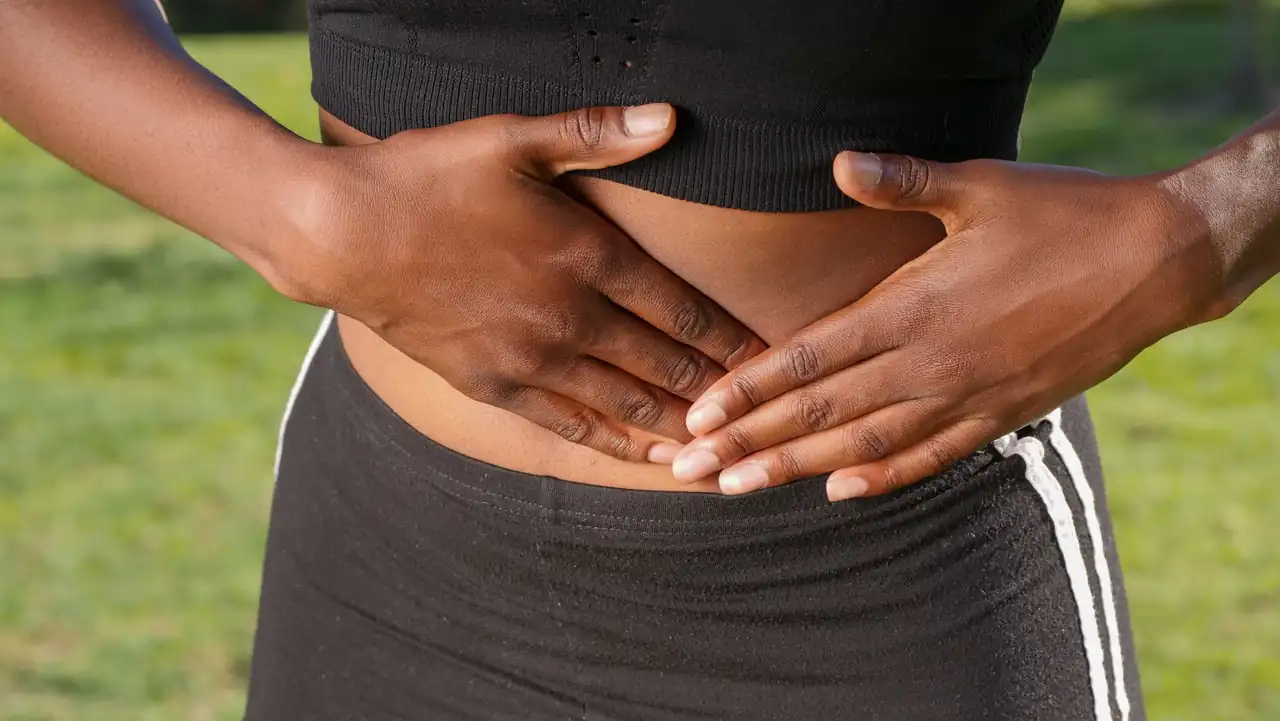
Pain in the right groin when walking in a woman does not point to a single cause. It may arise in an overloaded muscle, in the hip, in the pelvis, in the urinary system, or even from a gynecological problem that radiates to that area. Location helps, but it is not enough: the groin is an anatomical crossroads and, for that reason, pain there is often more of an alert message than a diagnosis in itself.
The key lies in the context. A discomfort that appears after a brisk walk, a sudden turn, or a running session does not feel the same as pain that comes with fever, bleeding, a visible lump, or a stinging sensation when urinating. Walking moves the hip, pubis, lower abdomen, and adductor muscles all at once; when one of those pieces fails, the discomfort may be located in the right groin even though the origin is a bit higher up or farther back.
Muscular and biomechanical causes that are most often behind it
The most common cause in the sports setting is overloading of the adductors or of the muscular complex that stabilizes the pelvis. A strain, sprain, or tendinopathy in that area is usually noticed when stepping, climbing stairs, accelerating, or changing direction. A woman who notices pain when walking often describes discomfort that strikes when putting weight on the leg, as if the stride were left unfinished.
This group also includes conditions related to the abdominal wall and to the insertion of muscles into the pubis. Pubalgia, adductor injury, and irritation of the rectus abdominis are not exactly the same, but they share a feature: repeated movement turns a mild discomfort into a more constant pain. In runners, hikers, or people who go from a sedentary lifestyle to intense training, the sudden transition often acts like a switch.
The hip always deserves attention. Femoroacetabular impingement, labral irritation, or limited internal rotation can project pain toward the right groin, especially when walking with a long stride or pivoting on that leg. Sometimes the problem is not in the groin, but in the mechanics of the hip, which forces the surrounding soft tissues to work like a stressed hinge. The result is a pain that feels deep, less superficial than a typical muscle spasm.
The sacroiliac joint or the lumbar area may also be involved. When the lower back loses stability or a nerve becomes irritated, pain travels along long and misleading pathways. In clinical practice, it is not unusual for a patient to point to the right groin when the source is in the posterior pelvis, the gluteal region, or the lower spine. Walking amplifies that pathway because each step requires fine coordination between the trunk and the leg.
When the problem looks like a sports injury, but is not
Not all groin pain while walking is muscular. An inguinal hernia can cause a feeling of heaviness, a sharp twinge, or tightness, with or without a visible bulge. In women it can go unnoticed more easily than in men, precisely because the signs are sometimes subtle. If the pain increases when coughing, straining, or standing for long periods, the abdominal wall should be examined carefully.
Osteitis pubis, on the other hand, is a painful inflammation around the pubic symphysis. It usually appears when there is repeated overuse, poor force distribution, or a stiff hip. During everyday walking it may feel like a central pain or one that is slightly shifted to one side, and it often worsens when the stride requires the pelvis to open too much. It is a friction injury, as if the front bridge of the pelvis had a point that rubs persistently.
In some cases, the tension comes from the iliopsoas. This deep muscle helps flex the hip and, when it becomes contracted or irritated, causes pain that is noticed when lifting the leg, starting to walk, or rising from a chair. Its depth makes the picture confusing: there is not always a specific area that can be palpated, but walking reveals it through repetitive, almost mechanical discomfort.
Gynecological causes that can radiate to the right groin
Female anatomy adds another layer of complexity. Ovarian cysts, endometriosis, pelvic inflammatory disease, or ovarian torsion can present with lower abdominal pain that radiates to the right groin. Sometimes the patient does not identify the origin as gynecological because the discomfort is felt laterally, in the hip area, or even when walking. In these cases, the body distributes pain as if looking for a shortcut through the pelvis.
Endometriosis deserves special mention because it can cause pain that changes with the menstrual cycle, worsens with movement, and spreads to the back or thigh. When there is an ovarian cyst, the discomfort may be concentrated on one side and become more noticeable with walking, internal friction of the tissues, or sudden changes in posture. If irregular bleeding, pain during sex, abdominal bloating, or especially painful periods also appear, a pelvic origin becomes more likely.
During pregnancy, the pelvis changes visibly and its behavior changes too. Relaxin and progesterone soften ligaments and joints to prepare for childbirth, but that process can cause groin pain when walking, especially in the second and third trimesters. Pressure on the pubic symphysis, the round ligament, and the hip makes climbing stairs, opening the legs wide, or walking quickly uncomfortable. In many pregnant women, the discomfort is described as a feeling of instability, not just pain.
Signs that suggest a urinary, intestinal, or urgent cause
Fever changes the picture. When right groin pain appears with a high temperature, nausea, vomiting, or general malaise, urinary infections, kidney problems, or abdominal processes that are no longer simply due to overuse must be considered. A kidney infection or a kidney stone can radiate to the groin and become noticeable while walking because each step shakes an already inflamed area.
Urinary tract infections are usually accompanied by burning when urinating, frequent urges to go to the bathroom, cloudy urine, or urine with a bad smell. If the pain becomes higher, more intense, and is accompanied by lower back pain, the kidney enters the picture. Inguinal lymph nodes may also become swollen due to infections of the skin, the genital area, or nearby tissues, and those nodes can hurt when touched or when walking simply because the leg swings with each step.
Appendicitis remains an important possibility when the pain begins around the abdomen and moves down toward the right side. In some women, the pain is initially interpreted as groin discomfort, especially if the pain is accompanied by nausea or loss of appetite. In these cases, movement does not just cause discomfort: it clearly worsens the symptom. Walking, coughing, and changes in posture often intensify the pain significantly.
What details help distinguish one cause from another
The way the pain appears provides valuable clues. Pain that starts after running, kicking, changing pace, or walking more than usual suggests a soft tissue injury or biomechanical irritation. If it worsens with weight-bearing on one leg, climbing steps, or separating the legs, suspicion usually points to the adductors, hip, pubis, or pelvic ligaments. When the pain is triggered by coughing, exertion, or abdominal pressure, the inguinal wall becomes more relevant.
By contrast, night pain, persistent pain, or pain with general symptoms requires looking beyond the musculoskeletal system. Fever, blood in the urine, visible swelling, a lump, vomiting, or intense pelvic pain do not fit with simple overuse. Neither does discomfort that becomes repetitive and lasts for several weeks without improving, especially if it limits normal walking or changes the gait.
Exact location is not perfect either. The right side may indicate a true problem on that side, but it may also point to a cause radiating from the center of the pelvis, from the back, or from the lower abdomen. That is why, in medical practice, the emphasis is on not focusing only on the painful spot, but on what makes it hurt, what accompanies it, and how long it lasts.
How groin pain is evaluated when the groin becomes the weak point
Physical examination usually shows the way. The clinician looks for tenderness on palpation, limitation of movement, pain when resisting adduction or hip flexion, and signs that suggest a pubic injury or hernia. Hip mobility is also assessed, because limited internal rotation or pain when turning the leg may point to femoroacetabular impingement or a problem in the neighboring joint.
If the picture remains unclear, imaging tests help refine it. Ultrasound can detect some soft tissue abnormalities, while magnetic resonance imaging is especially useful for viewing tendons, pubis, adductors, labrum, and bone edema. In pain with suspected gynecological or urinary causes, pelvic ultrasound, urinalysis, or gynecological evaluation may be decisive. The goal is not to add tests for the sake of it, but to choose those that best answer the dominant clinical clue.
Medical evaluation becomes more important when pain changes the gait. A woman who limps to avoid putting weight on the right leg starts compensating with her back, pelvis, and the opposite side. That compensation, maintained over time, can turn a localized problem into a broader one, with lower back pain, hip stiffness, and secondary muscle fatigue. The body tries to protect itself, but often does so by tightening other parts of the mechanism.
Treatment: relative rest, pain control, and a gradual return to movement
The first step is usually not complete immobilization. In muscle injuries or overuse, relative rest helps more than total inactivity. Reducing the activity that triggers pain, lowering walking intensity, and avoiding long strides usually gives tissues room to recover. Ice can be useful in the early stages if there is inflammation or a recent strain, while heat becomes more useful later when stiffness is the main issue.
Active physical therapy plays a central role in many non-surgical cases. It is not limited to unloading the area; it aims to restore strength, coordination, and stability of the hip and pelvis. In an adductor injury, for example, the goal is not only to stop the pain when walking, but also for the muscles to tolerate load again without losing balance. When the hip is stiff or the trunk stabilizes poorly, treatment also often includes mobility and lumbopelvic control exercises.
If the origin is gynecological, urinary, or digestive, treatment depends on the actual diagnosis and not on where the pain is felt. That is one of the most common traps with this complaint: a person may think they have a strain when in fact they are dealing with an infection, ovarian torsion, a hernia, or kidney colic. Treating well requires naming the cause correctly, not just relieving the symptom.
When pain stops being a nuisance and becomes a warning sign
Pain that appears suddenly and is intense deserves prompt attention, especially if it is accompanied by fever, vomiting, abnormal vaginal bleeding, a lump in the groin, inability to walk, or pain when urinating. It should also be assessed quickly if the discomfort gets worse instead of better over the days or if it changes the usual gait pattern. Persistence is a clue as important as intensity.
In active women, runners, or recreational athletes, right groin pain while walking is sometimes normalized for weeks, as if it were part of the effort. It is not. Discomfort that forces a shorter stride, a twisted body to avoid weight-bearing, or stopping training should not be interpreted as a simple transient muscle strain. Repetition of the symptom is often the tissue’s way of saying it can no longer compensate.
The difference between a trivial injury and a significant problem is not always in how dramatic the pain is, but in the full story: when it started, what triggers it, whether there are other symptoms, and whether it changes with rest. In such a shared anatomical area as the groin, that clinical portrait is worth more than a quick label. The right side only marks the stage; the cause is often in another room of the same building.
A small discomfort can hide a bigger problem
The right groin is not a diagnosis, but a warning. It may be speaking of tired muscles, a hip that moves poorly, a weakened abdominal wall, a pelvis under hormonal changes, or an illness radiating from the abdomen or urinary tract. Walking makes it visible because walking is a test of coordination, support, and balance, three functions the body defends quickly when something goes wrong.
In a woman, moreover, the range is broader because of gynecological influences and the particularities of pregnancy and the menstrual cycle. That is why it is so important not to oversimplify. Pain while walking may be an adductor injury, yes, but it may also be a hernia, an ovarian cyst, referred sciatica, an inflamed sacroiliac joint, or an early infection. Precision does not mean guessing; it means reading the body’s signals correctly.
That is the decisive point: not to stay focused on the spot that hurts, but to understand why it hurts when walking, what accompanies it, and what makes it more likely. The groin contains many structures within just a few centimeters, and that anatomical density explains why such a specific symptom can hide such different stories. Listening carefully is the most reliable way not to overlook it.
Medical reference: Hip injuries and disorders, MedlinePlus (U.S. National Library of Medicine).



How to prevent thigh chafing: causes and real solutions

Women’s running windbreakers: seven jackets and how to choose

Do more workouts get rid of soreness? A guide for runners

Jaén Half Marathon 2026: Record 3,800 Runners Registered

Men’s short running tights: how to choose the right pair

World Triathlon confirms data breach involving medical data

Izan Edo targets podium at Miyazaki World Cup

María Pérez ranks ninth in World Athletics’ 2026 top ten

Dos Santos, Duplantis and Sawe: World Athlete of the Year finalists

San Silvestre Vallecana 2026: 42,000 places, prices and start times

 Races4 months ago
Valencia Half Marathon 2027: date and registration

 Races4 months ago
Valencia Marathon 2026: entry, ballot and course

 Reviews and Comparisons4 months ago
Asics Gel-Roadmiles 3 for men: review and current price

 Reviews and Comparisons4 months ago
Asics Gel Sonoma 8 Gore-Tex: complete analysis for trail and rain

 Sneakers4 months ago
Saucony Endorphin Pro 4: full review and verdict

 News5 months ago
Strava API 2026: what changes for clubs, challenges and runner apps?

 Reviews and Comparisons5 months ago
Nike Alphafly 3: opinions, sensations, and real key points

 Reviews and Comparisons4 months ago
Under Armour running shoes review 2025-2026: models and key features

 Sports Equipment4 months ago
Shoe sizes in cm: a clear guide to getting the right fit for your footwear

 Sneakers3 months ago
Skechers GO RUN Consistent 2.0 analysis: comfort and limits

 News5 months ago
Valencia Marathon 2026 route: key tips to train and run better

 Sneakers4 months ago
Adidas Adizero Boston 13 for men: review and verdict