Health and Nutrition
Running after 50: health, risks, and real keys
Running in later life brings health and well-being, although it requires prudence, strength, and progression so as not to pay unnecessary tolls.

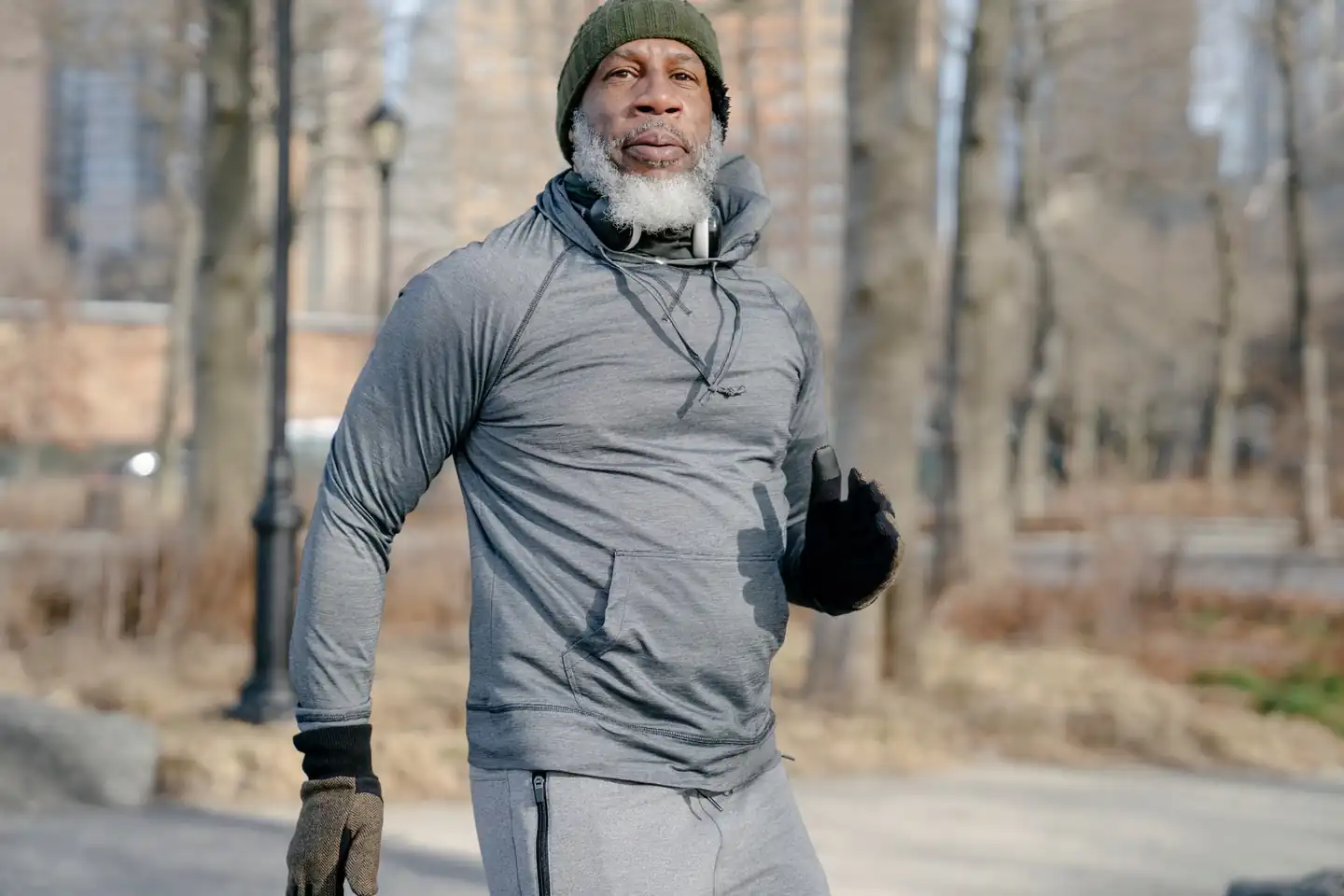
Imagen: Barbara Olsen / Pexels
Running in later life is no longer a rarity or an eccentricity reserved for a few stubborn souls. More and more people are over 50 and still heading out for a run with a normality that, a decade ago, seemed far less visible. The image of the veteran runner is now part of the urban landscape: a stride that’s a little more restrained, yes, but also a consistency that carries more weight than speed.
The key is that running after 50 remains a very valid option, as long as the body gets what it needs: progression, strength, rest, and medical checkups when the time comes. From that age onward, muscle mass, bone density, recovery, and tolerance to effort all change, but that doesn’t invalidate the sport; it just forces it to be smarter.
A body that changes, not an automatic limit
The passing of time does not turn running into a forbidden activity. What it does is make certain processes more visible, processes that used to go unnoticed. Muscle mass tends to decrease over the years, elasticity doesn’t respond the same way, and recovery between sessions usually needs more room. Small aches in the tendon, knee, hip, or back also appear more often, aches that used to sort themselves out almost on their own.
That doesn’t mean giving up sport, but rather understanding that the body no longer works like a new car. The comparison is useful: a well-maintained engine can last for decades, but it needs checkups, proper fuel, and less improvisation. For the adult runner, that checkup translates into training that is less impulsive and more finely tuned.
The World Health Organization has been insisting for years on a simple message: more movement and less sedentary behavior. In adults, regular physical activity helps protect cardiovascular health, reduces the risk of metabolic diseases, and improves mood. After 50, that effect becomes even more valuable because the margin for losing independence also grows.
That’s why the real debate is not whether you can run, but how to run with judgment. Those who reach this stage with years of sporting habit usually maintain better tolerance to impact. Those starting from scratch can also do it, but they need more patience and a gradual approach. In both cases, the principle is the same: age matters, but it does not decide everything.
What the body gains when the pace is adjusted
The most visible benefit of running in mature adults is usually an improvement in overall fitness. The heart works more efficiently, lung capacity stays more active, and circulation responds better to everyday effort. You don’t need to train like an elite runner to notice changes; regular, consistent, and sensible practice is enough.
There’s also a less flashy but decisive gain: the ability to preserve independence. Climbing stairs, walking with ease, carrying bags, or getting through a long day without feeling so drained are gestures that seem minor until they start to become difficult. Running, when integrated sensibly, helps sustain those small but huge movements that define daily life.
On the bone and muscle side, the stimulus of moderate impact can be positive. Bones need load to stay active, and muscles respond to effort like a sponge regaining shape. Strength is not preserved by inertia; it has to be built. That’s why running adds value, but it doesn’t fully replace strength work, which acts as the quiet foundation of any stable routine.
Metabolism also benefits from the change. Regular exercise helps improve glucose control, reduces insulin resistance, and favors a more efficient use of fat as fuel. In adults, this matters more than it may seem, because the body becomes less forgiving of long periods of inactivity and prolonged sedentary habits.
The weight of mental experience
One of the reasons so many people keep running after 50 is that the mental effect of exercise is immediate and steady. Going out for a run acts like a valve: it lowers the inner noise, organizes the breathing, and leaves a sense of clarity that doesn’t always show up with other activities. Endorphins and other neurotransmitters have a lot to do with it, but the result is felt in a very human way: the mind rests.
At a stage of life where more responsibilities, more changes, and more family or work demands may coexist, running offers a simple structure. Putting one foot in front of the other has something ritualistic and something mentally cleansing about it. It doesn’t solve problems, but it places them on a more orderly table. That is one of its great virtues.
There’s also a social factor. Running in a group, meeting up in a park, or sharing a long run with friends maintains a network of contact that protects against isolation. A healthy social life is not an accessory; it’s part of well-being. In mature adults, sport can become a discreet bridge toward conversations, habits, and shared routines.
And there’s a more intimate emotional component: running after 50 brings back a sense of control. Not because the body obeys without nuance, but precisely because the runner learns to negotiate with it. That negotiation, when done well, strengthens self-esteem on a much firmer base than a simple obsession with times.
Strength is no longer optional
Those who run with more years behind them usually discover quickly that the legs are not the only engine. Strength work becomes a central ally because it protects joints, improves posture, and reduces the risk of overuse injuries. From a certain age onward, running without strength is like carrying an umbrella whose fabric is already worn out: it may last a while, but it doesn’t offer the same protection.
There’s no need to build a complex routine or think of weight training as an aesthetic goal. What matters is preserving useful muscle mass. Squats, adapted deadlifts, lunges, hip work, calf work, and stability exercises help make each stride more efficient. The body runs better when the base holds.
This is especially relevant because muscle loss doesn’t only affect performance. It also affects mobility, bone protection, and the ability to react to stumbles or sudden changes in support. In other words: more useful muscle means more safety.
The experience of many veteran runners agrees on one point: when strength is added regularly, running becomes more stable and less fragile. It’s not about running less out of fear, but about running better in order to withstand the passage of time with fewer surprises.
The signals worth respecting
At a certain age, the most common mistake is not running too slowly, but running as if nothing had changed. The body warns before the will does. Persistent discomfort, stiffness when getting up, repeated twinges, disproportionate fatigue, or recovery that takes longer than normal are signs that deserve attention. Stubbornness rarely improves a tendon.
There is a clear difference between the normal discomfort of effort and pain that changes your stride or stays around for days. When discomfort forces compensation, the risk of injury grows in a chain reaction. The knee tries to protect the ankle, the hip compensates for the knee, and the back ends up paying part of the bill. The runner feels it as a localized ache; the body experiences it as a domino effect.
Prudence also means reviewing the training calendar. Not every training block has to end in a personal best, and not every week needs three intense sessions. Recovery is part of training, not a lazy add-on. Sleeping, reducing load, and alternating impact with gentler days has a real impact on sporting continuity.
For people with hypertension, diabetes, a history of heart problems, obesity, or long periods of inactivity, a prior medical checkup is especially sensible. Prevention doesn’t dramatize; it fine-tunes. And in mature running, fine-tuning means preserving the practice for more years.
Starting from scratch without turning it into an exam
For those who didn’t run before, 50 is not a closed door. It is, rather, a threshold that calls for an orderly start. Walking and running in intervals is usually the kindest way to build tolerance to effort. The body understands transitions better than sudden leaps.
The usual temptation is to try to prove something in the first few weeks. That rush often takes its toll in the form of shin splints, plantar fascia issues, or hip pain that arrives before real adaptation has taken place. The sensible thing is to give tissues, joints, and the cardiovascular system time to respond. Useful progress rarely roars; it almost always whispers.
The terrain matters too. Very hard surfaces increase the load, while compact paths, parks, or regular tracks are usually kinder. It’s not about always running on soft ground, but about not concentrating all the load in a hostile setting from day one. The body appreciates nuance.
Frequency also makes a difference. Two or three well-planned weekly sessions usually bring more than a string of disorganized attempts. Consistency weighs more than heroics, and that phrase takes on special meaning once the idea of recovering in twenty-four hours is behind you.
When the clock stops calling the shots
Many runners move from measuring themselves only by the stopwatch to measuring by feel, consistency, and recovery capacity. That shift is not a surrender; it is sporting maturity. The best indicator is not always speed, but the ease with which a person can sustain the habit without breaking down inside or out.
An older runner can still keep ambitious goals, but they rarely should copy the logic of their twenties. Instead of chaining intensities together, it usually works better to alternate easy days, moderate sessions, and the occasional sharper stimulus, always within a structure that leaves room for adaptation. The older body responds well to variety, not punishment.
It’s also worth accepting that performance fluctuates. There are weeks with light legs and others with a dragging feeling. That doesn’t mean losing fitness overnight; it means recovery and external stress matter more. Work, sleep, heat, nutrition, and mental stress are no longer background noise. They are part of training, whether we like it or not.
Those who accept that reality usually run with more calm. And calm, at this stage of life, has a sporting value that is often underestimated. A calm runner makes fewer mistakes, listens better, and keeps their relationship with sport going longer.
Nutrition, hydration, and the fuel that changes with age
The passing years also change the way the body manages energy. A reduced sense of hunger appears more easily, sensory perception shifts a little, and in some cases there is a tendency to eat less than is actually needed. Eating well is not eating more, but giving the body what it asks for in the right amount.
Protein becomes more important because it helps preserve muscle mass and repair tissues after exercise. Carbohydrates remain the runner’s fuel, especially when sessions are longer or a bit more intense. And quality fats, such as those found in nuts, olive oil, or oily fish, help support the whole without turning every meal into a rigid equation.
Hydration deserves a separate mention. With age, the sensation of thirst can become less precise, but the real need does not disappear. Drinking too little can take its toll quietly: more fatigue, poorer heat tolerance, slower recovery, and a feeling of heavy legs. In a place like Valencia, where the heat can press for several months of the year, this matters even more.
The timing of intake also matters. Going out with an empty stomach does not always improve performance, and doing so after a heavy meal doesn’t either. The sensible approach is usually to leave enough time to digest without weighing down the session. The ideal guideline changes depending on schedule, weather, and individual tolerance, but the common principle is not to improvise.
Footwear, paces, and small decisions that matter a lot
Gear doesn’t make the runner, but it can keep them out of trouble. The right shoes won’t fix everything, though they do soften part of the impact and improve the feeling of security. Footwear choice should respond to actual use, the usual terrain, and comfort, more than to the fashion of the moment.
There’s also an idea worth discarding: running harder does not always mean moving forward more. Often, improvement comes from sustaining a comfortable pace with reasonable frequency. For older runners, sustainable progress is built like a mesh, not like an isolated sprint. Each session adds a thread, not a headline.
That approach makes something essential possible: arriving at the following week wanting to repeat. Adherence is worth its weight in gold. A workout that leaves the runner beaten down and unwilling to come back is usually a bad deal. By contrast, a contained but steady load turns activity into habit, which is precisely what protects health in the long run.
Technical prudence does not diminish sporting value. On the contrary, it multiplies it. In later life, running well means less about pushing hard and more about lasting. Lasting, in this context, is a form of success.
The kind of runner that appears when age sharpens the gaze
There is something interesting about those who keep running beyond 50: they usually give up the obsession with pointless comparison sooner. It no longer matters so much who posted the best time in the last race, but who still goes out regularly, who arrives without aches, and who keeps the pleasure of moving. That shift makes running more human and less forced.
Maturity brings a different reading of sport. You run to feel better, yes, but also to preserve that sense of being in tune with yourself, of having cared for the body enough for it to keep responding. The veteran runner usually isn’t looking for grandiose heroics; they’re looking for continuity, health, and a certain physical peace.
In that profile there is a valuable lesson for any age: performance is not sustained by willpower alone. It needs rest, nutrition, strength, technique, and common sense. Those who run after 50 end up understanding that every outing is a balance between stimulus and prudence, between desire and limit.
And that is where its real strength lies. Not in defying time arrogantly, but in learning to live with it without giving up movement. Mature running is not about running against age, but about using it intelligently to keep running better, for longer, and with less noise around it.
A practice that gains value when done with a clear head
The available evidence and the experience of thousands of runners point in the same direction: running after 50 can be healthy, stimulating, and perfectly viable if the new physical context is respected. There are no miracles or universal recipes, but there is a clear pattern. The body responds better when it is challenged with judgment and protected without drama.
That balance explains why so many mature people keep the habit and weave it into a broader life. Running stops being a test of character and becomes a tool for well-being. Some days it will be gentle, other days a bit more intense; some weeks it will go beautifully, and others it will feel like the legs weigh more than they should. It’s part of the game.
What matters is that the game keeps going. That sport doesn’t turn into a fight against the clock or against the mirror. The best run at this age is the one you still feel like repeating tomorrow. And that, more than a slogan, is a way of understanding health as sustainable movement, not as a brief burst.
In a country where more and more people are reaching longer and more active ages, running at 50, 60, or beyond stops being a rarity and becomes a sensible expression of longevity in motion. It is not a gesture of athletic nostalgia. It is a commitment to staying alive in a very concrete way: with lungs, legs, and head all working in the same direction.
Medical reference: Fitness and exercise after 50, Johns Hopkins Medicine.



How to prevent thigh chafing: causes and real solutions

Women’s running windbreakers: seven jackets and how to choose

Do more workouts get rid of soreness? A guide for runners

Jaén Half Marathon 2026: Record 3,800 Runners Registered

Men’s short running tights: how to choose the right pair

World Triathlon confirms data breach involving medical data

Izan Edo targets podium at Miyazaki World Cup

María Pérez ranks ninth in World Athletics’ 2026 top ten

Dos Santos, Duplantis and Sawe: World Athlete of the Year finalists

San Silvestre Vallecana 2026: 42,000 places, prices and start times

 Races3 months ago
Valencia Half Marathon 2027: date and registration

 Races3 months ago
Valencia Marathon 2026: entry, ballot and course

 Reviews and Comparisons4 months ago
Asics Gel-Roadmiles 3 for men: review and current price

 Reviews and Comparisons4 months ago
Asics Gel Sonoma 8 Gore-Tex: complete analysis for trail and rain

 Sneakers3 months ago
Saucony Endorphin Pro 4: full review and verdict

 News5 months ago
Strava API 2026: what changes for clubs, challenges and runner apps?

 Reviews and Comparisons5 months ago
Nike Alphafly 3: opinions, sensations, and real key points

 Reviews and Comparisons4 months ago
Under Armour running shoes review 2025-2026: models and key features

 Sports Equipment4 months ago
Shoe sizes in cm: a clear guide to getting the right fit for your footwear

 Sneakers3 months ago
Skechers GO RUN Consistent 2.0 analysis: comfort and limits

 News5 months ago
Valencia Marathon 2026 route: key tips to train and run better

 Sneakers4 months ago
Adidas Adizero Boston 13 for men: review and verdict