Health and Nutrition
Sock for plantar fasciitis: how to choose it and when it helps
What does this textile support provide, when can it relieve pain, and what details matter when choosing it.

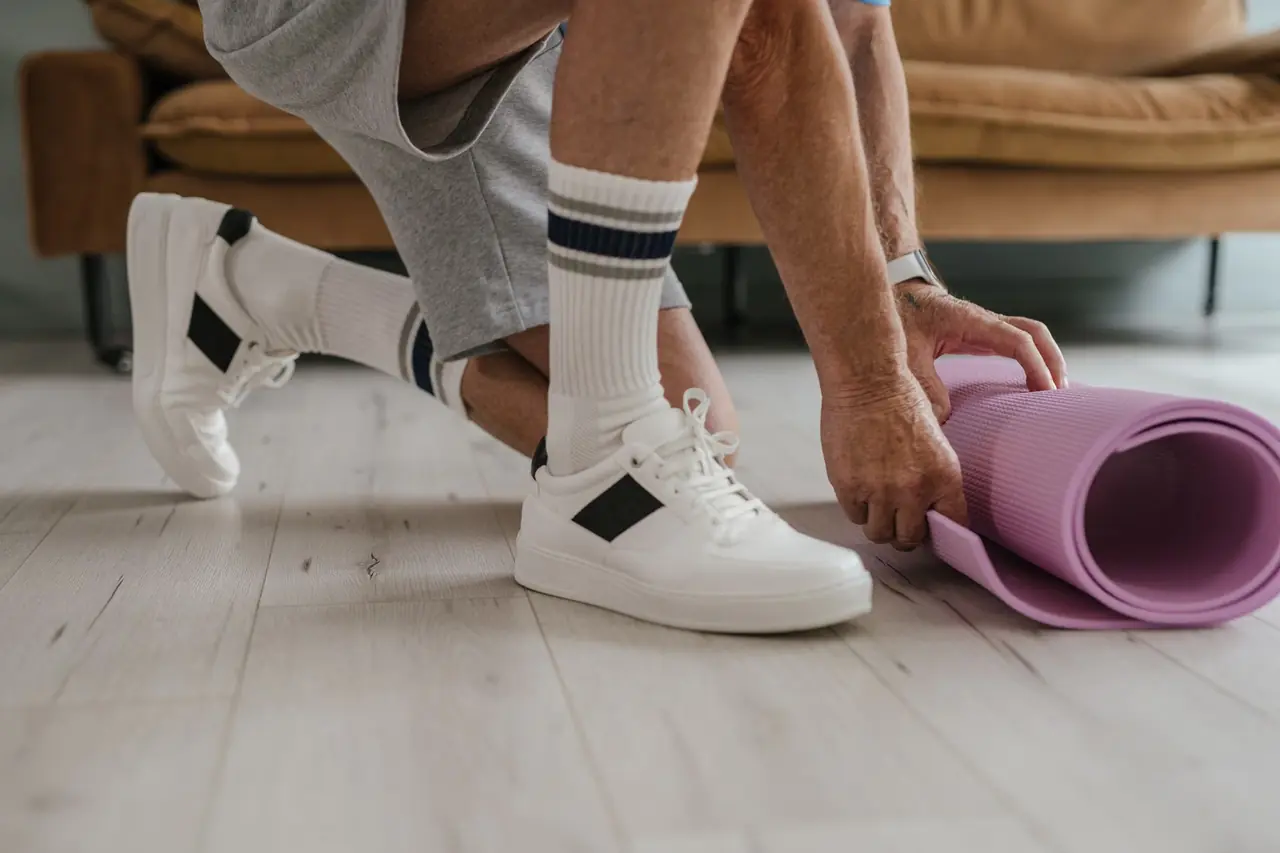
The pain that appears under the heel when getting out of bed usually has a very recognizable pattern: a sharp sting, a stiff foot, and the feeling that the first step weighs more than normal. In that scenario, a plantar fascia support sock has become one of the most sought-after solutions because it offers localized compression, arch support, and a sense of containment that many runners notice from the very first use.
It is not a cure on its own or a substitute for medical evaluation when the pain persists, but it can be part of a useful strategy to reduce discomfort, unload tissue, and improve comfort at specific stages. Its appeal grows especially among those who run, spend many hours on their feet, or have chained together weeks of heavy load with too little rest.
What this type of support really does
The plantar fascia is a band of fibrous tissue that helps support the arch of the foot and distribute the forces of each step. When it becomes irritated, the tissue loses tolerance and the area becomes especially sensitive to repeated impact. That is where the technical sock comes in: it compresses the sole, wraps the midfoot, and limits excessive movement, something that can be especially useful when walking barefoot at home or when moving from the bed to the first steps of the day.
Its effect is not magical or immediate for everyone, but it does have clear biomechanical logic. By improving the perception of support, the foot feels less exposed; by distributing pressure better, the heel does not bear such concentrated load; and by maintaining a certain gentle tension during use, it may reduce that feeling of tightness that accompanies inflammation in the area.
It is worth distinguishing it from a standard compression sock. A model designed for this problem usually works mainly on the plantar arch and the rearfoot, not so much on the calf. Some designs add a bi-elastic structure, an open or closed toe depending on use, and pressure bands that stabilize without turning the foot into a rigid piece. The key is to support without squeezing.
Why it is so interesting to runners and active people
Plantar fasciitis appears frequently in very different profiles, but running occupies a prominent place for a simple reason: repetition. Every stride adds load to the same area, and when volume increases faster than the tissue’s ability to adapt, the foot protests. The type of shoe, sudden changes in surface, hills, and the widespread habit of racking up miles with calves and soleus that are too tight also play a role.
In that context, the textile support is valued for its practicality. It is easy to put on, fits in any training bag, and can be used at specific times of the day, not only during sport. For anyone who feels their foot is sensitive on waking or after a long day on their feet, the stable and continuous support can make a modest but real difference in the level of discomfort.
There is also an adherence factor, though it is rarely mentioned. Orthoses and insoles perform more precise functions, but they are not always comfortable at every moment. The sock, by contrast, has the advantage of fitting naturally into routine and not requiring a radical change in habits. In sport, that simplicity is often decisive: what gets used works better than what is left forgotten in a drawer.
What a good model should have and what to watch out for
Not all models offer the same experience. The first important detail is the level of compression: it should feel firm, but not suffocating. If it leaves deep marks, numbs the toes, or causes coldness, the pressure is excessive. If it is barely noticeable, it probably does not provide the intended support. The right balance usually feels like an enveloping pressure that accompanies movement without preventing it.
The second issue is the shape. A design with arch reinforcement, flat seams, and good fit over the instep avoids uncomfortable folds, which in an already sensitized foot act like small stones inside the shoe. The fabric also matters: breathable materials help control moisture, which not only improves comfort but also reduces the risk of chafing in long sessions or on hot days.
Another point that often goes unnoticed is sizing. A poorly fitted support loses effectiveness and can even worsen the sensation of pressure in the wrong place. Foot length, forefoot width, and arch shape matter much more than they seem. A short, long, or mid-calf model does not respond the same way on a high-arched foot as on a flatter one, and that difference is noticeable from the first few minutes.
When it may be useful and when it is not enough
This type of garment can make sense in stages of mild or moderate pain, during periods of overload, or as a complement to other care. It may also help those who notice that the foot gets too cold and stiff at rest, a common feeling when the fascia is irritated. On the other hand, if there is very intense pain, clear inflammation, limping, or inability to bear weight normally, the problem already requires a broader review.
The difference between relief and resolution is important. The sock provides support, but it does not by itself correct poor running technique, limited ankle dorsiflexion, too much weight on the heel, or a poorly calibrated training progression. It also does not replace temporary load reduction when the tissue is overwhelmed. In other words: it helps you live with the problem better, not erase its origin.
Its use makes more sense when it is integrated into a coherent routine. Relative rest, mileage control, appropriate footwear, gentle stretches, and, if needed, insoles or professional evaluation make for a stronger package than any isolated solution. The foot, after all, works like a chain of springs; if one breaks, the others compensate, but not indefinitely.
The relationship between compression, comfort, and the feeling of relief
Well-dosed compression produces a very specific perception: the foot feels more gathered, less loose inside the shoe, and less exposed to the back-and-forth of support. That subjective sensation matters, because pain is not only a mechanical signal; it is also fueled by the nervous system’s sensitivity and the expectation of discomfort with each step. A stable support can lower that alert level.
In people who spend a lot of time on their feet, the improvement does not always translate into complete absence of pain, but rather less fatigue at the end of the day. That difference counts. A less tired foot tolerates a long workday, an easy jog, or even a walk that used to feel uncomfortable. The body works like that: small accumulated advantages are often worth more than a grand promise.
It is also worth remembering that the feeling of relief can vary depending on the stage of the problem. There are days when plantar fasciitis seems to ease, and others when it returns with knife-like stiffness. Textile support can fit into that ebb and flow, but it should not be interpreted as definitive proof of recovery. Real progress is measured by the ability to walk, run, and get up with less pain over weeks, not by a single good morning.
How it fits with footwear and training
Using this support makes more sense when the rest of the gear is working with it. A shoe that is too soft, worn out, or not stable enough can take away part of the benefit, because the foot will keep looking for support where it cannot find it. By contrast, footwear with a stable base and reasonable toe-box room allows compression to work without adding extra discomfort.
In running, the load context also matters. Easy runs, strength work, and recovery are usually better tolerated than demanding intervals or long descents, which are harder on the foot. A well-chosen plantar support does not change stride mechanics by magic, but it can make the transition between rest and activity more bearable, especially if used at strategic times rather than indiscriminately.
Some runners reserve it for morning hours; others, for after training; others, for workdays when standing weighs almost as much as a long run. That flexibility explains part of its popularity. Unlike other more rigid devices, the sock adapts to real life, which rarely offers a clean and orderly scenario.
Signs that more than a sock is needed
If pain lasts, changes in intensity, or is accompanied by a deep stabbing sensation, compression is not enough. It is also worth paying attention when discomfort appears even at rest, when the heel hurts persistently to the touch, or when gait changes because the foot no longer accepts normal loading. In those cases, the problem may require a more complete assessment of biomechanics, footwear, and tissue tolerance.
The course of plantar fasciitis is rarely linear. It may improve with rest and relapse when returning to intense activity too soon. It may seem controlled in the morning and worsen at the end of the day. That is why any useful resource should be read as part of a bigger picture. Textile support relieves, but it does not replace managing the cause, which often combines training, anatomy, and daily habits.
In practice, the best sign is not that the pain disappears completely within a few hours, but that the foot gradually regains a calmer way of functioning. Less stiffness on getting up, greater tolerance for walking, less heel pain after exertion. That is the kind of progress that matters, because it shows the tissue is once again accepting load without setting off the alarm at the first chance.
The real value of a simple solution when the foot asks for a break
There are products that promise too much and others that, without making noise, work because they solve a specific part of the problem. The plantar fascia support sock belongs more to the second category. It does not correct an injury on its own, does not replace clinical judgment, and does not guarantee an immediate return to training, but it can relieve, stabilize, and make a delicate phase more bearable.
Its value lies precisely in that effective modesty. It adds a layer of support, softens the feeling of impact, and can accompany recovery without complicating daily life. For a runner, a worker who is on their feet, or anyone who feels heel tension at the start of the day, that is no small thing. Sometimes the difference between dragging the problem along and beginning to control it fits, quite literally, in a well-chosen sock.
The foot does not ask for miracles; it asks for consistency. And in that area, a well-designed textile support can provide discreet but useful help while the tissue calms down and starts accepting each step again without every footfall sounding like a sharp strike on a board.
Medical reference: Heel Injuries and Disorders, MedlinePlus (U.S. National Library of Medicine).



How to prevent thigh chafing: causes and real solutions

Women’s running windbreakers: seven jackets and how to choose

Do more workouts get rid of soreness? A guide for runners

Jaén Half Marathon 2026: Record 3,800 Runners Registered

Men’s short running tights: how to choose the right pair

World Triathlon confirms data breach involving medical data

Izan Edo targets podium at Miyazaki World Cup

María Pérez ranks ninth in World Athletics’ 2026 top ten

Dos Santos, Duplantis and Sawe: World Athlete of the Year finalists

San Silvestre Vallecana 2026: 42,000 places, prices and start times

 Races4 months ago
Valencia Half Marathon 2027: date and registration

 Races4 months ago
Valencia Marathon 2026: entry, ballot and course

 Reviews and Comparisons4 months ago
Asics Gel-Roadmiles 3 for men: review and current price

 Reviews and Comparisons4 months ago
Asics Gel Sonoma 8 Gore-Tex: complete analysis for trail and rain

 Sneakers4 months ago
Saucony Endorphin Pro 4: full review and verdict

 News5 months ago
Strava API 2026: what changes for clubs, challenges and runner apps?

 Reviews and Comparisons5 months ago
Nike Alphafly 3: opinions, sensations, and real key points

 Reviews and Comparisons4 months ago
Under Armour running shoes review 2025-2026: models and key features

 Sports Equipment4 months ago
Shoe sizes in cm: a clear guide to getting the right fit for your footwear

 Sneakers3 months ago
Skechers GO RUN Consistent 2.0 analysis: comfort and limits

 News5 months ago
Valencia Marathon 2026 route: key tips to train and run better

 Sneakers4 months ago
Adidas Adizero Boston 13 for men: review and verdict