Health and Nutrition
Swollen big toe from running: causes and what to do
Causes, warning signs, and initial care to reduce inflammation and prevent the problem from getting worse.

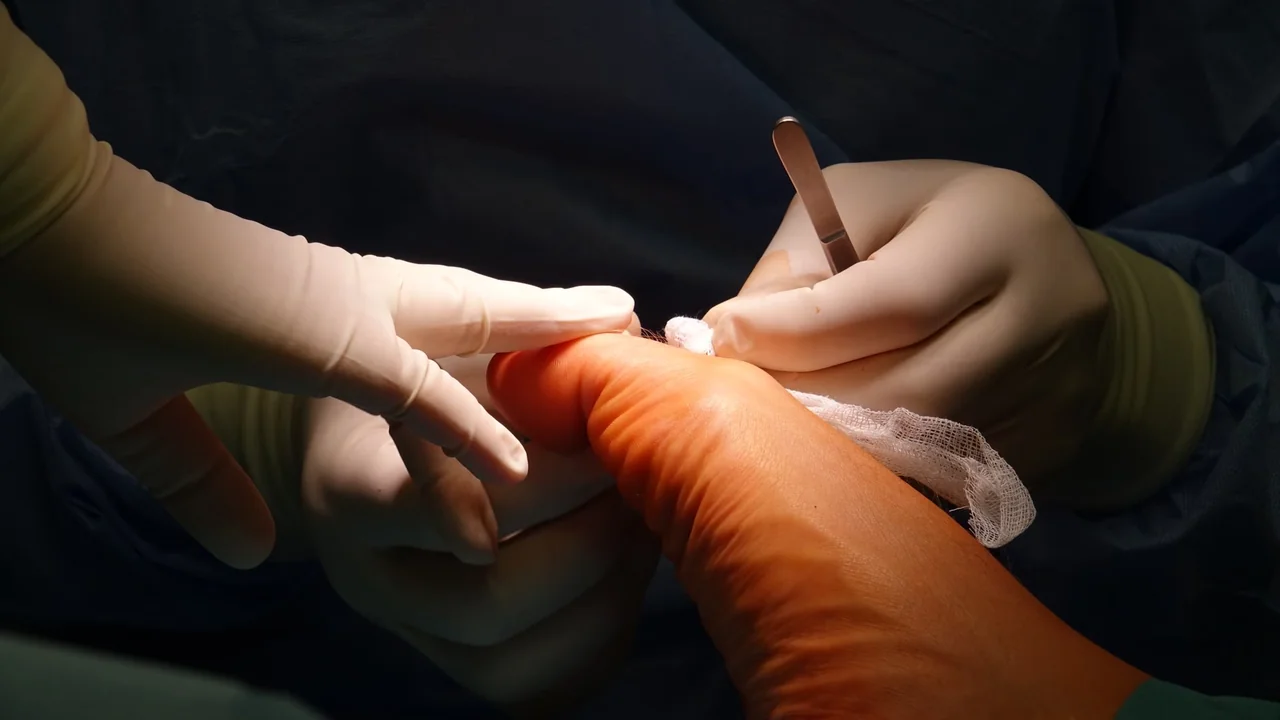
A swollen big toe rarely appears without a reason. For runners, it may be the visible result of an impact, repeated overuse, an infection around the nail, or inflammation that has been developing over time. This joint bears a substantial share of the load when walking, running, and changing direction, so a problem can quickly become noticeable during a run or at push-off with each stride.
The key is to read the picture correctly: a swollen area with a bruise after an impact is not the same as a red, hot lump, nor is pain that worsens when lifting the foot off the ground the same as discomfort around the nail with discharge. The shape, color, local heat, and ability to bear weight provide valuable clues, because very different injuries can hide behind the same appearance, from a simple contusion to a fracture, gout, sesamoiditis, or an infection that requires prompt attention.
What swelling in the big toe reveals
Inflammation is a defense response, but in the foot it can become an obstacle to everything: putting on shoes, walking, playing sports, or even resting. When the big toe looks larger than normal, the skin feels tight, shoe pressure increases, and every step seems to rub an already irritated area. That snowball effect explains why a small discomfort can end up affecting your entire gait.
In runners and active people, the big toe works like a final spring. It propels the body forward during the push-off phase and absorbs part of the load on landing. For that reason, swelling in the big toe should not be reduced to a cosmetic detail: it may be a sign that the foot’s mechanics are failing, that there is a soft tissue injury, or that the footwear is pushing the joint into constant conflict.
The progression also matters. Sudden inflammation with intense pain usually points to an acute episode; slow swelling, almost in the background, fits better with osteoarthritis, bursitis, deformity, or repeated use. When the problem lasts, the tissue becomes more sensitive, mobility loses smoothness, and the body compensates, often with more forefoot loading, more fascia tension, and more fatigue throughout the lower-limb chain.
Signs that help distinguish the cause
Color says almost as much as pain. A purple tone suggests bleeding under the skin or a bruise from trauma; bright redness with local heat suggests active inflammation or infection; a pale, tense area may accompany significant edema. If there is also deformity, loss of mobility, or sharp pain when bearing weight, the problem no longer seems minor.
It is also worth noting where the discomfort begins. Pain on the inner base of the toe is often associated with bunion and bursitis; pain on the upper part of the joint fits with big toe osteoarthritis; pain under the toe, especially when running or standing on tiptoe, suggests sesamoid irritation. If the affected area surrounds the nail, with sensitive, swollen skin or pus, suspicion shifts toward paronychia, ingrown toenail, or, in less well-known cases, retronychia.
Fever, discharge, and a rapid increase in swelling require closer attention. In a skin or nail infection, the foot may throb, the skin become shiny, and shoe pressure become unbearable. In a gout attack, the onset is usually abrupt, with very intense pain and a joint that seems to be burning from within. In a fracture, the history of the blow or twist is usually clearly remembered, sometimes accompanied by a crack or the feeling that something gave way abnormally.
Common causes that explain the problem
Blows remain the most common cause. Hitting a piece of furniture, a fall, a bad step off a curb, or the rubbing of a stiff shoe can cause contusion, edema, and bruising. In the big toe, bleeding under the skin is easy to see because the area has little room to expand, and that small bleed can make the lump seem more alarming than it really is in some cases.
Bone injuries deserve a separate mention. A phalanx fracture or stress fissure may go unnoticed at first, especially if the person keeps walking and the swelling is not dramatic. However, pain that increases when pushing off, tenderness to the touch, and functional limitation eventually give it away. In runners, a sudden increase in mileage or intensity can trigger this type of injury, especially if the foot was already under demanding mechanics.
Gout and other inflammatory arthritides have a very different pattern. The toe may wake up swollen, red, and extremely painful, as if the joint had filled with embers. Osteoarthritis, by contrast, usually presents with progressive stiffness, discomfort when pushing off, and intermittent episodes of inflammation. In both cases, the outward appearance can be confusing, but the clinical context is highly informative: age, medical history, previous attacks, other affected joints, and the relationship with exertion or footwear.
Skin and nail causes should not be forgotten either. An embedded nail, periungual infection, or retronychia can inflame the entire pad and the proximal edge of the toe with a very striking appearance. The ingrown nail presses in, the skin responds with inflammation, and if it becomes superinfected, discharge appears. In retronychia, the nail plate loses its normal forward growth and shifts upward, creating a painful picture that is confused with other infections for weeks or months.
What a runner notices before anyone else
In running, the big toe is a load sensor. When something is not right, the runner usually feels it during the transition between support and push-off, just when the body stops being still and turns the stride into propulsion. Discomfort appears when starting, a sensation of incomplete push-off, or the need to slightly alter the step to avoid pain. That seemingly minor compensation can change how load is distributed across the rest of the foot.
Narrow footwear easily worsens the situation. A compressed toe box, a last that squeezes the toes, or a rigid heel counter can reduce the space right where inflammation already exists. Then the toe rubs, the skin becomes irritated, and the pain stops being intermittent and becomes constant. In athletes, the combination of fatigue, hard surfaces, and a sudden increase in training also matters—a triangle that heavily stresses the forefoot.
The most common mistake is to normalize the discomfort and keep adding sessions. In overuse injuries, that persistence prolongs recovery time. Inflammation does not resolve because more is demanded from the tissue; on the contrary, it can spread to the joint, the sesamoids, or nearby muscles. By contrast, reducing load, correcting footwear, and observing the foot’s response over a few days provides much more useful information than continuing to run blindly.
First measures that actually make sense
Relative rest works better than absolute immobility. It is not about keeping the foot completely still for days on end, but about removing what feeds the irritation: running, jumping, long walks, tight shoes, or activities that force push-off of the big toe. After a recent blow, the combination of rest, elevation, and local cold helps reduce edema and pain during the first 48 to 72 hours.
Ice should be used carefully. Applied for about 15 to 20 minutes at a time, with a cloth in between, it can relieve acute inflammation quite a bit. Heat, on the other hand, makes less sense at the start if there is internal bleeding or active inflammation, because it may make the area more congested. In more chronic or stiff processes, heat may have another use, but not as an automatic response on day one.
Wide footwear changes the functional outlook a lot. A shoe with a roomy toe box reduces direct pressure on the toe and allows walking with less friction. In cases of irritation from rubbing, a simple lace adjustment, a well-fitted insole, or a silicone protector can make the difference between continuing to drag out the problem or letting the tissue rest. If there is a wound, pus, fever, or disproportionate pain, self-care is no longer enough and medical evaluation is needed.
When the situation calls for prompt review
Inability to bear weight is a significant warning sign. If the toe hurts so much that walking is almost impossible, if there is visible deformity, or if bruising appears very prominently after the blow, a fracture should be ruled out. It is also important to pay attention to extreme tenderness at one specific point on the bone, because it often distinguishes a simple contusion from a more serious injury.
Infection is another situation that should not be delayed. A hot, red, swollen, and draining nail fold can worsen if minimized. The same happens when pain increases instead of easing, or when the toe becomes increasingly stiff. In the foot, progression may seem slow in appearance and fast in practice: a small problem that barely bothers you today may prevent you from putting your foot into a shoe tomorrow.
Urgent care makes sense if redness spreads, fever appears, or the patient has conditions such as diabetes, poor circulation, or immunosuppression. In those contexts, an apparently minor injury can become more complicated more quickly. Professional assessment is not only about relieving symptoms, but also about preventing a skin entry point from turning into a much broader problem.
How diagnosis is approached in consultation
The examination starts with a careful look. The swelling pattern, color, mobility, exact point of pain, and history of the trigger often guide things much more than it seems. A swollen toe after a match, a toe that wakes up hot and red without trauma, or a toe with pain next to the nail do not point to the same source, even if the initial outside appearance looks similar.
Then comes palpation and functional assessment. It is checked whether it hurts when moving the joint, pressing the bone, squeezing laterally, or bending the phalanx. In some situations, an X-ray clarifies whether there is a fracture, osteoarthritis, or bone changes; in others, ultrasound helps identify effusions, abscesses, or abnormalities in soft tissues and the nail apparatus. That combination of observation and tests avoids blind treatment.
The medical history matters as much as the image. Knowing whether there was a blow, whether the person runs, whether they wear narrow shoes, whether they have had gout before, whether there is a recurrent ingrown toenail, or whether the problem started after a long day on their feet guides the diagnosis quite accurately. In big toe pathology, few things are as valuable as reconstructing the sequence of what happened.
Treatment according to the source of the problem
Not all inflammations are treated the same way. A mild contusion usually improves with conservative measures and time; a fracture may require immobilization or closer follow-up; gout calls for a specific anti-inflammatory approach; an infection may need drainage or antibiotics; an ingrown toenail or retronychia, local management that relieves pressure on the nail fold. The most costly mistake is applying the same remedy to different problems.
In mechanical problems, reducing load is central. Less impact, less rubbing, and less pressure usually translate into less inflammation. In joint problems such as hallux rigidus, stiffness and pain with movement make the foot seek compensations, so treatment focuses on protecting the joint and unloading the final push-off. In sesamoiditis, what hurts is the plantar area of the first ray, so the goal is to take pressure off that small support system that is working too hard.
Skin and nail problems also require specific intervention. If the nail edge is embedded, scraping the surface of the problem does nothing; the conflict keeping the inflammation alive must be removed. If there is infection, local control must be serious and, when there is pus or significant involvement, improvisation should be avoided. In retronychia, the condition may last for months before being recognized, but once the pattern is identified, resolution improves greatly by removing the damaged nail plate or correcting the source of the microtrauma.
How to shorten recovery without overloading the tissue
Recovery improves when biological time is respected. Inflamed tissue does not respond well to haste, but neither does it respond well to complete inactivity once the acute phase has passed. Gently moving the joint, gradually restoring normal walking, and avoiding persistent mechanical pressure help the toe regain function without becoming stiff. The goal is not only for the swelling to go down, but for the toe to work naturally again.
Shoe choice is a decisive piece. A shoe with a wide toe box, without aggressive seams and with enough height in the toe area, reduces rubbing and gives room for residual edema. If the problem is at the base of the toe or in plantar support, a targeted offloading or an insole modification may distribute pressure better. In athletes, returning to running too soon usually prolongs the problem rather than solving it.
Monitoring the course during the first few days provides useful clues. If pain decreases and mobility improves, the process is probably heading in the right direction. If the lump remains the same, if the skin changes color in a worrying way, or if each step worsens the inflammation, the diagnosis deserves review. The best sign of recovery is not always the complete disappearance of swelling, but that the foot stops complaining during everyday movements.
What usually makes the situation worse without being noticed
Walking in the same shoes that caused the rubbing is a very effective way to keep the irritation going. So is returning to training as soon as the pain eases a little, before the tissue has recovered its tolerance. In the big toe, the margin between discomfort and relapse can be very small, especially if the foot mechanics are still under the same pressure.
Another common factor is improvising with bandages or home remedies that cover the problem but do not relieve it. Covering an inflamed nail without checking whether there is an infection, or tightening a bandage too much to feel more support, can worsen local circulation and increase pain. The foot does not appreciate either aggression or makeup: it needs less load, less friction, and a clear reading of what is happening.
Repetition matters more than intensity. A small daily discomfort adds up more than an isolated acute episode. That is why, when big toe inflammation keeps coming back, it is worth thinking about the mechanical cause, the way of walking, shoe width, and the possibility of an underlying injury that has not yet fully resolved. The symptom is the surface; the cause is usually a little deeper.
A swollen big toe: what runners need to know
The big toe helps drive you forward at the end of each stride and takes load as your foot lands. If it is swollen, pushing off may hurt, prompting you to shorten your stride or put more weight on the outside of your foot. That compensation can change your gait and make an easy run uncomfortable. A knock, a tight shoe rubbing the toe, or repeated loading may be relevant, but swelling alone cannot identify the cause.
Notice when the pain starts and where it is centred: beneath the toe, at the joint, or around the nail. Also look for bruising, redness, warmth, discharge, a change in shape, or difficulty bearing weight. Pain that worsens at push-off, increasing swelling, or a change in the way you walk are reasons to stop and assess the situation rather than push through a long run. Fever, pus, severe pain, or rapidly worsening symptoms call for prompt medical attention.
While walking or running hurts, pause sessions that trigger the pain; do not try to make up for them with faster running, hills, or intervals. Choose footwear that does not squeeze the area and avoid activities that bring the discomfort on. Return to running gradually only when everyday movement and weight-bearing feel comfortable. If the pain comes back, reduce your load again. If swelling or discomfort persists, consult a healthcare professional before returning to your usual training.
A foot that warns before the injury grows
Swelling of the big toe is not a minor problem by definition; it is a visible sign that something is altering the mechanics, skin, joint, or nail. Sometimes the cause is simple and resolves with relative rest, ice, unloading, and a better-chosen shoe. Other times, however, the toe’s appearance is the tip of the iceberg of a fracture, arthritis, gout, or an infection that needs specific treatment.
Reading the picture well avoids weeks of frustration. The location of the pain, skin color, timing of onset, and relation to exertion offer a fairly reliable guide so you do not waste time. In a foot that swells, prudence does not mean constant alarm, but rather not overlooking what the body is already clearly signaling.
When the toe stops behaving like a lever and becomes a burden, the problem is no longer only in the toe. The step changes, support is altered, and the rest of the foot begins to compensate. That is why understanding in time what lies behind swelling in the big toe helps stop the damage before the runner, walker, or any active person gets used to moving with discomfort that should never have been normalized.
Medical reference: Toe pain, NHS.



How to prevent thigh chafing: causes and real solutions

Women’s running windbreakers: seven jackets and how to choose

Do more workouts get rid of soreness? A guide for runners

Jaén Half Marathon 2026: Record 3,800 Runners Registered

Men’s short running tights: how to choose the right pair

World Triathlon confirms data breach involving medical data

Izan Edo targets podium at Miyazaki World Cup

María Pérez ranks ninth in World Athletics’ 2026 top ten

Dos Santos, Duplantis and Sawe: World Athlete of the Year finalists

San Silvestre Vallecana 2026: 42,000 places, prices and start times

 Races3 months ago
Valencia Half Marathon 2027: date and registration

 Reviews and Comparisons4 months ago
Asics Gel-Roadmiles 3 for men: review and current price

 Races3 months ago
Valencia Marathon 2026: entry, ballot and course

 Reviews and Comparisons4 months ago
Asics Gel Sonoma 8 Gore-Tex: complete analysis for trail and rain

 Sneakers3 months ago
Saucony Endorphin Pro 4: full review and verdict

 News5 months ago
Strava API 2026: what changes for clubs, challenges and runner apps?

 Reviews and Comparisons5 months ago
Nike Alphafly 3: opinions, sensations, and real key points

 Reviews and Comparisons4 months ago
Under Armour running shoes review 2025-2026: models and key features

 Sports Equipment4 months ago
Shoe sizes in cm: a clear guide to getting the right fit for your footwear

 Sneakers3 months ago
Skechers GO RUN Consistent 2.0 analysis: comfort and limits

 News5 months ago
Valencia Marathon 2026 route: key tips to train and run better

 Sneakers4 months ago
Adidas Adizero Boston 13 for men: review and verdict