Sports Equipment
Sport sunglasses for men: how to choose the best ones
Fit, lenses, and materials make the difference in running, cycling, or mountain sports. These are the keys to getting it right.

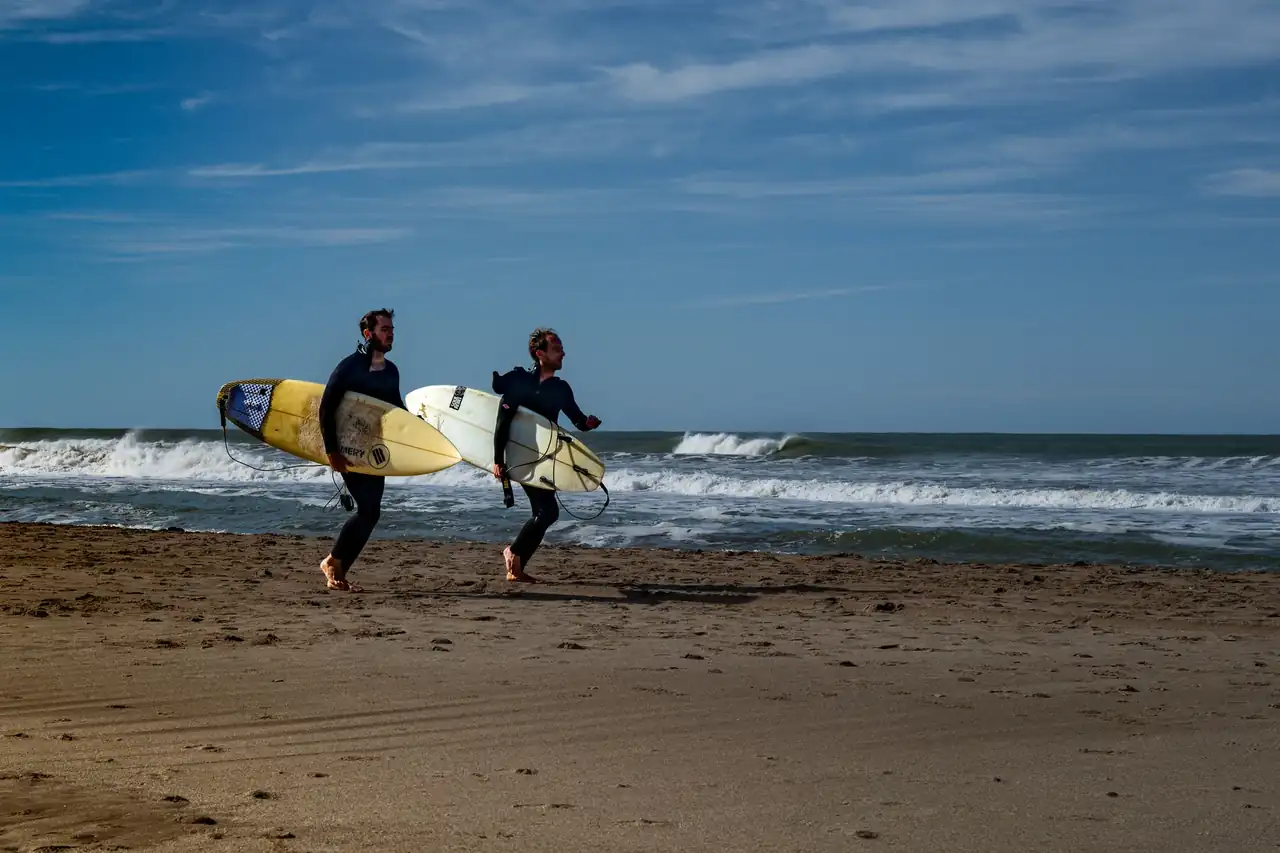
On the road, on a trail, or under a sun that hits head-on, a pair of well-chosen sunglasses completely changes the experience: they reduce glare, protect against ultraviolet radiation, and keep your face from tightening with every stride or pedal stroke. In practice, what separates a flashy accessory from a useful tool comes down to very specific details: fit, ventilation, weight, curvature, and lens type.
The market has strongly pushed toward increasingly technical models, and that shows up both in the display case and in your wallet. In Spain, the usual prices for men’s sports sunglasses vary widely: entry-level options range from 12 to 20 euros, the more capable models sell for between 25 and 40 euros, and high-end references can easily exceed 100 euros. The difference is not always in the brand name; often it lies in the lens, the fit, and the ability to really wear them for hours.
What really matters in training sunglasses
The first temptation is usually to focus on the shape or color of the frame, but visual performance depends on another set of virtues. UV400 protection is the sensible starting point, because it blocks practically all UVA and UVB ultraviolet radiation. Without that filter, the rest of the technical sheet matters much less. From there, the conversation should move to comfort: a pair can be light and still be annoying, or wrap around the face without staying secure in motion.
Fit becomes decisive in sports with repeated impact, such as running. A frame that bounces, presses on the temple, or shifts with sweat ends up being unnecessary after a few kilometers. That’s why models with a rubber nose bridge, grippy temples, and flexible materials like TR90 stand out; it’s a polymer known for being strong and lightweight. It’s no small detail: in long sessions, a few extra grams can feel like a small stone on the nose.
It’s also worth looking at the field of view. Wraparound or shield-style sunglasses expand side coverage, block the wind better, and limit the entry of dust, insects, or side reflections. In cycling this translates into safety; in trail running or urban running, into fewer distractions. The key is not to cover more just for the sake of it, but to follow the natural movement of the head without creating blind spots or strange edge distortions.
Polarized, photochromic, or mirrored: what each lens does
The lens is the heart of it all. In an environment with shiny asphalt, water, snow, or glass buildings, polarized lenses reduce reflections and improve scene readability. They are especially useful for urban runners, road cyclists, and athletes who train by the sea or in very exposed areas. They do not replace ultraviolet protection, but they make vision cleaner, as if someone had turned the world’s brightness down a notch.
Photochromic lenses respond to light and change tint according to solar intensity. That automatic adaptation is very convenient when a route alternates between shade and sun, or when the outing begins in dim light and ends at midday. In mountain and trail settings, where light comes and goes between trees, rocks, and cliffs, that versatility matters more than aesthetics. The only caveat is that the transition is not always instant, so it’s worth assuming they won’t behave exactly like a fixed lens.
Mirrored lenses help most on very bright days. They reflect part of the incoming light and usually offer a more aggressive, more sporty, almost competitive look. They are a logical choice for summer days or high-mountain areas. If training mixes light and shade, brown, amber, or pink tones can provide contrast without darkening the scene too much. It’s not all about darkness: in sport, seeing well often means seeing with nuance.
Light materials, a firm grip, and a frame that doesn’t distract
The best solutions are not the ones that attract the most attention, but the ones that disappear on your face. TR90, polycarbonate, nylon, and lightweight aluminum dominate much of the technical sheets because they withstand intense use well and handle the small knocks of sports life better. In a backpack, in a drawer, or on a hot, sweaty outing, durability becomes a very real advantage.
Ventilation also matters more and more. Many models include small openings in the upper part or in the temples to reduce fogging, especially when effort increases and the body produces more vapor. This is relevant in cycling and also in running when ambient humidity is high or when stops and starts are frequent. A clear lens is a useful lens; if it fogs up, the rest of the design takes a back seat.
The men’s sports sunglasses that work best usually share a common idea: lightness without fragility. Approximate weights of 20 to 30 grams are common in well-designed models, while beyond that threshold the feeling on the nose and ears becomes more noticeable. It’s not an absolute rule, but it is a reliable clue for separating a reasonable product from one that is too noticeable with every movement.
Running, cycling, mountain sports, and padel do not ask for the same thing
Running demands stability above all else. Runners need a frame that doesn’t bounce, doesn’t move with sweat, and lets them look at the ground without artificially lifting the head. Wraparound shapes, non-slip bridges, and lenses with good contrast fit this discipline well. On urban routes, polarization also helps tame the glare from asphalt, windshields, and glass facades.
In cycling, the equation changes slightly. Here speed amplifies the effect of the air, so frontal coverage, ventilation, and helmet compatibility matter. Many technical sunglasses were originally made for cycling and later adapted to other sports. Their wide shield protects better from wind, mosquitoes, and small splashes that appear on the road or trail. On long rides, that barrier is appreciated like an invisible visor.
Mountain sports and trail running add another layer of complexity: constant light changes, mud, rocks, branches, and stretches of deep shade. Photochromic lenses often shine there because they offer a more logical transition between environments. In padel or tennis, by contrast, the criteria can be more mixed; side vision and contrast matter a lot, but so does comfort during explosive movements and quick turns. The same object, in reality, changes jobs depending on the setting.
Real prices and what to expect at each level
The price range is broad and, fortunately, you don’t have to jump straight to the premium segment to find something worthwhile. Between 12 and 20 euros, you’ll find simple options with UV protection and basic design, enough for occasional use or very easy training sessions. In that range, it’s especially worth checking that the frame isn’t flimsy and that the lens doesn’t distort the image at the edges.
Between 20 and 40 euros is usually the most interesting territory for most runners and cyclists. That’s where light models, polarized lenses, wraparound designs, and more reliable materials come together. In many online stores, this range accounts for a large share of sales because it combines manageable cost with enough performance for frequent use. It’s no coincidence that many popular references from brands such as Oakley, Adidas, Bollé, Julbo, Nike, or Hawkers sit near that scale, with variations depending on finish and lens.
From 80 or 100 euros upward, you enter a different game. Optics usually improve, finishes are more refined, and the fit tends to be more precise. The possibility of adapting the sunglasses to a prescription or mounting specific lenses for different conditions also appears more often. Price, however, does not by itself guarantee a better experience. There are expensive models that look great in your hand and underperform when running, and modest ones that do the job they were designed for very well.
Prescription lenses change the picture for those who need sharp vision
One point that is often forgotten is the possibility of doing sport with visual correction. Many sports sunglasses accept prescription lenses or adaptations designed for those who wear glasses in everyday life. This matters especially in long-distance running, cycling, or hiking, where a small focus problem becomes annoying over the miles. Seeing the asphalt, a pothole, or a sign clearly is not a luxury; it’s part of safety.
Prescription correction does not have to ruin the sporty design. There are clip-in solutions, insertable lenses, or frames prepared to accommodate correction without sacrificing hold. The challenge is finding the balance between vision and ergonomics. When that combination works, the sunglasses stop being a seasonal accessory and become a stable part of your kit.
It’s worth remembering that prescription does not replace a technical lens. A pair of prescription sunglasses without the proper filter, useful curvature, or sun protection is still a bad buy for outdoor sports. The sensible approach is to think about both things at once: see clearly and protect properly. One without the other leaves the setup incomplete.
Brands, trends, and an industry that already thinks about real use
Current offerings show a clear trend: more lightness, more versatility, and less ornamental accessory. Specialized brands have understood that runners, cyclists, and hikers want a piece that doesn’t require too many compromises. Oakley remains associated with high-end technical gear, Julbo keeps a strong presence in mountain and trail, Adidas and Nike explore more sporty and urban lines, while Bollé, Eassun, Under Armour, Polaroid, Hawkers, and Rockbros compete in different segments with varying prices and features.
The presence of models with interchangeable lenses or certified recycled materials has also grown. On Amazon and other online stores, it’s now common to find products that highlight recycled content or more environmentally friendly processes. That doesn’t solve the purchase by itself, but it adds an interesting layer of reading: consumers no longer look only at protection or price, but also at the material footprint of what they wear on their face.
The result of all this is a more mature offering. A few years ago, many sports sunglasses seemed designed to look fast. Now, many references are made to perform for real in real effort. That difference shows in the nose bridge, the grip of the temples, and the way the lens handles the environment, without exaggeration or gimmicks.
Choosing well means gaining comfort before you start sweating
Men’s sports sunglasses should not be bought like someone choosing a fashion color. They are a small mechanism for protection and terrain reading, a tool that has to do its job without stealing attention. If the frame is stable, the lens responds to light, and the weight almost disappears, the runner appreciates the difference within minutes. If something fails, the memory lasts throughout the workout.
Good judgment means bringing together three pieces: real sun protection, solid fit, and a lens suited to the setting. Add to that the budget, the prescription if needed, and the type of sport practiced most often. The same model may work well for walking, for adding miles at an easy pace, or for mountain outings, but it won’t always handle a race, a fast descent, or a windy route in the same way.
In the end, the best choice is not the most eye-catching or the most expensive. It’s the one that lets you look ahead, breathe deeply, and keep moving without noticing that you’re wearing anything at all. In sport, as in so many things, excellence often looks simple when it’s well made. And a good pair of men’s sports sunglasses is exactly that: a discreet piece that makes the difference visible on every outing.



How to prevent thigh chafing: causes and real solutions

Women’s running windbreakers: seven jackets and how to choose

Do more workouts get rid of soreness? A guide for runners

Jaén Half Marathon 2026: Record 3,800 Runners Registered

Men’s short running tights: how to choose the right pair

World Triathlon confirms data breach involving medical data

Izan Edo targets podium at Miyazaki World Cup

María Pérez ranks ninth in World Athletics’ 2026 top ten

Dos Santos, Duplantis and Sawe: World Athlete of the Year finalists

San Silvestre Vallecana 2026: 42,000 places, prices and start times

 Races4 months ago
Valencia Half Marathon 2027: date and registration

 Races4 months ago
Valencia Marathon 2026: entry, ballot and course

 Reviews and Comparisons4 months ago
Asics Gel-Roadmiles 3 for men: review and current price

 Reviews and Comparisons4 months ago
Asics Gel Sonoma 8 Gore-Tex: complete analysis for trail and rain

 Sneakers4 months ago
Saucony Endorphin Pro 4: full review and verdict

 News5 months ago
Strava API 2026: what changes for clubs, challenges and runner apps?

 Reviews and Comparisons5 months ago
Nike Alphafly 3: opinions, sensations, and real key points

 Reviews and Comparisons4 months ago
Under Armour running shoes review 2025-2026: models and key features

 Sports Equipment4 months ago
Shoe sizes in cm: a clear guide to getting the right fit for your footwear

 Sneakers3 months ago
Skechers GO RUN Consistent 2.0 analysis: comfort and limits

 News5 months ago
Valencia Marathon 2026 route: key tips to train and run better

 Sneakers4 months ago
Adidas Adizero Boston 13 for men: review and verdict