Sports Equipment
Shoe size chart: equivalences, measurements and widths
Practical guide to choosing the correct shoe size with equivalents, foot measurements, and widths.

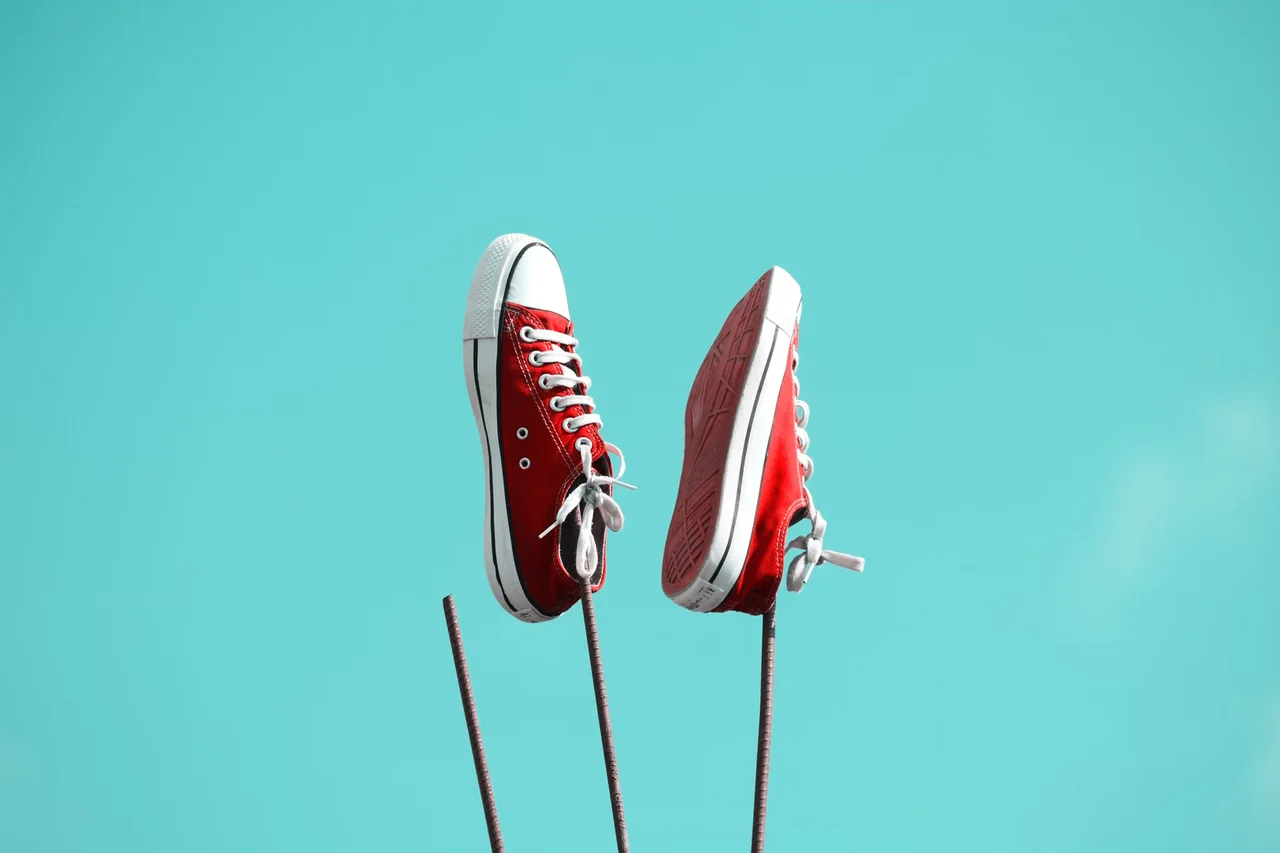
The correct shoe size does not depend only on the number printed on the tongue. Between European, British, and American systems, and with real differences between brands, buying footwear is still a mix of measurement, judgment, and trial. The same foot can fit differently depending on the last, the material, and even the time of day it is measured.
That is why a good shoe size chart does not work as an exact promise, but as a compass. It serves to translate centimeters into numbers, compare systems, and reduce errors, but it does not replace the real fit. In the footwear world, length matters, yes; width too, and sometimes more than it seems.
Foot measurements matter more than the number
The starting point is always the length of the foot. Europe, the United Kingdom, the United States, and Japan do not use the same pattern, so the shoe label can vary even if the foot is the same. In practice, a foot of about 24.5 cm usually falls around a European 38 or 39 for women, and a 40 or 41 for men, although the exact jump changes depending on the manufacturer.
It is worth assuming from the very first minute that the commercial size is not a universal measurement. Two sneakers with the same size can feel like different models: one may leave the instep free, while another may squeeze the toe box like a drawer that is too short. Measuring the foot, therefore, is more valuable than relying on the memory of the last pair bought.
The most useful reference for comparing sizes is the centimeter. Anyone who knows their foot’s true measurement can convert it fairly accurately between charts. In adult footwear, the steps usually range between 0.5 and 1 unit depending on the system, while in children’s shoes the increments are finer and the variety of scales greater.
How to measure your foot at home accurately
The simplest method is still the most effective: a sheet of paper, a straight pencil, a ruler, and a wall. The foot should rest fully on the surface, with the heel properly placed and the toes relaxed. Mark the tip of the longest toe and measure the distance from the back edge to that mark. Doing it with both feet is important, because they do not always measure the same.
The best time to do it is in the afternoon or at the end of the day. Feet expand with activity and can gain a few millimeters, enough to go from a comfortable size to one that is too tight. Measuring in the morning usually gives a smaller-than-real number, and in footwear that translates into compressed toes, rubbing, or a toe box that is too short.
There is one detail that repeats in stores and at home: the larger foot decides. If one measures more than the other, the longer one is used as the reference. That small difference is normal and does not require drama, but it does prevent the perfect shoe for one foot from turning the other into an uncomfortable guest.
Conversions between Europe, the United Kingdom, and the United States
In Europe, sizing usually follows a scale based on the internal length of the shoe. In the United Kingdom, the system has its own historical logic and usually shows values lower than European sizes. In the United States, the scale also changes between men and women, adding another layer of confusion for online shopping and international exchanges.
A practical reference: in women’s sizing, a EU 38 usually corresponds approximately to a UK 5 and a US 7.5. In men’s sizing, a EU 42 usually corresponds to a UK 8 and a US 9. It is not a perfect mathematical translation, but it is a solid starting point before trying them on.
In children’s sizing, the jump between systems is more irregular. A European children’s size does not always move with the same rhythm as in adult sizing, and labels such as C or Y appear in the U.S. system. That is why the centimeter becomes the key piece again: it allows you to move from one scale to another without depending on commercial names that change by country or segment.
The practical guide for women, men, and children
In women’s footwear, the most common European sizes often range between 35.5 and 41, with frequent UK equivalents from 2.5 to 8 and U.S. equivalents from 5 to 10. A foot of 22.4 cm usually corresponds to around a EU 35, while one of 26.7 cm fits close to a EU 42. These are approximate ranges, but very useful when buying from a distance.
In men’s sizing, the most common range is approximately EU 39 to 47, with equivalents that can go from a UK 5 or 6 up to a UK 12, depending on foot length and the system used by the brand. A 27 cm foot is usually around a EU 42 or 43, while one of 29 cm normally moves up to EU 45 or 46.
In children, the margin for error is even more delicate. An incorrect fit does not just cause discomfort; it can also interfere with how the foot grows and bears weight. That is why the exact centimeter measurement matters more than the approximate number. In this range, the toe box should provide enough room for movement, but not so much that the foot slides around inside the shoe with every step.
Width matters too, and a lot
Length solves part of the problem, but the width of the foot can change the experience completely. Some people have narrow feet that suffer in standard models, while others need wider lasts to avoid ending up with lateral pressure. A shoe that is correct in length can be unusable if the forefoot area squeezes like a clamp.
Some brands use letters or abbreviations to indicate width. In men’s shoes, it is common to find N or B for narrow, M or D for medium width, and W, 2E, 4E, or 6E for roomier fits. In women’s shoes, the most common references range from AA for narrow, B for medium, and D or EE for wider fits.
There is no single universal standard for these designations, so the same symbol can vary between manufacturers. Even so, the concept is clear: a good fit should not focus only on length, but also on width, instep height, and the overall shape of the last. These are three dimensions of the same comfort.
Why two brands with the same size do not fit the same
Standardization exists on paper, but the real market works with small deviations. Some brands design roomier lasts; others, narrower ones. Even within the same brand, a sports model can fit differently from a casual shoe or a boot. The material, the curvature of the sole, and the interior padding all have a big influence.
Elastic fabrics, natural leather, synthetic leather, and technical mesh do not behave the same way. Some materials give with use, while others maintain a rigid structure. That is why a model can feel snug in the store and then loosen somewhat, while another will keep its rigidity almost unchanged for months.
This variability explains why a good reference should never be taken as a final verdict. Size is a map, not a boundary. Anyone who blindly buys their usual size and ignores the last may end up with a pair that pinches the instep, floats at the heel, or creates friction on the little toe. All of that can happen within the same number.
The comparison between men’s and women’s sizes is not symmetrical
In the United States, the difference between men’s and women’s sizes usually ranges from 1.5 to 2 sizes, depending on the brand and type of footwear. For example, a men’s size may correspond approximately to a women’s size somewhat higher within the same scale. That relationship is useful, but it should not be transferred automatically to Europe, where the equivalence depends more on the total length of the shoe.
There are also width differences. Men’s models usually offer more room in the forefoot and instep, while women’s models tend to have a somewhat narrower last. That does not mean that feet have gender, but rather that the market has built different patterns for different profiles, and personal fit matters more than the commercial label.
That is why, when comparing between sections or international catalogs, it is not enough to move a number up or down. You have to read the context of the system, the available width, and the type of shoe. Sneakers may allow a relatively simple conversion; dress shoes, less so. The shape of the shoe matters as much as the number.
The ideal space in front of the toes
A simple sign that a shoe may work is leaving between 1 and 1.5 cm of space at the front. That room allows the foot to expand while walking, the toes to spread a little, and rubbing to avoid hitting the same spot all the time. In athletic shoes, that extra allowance is especially useful.
If the space is smaller, predictable problems appear: bumped toenails, pressure at the toe, a feeling of heat, and a tighter stride. If it is excessive, the foot can slide forward and the heel lose support. Balance, as almost always in footwear, lies in a narrow and reasonable range.
In high heels or in certain very structured models, this margin is not interpreted in the same way. Even so, the logic remains the same: the foot should not be compressed or loose. Real comfort comes when the shoe follows the movement instead of forcing it.
When children’s conversions lead into the adult world
Children’s sizing sometimes feeds a false economy: the pair seems cheaper because it belongs to a different section, but the savings disappear if the last does not fit. In youth footwear, the boundary between child and adult also shifts easily. There are sizes that are already close to adult formatting, and others that still keep child proportions.
In the U.S. market, sizes C and Y often indicate that transition. Likewise, a small adult foot can match an advanced children’s size in some charts. That explains why some people find functional options in sections they had not initially considered.
Even so, it is not all about numbers. The design of a children’s shoe does not always respond to the same use, support, or durability as an adult one. Conversion is useful for guidance, but the product context remains decisive. A correct equivalence does not guarantee the correct experience.
The signs that the size is not yours
A shoe that is too small usually gives itself away quickly: pressure at the toe, bent toes, rubbing on the side, a visible mark when removed, and the feeling that the foot is trying to escape forward. The discomfort may seem tolerable at first, but with use it becomes a cumulative problem. The foot, in the end, does not negotiate well with constant compression.
Too much room has clear symptoms too. The heel lifts while walking, the instep loses support, and the foot moves inside the shoe as if the structure were a box that is too big. That looseness can be just as annoying as tightness, because it alters the stride and causes rubbing in unexpected places.
True comfort is felt in small details: stable support, free toes, a firm heel, and a sense of enough space without exaggeration. A good fit does not draw attention; it simply disappears. And that silence is, in footwear, good news.
Charts guide you, but the try-on still has the final word
A conversion chart saves time and reduces errors, especially in online shopping or when comparing international systems. However, the foot still has the final word. Neither the roundest number nor the prettiest conversion can replace the real try-on, because the shoe’s behavior changes with the last, the instep, and the material.
Physical stores still retain an advantage that charts cannot imitate: they allow you to walk a few steps, feel the pressure, and detect whether the shoe responds well when your body weight comes down on it. In a digital setting, that same check shifts to the pre-purchase information, size guides, and return policy.
In sensible shopping, the best practice is simple: measure, compare, and accept that size is a reference, not an absolute truth. That idea avoids returns, avoids pain, and avoids the old habit of trusting a number as if it were a command. The foot, in the end, matters more than the catalog.
A better purchase starts with reading the last correctly
The correct size is not chosen only by eye or habit. It is built with measurement, equivalences, and context. That is why a good chart should include centimeters, European, UK, and US references, and also width, which is often the big forgotten factor. Without that combination, the number loses a lot of precision.
Buying better does not mean obsessing over detail, but accepting that footwear is an interface between the body and the ground. Just as a key must fit its lock, a shoe must respond to the shape of the foot with enough room and support. When that happens, the number stops mattering so much and the feeling of balance takes over.
At heart, the usefulness of a shoe size chart lies in exactly that: translating systems and bringing order to a market that has never been fully uniform. Used well, it saves mistakes. Used badly, it only adds noise. The difference is made by a well-taken measurement, an honest comparison, and attention to that small boundary where comfort or rubbing begins.
How to choose the right size for running
Getting the fit right in running shoes can help prevent cramped toes and rubbing over the course of a run. A size chart is a useful starting point, but different lasts and widths can make the same labelled size feel quite different. Measure both feet and use the longer one as your guide. Since feet can expand during the day and with activity, an afternoon measurement is usually more representative than relying on the size of your last pair.
When trying on shoes, wear the socks you normally run in and check that your toes have room and the sides of your feet are not squeezed. The fit should feel secure without pressure or rubbing as you walk. If you are ordering online, check the manufacturer’s size guide and compare measurements in centimetres rather than relying on the number alone: your usual size may fit differently in another brand or model.



How to prevent thigh chafing: causes and real solutions

Women’s running windbreakers: seven jackets and how to choose

Do more workouts get rid of soreness? A guide for runners

Jaén Half Marathon 2026: Record 3,800 Runners Registered

Men’s short running tights: how to choose the right pair

World Triathlon confirms data breach involving medical data

Izan Edo targets podium at Miyazaki World Cup

María Pérez ranks ninth in World Athletics’ 2026 top ten

Dos Santos, Duplantis and Sawe: World Athlete of the Year finalists

San Silvestre Vallecana 2026: 42,000 places, prices and start times

 Races3 months ago
Valencia Half Marathon 2027: date and registration

 Races3 months ago
Valencia Marathon 2026: entry, ballot and course

 Reviews and Comparisons4 months ago
Asics Gel-Roadmiles 3 for men: review and current price

 Reviews and Comparisons4 months ago
Asics Gel Sonoma 8 Gore-Tex: complete analysis for trail and rain

 Sneakers3 months ago
Saucony Endorphin Pro 4: full review and verdict

 News5 months ago
Strava API 2026: what changes for clubs, challenges and runner apps?

 Reviews and Comparisons5 months ago
Nike Alphafly 3: opinions, sensations, and real key points

 Reviews and Comparisons4 months ago
Under Armour running shoes review 2025-2026: models and key features

 Sports Equipment4 months ago
Shoe sizes in cm: a clear guide to getting the right fit for your footwear

 Sneakers3 months ago
Skechers GO RUN Consistent 2.0 analysis: comfort and limits

 News5 months ago
Valencia Marathon 2026 route: key tips to train and run better

 Sneakers4 months ago
Adidas Adizero Boston 13 for men: review and verdict