Sports Equipment
Shoe size in cm: equivalents, charts, and measurements
Convert centimeters to shoe size accurately and avoid mistakes when shopping for adults and children.

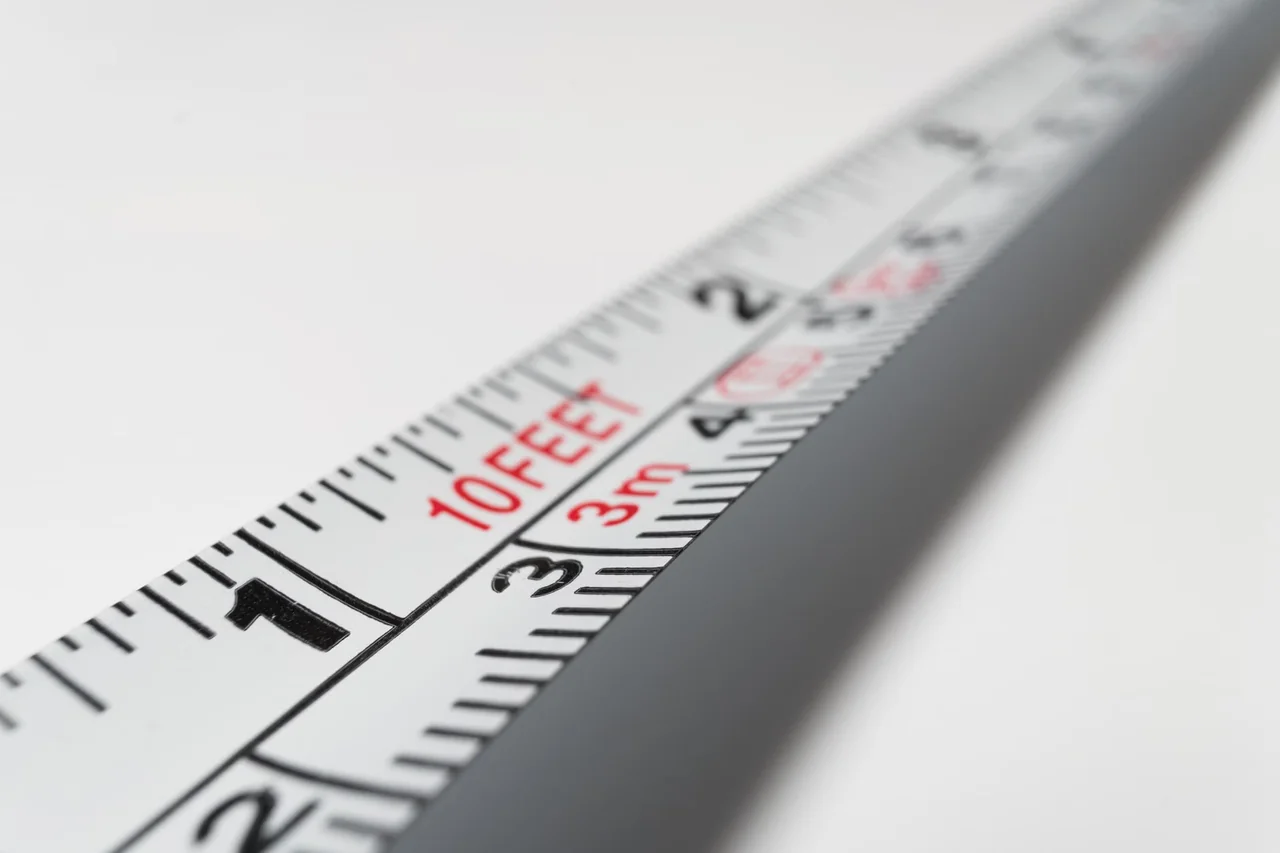
The foot measurement in centimeters remains the most reliable reference for getting footwear right, above the size shown on the box. Size numbers change between countries, brands, and even between models from the same label; centimeters, by contrast, provide a much more stable starting point for comparison and for choosing with less room for error.
In practice, that means a 25 cm foot does not always match the same number in Europe, the United States, or Mexico. The conversion depends on the last, the sizing system, and the type of shoe. That is why measuring the foot properly and reading the correct equivalence avoids blind purchases, rubbing, toe pressure, and unnecessary returns.
Why the centimeter matters more than the number
Footwear is manufactured to different standards depending on the market. European, American, and British sizes do not use the same scale, and some brands also adjust their patterns with slight internal differences. The actual length of the foot in cm makes it possible to compare objectively, like placing a ruler in front of a map so you do not get lost in the details.
That reference is especially useful for online shopping, where trying the shoe on is not possible. It also helps families with children, because feet grow quickly and a stable figure makes it easier to check whether a model has already become too short. In a context like running or everyday sport, that margin matters even more: a poor fit alters the gait and can turn a comfortable outing into a session of discomfort.
The key is not to confuse foot length with the final size outright. Footwear should have between 0.5 and 1 cm of extra room, depending on use, sock thickness, and the type of activity. A dress shoe allows less margin than a training shoe, where the foot usually swells a little more with exertion and heat.
How to measure your foot at home accurately
Measuring the foot correctly does not require any unusual tools. All you need is a sheet of paper, a wall, a pencil, and a ruler or measuring tape. The foot should rest on the floor, with the heel firmly against the wall and the weight distributed as when walking. The mark is made at the longest point, usually the big toe or the second toe, which for some people extends beyond the first.
The result should be taken from both feet, because they do not always measure the same. Many people discover differences of several millimeters, and that small variation can be decisive when choosing a size. In that case, the longer foot is used as the reference. Measuring at the end of the day also helps, since the foot tends to be slightly more expanded than in the morning.
It is best to do it with the type of sock you will wear with the footwear. A bare foot does not measure the same as one wearing a thick sports sock. In running shoes, hiking boots, or winter footwear, that detail matters more than it seems. A clean, repeated measurement reduces errors that later appear as a tight toe box, a snug instep, or an unstable heel.
Common equivalences between centimeters and European size
European sizing is not an exact translation of centimeters, but it does allow you to work with a useful guideline chart. In retail, people usually speak of approximate foot lengths and corresponding shoe numbers. For adults, the most common relationship in commercial charts places, approximately, a 24 cm foot near size 37, 24.5 cm around 37.5, 25 cm near 38, and 25.5 cm around 38.5.
From there, the sequence usually advances by half sizes: 26 cm is close to 39, 26.5 cm to 39.5, 27 cm to 40, 27.5 cm to 40.5, 28 cm to 41, 28.5 cm to 41.5, 29 cm to 42, and 30 cm to 43. From that point on, 31 cm usually corresponds to 44, 32 cm to 45, 33 cm to 46, and 34 cm to 47. These equivalences are approximate, not absolute, because foot volume also matters.
In larger sizes, some commercial charts continue with 34.5 cm for 47.5 and 35 cm for 48. That progression helps guide purchases, although it does not replace each manufacturer’s technical size chart. If a brand uses a narrow last, the same centimeter measurement may require a larger number to maintain comfort; if the last is wide, the opposite may happen.
The chart that helps the most when buying without improvising
Size converters usually include several systems at once. A clear chart crosses foot length with European size and, often, with US size or other markets. For men, for example, many retailers place 25.4 cm near a US 8, 26 cm around US 9, 27 cm at US 10, 27.9 cm at US 11, 28.6 cm at US 12, 29.4 cm at US 13, and 30 cm at US 14, although the final fit depends on the manufacturer.
For women, the most common commercial equivalences place 22.5 cm near US 5, 23 cm around US 5.5, 23.5 cm around US 6, 24 cm near US 6.5, 24.5 cm at US 7, 25 cm at US 7.5, 25.5 cm at US 8, 26 cm at US 8.5, 26.5 cm at US 9, and 27 cm at US 9.5. Accuracy improves when the centimeter measurement is compared with the brand’s own chart, not with an isolated generic equivalence.
In children, the margin is even more delicate. Children’s charts do not only translate length; they also reflect very rapid growth rates. A foot from 12.1 to 13 cm usually falls in European sizes close to 20 or 22; between 14.3 and 14.6 cm, numbers close to 24 are common; and from 19.7 cm onward, commercial guides already move toward 32 or 33. At these ages, it is more about checking frequently than guessing.
Extra room, last, and use: the three details that change the real size
It is not enough to look only at the measured centimeter. Intended use changes the most suitable size. A street shoe can have a slightly snugger toe box without much issue, whereas a running shoe needs room for foot movement and for the natural expansion caused by exertion. Between half a centimeter and one centimeter of extra room is usually a sensible reference in sports footwear, as long as the heel does not slip.
The last also matters. Some shoes make the foot look slimmer while others prioritize width. Narrow toe boxes may force you to go up half a size even if the length seems right, because the problem is not length but width. In people with a high instep, the fit on the upper part can also be the real bottleneck, that area where the shoe looks fine on the shelf and feels uncomfortable when walking.
The type of closure comes into play quietly. Laces, Velcro, or adjustable straps allow a better fit than a rigid slip-on. That detail, which sometimes seems secondary, can be decisive for feet whose volume changes throughout the day. The correct size is not just a number; it is the balance between length, width, support, and freedom of movement.
Frequent mistakes when converting centimeters to size
One of the most common mistakes is sticking with the measurement without adding extra room. A foot may measure 26 cm and still need a shoe designed for 26.5 or 27 cm depending on the model. Another frequent error is using an old chart or one from a different brand without checking whether the equivalence refers to the shoe’s interior length, the foot length, or an approximate commercial conversion.
Confusion between size and comfort is also common. A shoe that fits is not always the right shoe. If the toe touches the front, if the instep feels tight while walking, or if the heel lifts too much, the size is compromised even if it seems acceptable at rest. The foot should settle in, not be forced in. The difference between those sensations is usually noticeable after a few minutes of walking.
In sports footwear, another mistake appears: buying too tight, thinking it will give. Some materials do adapt, yes, but the structure of the model does not change by magic. Leather may stretch somewhat; technical mesh behaves differently. And a running shoe that is too tight does not improve with the miles; it punishes the foot sooner.
Children: rapid growth, frequent checks, and controlled extra room
In children’s footwear, the centimeter measurement is almost a snapshot of a moment that quickly changes. Children grow in jumps, not linearly, and that means the fit has to be checked regularly. In early ages, checking every two or three months is usually reasonable; in later stages, it can be spaced out a bit more, but never forgotten altogether.
Children’s feet need room to move, but not too much. Too much space is also a problem, because the foot slips, walking becomes clumsy, and support loses effectiveness. That is why age-based charts are only for quick guidance. The actual cm measurement always matters more than the birth date, which can be a far too imprecise compass.
In this category, material recommendations matter as much as size. Flexible, breathable models with a secure sole usually perform better in everyday use. The priority is not to wear a nice-looking number, but to make sure the child’s foot can grow without obstacles, without squeezing, and without floating inside the shoe like it is in a boat that is far too large.
Adults: why the same centimeter does not mean the same thing across brands
Among adults, the problem does not disappear. A 27 cm foot may feel right in a size 42 from one brand and in a 41.5 or 43 from another. The difference is not always due to a manufacturer error; it often reflects the shape of the last, the type of toe box, or the market the collection is aimed at. Commercial size is a convention, not a universal truth.
Dress shoes usually leave less room for adjustment. More structured models, with rigid leather or a narrow design, require greater precision. By contrast, in sneakers and casual footwear, the adaptation can be somewhat greater. Even so, it is wise not to assume that a usual size works without checking the length in cm, especially when the manufacturer or sole type changes.
For those who repeatedly buy the same model, past experience helps, but it does not replace measurement. Feet change with age, weight, heat, activity, and even during certain times of day. The safest reference remains the foot’s centimeter measurement, because it allows you to readjust without relying on memory or on a number that may already have become too small.
Sports footwear and running: centimeters, half sizes, and real feel
In running, talking about size in centimeters is even more practical. During the run, the foot moves, impacts, and expands. It can also increase slightly in volume due to heat and circulation. That is why many runners choose a little more room than they would use in street shoes, especially for long runs or in summer.
The distance between the tip of the longest toe and the front of the shoe should not be exaggerated, but it should be sufficient. About a thumb’s width of space is often used as a visual reference, although each foot and each model draws its own boundary. If the fit is too exact, downhill running, the end of a long run, or impact training can leave the foot sore.
The lacing system also matters. A good lace-up can correct small differences in size or instep height, while a poor fit makes even the correct size feel unstable. In sports, the cm size provides the base; the rest is completed by foot shape, training type, and how the model responds once it starts rolling over asphalt or dirt.
A good purchase starts before choosing the model
The right decision does not start in the shop window, but with the measurement. Anyone who measures the foot in centimeters, compares it with a reliable chart, and adds the proper amount of extra room buys with less guesswork and more judgment. That simple step avoids the all-too-common feeling of trying on a shoe that is already too small, like a door that looks open until you try to go through it.
Measure, compare, and check are enough to reduce many common mistakes. After that, the last, the intended use, and personal preference come into play, and they matter too. But the serious starting point is always the same: a well-measured foot, a well-interpreted equivalence, and a careful reading of each chart. In a market full of numbers that seem the same but are not, the centimeter remains the clearest language for buying shoes sensibly.
In the end, size is not a decorative label. It is the difference between walking naturally and accumulating small discomforts that repeat themselves without drawing attention at first. That is why the cm measurement does more than guide: it organizes buying criteria, brings order to different systems, and makes it possible to choose with greater confidence in a field where details are, quite literally, underfoot.



Reebok runs large or small: a real fit guide

Hoka Challenger ATR 7 GTX: complete review of the all-terrain shoe

How to clean white sneakers without ruining them

Altus Pirineos 40-liter backpack: analysis, use, and key points

20,000 mm waterproof jacket for men: key points to get it right

Under Armour HOVR Sonic 6: complete review of the shoe

incline treadmills: guide to choosing better

Achilles tendonitis: real recovery time

Pain in the Achilles heel: causes, signs, and relief

What to take for calf pain: real relief and when to worry

 Races3 months ago
Valencia Half Marathon 2026: date and registration

 Reviews and Comparisons4 months ago
Asics Gel-Roadmiles 3 for men: review and current price

 Races3 months ago
Valencia Marathon 2026: entry, ballot and course

 Reviews and Comparisons4 months ago
Asics Gel Sonoma 8 Gore-Tex: complete analysis for trail and rain
- Sneakers3 months ago
Saucony Endorphin Pro 4: full review and verdict

 News5 months ago
Strava API 2026: what changes for clubs, challenges and runner apps?

 Reviews and Comparisons5 months ago
Nike Alphafly 3: opinions, sensations, and real key points

 Reviews and Comparisons4 months ago
Under Armour running shoes review 2025-2026: models and key features

 Sports Equipment4 months ago
Shoe sizes in cm: a clear guide to getting the right fit for your footwear
- Sneakers4 months ago
Adidas Adizero Boston 13 for men: review and verdict
- Sneakers3 months ago
Neutral running shoes with lots of cushioning: the best of 2026

 News4 months ago
Where is the Hoka brand from and why was it born in France