Sports Equipment
American shoe size to European size: equivalences and key points
Clear conversion between U.S. and European sizes, with measurements, brand-specific nuances, and tips for getting it right when buying.

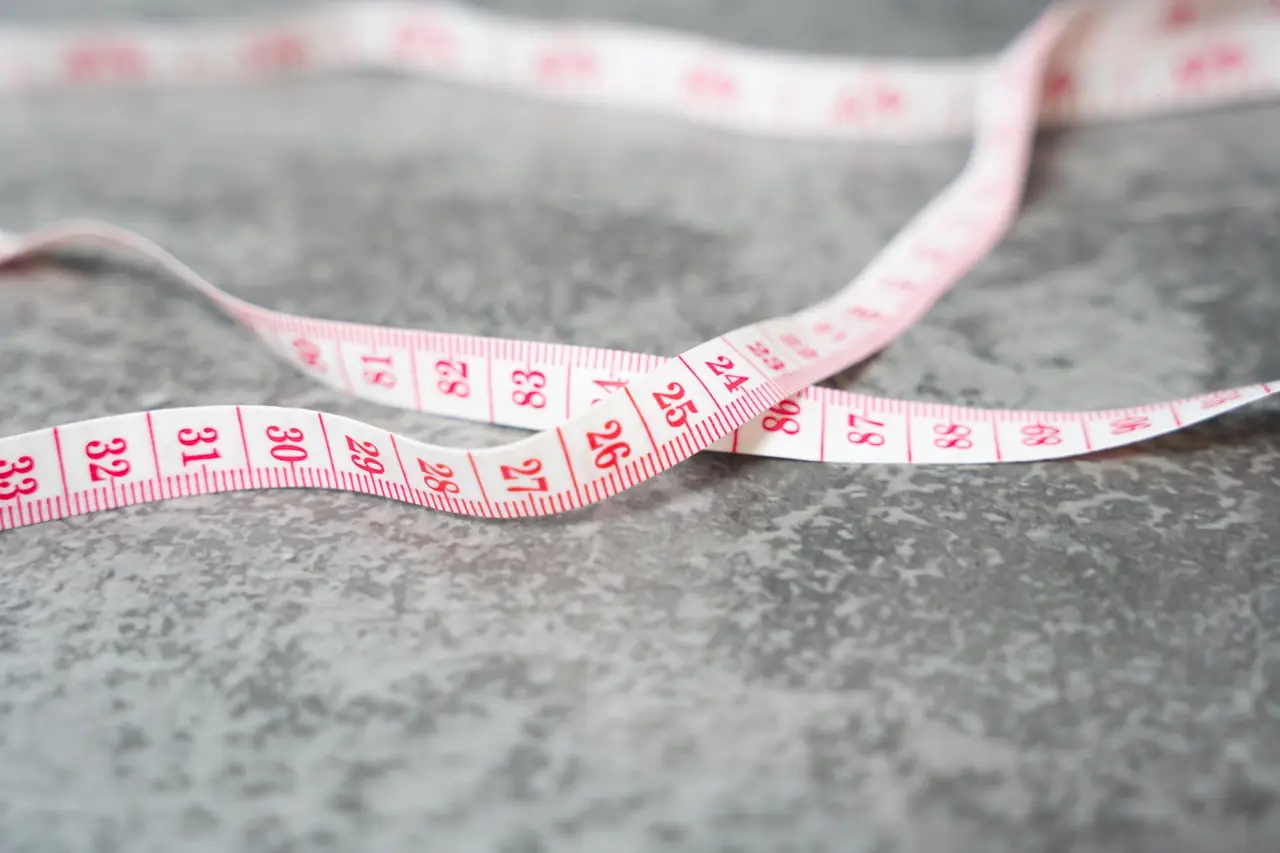
The equivalence between American size and European size is not governed by a fixed rule, and that is where most mistakes when buying shoes come from. The same number can vary depending on gender, last shape, brand, and even the country of manufacture. In practice, a U.S. size usually runs ahead of the European one in steps that do not always match exactly, so looking only at the number printed on the box can lead to a fit that is too tight or, on the contrary, to a shoe with too much slack.
The useful reference is not the isolated number, but the combination of foot length in centimeters, sizing system, and type of footwear. In women, for example, a US 8 usually corresponds to about a EU 39, while in men a US 8 usually comes close to a EU 41. That difference is not arbitrary: the American and European systems start from different scales and also tend to separate charts by category, which especially complicates online shopping and international brands.
How sizes are translated between the United States and Europe
The most reliable conversion between both systems starts with the actual measurement of the foot. Even so, for quick guidance, it is worth remembering some common matches. In women, a US 5 usually equals a EU 35.5, a US 6 a EU 36.5, a US 7 a EU 38, and a US 8 a EU 39. In men, a US 6 usually is around a EU 39, a US 7 around a EU 40.5, a US 8 around a EU 42, and a US 9 around a EU 43. These are widely used references in international trade, although they do not replace the manufacturer’s specific chart.
The European system, moreover, uses more continuous numbers and often advances in half sizes or quarters in some charts, while the American system more clearly distinguishes between men’s and women’s sizing. Hence the same number does not mean the same thing in both cases. A women’s US 8 does not fit like a men’s US 8, neither in length nor in overall fit, because the calculation base and the last shape usually change.
Sizing literature also includes centimeter variations that help ground the purchase. A 24.5 cm foot is usually around a women’s EU 39 and a men’s EU 40.5 or 41, depending on the brand. A 26.7 cm foot usually comes close to a men’s EU 42, while 25 cm may be near a EU 39.5 or 40. These ranges are useful because the European number alone is not always enough to fine-tune the fit.
Why conversion changes by gender and type of footwear
Men’s and women’s charts not only reflect differences in length. They also reflect a different last construction, with variations in forefoot width, instep shape, and the distribution of internal volume. Simply put, a shoe may measure similarly on the outside and feel very different on the inside. That is why a correct conversion depends not only on foot length, but also on the shape of the model and on how the brand distributes space.
In sneakers the mismatch is usually a bit more forgiving than in a rigid or dress shoe, but you still should not trust it blindly. Some American brands work with a difference of about 1.5 sizes between men and women within their own nomenclature, while in others the equivalence shifts a little more or a little less. Children’s sizes, moreover, follow separate scales and use letters or suffixes that do not translate cleanly to adult sizing.
That spread explains why the same person may wear a EU 39 in one brand, a 40 in another, and a 38.5 in a particularly narrow model. There is no exact universal conversion; what does exist is an approximate map that, when interpreted correctly, reduces the margin of error a lot. In online shopping, that nuance is worth gold: it avoids returns, chafing, and the feeling that the number on the box is more misleading than helpful.
Measuring your foot at home with enough precision
The most practical way to get it right is to measure both feet at the end of the day, when they are slightly more expanded. All you need is a sheet of paper, a straight pencil, and a ruler. Place your heel against a wall, mark the tip of the longest toe, and then measure the distance from the edge of the paper to that mark. Repeating the process with both feet matters more than it seems, because it is common for one to be slightly larger than the other.
The figure to use as a reference is the longer foot. If the result falls between two sizes, it is usually wise to choose the larger one, especially for closed shoes or models that allow little room for slack. At the front, it is advisable to leave between 1 and 1.5 cm of space so the toes are not compressed, something especially important in shoes for walking, running, or spending many hours on your feet.
Measuring in the afternoon is not a household whim. Over the course of the day, the foot gains volume due to heat, activity, and accumulated load. Measuring in the morning can give an overly optimistic size, as if the body had not yet settled into its real place. That small margin can decide between comfort and constant pressure, between a fit that supports and one that punishes.
What U.S. size corresponds to a European size in women and men
In women, some common equivalences place a US 5 at around a EU 35.5, a US 5.5 at EU 36, a US 6 at EU 36.5, a US 6.5 at EU 37.5, a US 7 at EU 38, a US 7.5 at EU 38.5, a US 8 at EU 39, and a US 8.5 at EU 40. From there, a US 9 usually lands around EU 40.5 or 41 and a US 10 moves close to EU 42. These are very useful guides for international shopping, although some brands round with slight deviations.
In men, the most cited sequence places a US 6 around EU 39, a US 6.5 at EU 40, a US 7 at EU 40.5, a US 7.5 at EU 41, a US 8 at EU 42, a US 8.5 at EU 42.5, and a US 9 at EU 43. From there, a US 10 usually approaches a EU 44, a US 11 a EU 45.5 or 46, and a US 12 a EU 47. The jump between numbers is not always uniform, so an intermediate size may end up too short or too long depending on the last pattern.
These references are especially helpful with American brands that do not show internal length in centimeters. If they do indicate it, that figure takes precedence. For a 25.4 cm foot, for example, the fit may fall between a EU 40.5 and 41 in men, or around a EU 39 in women, depending on the manufacturer. The centimeter provides a more stable anchor than the number, which is still a commercial convention, not an exact physical measurement.
What happens with children’s sizes and why improvising is not advisable
In children’s footwear, the charts change more drastically. U.S. systems usually divide toddlers’ and youth sizes with letters or codes that do not follow the same logic as adult sizes. That is why converting a children’s size to an adult women’s or men’s size requires more care than in other categories. In children’s shoes, the actual foot length matters even more than the printed number, because rapid growth means a poorly chosen size can become too small within weeks.
Reference charts place, for example, a 17 cm foot around a children’s EU 27, while 20.4 cm may come close to a EU 32. When compared with adult sizes, misleading overlaps appear: a youth number may seem close to a women’s size, but the last shape and width are usually not identical. In fact, in many cases a children’s size does not properly meet the needs of an adult foot, even if the number seems compatible.
It is also worth remembering that a child’s foot is not a rigid, stable-measurement object. It grows, widens, and changes how it bears weight. Therefore, rather than chasing the exact millimeter-perfect number, the sensible approach is to leave enough room for toe movement and natural growth. A tight fit during growth years translates into discomfort before it translates into savings.
Width matters as much as length
In footwear retail, the obsession usually centers on the number, but width can make the difference between a wearable pair and one doomed to the back of the closet. Some American brands do specify widths such as narrow, medium, wide, or extra-wide, while in the European market this information appears less regularly. The equivalents vary from one manufacturer to another, so there is no universal rule as clean as the one attempted for length.
As a general guide, a medium width is usually around D in men and B in women, although some brands use different scales such as M, W, or double and triple letters. That means a person may wear the correct size and still feel pressure on the instep or at the sides of the foot. The real fit comes from the sum of length, width, and interior shape, not from a single number.
In running shoes this is especially clear. Shoes that are slightly narrow can cause numbness on long runs, rubbing on the little toe, or black toenails; shoes that are too wide, on the other hand, encourage slipping and loss of support. American-to-European sizing alone does not solve that problem. It only sets the starting point. After that come the model’s experience, the foot type, and the intended use.
Brands do not size the same, even if they promise the same
Standardization exists on paper, but in the store the reality of the pattern rules. Two models with the same number can feel different because of material stiffness, toe box curvature, or the structure of the heel collar. Elastic fabrics give more; leather, depending on treatment, may soften; synthetic mesh behaves differently. Material changes the felt size, even if the label does not change.
That is why a conversion between the U.S. and Europe should not be read as a verdict, but as an initial estimate. If a manufacturer tends to run small, it may be wise to go up half a size; if its last is generous, that same measurement may be enough or even too much. When buying from a distance, a brand’s track record matters almost as much as the chart. Anyone who has repeatedly bought from the same brand already knows its quirks.
Insoles, sock thickness, and intended use also matter. Winter footwear with thick socks requires more room than a summer loafer. A training shoe needs different space than a formal shoe. The right size is not an isolated number, but a balance between foot, activity, and model construction.
How to read a conversion chart without falling into traps
Conversion charts work best when used as a bridge, not a destination. The most practical approach is to first find the column you already know, for example the U.S. size, and then move across to the corresponding European size. If the measurement in centimeters is available, that figure should take precedence over any other data. The centimeter is the physical basis; everything else is a translation.
Reading also changes if the chart distinguishes between men, women, and children. A women’s EU 39 does not always match a men’s EU 39 in terms of fit. In addition, some charts use half sizes and others only whole numbers, so rounding can shift the final fit. The most common mistake is mixing systems as if they were interchangeable, when in reality each one follows a different standard.
For international purchases, it is also worth checking the market the brand targets. A U.S. seller exporting to Europe may label sizes with a dual reference, while another may show only its original system. In that case, measuring the foot and comparing it with the centimeter length usually gives a more solid answer than clinging to a single number.
What to remember before completing a purchase
The difference between a successful purchase and an inconvenient return is often just a few millimeters. Measuring both feet, checking the brand’s chart, and leaving room in front of the toes are three simple steps that avoid many problems. If width and intended use are also taken into account, the conversion between American and European sizes becomes much more precise.
There is no perfect equivalence for every case because footwear is not an identical mechanical part across factories. Each brand cuts, assembles, and finishes in its own way, and that is where small differences slip in that the number does not explain. Even so, with a clear centimeter reference and a well-interpreted conversion chart, the margin of error drops significantly and the choice stops depending on luck.
In the end, the best size is the one that follows the foot’s natural movement without squeezing the toe box, without floating at the heel, and without pressing the sides. The number guides; the fit decides. And at that intersection of measurement, last shape, and use lies the real answer to moving from American size to European size without buying blind.
Choosing the right size for your running shoes
Getting the fit right in running shoes makes training more comfortable and helps prevent your foot from feeling cramped or sliding around. US-to-EU conversions can be a useful guide, but they do not guarantee a good fit on their own: lasts and sizing can differ between brands and models.
Before buying, measure both feet in centimetres and check the manufacturer’s size chart, including any width guidance. If you can try the shoes on, wear the socks you normally run in and make sure your toes have room while your heel feels secure. If the fit causes pain or discomfort that continues when you run, consult a professional.
Este artículo contiene enlaces de afiliado: si compras a través de ellos, se genera una pequeña comisión sin coste adicional para ti. Más información.



How to prevent thigh chafing: causes and real solutions

Women’s running windbreakers: seven jackets and how to choose

Do more workouts get rid of soreness? A guide for runners

Jaén Half Marathon 2026: Record 3,800 Runners Registered

Men’s short running tights: how to choose the right pair

World Triathlon confirms data breach involving medical data

Izan Edo targets podium at Miyazaki World Cup

María Pérez ranks ninth in World Athletics’ 2026 top ten

Dos Santos, Duplantis and Sawe: World Athlete of the Year finalists

San Silvestre Vallecana 2026: 42,000 places, prices and start times

 Races4 months ago
Valencia Half Marathon 2027: date and registration

 Races4 months ago
Valencia Marathon 2026: entry, ballot and course

 Reviews and Comparisons4 months ago
Asics Gel-Roadmiles 3 for men: review and current price

 Reviews and Comparisons4 months ago
Asics Gel Sonoma 8 Gore-Tex: complete analysis for trail and rain

 Sneakers4 months ago
Saucony Endorphin Pro 4: full review and verdict

 News5 months ago
Strava API 2026: what changes for clubs, challenges and runner apps?

 Reviews and Comparisons5 months ago
Nike Alphafly 3: opinions, sensations, and real key points

 Reviews and Comparisons4 months ago
Under Armour running shoes review 2025-2026: models and key features

 Sports Equipment4 months ago
Shoe sizes in cm: a clear guide to getting the right fit for your footwear

 Sneakers3 months ago
Skechers GO RUN Consistent 2.0 analysis: comfort and limits

 News5 months ago
Valencia Marathon 2026 route: key tips to train and run better

 Sneakers4 months ago
Adidas Adizero Boston 13 for men: review and verdict