News
10K Valencia Ibercaja: history, records and course
A Valencian race that blends elite competition, records, and a course almost made for flying.

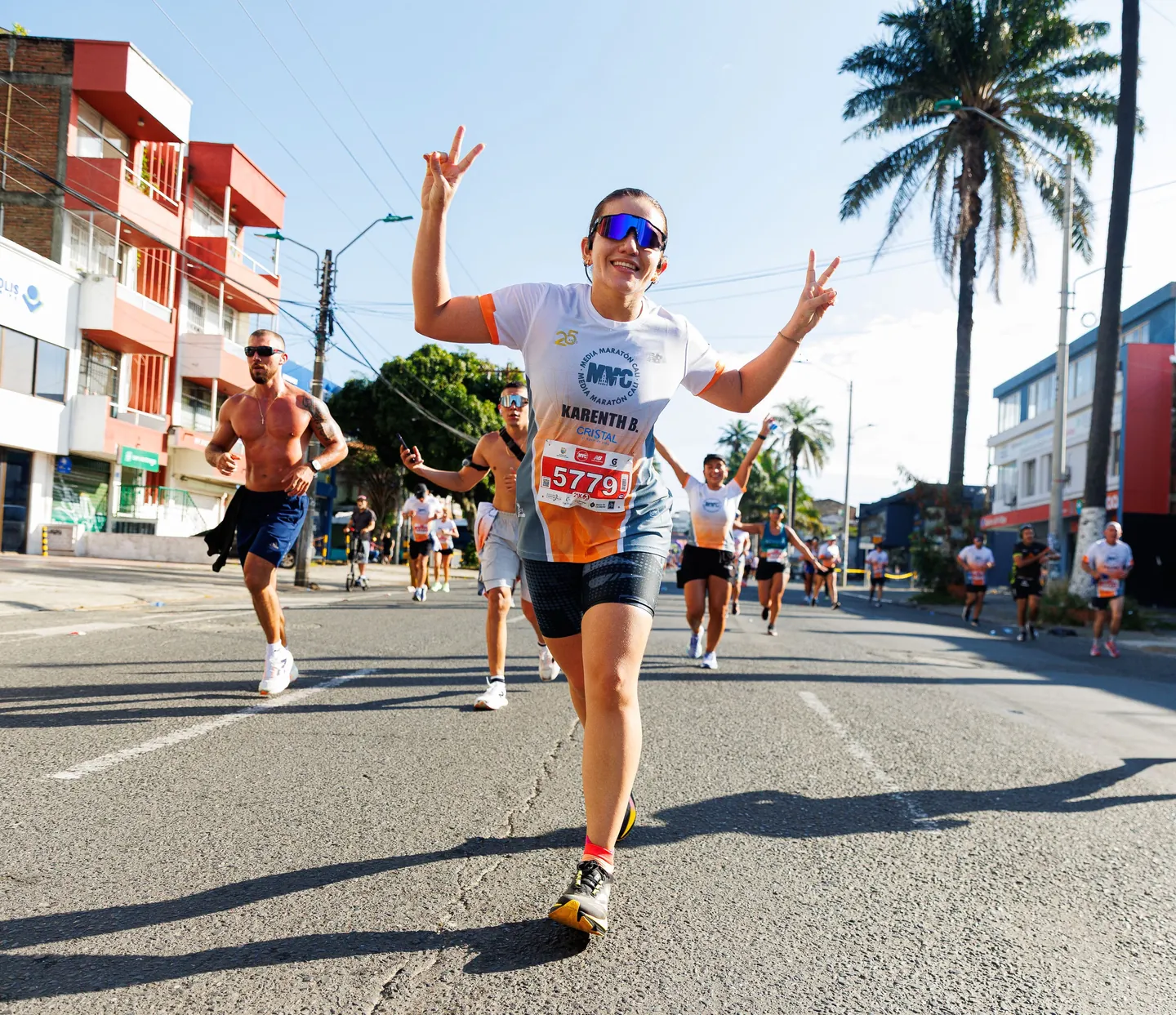
Imagen: CRISTIAN CAMILO ESTRADA / Pexels
Valencia has been on the world long-distance map for years for one very specific reason: its 10K has turned an urban course into a speed track without tartan. The race, known through sponsorship as the 10K Valencia Ibercaja, has brought together some of the best specialists on the planet and has been the stage for marks that have made history, including the first woman under 29 minutes in a road 10-kilometer race.
It is not just a fast race; it is an event that sums up the city’s athletic ambition. Since its creation in 2009, the event has grown to become an international benchmark on the road-running calendar, with a certified course, top-level elite competition, and an organization that has repeatedly received recognition from the Spanish Athletics Federation as the best in its distance in Spain.
A race born for speed
The Valencian race was born in 2009 and very quickly gained its own identity: short distance, a clean course, and a winter date that usually offers favorable conditions for running fast. In a sport where wind, turns, and small irregularities in the asphalt can ruin an attempt at a personal best, Valencia has found an almost surgical formula. Everything pushes forward, from the width of its avenues to the layout of the course, which minimizes obstacles and reduces the loss of rhythm.
The commercial name has varied due to sponsorship, but the heart of the event has remained intact. The race is part of the great Valencian running trilogy, along with the marathon and the half marathon, three events that have helped project the city’s image as Spain’s capital of popular and elite racing. That coexistence between mass participation and high performance explains much of its appeal: thousands of amateur runners share the stage with athletes capable of running at paces that seem like another discipline.
The symbolic weight of the event has also grown because of its records. In 2020, Rhonex Kipruto ran 26:24, setting the men’s benchmark for the race and confirming the reputation of the course. Four years later, Agnes Jebet Ngetich raised the competitive ceiling even further with a 28:46 that became the women’s world record for the 10-kilometer road race and the first time a woman had gone under 29 minutes at that distance. Valencia does not just host fast races; it creates new pages in long-distance history.
The course that earned a reputation for flying
The route starts and finishes on Paseo de la Alameda, within a very recognizable urban setting for anyone familiar with the city. It is a flat, precisely measured course designed so that the runner can maintain stride, cadence, and a sense of continuity. The absence of serious elevation changes is not enough on its own to explain the race’s fame, but it helps. What matters most is the sum: width, straight sections, few changes of direction, and an organization that fine-tunes the event so the pace does not break.
The course is usually described as an urban loop of 10 kilometers, with the first and last parts sharing part of the same sector, though in reverse. That apparently simple geometry has a clear practical consequence: it makes sustained effort easier and leaves little room for the legs to fall out of rhythm. In such a short distance for the elite, where every second counts, that kind of course is pure gold. For recreational runners, it is also more forgiving than other more twisty and narrow urban races.
The reputation for being a fast course was not born from marketing, but from the stopwatches. Valencia has been the stage for performances that rarely appear together in the same race: a world record, continental records, national bests, and an accumulation of top-level times that turn the results list into a snapshot of international athletics. That density of performance reinforces the feeling that the race functions like a laboratory of speed, where the asphalt seems shorter than usual and the clock runs slightly behind.
Records that changed the conversation
The Valencian 10K has been defined by two major milestones. The first came in 2020, when Kipruto set a men’s world-leading mark of 26:24. The second arrived in 2024, with Agnes Jebet Ngetich’s 28:46. That performance did more than lower the previous best; it changed the scale of what was possible on the road in the women’s category. Until that day, the 29-minute barrier was an invisible wall. Valencia turned it into an open door.
Ngetich’s performance was especially striking because it combined control and aggression. She passed 5K in 14:13, an extraordinary time in itself, and held the effort through the second half despite a wind that complicated the final stretch. The result was a 28-second improvement over the previous record, a huge leap in a race where every second is usually squeezed as if it were a drop of water in midsummer. The fact that she also became the first woman to run under 29 minutes on the road added a layer of significance that is hard to overstate.
The impact of 2024 was not limited to the top of the podium. Jacob Kiplimo won in 26:48, a time among the fastest in history for the distance. Birhanu Balew ran 26:57, and Peter Mwaniki Aila completed the podium in 26:59. In the women’s race, Kenyan dominance was emphatic: Emmaculate Anyango was second in 28:57 and Lilian Kasait Rengeruk third in 29:32. The level was not just in the headlines; it was in the depth. When a race produces so many top-class performances at once, it is clear that the course and the competitive context have aligned with millimetric precision.
A showcase for the elite and for thousands of recreational runners
The event does not live off stars alone. The mass start brings together thousands of runners every year who find in Valencia an experience very different from other 10-kilometer races. The coexistence of elite and recreational running turns the day into a kind of multi-level theater: upstairs, athletes reading record splits; downstairs, runners pursuing goals as varied as a personal best, a debut at the distance, or simply finishing with good feelings. That mix fuels the atmosphere without reducing the seriousness of elite performance.
In recent editions, participation has comfortably exceeded ten thousand entrants across the main events and the complementary races. The organization has introduced staggered starts to order the flow of runners and reduce bottlenecks in the first meters, a detail that matters far more than it may seem. In a 10K, a bad start position can cost more than a poor training session, because every tight corner or abrupt change of pace alters running economy. Valencia has refined that logistics so the experience is cleaner and, at the same time, fairer.
The popular dimension also explains the event’s cultural weight in the city. The 10K has become part of the local calendar as the opening event of the sports year, with the added effect of attracting tourism, filling hotels, and boosting businesses linked to runners. It is not an isolated phenomenon: it is part of a broader strategy in which Valencia has built a city brand associated with running, something uncommon in Spain because of its scale and its continuity over time.
How Valencia produces such fast times
The answer lies in the combination of factors, not in just one. The course is flat, yes, but it is also well measured and designed not to slow runners down. The date, in mid-January, usually offers cool temperatures, a key ally for long-distance performance. The race setup seeks to reduce interference: few elevation changes, few sharp turns, little exposure to uncomfortable stretches, and logistical control that protects the rhythm. When those pieces come together, the result is almost predictable: very fast times.
The type of elite that comes also matters. Valencia has managed to attract athletes who arrive with a real intention to chase a time, not just to compete for position. That mix creates less tactical and more physiological races, where the group stretches out early and the pace per kilometer becomes a cascade of rhythms impossible for the average runner. In journalistic terms, the race works like a magnet for those chasing times and needing a stage that does not steal energy through small details.
Measurement and certification have been key to sustaining the course’s credibility. At a time when road records are scrutinized closely, trust in the route matters as much as the time itself. Valencia has managed to stand on that boundary between spectacle and reliability, something not all races achieve. A fast course can be eye-catching; a fast and reliable one becomes a world reference. That difference, though it may seem technical, is what separates races that entertain from those that change the sport.
The sporting reading of its latest editions
The 2024 edition confirmed that Valencia is no longer just a fast race, but a platform for milestones. Kiplimo’s victory reinforced the idea that the course can sustain paces close to the highest marks in men’s history. Ngetich’s, by contrast, opened a new conversation about the women’s ceiling on the road. Both results went around the world and consolidated the race as a first-class reference on the early-year calendar.
Beyond the brilliance of the winners, the race produced several national and continental records. Dominic Lobalu, for example, equaled the European and Swiss records with 27:13, showing that the course does not only favor the great African dominators. The value of the event also lies in that: it allows different federations and athletes to measure how far their bodies can go under maximum-efficiency conditions. Valencia does not hand out times by chance; it sharpens them.
Media coverage has multiplied its reach. Live broadcasting, coverage in specialized media, and the circulation of finish-line images have given the race a life beyond competition Sunday. In the age of short clips, a final stride or a smile after crossing the line can travel around the world in minutes. That has reinforced the event’s visibility and fed a reputation that no longer depends only on who was there, but also on who watched it on a screen.
The value of the Valencia brand on the long-distance calendar
The city has made running part of its public identity. This is not just about organizing races, but about sustaining a narrative in which athletics appears as a sporting, social, and tourist engine. The 10K fits into that structure because it offers a more accessible entry point than the marathon, but with the same seal of organizational quality. In a way, it is the gateway to a much larger brand.
The accumulated effect over the years has been clear. Valencia appears more and more often in conversations about records, fast courses, and well-run events. That visibility benefits the city and the race itself, which has gone from being a solid national event to one with global resonance. In a calendar saturated with races, claiming that space is no small feat: it requires consistency, a recognizable organization, and results that support the story. Valencia has had them.
The RFEA has endorsed that trajectory with repeated awards, a detail that should not be treated as a mere ceremonial medal. The awards for Spain’s best 10K reflect continuity, not a one-off flash. And in athletics, continuity counts almost as much as the record itself. A race may surprise once; staying at the top across several editions speaks of structure, judgment, and a very sharp understanding of what today’s runner seeks in an urban race: speed, reliability, and an experience that respects the effort.
What the Valencian 10K leaves for the long-distance runner
The clearest lesson from this race is that context matters as much as fitness. A 10K is defined not only by the legs, but by the environment around them: temperature, profile, measurement, start pace, group density, and even the logic of the wind. Valencia has turned those factors into a competitive advantage. That is why its marks are read so closely: they are not just results, but the product of a very specific piece of sports engineering.
It also leaves another relevant idea for the world of recreational running: speed does not have to be at odds with identity. Valencia has maintained its own personality, with urban imagery, institutional backing, a mass atmosphere, and a course designed for fast running without losing the pulse of the street. That combination explains why the race attracts runners of such different profiles. Each one is looking for something different, but all recognize the same setting: an asphalt surface that seems to push toward the finish.
The Valencian race has settled into a position that is hard to argue with. It has hosted records, maintained impeccable organization, and projected the city as a reference point for international long-distance running. In a discipline where excellence is measured in seconds, achieving so many repeated top marks is no coincidence. It is the result of years of work, an intelligent reading of the course, and a finely tuned relationship between city, athletes, and stopwatch. Valencia is no longer chasing history; it is writing it at 2:40 per kilometer.



How to prevent thigh chafing: causes and real solutions

Women’s running windbreakers: seven jackets and how to choose

Do more workouts get rid of soreness? A guide for runners

Jaén Half Marathon 2026: Record 3,800 Runners Registered

Men’s short running tights: how to choose the right pair

World Triathlon confirms data breach involving medical data

Izan Edo targets podium at Miyazaki World Cup

María Pérez ranks ninth in World Athletics’ 2026 top ten

Dos Santos, Duplantis and Sawe: World Athlete of the Year finalists

San Silvestre Vallecana 2026: 42,000 places, prices and start times

 Races4 months ago
Valencia Half Marathon 2027: date and registration

 Races4 months ago
Valencia Marathon 2026: entry, ballot and course

 Reviews and Comparisons4 months ago
Asics Gel-Roadmiles 3 for men: review and current price

 Reviews and Comparisons4 months ago
Asics Gel Sonoma 8 Gore-Tex: complete analysis for trail and rain

 Sneakers4 months ago
Saucony Endorphin Pro 4: full review and verdict

 News5 months ago
Strava API 2026: what changes for clubs, challenges and runner apps?

 Reviews and Comparisons5 months ago
Nike Alphafly 3: opinions, sensations, and real key points

 Reviews and Comparisons4 months ago
Under Armour running shoes review 2025-2026: models and key features

 Sports Equipment4 months ago
Shoe sizes in cm: a clear guide to getting the right fit for your footwear

 Sneakers3 months ago
Skechers GO RUN Consistent 2.0 analysis: comfort and limits

 News5 months ago
Valencia Marathon 2026 route: key tips to train and run better

 Sneakers4 months ago
Adidas Adizero Boston 13 for men: review and verdict