News
Barcelona Marathon 2026 route: course and tips for running it
The Barcelona race keeps an urban, central and faster route, with the start on Passeig de Gràcia and the finish at Arc de Triomf.

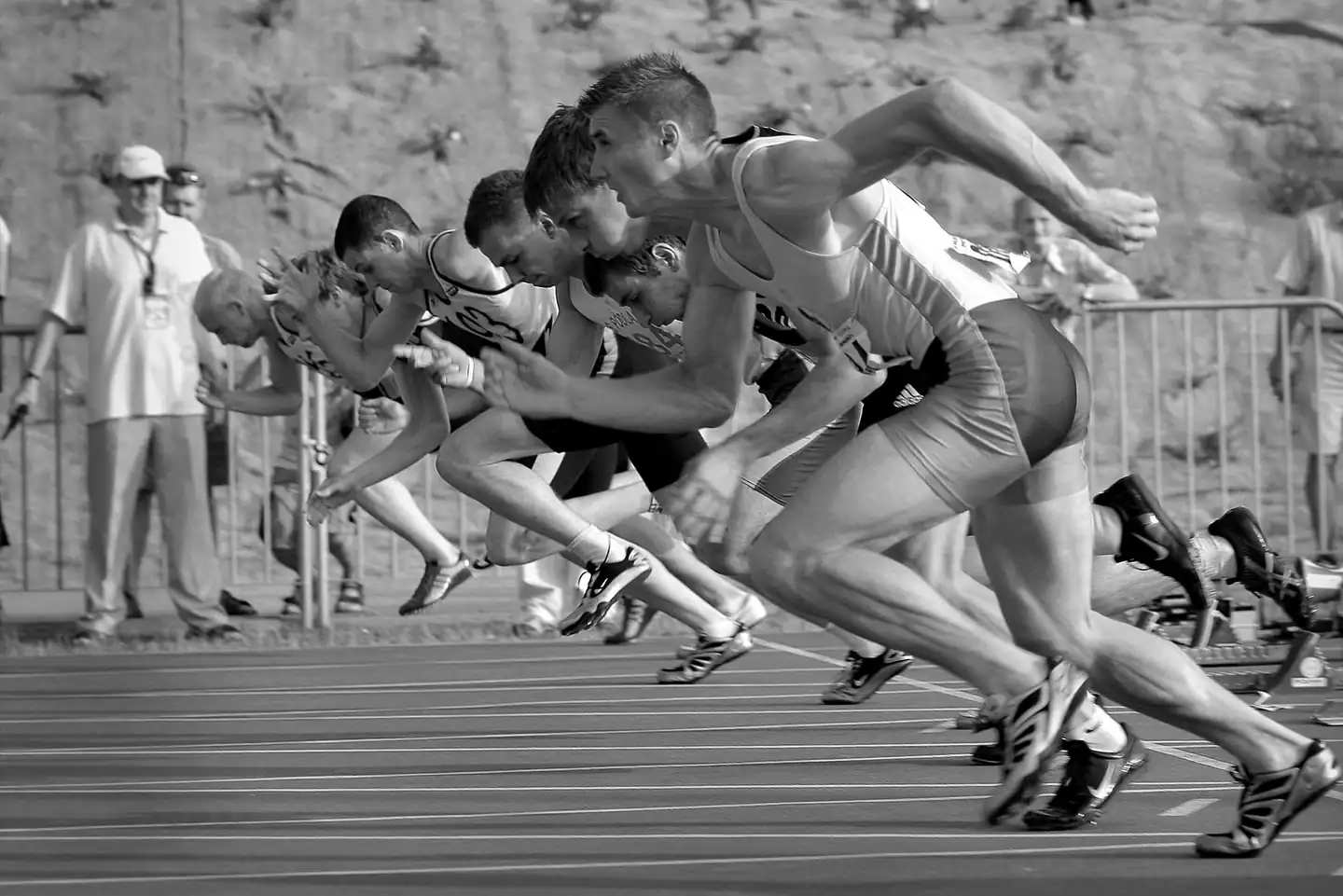
The course of the Zurich Marató Barcelona 2026 once again places the city on the map of Europe’s great fast marathons. The start on Passeig de Gràcia and the finish at Arc de Triomf condense the identity of a race that opts for a very urban circuit, with long avenues, passages through recognizable landmarks and less elevation gain than in previous stages. For elite and recreational runners alike, that combination matters as much as the atmosphere: fewer sharp turns, more continuity and a clear reading of the effort over the 42.195 kilometers.
The 2026 edition keeps the route debuted in 2024 and consolidated in 2025, with a more central profile and a second half designed to hold the pace. The stretch through the Eixample concentrates much of the action, while the presence of places like the Sagrada Família, the Monumental, Fòrum Park and the Columbus monument adds a recognizable postcard to each section. It is a marathon that not only tests the legs; it also tests patience, the ability to pace oneself and mental endurance in a city that opens up like a map of lights and wide straight roads.
A race that changed its skin without losing its identity
Barcelona has been linked to the 42.195 kilometers for more than four decades, but the current course marks a different stage in its history. The race was born in 1980, although it had predecessors in Palafrugell under the name of the Catalonia Marathon in 1978 and 1979. Since then, the marathon has steadily grown in importance until becoming one of the most visible events on the Spanish and European calendar, with sustained growth that has taken it from a well-established urban race to an international showcase.
That growth is not explained only by the number of participants. It also responds to an organization that has known how to read what the modern runner is looking for: a certified course, an intense city experience and a route that does not punish too much with constant climbs or isolated stretches. Today’s Barcelona offers avenues where the pack can breathe, sectors where the crowd gathers and an architectural landscape that accompanies without distracting from the main goal, which remains to run 42 kilometers solidly.
The relevance of the Barcelona course lies in its balance between spectacle and performance. It is not an extremely easy-profile race, but it is one of the most favorable for going after a personal best within a major urban setting. That nuance has placed it among the most appealing marathons for those who want to compete, finish feeling good, or live a high-level day without leaving a recognizable and well-connected city environment.
Start on Passeig de Gràcia and finish at Arc de Triomf
The marathon starts on Passeig de Gràcia, one of Barcelona’s most recognizable arteries. The choice is no accident: it is a wide, central avenue with the capacity to absorb the flow of thousands of runners without turning the first meters into an excessive bottleneck. From there, the race quickly enters a logic of major roads and iconic spots that allow the field to spread out relatively fast.
The finish at Arc de Triomf adds a very powerful visual dimension. The arch, the open space and the final straight create a more cinematic ending than an administrative one, something that in a marathon matters a lot. Crossing the line in that setting has an obvious symbolic value, because the runner is not just finishing a distance; they are closing a journey through the heart of the city with an image that stays engraved.
That pairing between Passeig de Gràcia and Arc de Triomf defines the character of the current course. The race stops being a movement through the outskirts of the city and becomes a kind of open map of central Barcelona. It is an important detail for the recreational runner, but also for the fan following the race from the street: the visibility of the route makes public support easier and multiplies the feeling of being part of a real urban event, not just a competitive passage.
A central circuit, flatter and designed to sustain pace
The major structural novelty of the route is its flatter profile and its predominantly central passage. Roughly half of the course runs through the Eixample, welcome news for anyone looking for a more even race, with less accumulated wear from hills or excessive changes of direction. In a marathon, every incline is paid for; every turn too. Reducing both factors does not guarantee a great time, but it does remove noise from the equation.
The feeling the course conveys is that of a cleaner line. There is less exposure to stretches that break running mechanics and more continuity on avenues where a steady rhythm can be found. That does not mean the marathon is flat in an absolute sense, because every city has its nuances, its pavement, its wind and its own layout. But, within the urban logic, Barcelona has gained a more forgiving circuit for runners who want to manage splits with their heads.
The difference between a scenic marathon and a fast marathon often lies in small topographic details. That is why it matters so much that the route has been adjusted. Less elevation means fewer unnecessary surges, fewer braking moments and a more even perception of effort. It is the kind of change you do not see in a photograph, but you feel in the muscles after kilometers 28, 32 and 37, when the race starts to take its toll and any economy of movement counts.
The most recognizable points on the route
The 2026 route passes through some of Barcelona’s most emblematic places, combining urban icons and areas open to a steady rhythm. Among the highlighted points are the Sagrada Família, the Monumental, Fòrum Park and the Columbus monument, along with other avenues that support the main body of the course. That mix builds a race with layers: heritage, sport and landscape.
The Sagrada Família provides one of the most recognizable moments, not so much for the technical effort as for the visual weight. The Monumental and the Fòrum, on the other hand, refer to wide spaces where the runner can read the race better and manage the stride. Columbus, at the end, brings a maritime and tourist reference back into the route, a very Barcelona reminder that the sea is also part of this distance, even if it is not physically beside every meter.
The value of these passages is not just photographic: they mentally organize the race. In a marathon, recognizing intermediate points helps divide the effort into chapters and measure the passage of time with clear references. The city, in that sense, works like an emotional stopwatch. Every monument, every avenue and every wide stretch becomes a mark in the runner’s memory, something that later often weighs as much as the official time.
What it means for those chasing a personal best
The new layout of the Marató de Barcelona favors those who want to run progressively and evenly. A wide urban circuit, with less elevation and a large portion in the center, offers better conditions to maintain cadence and avoid peaks of fatigue. That is especially useful over a distance where running economy matters more than brute force. Here the goal is not to launch attacks; it is to survive the sum of small energy expenses.
Fast runners usually pay attention to two variables that the general public sometimes underestimates: the continuity of the route and the ability to coexist with the pack. Barcelona, with its width on several avenues and the fact that it is a more central course, partly reduces the chaos of the start and allows each group to find its space. For anyone going after a personal best, that detail can be as valuable as a good training session.
It is also a course that rewards a smart reading of effort. The runner who goes out above their possibilities ends up paying the bill in the second half, even if the profile is favorable. By contrast, the one who keeps energy in the first 25 kilometers can take advantage of the race design in the final stretch. Barcelona gives nothing away, but it does not hide unnecessary traps either.
Schedule, logistics and what to expect on race day
The general start is scheduled for 8:30 a.m., with a wave format to organize the flow of participants. That early start aims to take advantage of a cooler, more favorable window for running, something especially relevant in a long distance where temperature and wind can alter the race. In a marathon, a well-chosen start time is worth almost as much as a good pair of shoes.
The organization also includes specific starts for wheelchair athletes, who usually set off a few minutes earlier, and a logistics setup that tries to better distribute the traffic of runners according to estimated paces. That system not only improves the initial flow, but also helps avoid bottlenecks in the first kilometers, when nerves, concentration and excess enthusiasm often all end up on the same asphalt.
The race time limit and the structure of the event reinforce the idea of a race designed for many speeds, not just for the elite. That is part of Barcelona’s personality: a big, mass-participation marathon that is at the same time organized enough for different runner profiles to coexist without the experience losing clarity. On race day, the city adapts to the rhythm of the shoes and the usual noise gives way to a morning of measured movement, aid station bags and counted steps.
Wind, temperature and the real effect on the course
In Barcelona, the course cannot be fully understood without the weather, especially when the wind comes into play. March usually offers a reasonable window to compete, with cool temperatures and manageable humidity, but the coastal setting introduces a factor that can change the perception of effort. It is not the same to run a sheltered avenue as a more exposed stretch near the sea or in areas open to the airflow.
For the recreational runner, temperature is usually more decisive than any technical reading of the route. A flatter circuit may seem ideal on paper, but if the wind picks up in the second half, the race stops feeling comfortable. That is why the Barcelona design, although favorable, should not be read as a guarantee. In a marathon, the weather draws with pencil on a paper the organization does not control.
The advantage of the new route is that it makes management easier when conditions are favorable and minimizes damage when they are not. That is probably its greatest merit. An itinerary with more continuity allows small weather setbacks to be absorbed better. If the wind blows, the runner does not also have to deal with a profile that punishes every meter. If the temperature is good, the city offers a surface conducive to running steadily and smoothly.
Records, elite and the competitive standard of the race
The Zurich Marató Barcelona has already shown in recent years that its course can produce very high-level performances. The 2024 edition saw a men’s record of 2:05:01 and a women’s victory in 2:19:52, while 2025 raised the bar even further with even faster times in both categories. Those marks help explain why the race is part of the conversation about Europe’s great marathons: it does not just attract numbers, it attracts speed.
When an urban race manages to combine mass participation with competitive times, its course gains prestige. It is not enough to be beautiful or to have history; it has to prove that the asphalt allows fast running. Barcelona has done that. And that recognition has a cascading effect: it attracts more runners, improves international perception and raises the overall level of each edition.
The 2026 circuit inherits that context and turns it into a promise of competitive continuity. There is no need for exaggeration to say it is one of the most serious events on the calendar. The route favors those who come to push, but it also offers a complete experience to those who simply aim to finish feeling good. In a race of this caliber, both things coexist naturally.
What makes Barcelona unique within the European calendar
Barcelona does not compete only with other marathons for runners’ time; it competes for its urban atmosphere. The mix of modernist architecture, wide avenues, Mediterranean light and a finish in the city center creates a very defined personality. There are flatter races and others with more athletic tradition, but few combine postcard appeal and competitive efficiency in this way.
The city helps a lot. Its urban layout, so geometric in several areas, fits well with a long-distance race. The runner does not feel like they are jumping from one landscape to another without logic; rather, they move through a recognizable board, with references that follow one another like milestones on a map of concrete and shade. That continuity is one of the secrets of the Barcelona marathon and explains why so many participants return.
At its core, the 2026 route sums up what the race wants to be: a great city marathon, fast and visually powerful. It does not try to hide its sporting ambition or its vocation as an urban spectacle. On the contrary, it makes them coexist. And in that coexistence lies much of its appeal, because it allows each runner to find their own reading of the same asphalt.
Barcelona runs toward a clearer identity in the queen distance
The evolution of the course shows a very specific idea: to make the marathon a more urban, cleaner and more legible experience. The changes introduced in recent years do not seem cosmetic, but strategic. The aim has been to create a route that performs better for runners, offers more city presence and strengthens Barcelona’s image as a venue for big, well-executed events.
That approach has an impact on how the event is perceived and on the way it is told from the outside. A marathon does not live only by its date; it lives by its story. And the Barcelona story today revolves around a central, eye-catching circuit with the potential to keep producing good marks. The race has been refined without losing its identity, something that does not always happen when a race grows.
The route of the Marató Barcelona 2026 is not just a path on the map: it is the synthesis of a city that has learned to turn its streets into a stage for endurance and pace. Between Passeig de Gràcia and Arc de Triomf unfolds a race with its own character, capable of captivating the runner, the spectator and anyone who studies the marathon as one of the great rituals of urban athletics. In that balance between history, performance and city lies, precisely, its strength.



How to prevent thigh chafing: causes and real solutions

Women’s running windbreakers: seven jackets and how to choose

Do more workouts get rid of soreness? A guide for runners

Jaén Half Marathon 2026: Record 3,800 Runners Registered

Men’s short running tights: how to choose the right pair

World Triathlon confirms data breach involving medical data

Izan Edo targets podium at Miyazaki World Cup

María Pérez ranks ninth in World Athletics’ 2026 top ten

Dos Santos, Duplantis and Sawe: World Athlete of the Year finalists

San Silvestre Vallecana 2026: 42,000 places, prices and start times

 Races4 months ago
Valencia Half Marathon 2027: date and registration

 Races4 months ago
Valencia Marathon 2026: entry, ballot and course

 Reviews and Comparisons4 months ago
Asics Gel-Roadmiles 3 for men: review and current price

 Reviews and Comparisons4 months ago
Asics Gel Sonoma 8 Gore-Tex: complete analysis for trail and rain

 Sneakers4 months ago
Saucony Endorphin Pro 4: full review and verdict

 News5 months ago
Strava API 2026: what changes for clubs, challenges and runner apps?

 Reviews and Comparisons5 months ago
Nike Alphafly 3: opinions, sensations, and real key points

 Reviews and Comparisons4 months ago
Under Armour running shoes review 2025-2026: models and key features

 Sports Equipment4 months ago
Shoe sizes in cm: a clear guide to getting the right fit for your footwear

 Sneakers3 months ago
Skechers GO RUN Consistent 2.0 analysis: comfort and limits

 News5 months ago
Valencia Marathon 2026 route: key tips to train and run better

 Sneakers4 months ago
Adidas Adizero Boston 13 for men: review and verdict