News
Barcelona running expo 2026: schedules, access and bib number
Schedules, access, and key details for picking up your bib, T-shirt, and bag before the big event in Barcelona.

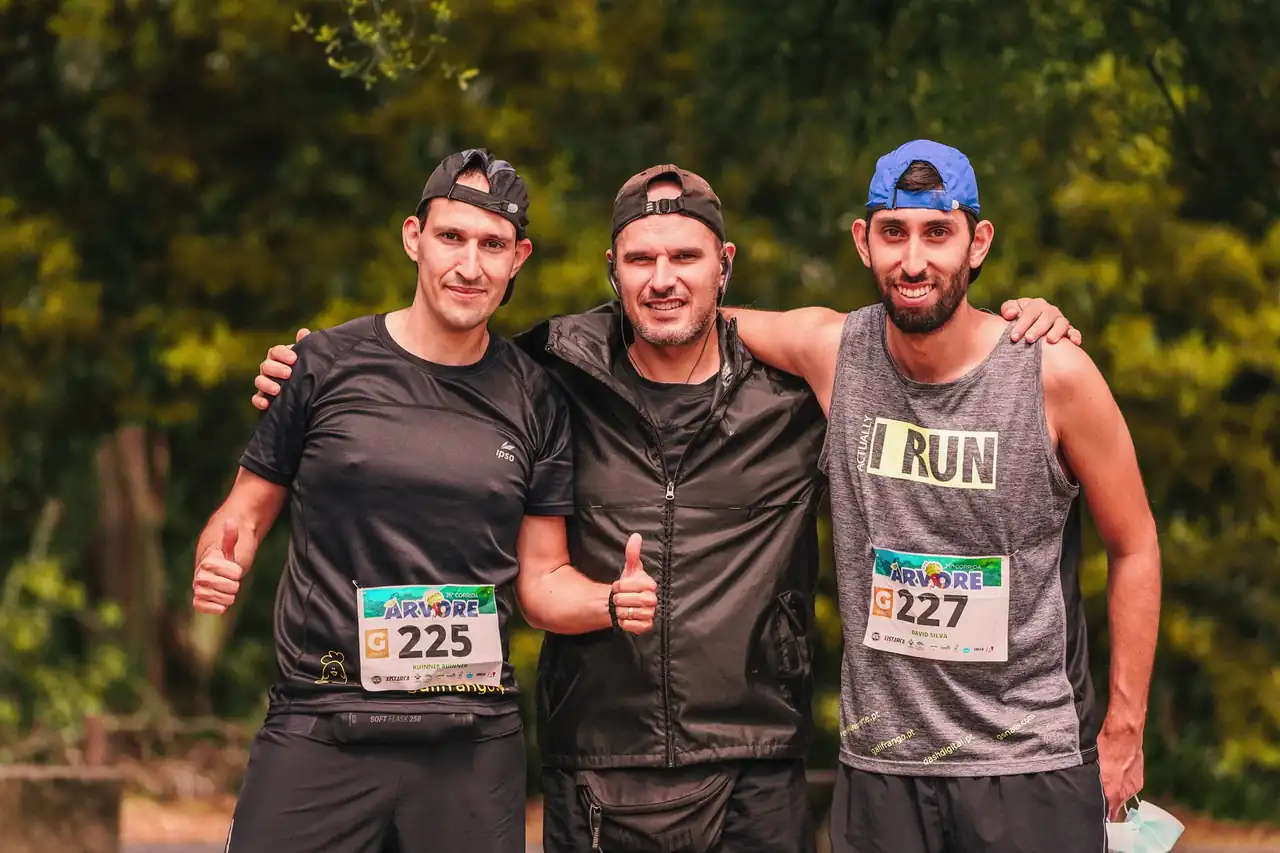
The race expo in Barcelona brings together in one place the logistics, excitement, and social energy surrounding the big event on the popular running calendar. Bib numbers, T-shirts, and the runner’s bag are collected there, but it is also where the real thermometer of the event is measured: runners arriving with the serious expression of those fine-tuning the last details, and brands turning the pavilion into a technical showcase of shoes, gels, and new products.
In the 2026 edition, that nerve center is located at Fira de Barcelona, with free access and a schedule spread between Thursday, March 12, and Saturday, March 14. The organizers concentrate everything needed to wrap up the practical side before Sunday, when Barcelona turns into a 42.195-kilometer circuit with a start at 8:30 a.m. from Passeig de Gràcia and an event that will once again bring together tens of thousands of people around the marathon.
The first contact with the marathon begins at the expo
Picking up the bib has something of a rite of passage about it. It is not just a formality; it is the moment when the race stops being a date on the calendar and takes on shape, weight, and color. The paper becomes a number, the technical T-shirt becomes a Sunday expectation, and the runner’s bag becomes a mix of usefulness and keepsake that many people save for years. In Barcelona, that transition happens at Expo Sports, one of the main activity hubs of the week.
The expo takes place at Fira de Barcelona, hall 7, with an entrance open to any visitor. On Thursday, March 12, it is open from 3:00 p.m. to 8:00 p.m., while on Friday, March 13, and Saturday, March 14, it keeps extended hours, from 9:00 a.m. to 8:00 p.m. That range avoids unnecessary queues and allows for smoother movement, something important at an event that, because of its size and profile, attracts both local athletes and visitors from outside Catalonia and the rest of Spain.
The venue does more than handle the administrative side. It also serves as a showcase for the running ecosystem: brands, technical gear, sports nutrition, and small details that often go unnoticed until one of them is missing. In that atmosphere, the runner gradually wraps up their own pre-race night before the big day, with a mix of curiosity and discipline that is already part of the landscape of major city marathons.
What is collected and why it is best not to leave it until the last minute
At the expo, the bib number, T-shirt, and runner’s bag are handed out. These are the three elements that truly activate the participant’s experience, because without them there is no start, no identification, and no small sense of belonging that sets apart those who are already part of the event. It is also the place to check that the details are correct, confirm organizational information, and avoid a minor issue becoming a problem on Sunday morning.
Those who arrive at the pavilion on the first day usually find a calmer pace, with less pressure and more room to move between stands. As Friday progresses, the flow increases; on Saturday, just hours before the start, the expo takes on an almost electric tone. That is why, from a practical point of view, picking up the bib in advance remains the most sensible decision. It is not only about convenience. It also allows for better rest, calmer meals, and less room for error on a weekend when every detail matters more than usual.
Barcelona is also preparing for a particularly large edition. The marathon has sold 32,000 bibs, a figure that confirms the appeal of a fast, very urban race with a course that usually favors those looking for a personal best. In that context, the expo acts as a logistical pressure valve: it organizes, distributes, and gives breathing room to an event that, without a clear pickup point, would be much more chaotic.
Hours, access, and atmosphere inside Expo Sports
The combination of extended hours and free entry makes the expo a useful feature for almost every type of runner. Someone traveling from another city can take care of it upon arrival; someone living in Barcelona can choose the least crowded time slot; and someone competing in the marathon can use it as a final check of gear, pace, and sensations. In this type of expo, the organization often feels like a well-designed terminal: plenty of traffic, but enough room so that no one gets lost in the noise.
The location at Fira de Barcelona, hall 7, also helps concentrate the flow. It is a large space designed to absorb continuous entries and exits without the visitor feeling trapped. Inside, the atmosphere mixes race-day nerves with a very particular sociability. Conversations about the forecast, the last training session, how to approach the first kilometers, or the gear chosen for the day are all exchanged, even though the official focus remains on collecting the race pack.
It is worth having the required documentation requested by the organizers close at hand and checking the registration details carefully. At an event of this size, any small oversight can delay a procedure that should be resolved in minutes. The key, as almost always in a marathon, is anticipation: arrive early, do not improvise, and leave room for the weekend to have some margin for maneuver.
Saturday is no minor day: the city already beats like a circuit
Saturday, March 14, is not a day of passive waiting. Barcelona is already entering race mode. While the final formalities are completed at the expo, the city begins to feel the gentle pressure of a major popular event. The areas around the city center, the zones near the start, and the spaces linked to parallel activities fill with runners walking with the apparent calm of those who are resting, but with the inner tension of those already counting the kilometers in reverse.
In that context, the expo does more than hand out materials. It also acts as a meeting point. It is where many people first measure themselves against the true scale of the event: the number of participants, the logistics deployed, the calendar of activities, and the background buzz of a marathon that is not limited to 42.195 kilometers, but stretches over several days. That dimension is part of the experience, and it explains why the Barcelona weekend has become one of the great popular athletics festivals in Spain.
The plan to start from Passeig de Gràcia at 8:30 a.m. and the staggered corrals until 9:45 a.m. add another layer to that pre-race atmosphere. Everything is designed to avoid crowding and keep the start flowing smoothly. In such a crowded marathon, the organization of the start becomes as important as the course itself. The expo, therefore, is not a mere add-on: it is the first visible piece of that machinery.
Breakfast Run and Kids Race: the marathon opens up to other rhythms
Barcelona has clearly understood that a major event is not built on Sunday alone. The weekend is rounded out with activities that expand the story and make it more family-friendly. The Bimbo Breakfast Run Barcelona by Hoka takes place on Saturday, March 14, at 9:30 a.m., starting at Torres Puig i Cadafalch and covering an approximate distance of 4 kilometers. It is a short, festive race, very much designed to wake up the legs without overloading them, with the added bonus of a post-race breakfast that reinforces the feeling of meeting rather than competing.
The Kids Race, for its part, brings the marathon into the children’s sphere. It also takes place on Saturday, on Passeig Lluís Companys, roughly between 10:00 a.m. and 1:00 p.m., with distances ranging from 200 to 800 meters depending on age. All children receive a medal, diploma, and refreshments, and the initiative also includes a charitable component: for every child who crosses the finish line, the Z Zurich Foundation donates 10 euros. That gesture turns the event into a tool for participation and commitment, without losing the lightheartedness of an activity meant for enjoyment.
Both events have a clear role within the weekend. On one hand, they relieve competitive tension with shorter, more approachable formats; on the other, they broaden the social base of the marathon, which stops being just the race for adults with bibs and becomes a multi-layered urban event. In that sense, the race expo in Barcelona is the prelude to a celebration that does not end at a single finish line.
A marathon with national significance and an ever-higher pulse
The 2026 edition will also once again decide the Spanish Marathon Championship, a status that gives the event even greater importance. It is not common for the same city to repeat as host of the national championship over such a demanding distance, and Barcelona has already done so several times. That detail makes it not only a setting for mass participation, but also a technical reference within Spanish athletics.
The presence of the championship adds another layer to the expo. Among the pavilion aisles are not only everyday runners collecting their bibs; there is also the atmosphere of a race with rankings, prestige, and top-level competitive focus. That affects everything: the brand offerings, media attention, the kind of conversations, and the feeling that the entire city is working toward the same March morning.
Barcelona is once again banking on a very recognizable combination: a fast course, urban aesthetics, and an organization that tries to maintain a balance between spectacle and performance. The expo is the first place where that balance becomes clear. There, the runner who wants to finish well shares space with the one chasing a big time, the occasional visitor with the regular attendee of major events, the child entering the Kids Race, and the veteran who already knows the routine as if it were part of the warm-up.
The course begins before stepping onto the starting line
Anyone entering the expo is not just collecting gear; they are stepping into the story of the course. The Barcelona marathon is known as one of the fastest and most tourist-friendly on the European calendar, with a route that passes through iconic points of the city and favors steady pacing. There are no major walls or frightening climbs, but there is a clear warning for race day: too much enthusiasm is paid for at the end.
That message is easier to understand once the logistics are sorted out. A bib collected without rushing, a checked T-shirt, a closed bag, and gear ready for the next day reduce mental load. In a marathon, that reduction matters almost as much as a well-executed training session in the weeks leading up to it. The mind also runs, and it does so carrying invisible weight. The expo helps lighten it.
That is why its real value goes far beyond administration. It is a space where the weekend is ordered, small decisions with big effects are made, and the tone is set for everything that comes afterward. The city provides the infrastructure; the runner provides the personal story. Between the two, the expo acts as a hinge, like a large locker room where Sunday begins to take shape long before the starting gun.
Barcelona prepares for a weekend that is no longer just a race
The race expo in Barcelona sums up well what has turned this marathon into a central event on the calendar. It is practical, yes, but also emotional; it is logistics, but also human landscape. In its aisles, you can see the less visible side of competition: waiting, planning, the blend of nerves and order that precedes a mass start. There, the 32,000 bibs, the weight of the Spanish Championship, the Breakfast Run, the Kids Race, and the staggered start on Sunday all make more sense.
All of that explains why the expo cannot be reduced to a simple gear pickup. It is the place where Barcelona starts running before the first gun goes off. And in a city accustomed to turning its streets into a stage, that moment has something of an urban ritual about it: a sober, efficient, highly visible choreography in which each runner already has part of the effort behind them.
The final image left by this weekend is that of a city ready to accompany the runner from the first administrative step to the last meter. The expo organizes, the start activates, and the course completes the story. Between those points lies that stretch of hours in which everything seems suspended, but in reality has already begun. That is the true strength of the Barcelona marathon: making Sunday feel inevitable from Thursday.
Este artículo contiene enlaces de afiliado: si compras a través de ellos, se genera una pequeña comisión sin coste adicional para ti. Más información.



How to prevent thigh chafing: causes and real solutions

Women’s running windbreakers: seven jackets and how to choose

Do more workouts get rid of soreness? A guide for runners

Jaén Half Marathon 2026: Record 3,800 Runners Registered

Men’s short running tights: how to choose the right pair

World Triathlon confirms data breach involving medical data

Izan Edo targets podium at Miyazaki World Cup

María Pérez ranks ninth in World Athletics’ 2026 top ten

Dos Santos, Duplantis and Sawe: World Athlete of the Year finalists

San Silvestre Vallecana 2026: 42,000 places, prices and start times

 Races3 months ago
Valencia Half Marathon 2027: date and registration

 Races3 months ago
Valencia Marathon 2026: entry, ballot and course

 Reviews and Comparisons4 months ago
Asics Gel-Roadmiles 3 for men: review and current price

 Reviews and Comparisons4 months ago
Asics Gel Sonoma 8 Gore-Tex: complete analysis for trail and rain

 Sneakers3 months ago
Saucony Endorphin Pro 4: full review and verdict

 News5 months ago
Strava API 2026: what changes for clubs, challenges and runner apps?

 Reviews and Comparisons5 months ago
Nike Alphafly 3: opinions, sensations, and real key points

 Reviews and Comparisons4 months ago
Under Armour running shoes review 2025-2026: models and key features

 Sports Equipment4 months ago
Shoe sizes in cm: a clear guide to getting the right fit for your footwear

 Sneakers3 months ago
Skechers GO RUN Consistent 2.0 analysis: comfort and limits

 News5 months ago
Valencia Marathon 2026 route: key tips to train and run better

 Sneakers4 months ago
Adidas Adizero Boston 13 for men: review and verdict