News
Vall d’Albaida Circuit 2025: dates, route and key details
The region is preparing 23 events, 25 municipalities, and a calendar that starts in March and ends in October.

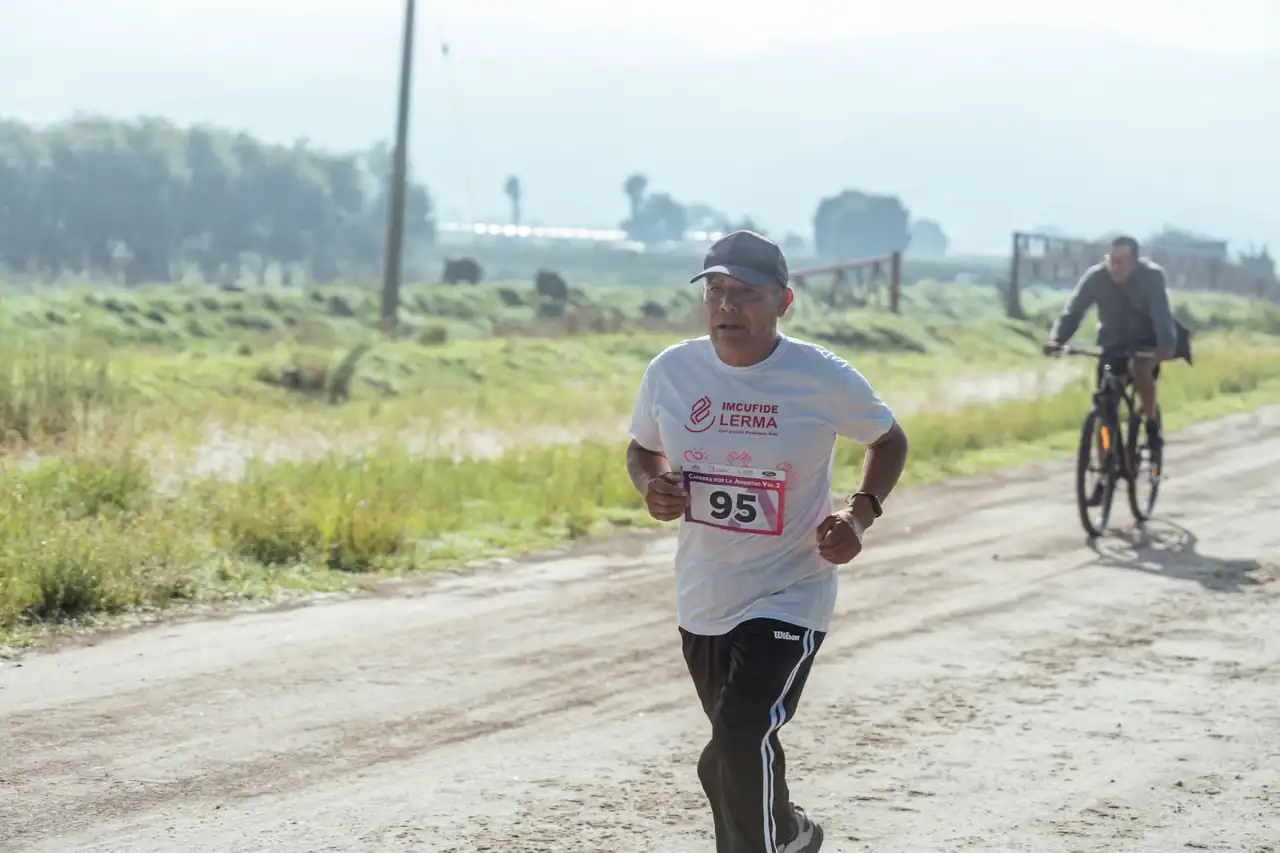
The Vall d’Albaida turns its streets, squares, and roads back into a map of bib numbers and stopwatches. The 2025 edition of the regional popular road race circuit kicks off on March 7 in El Palomar and runs until October 19 in Salem, with a calendar of 23 races spread across 25 municipalities. It is not just a succession of races: it is a sporting structure that keeps the pulse of popular athletics in the region beating for much of the year.
The most visible figure is also the most telling: an estimated average of 700 to 750 participants per event, according to the regional organizers themselves, placing the circuit among the most crowded events in each town. That presence is not limited to adult runners. The program includes an 11th children’s circuit, with 19 races, and the 4th circuit for people with functional diversity, two elements that broaden the sporting picture and reinforce the open nature of the initiative.
A calendar that organizes the season in the region
The 2025 circuit is not born as a simple list of dates, but as a regional sports calendar that gives continuity to a deeply rooted idea in the Vall d’Albaida: running is also a way of coming together. The presentation held in Benigànim brought together runners, authorities, and sports organizations in an event that foreshadows the tone of the season well, closer to the social fabric than to pure competition. In regions like this, each race usually has something of a local festival, something of a reunion, and something of a physical test.
The sequence of the circuit matters because it traces a kind of journey through towns very different from one another, with urban routes, asphalt stretches, and atmospheres that change depending on the terrain, altitude, and time of year. The calendar begins in March, when the weather is usually favorable and the heat has not yet set in, and ends in October, with a final race in Salem that brings a long and sustained period to a close. Between those two extremes, the circuit works as a red thread connecting popular athletics with local identity.
The organizers insist that registrations are already available through the Multiesport website, the timing and management platform that handles sign-ups, registered runner lists, and information for each event. This centralization makes it easier to follow the circuit, something key in a format with so many venues and categories, where regular runners need to frequently check changes, schedules, and the specific regulations of each race.
A competition designed for many runner profiles
One of the circuit’s strengths is its breadth. It is not reserved for an elite or for a single distance, but brings together runners of different levels, ages, and backgrounds within the same organizational framework. That explains the variety of participation: veterans, seniors, prospects, children, and athletes with functional diversity share the same competitive structure, even if they do not always cross the same finish line or cover the same course.
In that sense, the circuit is more like an ecosystem than an isolated race. Each municipality contributes its personality, its supporters, and its own way of understanding the finish. There are towns where the starting line becomes a showcase for regional clubs, and others where the entire historic center seems to rally around the runners’ passage. That mix of competition, belonging, and closeness is one of the reasons the event remains so relevant.
The children’s section deserves its own reading. Maintaining 19 races for youth categories is no minor detail, because it ensures continuity for the grassroots and turns the circuit into an informal school of sporting habits. For many boys and girls in the region, these races are the first contact with a bib number, collective warm-up, and nerves before setting off. At the same time, the circuit for people with functional diversity reinforces an essential idea: popular sport must also be a space for real, visible, and normalized inclusion.
Registrations, prices, and the practical logic of the runner
The registration fee starts at 25 euros in the information released by the organizers and the timing website. That figure, while not the only relevant one, helps explain the spirit of the circuit: an accessible format, designed to allow participation in a long season rather than in a single isolated race. In events of this kind, the cost is usually part of a broader experience that includes rankings, timekeeping, organizational support, and a place in a broad calendar.
Registration is structured by categories and specific dates, with options ranging from under-8s to veterans. That flexibility matters because not all runners experience the season in the same way. Some come to a single race because it is nearby, some compete regularly, and some aim to complete several stops to enter the overall standings. Precisely for that reason, the circuit is not reduced to race day: its value also lies in the sum of results, the comparison between venues, and the continuity of effort.
The figure of 666 registered runners listed in the reference information reflects the project’s initial pull and the circuit’s capacity to mobilize athletes from across the region and beyond. It is not a strictly final season total, but it is a clear sign of its weight. In popular regional races, registration usually grows gradually as key dates approach, especially when the calendar becomes established and people recognize the event’s brand.
A sporting showcase for 25 municipalities
The territorial dimension is one of the most valuable features of the Vall d’Albaida circuit. Twenty-five municipalities take part in a network that not only distributes starts and finishes, but also visibility. Each host town gains presence on the Valencian sporting map and projects an image of an active, prepared community capable of organizing a popular-level race with guarantees.
From a journalistic perspective, that reach matters a lot. In large urban races, the spotlight is usually concentrated on a single city and a single course. Here, by contrast, the lead role rotates. The runner changes scenery like turning the page of a book: one week they run among narrow façades, the next along wider avenues, and another in an environment where geography matters more than asphalt. That diversity is part of the appeal and also part of the logistical challenge.
The regional organizers also stress the social importance of the circuit. In many towns, the race is the most crowded event of the year, which explains why it is prepared with special care in aid stations, volunteering, traffic restrictions, and coordination with clubs. On those days, the race stops being an isolated sporting event and becomes a kind of public square in motion.
The value of continuity in popular athletics
The popularity of this circuit is not based only on the number of registrations, but on its ability to maintain a shared routine for months. In popular athletics, continuity counts for almost as much as performance. A runner may arrive driven by a one-off motivation, but usually stays for the feeling of belonging to a recognizable sequence, with stable rules and a calendar that offers intermediate goals. That is one of the keys to the Vall d’Albaida’s success.
There is also an emotional component, although it should be described with restraint. Regional races retain something of a homegrown ritual: the arrival of the public, the greeting between rival clubs, the recognition among runners who repeat across different venues, and the final photo with the town in the background. All of that creates an atmosphere that feels more human than monumental, more intimate than spectacular, and precisely for that reason so valuable.
The 2025 circuit acts as a line of cohesion between generations. The youngest discover competition, adults sustain the level of participation, and veterans contribute memory, consistency, and reference. Together, the project does not just measure times; it also measures a region’s ability to sustain shared sporting habits, something that is not improvised and that requires a foundation built over many years.
What the 2025 edition reveals about regional running
The available information offers a clear reading: popular running in the Vall d’Albaida is going through a mature phase. The goal is no longer simply to add races for the sake of accumulation, but to consolidate a model that combines competition, school-level development, inclusion, and a stable calendar. The fact that there are children’s and functional-diversity categories is not secondary; it defines the kind of circuit being built and the kind of runner it is aimed at.
In addition, the organizers appear to have found a recognizable formula for attracting participation without losing local identity. The regional format avoids the logic of impersonal major events and instead opts for a network of races in which each town has its own voice. That gives the circuit a special texture, almost like a shared route. It is no coincidence that registrations are centralized on a single platform and that the information is presented in a unified way: the network needs coherence to function over so many months.
From a sporting point of view, the circuit also serves as a barometer of the state of Valencian running outside the major capitals. The response from clubs in Ontinyent, l’Olleria, Bocairent, Atzeneta, Benigànim, Xàtiva, and Gandia, among others, confirms that there is a very lively competitive base in the province of Valencia and its surroundings. The registration lists show a notable presence of local clubs, independent runners, and athletes linked to small groups, a mix that adds depth to the competition and prevents it from becoming a homogeneous gathering.
The final in Salem and the meaning of making it to October
The final stretch of the circuit, scheduled for October 19 in Salem, serves as both a symbolic and sporting finale. Closing the season in autumn allows the competition to extend beyond the first spring momentum and the summer heat, and it forces runners to better manage their calendar, fitness peaks, and participation in multiple venues. It is not a single long race, but a succession of small decisions that end up carrying a lot of weight.
In a circuit like this, reaching October is not just a date. It is the result of chaining together starts, recoveries, short trips, and partial goals over more than half a year. For regular runners, that length brings a different satisfaction from that of an isolated race: the feeling of having traveled through a region not only with the legs, but also with memory. Each town leaves a different mark, as if the calendar were a map of footprints drying in the sun.
The Vall d’Albaida reaffirms with this edition that popular athletics remains a tool for local cohesion. At a time when many events seek growth at any cost, this circuit maintains a recognizable scale, an orderly calendar, and participation rooted in the community. There is no need to exaggerate its impact to understand it: it is enough to observe how an entire region prepares to welcome thousands of steps, one after another, over eight months of the season.
That is, in the end, the truest portrait of the 2025 edition: a network of races that lives not only in the standings, but also in the pre-race conversation, in the dawn start, in the sound of shoes on asphalt, and in the feeling of meeting again at the same point as the previous year, with new bib numbers and the same desire to keep running.



How to prevent thigh chafing: causes and real solutions

Women’s running windbreakers: seven jackets and how to choose

Do more workouts get rid of soreness? A guide for runners

Jaén Half Marathon 2026: Record 3,800 Runners Registered

Men’s short running tights: how to choose the right pair

World Triathlon confirms data breach involving medical data

Izan Edo targets podium at Miyazaki World Cup

María Pérez ranks ninth in World Athletics’ 2026 top ten

Dos Santos, Duplantis and Sawe: World Athlete of the Year finalists

San Silvestre Vallecana 2026: 42,000 places, prices and start times

 Races4 months ago
Valencia Half Marathon 2027: date and registration

 Races4 months ago
Valencia Marathon 2026: entry, ballot and course

 Reviews and Comparisons4 months ago
Asics Gel-Roadmiles 3 for men: review and current price

 Reviews and Comparisons4 months ago
Asics Gel Sonoma 8 Gore-Tex: complete analysis for trail and rain

 Sneakers4 months ago
Saucony Endorphin Pro 4: full review and verdict

 News5 months ago
Strava API 2026: what changes for clubs, challenges and runner apps?

 Reviews and Comparisons5 months ago
Nike Alphafly 3: opinions, sensations, and real key points

 Reviews and Comparisons4 months ago
Under Armour running shoes review 2025-2026: models and key features

 Sports Equipment4 months ago
Shoe sizes in cm: a clear guide to getting the right fit for your footwear

 Sneakers3 months ago
Skechers GO RUN Consistent 2.0 analysis: comfort and limits

 News5 months ago
Valencia Marathon 2026 route: key tips to train and run better

 Sneakers4 months ago
Adidas Adizero Boston 13 for men: review and verdict