News
Aranda de Duero Cross 2025: favorites, names, and context
The Aranda meeting brings together national and African athletes in a key opening of the cross-country calendar.

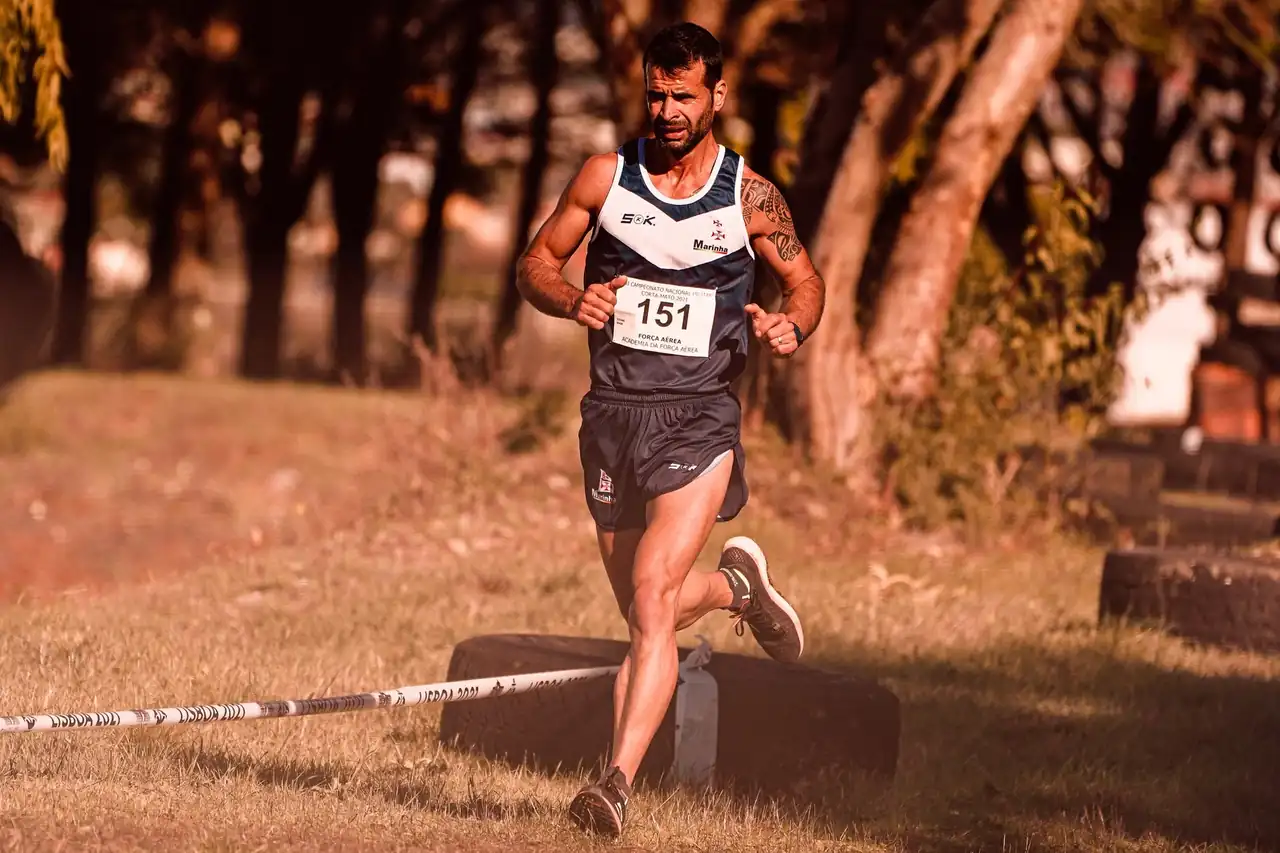
Aranda de Duero once again marks the real start of the athletic winter with an event that, by tradition and level, usually measures the pulse of Spanish cross country before the calendar enters its roughest stretch. The 2025 edition arrives with a lineup that blends African power, national distance talent, and a major new feature in the women’s race: María Forero’s season debut in cross country.
The Burgos race retains its role as a barometer. It does not decide titles, but it does hint at hierarchies, reveal form, and provide an early snapshot of who has arrived sharp in the autumn. On this occasion, the spotlight is split between Meshack Kipkurgat as the main men’s contender and a women’s field featuring several very familiar names from the Spanish scene, with special attention on Forero and runners capable of turning consistency into a tool of attrition.
A season opener that matters more than it seems
Cross country no longer waits for spring. World Athletics’ decision to move the World Championships in the discipline up to January 10 has compressed the calendar and pushed organizers to act sooner. The result is an earlier start, almost with leaves still falling, in which athletes arrive with less accumulated base and preparation still half-baked. In that context, Aranda de Duero gains value as the first serious benchmark of the winter.
That opener status explains part of the interest it generates every year. It is not just a demanding competition, but an event that usually brings together different profiles: mud specialists, 5,000- and 10,000-meter runners looking for sensations, and a few international names who provide enough intensity for the result to be meaningful. When the season starts this early, there is very little room to hide shortcomings.
The sporting consequence is clear. The leaders’ positions in Aranda tend to speak as much about form as ambition. Winning here does not mean dominating the winter, but it does help build a narrative and confidence. And in a discipline where the terrain, the cold, and the changing pace demand methodical improvisation, that first message carries more weight than it may seem at first glance.
Meshack Kipkurgat, the benchmark in a very open start
In the men’s race, the strongest name is Kenyan Meshack Kipkurgat, recently second in the Gijón half marathon and bringing the speed-and-endurance mix that usually causes damage on awkward courses. His presence raises the bar for the favorite group and forces the rest to run with more precision than instinct. In cross country, that matters: a bad change of pace costs more than on the track, and a poor read of the terrain leaves wounds that do not close afterward.
Alongside him is Moroccan Sala Heddine, winner of Aranda’s last mile race, a detail that is not minor because knowing the course, even partially, is often worth half a victory on a route where sensation and muscle memory overlap. In races like this, knowing when to accelerate and when to protect yourself from the strain is almost a craft science.
The Spanish contingent also deserves attention. Pablo Sánchez Gómez, who last season won the Association of Cross Country Race Organizers’ award for best national athlete, once again ranks among the most solid names on the entry list. Around him are Aarón Las Heras, Dani Arce, Sebas Martos, Adam Maijó, and Pol Oriach, a group that adds depth to the race and ensures changes of pace, tactical reading, and relentless fighting for positions. The presence of several athletes with international level turns the start into a race of constant filtering.
In a cross country race of this profile, the favorite does not always win through sheer superiority. Often, the victor is the one who manages the first third best, who does not get dragged into an early attack, and who reaches the final stretch with something in reserve. That is why the lineup matters as much as the legs. Aranda usually rewards those who know how to race with a cool head in an environment that, by definition, does not invite comfort.
The women’s race gains strength with María Forero’s debut
The big novelty in the women’s race is the debut of María Forero in this cross country campaign. Her appearance adds intrigue because she is an emerging athlete with the ability to push the pace and compete without complexes in increasingly demanding settings. In a discipline where debuts say a lot about the competitive tone of the winter, her presence turns the race into something more than a simple unveiling.
The women’s entry list also has depth and contrast. It includes Fátima Azzahraa Ouhaddou, Claudia Estévez, who was second last year in Aranda, Lidia Campo, Lucía Rodríguez, Azucena Díaz, Clara Viñarás, María Viciosa, Celia Antón, and Ecuadorian Katherine Tisalema. It is a compact and varied group, with athletes capable of sustaining high paces and adapting to a course where endurance is often as important as top speed.
The value of this field lies not only in the names. The time of year also matters. October is usually a month of recalibration for many distance runners, still fine-tuning workloads after summer or after a track season that has left the muscles warm, but not always fresh. In that transition, a well-managed race in Aranda can change the tone of the whole month, even if the season is still young.
If in the men’s race the discussion revolves around the specific weight of Kipkurgat and Heddine, in the women’s race the competitive range seems even more open. Forero arrives under the spotlight, but behind her are runners with enough experience to turn the event into a battle of sustained pace, small breaks, and regroupings. Cross country, after all, is a setting where aesthetics matter little and tolerance for discomfort matters almost everything.
An 8,800-meter course where every decision leaves a mark
The men’s and women’s senior race will be contested over 8,800 meters, a distance that no longer allows anyone to hide behind short explosiveness or survive on stride economy alone. It is an intermediate, demanding course, and long enough to punish anyone who rushes. Every section of the circuit forces a decision: push, wait, cover, or take a risk. And in a race like this, deciding late usually comes at a high cost.
Aranda also has a very recognizable identity within the cross country calendar. It is not a laboratory track or a legendary mud bath designed for postcard-style epicness. Its appeal comes from the mix of atmosphere, level, and the feeling that the season truly begins there. For many distance runners, it is the first stage where the body stops training and starts competing. That transition, simple on the calendar and complex in the legs, explains much of its prestige.
The fact that the women’s race has gained so much visibility in recent years also helps. Equal-distance and same-time races strengthen the sporting reading of the event and make the comparison between categories clearer. In Aranda, both women and men will run the same distance, a choice that puts the focus on execution quality rather than format differences.
The start time also places the race in the middle of the day, at 12:25, when the morning cold has already given way to a somewhat more pleasant temperature, although the field still breathes that dry, sharp air typical of Castilian autumn. Light, ground, and wind all end up becoming part of the strategy, because in cross country even the environment runs.
Why Aranda works as the first major reference of the winter
Some races are part of the calendar, and others are part of the runners’ memory. Aranda belongs to both categories. Its consistency, its ability to attract top-level names, and its mix of tradition and modern relevance have made it a point of support for measuring sensations without needing to dramatize the result. At this stage of the season, that is worth gold for coaches, clubs, and athletes.
There is also a less visible but decisive prestige factor: the Aranda race usually attracts runners who do not enter out of mere routine. They come because they know there is real competition there. And that reputation is sustained by performances that leave a mark on the national circuit. A well-built cross country race does not need gimmicks; it needs level, pace, and a certain ability to make the runner uncomfortable.
In 2025, the combination of benchmark foreigners, Spanish distance runners, and ambitious debutants gives the race an uncommon density for this time of year. The appeal does not lie in a single figure, but in the collective whole. That is the kind of lineup that turns an October morning into a serious reading of the state of Spanish cross country athletics.
In addition, the Aranda event comes at a time when the discipline needs media continuity to avoid being reduced to a niche. The cross country season has a beauty that is hard to package: mud, cold, pace changes, awkward strides, and useful suffering. But when names, tradition, and a well-designed start come together, the result gains a clarity that any fan understands instantly.
What the race may leave beyond the podium
Beyond the winner, Aranda usually leaves clues about who has done their autumn homework and who is still carrying summer inertia. A good placing here can help build the winter campaign with confidence, while a bad day does not always have to be read as a structural problem. Cross country has a kind cruelty: it forgives nothing, but it also does not lie about the exact moment of form each athlete is in.
In the men’s race, attention will be on whether Kipkurgat confirms favoritism or whether one of the Spanish runners can turn the strain into a tactical endurance race. In the women’s race, interest is split between Forero’s debut, Estévez’s continuity, and the group’s ability to sustain a high pace without breaking too soon. Pace changes and the management of the final stretch usually explain more than the name printed on the start list.
Aranda de Duero also continues to offer a lesson that athletics knows well: the season does not begin with noise, but with measurements. And few measurements are as honest as a cross country race where nobody can hide behind a clean stopwatch. There, the wind, the terrain, and the body’s response when the legs begin to protest are in charge. That is precisely why the event still matters.
In an increasingly fragmented calendar, the Burgos event still preserves something uncommon: a clear identity. It does not aim to be a final, but it acts as an initial truth. And in 2025, with Meshack Kipkurgat and María Forero at the center of the showcase, that message once again comes through clearly from the very starting line.



How to prevent thigh chafing: causes and real solutions

Women’s running windbreakers: seven jackets and how to choose

Do more workouts get rid of soreness? A guide for runners

Jaén Half Marathon 2026: Record 3,800 Runners Registered

Men’s short running tights: how to choose the right pair

World Triathlon confirms data breach involving medical data

Izan Edo targets podium at Miyazaki World Cup

María Pérez ranks ninth in World Athletics’ 2026 top ten

Dos Santos, Duplantis and Sawe: World Athlete of the Year finalists

San Silvestre Vallecana 2026: 42,000 places, prices and start times

 Races3 months ago
Valencia Half Marathon 2027: date and registration

 Races3 months ago
Valencia Marathon 2026: entry, ballot and course

 Reviews and Comparisons4 months ago
Asics Gel-Roadmiles 3 for men: review and current price

 Reviews and Comparisons4 months ago
Asics Gel Sonoma 8 Gore-Tex: complete analysis for trail and rain

 Sneakers3 months ago
Saucony Endorphin Pro 4: full review and verdict

 News5 months ago
Strava API 2026: what changes for clubs, challenges and runner apps?

 Reviews and Comparisons5 months ago
Nike Alphafly 3: opinions, sensations, and real key points

 Reviews and Comparisons4 months ago
Under Armour running shoes review 2025-2026: models and key features

 Sports Equipment4 months ago
Shoe sizes in cm: a clear guide to getting the right fit for your footwear

 Sneakers3 months ago
Skechers GO RUN Consistent 2.0 analysis: comfort and limits

 News5 months ago
Valencia Marathon 2026 route: key tips to train and run better

 Sneakers4 months ago
Adidas Adizero Boston 13 for men: review and verdict