News
Cursa dels Nassos 2025: route, time and key details
The year-end race in Barcelona retains a fast 10 km course, with the start and finish at Selva de Mar.

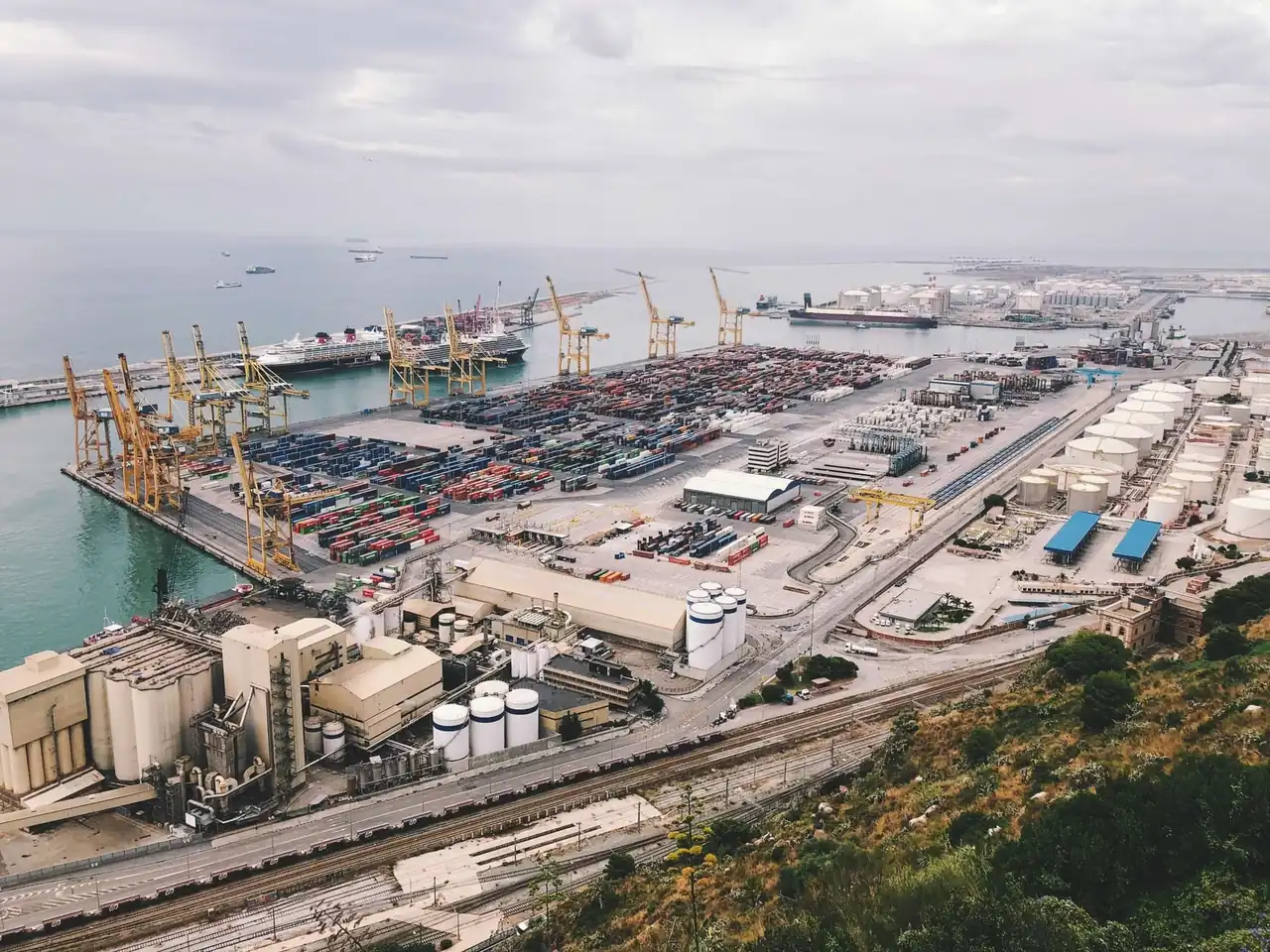
The Cursa dels Nassos 2025 keeps the profile of the great urban events that are won through rhythm: a certified course, mostly flat, and designed for fast running along Barcelona’s coastline. The start and finish are once again located in the area around Carrer de la Selva de Mar, in the Sant Martí district, a spot that brings together logistics, access, and that final end-of-year pulse that sets the race apart. For anyone looking at the route, the most relevant detail is clear: it is 10 kilometers of asphalt, with few sharp turns and stretches that favor a steady stride.
The 2025 edition preserves the character of a season-ending race and the same pattern that has made it so popular: a fast, certified course built for times. The organizers keep several start waves to manage the flow of participants, with the first scheduled for 5:15 p.m., a reference that explains much of the race’s atmosphere: it begins in daylight and finishes as the city is moving into evening, when Barcelona’s waterfront takes on another texture, colder and brighter.
A fast course by the sea
The Cursa dels Nassos 2025 route is not about a postcard view or leg-breaking elevation gain. Its virtue is the opposite: a fast urban layout, almost academic, that allows you to run consistently. The start on Selva de Mar, at the height of Ramon Calsina square, marks the beginning of a sequence that moves along wide streets and familiar avenues of Barcelona’s waterfront. It is a race that is easy to read on the map: from Sant Martí to the area around Icària, from Marina and Llull back toward Diagonal and Selva de Mar.
That clean, fairly predictable layout explains why so many people choose it to end the year with a stopwatch. The race takes place almost entirely on asphalt and only introduces the gentle inclines that appear in some stretches of Marina or Llacuna. There is no mountain, no sudden changes, and no technical sections; what matters is managing effort, sustaining pace, and working the legs on stable pavement. In Barcelona, that means a race where wind can play a role at times, but elevation rarely comes into play as a decisive factor.
In terms of race feel, the course has something of an urban conveyor belt: continuous progress, clear reference points, and the impression that every kilometer has been placed to favor pace. The waterfront area, with its wide streets and long straightaways, provides the cadence sought by those chasing a personal best. At the same time, the proximity of the sea adds a very distinctive year-end atmosphere, with the city quieter than usual and traffic held back by the nature of the event itself.
Start and finish on Selva de Mar
The organizers place both the start and the finish on Carrer de la Selva de Mar, at the height of Ramon Calsina square. That detail is not minor: it simplifies the runner’s logistics and creates a single hub before and after the race. The staggered start in several waves helps distribute the pack, a solution that reduces congestion and makes the start smoother in a race that usually gathers thousands of participants.
The first start has been set for 5:15 p.m., with other waves at 5:20 p.m. and 5:27 p.m. depending on the accredited 10-kilometer time. That ordering by pace improves the movement of the field and, in such a crowded race, prevents the fastest runners from having to weave through slower paces. Participants in wheelchairs start a few minutes earlier, at 5:12 p.m., on their own schedule, which reflects the race’s specific organization.
Sharing the start and finish on the same urban axis also shapes the perception of the route: you enter and leave through the same reference point, as if the course folded back on itself. It is a practical formula and one that fits perfectly with a year-end race, where people usually arrive with the intention of running, yes, but also of finding themselves in a city in a restrained celebratory mood, without excess and with an almost ritual feel.
The streets that shape the 10 kilometers
The official route starts on Selva de Mar and heads toward Passeig de Garcia Fària and Passeig de Calvell, then links up with the roundabout on Carrer de la Llacuna. From there, the course continues along Llacuna in both directions of the area planned by the organizers, passes Salvador Espriu, Plaça dels Voluntaris and the area around Dr. Aiguader, before approaching Pla de Palau and Passeig de Picasso. It is a very recognizable route for anyone who runs in Barcelona, with a pattern that combines open areas, wide turns, and out-and-back stretches designed not to punish the muscles too much.
After passing Passeig de Picasso, the course turns 180 degrees and begins the return through the same urban strip, passing Circumval·lació, Icària, Marina, Llull and once again Llacuna, before the final stretch along Avinguda Diagonal and the finish on Selva de Mar. It is not a route that hides surprises. And that is precisely why it works: it allows you to calculate splits, manage your effort, and run in a way very similar to long-track running, but right in the city. Runners who know how to hold pace on open avenues usually get the most out of it.
The final sequence, with the return via Diagonal and the closing stretch on Selva de Mar, concentrates the most profitable part of the course. These are meters where a steady stride can make a difference, especially if the runner has handled the earlier sections well. The absence of serious elevation does not remove fatigue, of course, but it does leave more room for fatigue to come from sustained speed rather than mechanical strain. That is the hallmark of the Cursa dels Nassos: a fast-profile 10K that is very easy to read.
What makes it so fast for chasing a time
Some races are remembered for their toughness and others for their ability to let you run. Barcelona’s belongs to the second group. The course is almost entirely flat, with 100% asphalt, and its certification makes it a useful benchmark for those who want to verify an official time. That attracts both high-level athletes and recreational runners who want to end the year with a concrete reference, without the noise of an irregular course or deceptive hills.
Speed does not depend only on the route, even if it is favorable. The time of day, the time of year, and the type of participant also matter. It is run on December 31, late in the afternoon, when many runners have already made evening training their natural schedule. That combination can be oddly beneficial: the body warms up earlier, the light fades gradually, and the atmosphere, far from being solemnly competitive, has something of a shared race. The result is usually a lively flow, with sustained paces and fewer interruptions than in other urban 10Ks.
In recent editions, the race has come close to massive participation numbers and has consolidated its image as an event that is both big and agile. Beyond the sponsor name or each year’s poster, the essence does not change: a certified, fast, and highly recognizable 10K. For a runner, that means one very specific thing: if the legs are there, the route does not put up many barriers. The work is done in the sensations, in the splits, and in the ability not to go too far above threshold from the very first kilometer.
What is worth reading before checking the clock
The route tells an important part of the story, but not all of it. The Cursa dels Nassos 2025 also features an organization designed to move thousands of people without clogging the city center. Staggered starts by pace, chip timing, aid stations, and the phased bib pickup all serve the same goal: to keep a very large race flowing smoothly. In an urban race, the runner’s experience depends as much on the course as on the machinery that supports it.
Bib and giveaway collection, scheduled in Barcelona in the days leading up to the race, is distributed in time slots to avoid excessive crowds. The organizers also recommend arriving by public transport, which makes sense for an event held in a well-connected area served by metro, tram, and bus. That detail matters because the route cannot be understood apart from its surroundings: Selva de Mar, Icària, Llacuna, and Diagonal are part of a city that keeps functioning around the race, even if for a while it does so to a different rhythm.
Runners who know the course usually take advantage of a simple benefit: they know where they can push and where it is wise to keep a little in reserve. The opening stretch invites you not to go too fast; the middle section rewards consistency; the final stretch, if there is still something left in the legs, allows you to squeeze harder. There are no extraordinary secrets, only classic management of a well-run 10K. And on a date as symbolic as December 31, that carries special value: ending the year with a route that gives nothing away, but does not punish more than necessary either.
Barcelona in the late afternoon, between urban pulse and straight lines
The image of the Cursa dels Nassos has something of a moving postcard. It is not the monumental postcard of the historic center, nor the solemn asphalt of a major marathon. It is something more intimate: a Barcelona of wide streets, distant sand, and avenues where the runner measures themselves against their own pace. The waterfront, the cool air that sometimes comes in from the sea, and the light slowly fading create a very particular scene, almost cinematic, but without artifice. The essential thing remains pace.
That mix explains why the race retains so much personality. The route is easy to explain, quick to remember, and straightforward to read for anyone who has already run other urban 10Ks. It does not require trail skills, downhill finesse, or a complex reading of the terrain. It asks for something else: consistency, attention to pace, and a cool head so you do not unravel at the start. Its greatest virtue is that it focuses on running well, not on surviving the course.
That is why the Cursa dels Nassos 2025 remains a benchmark for closing the calendar with a serious, certified 10K. The city helps, the course helps, and the date adds that note of farewell that turns a popular race into something more than just a time. Between Carrer de la Selva de Mar and the final return to the same street, runners find a course made for moving forward without fuss, with the sea close by and the clock in front of them.



How to prevent thigh chafing: causes and real solutions

Women’s running windbreakers: seven jackets and how to choose

Do more workouts get rid of soreness? A guide for runners

Jaén Half Marathon 2026: Record 3,800 Runners Registered

Men’s short running tights: how to choose the right pair

World Triathlon confirms data breach involving medical data

Izan Edo targets podium at Miyazaki World Cup

María Pérez ranks ninth in World Athletics’ 2026 top ten

Dos Santos, Duplantis and Sawe: World Athlete of the Year finalists

San Silvestre Vallecana 2026: 42,000 places, prices and start times

 Races4 months ago
Valencia Half Marathon 2027: date and registration

 Races4 months ago
Valencia Marathon 2026: entry, ballot and course

 Reviews and Comparisons4 months ago
Asics Gel-Roadmiles 3 for men: review and current price

 Reviews and Comparisons4 months ago
Asics Gel Sonoma 8 Gore-Tex: complete analysis for trail and rain

 Sneakers4 months ago
Saucony Endorphin Pro 4: full review and verdict

 News5 months ago
Strava API 2026: what changes for clubs, challenges and runner apps?

 Reviews and Comparisons5 months ago
Nike Alphafly 3: opinions, sensations, and real key points

 Reviews and Comparisons4 months ago
Under Armour running shoes review 2025-2026: models and key features

 Sports Equipment4 months ago
Shoe sizes in cm: a clear guide to getting the right fit for your footwear

 Sneakers3 months ago
Skechers GO RUN Consistent 2.0 analysis: comfort and limits

 News5 months ago
Valencia Marathon 2026 route: key tips to train and run better

 Sneakers4 months ago
Adidas Adizero Boston 13 for men: review and verdict