News
2025 Donostia Half Marathon Route: Complete Guide
A fast, flat route along the Cantabrian coast, with services, key points, and all the essentials of San Sebastián.

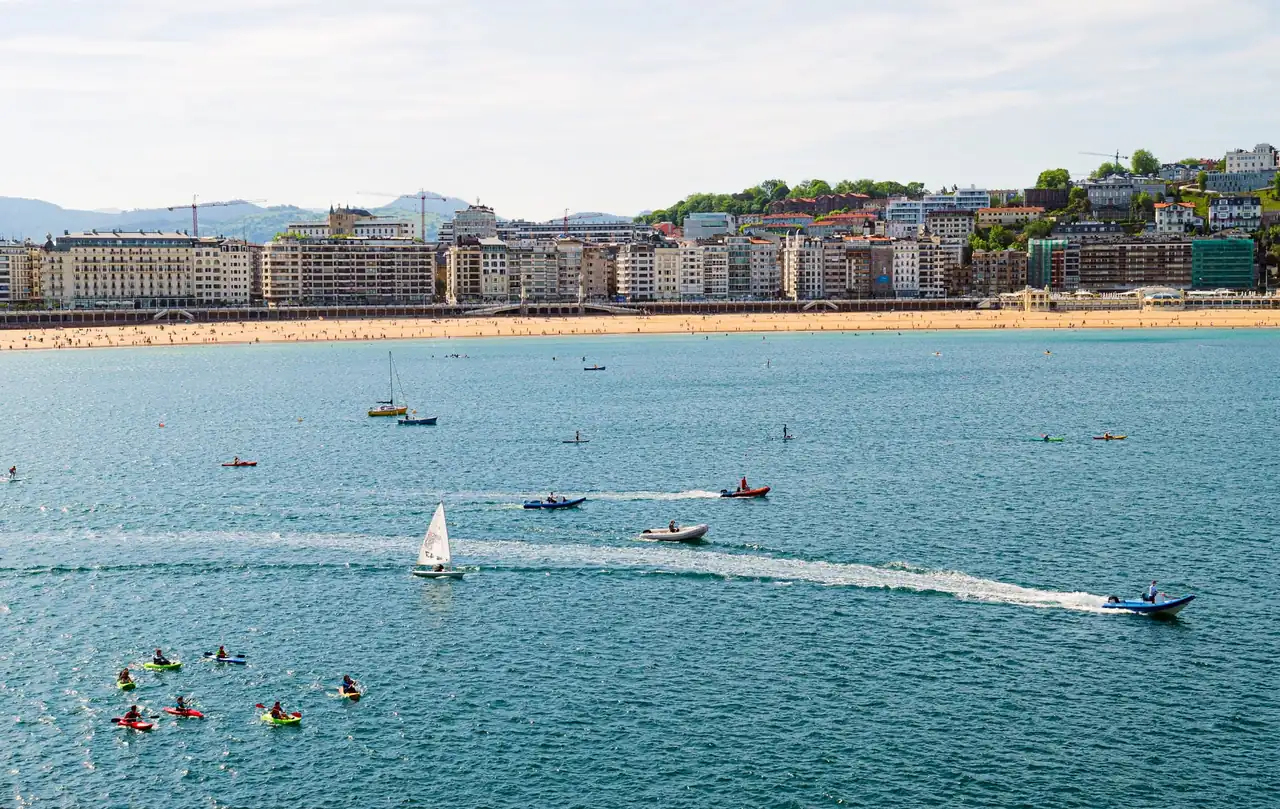
The course of the Donostia Half Marathon 2025 combines speed, scenery, and very careful logistics. The start is located on the Boulevard in Donostia, at 10:00, and from there the race unfolds on an urban circuit, at sea level and without any noticeable elevation changes, a rarity increasingly valued by those looking for a solid performance or a clean racing experience, without surprises.
The event maintains its status as a benchmark in the calendar for a simple reason: the runner moves among the city’s landmarks and wide sections, with a favorable profile, few sharp turns, and an atmosphere that accompanies without overwhelming. In practical terms, it is one of those courses that really lets you run, with a steady pace and an easy read, something that becomes clear from the first kilometers and makes the difference compared with other more broken-up routes.
A course designed to run fast and look around
San Sebastián offers a rare combination of asphalt, sea, and architecture. In this half marathon, the route does not simply connect streets; it draws a moving postcard. From the start area, runners find wide avenues and a layout that invites them to settle into their pace very early on. There are no big hills to break the cadence or technical sections that force you to hold back energy excessively.
That design explains why so many calendar references call it a fast course. The route is certified, fully urban, and with an almost flat profile, a combination that reduces accumulated muscle fatigue and favors a more economical stride. This is no minor detail: in a half marathon, every turn, every incline, and every braking moment is paid for at the end. Here, by contrast, the city seems to work in the runner’s favor.
The aesthetics also matter. Running alongside some of Donostia’s best-known landmarks turns the race into a sequence of recognizable images: the Kursaal, the Cathedral of the Good Shepherd, City Hall, the La Concha area. These are not tourist decorations; they are part of the course and help explain why this race remains so appealing to those who travel specifically to take part in it.
Start, early pace, and reading the first section
The start at the Boulevard places the race in a central and easy-to-recognize setting. That brings organizational convenience and also a fairly natural start, with enough space for the group to sort itself out without too much tension. In the first minutes, the smartest approach is to let the pace find its place, because the course rewards consistency and punishes impatience less than rushing ahead.
The organizers have planned pacers for the half marathon with target times of 1:25, 1:30, 1:35, 1:40, 1:45, 1:50, 1:55, and 2:00 hours. That range of paces makes it clear that the race is not aimed only at recreational runners, but also at those chasing specific times. Having those visual aids on such a stable course helps maintain focus when the mind starts negotiating with the legs.
On such a clean circuit, the first block is usually decisive for setting the feel. The flat asphalt and the route without extreme turns favor a steady cadence, but they also require prudent effort management: running too fast at the start can seem easy in an environment like this, and that is precisely why it is a common mistake. The apparent speed of the street is less deceptive than a hill, but it still costs the same at the end.
The points that define the race
The route is marked by a series of urban landmarks that act as visual and emotional guides. The Kursaal Congress Centre provides one of the most photogenic images of the race, while the Cathedral of the Good Shepherd and City Hall place the runner in the heart of the city. The presence of La Concha adds the most famous postcard: the bay, the open light, and that feeling of running right along the edge of a city facing the sea.
That scenery does more than beautify the experience; it also shapes the perception of effort. There is a very powerful psychological effect when the surroundings do not merely accompany you, but seem to breathe with the runner. The Donostia route has that effect: it is not monotonous, and that helps sustain attention over 21.097 kilometers, a distance where mental fatigue can weigh as much as physical fatigue.
The race is designed so that participants do not have to fight against hostile topography. There are no major elevation changes or sections that excessively break up the run. That is one of the reasons it is considered suitable for going after a personal best, as long as the runner arrives with a solid base and does not mistake a friendly course for a stroll. The course’s friendliness does not remove the demands; it makes them more honest.
Water stations, entertainment, and services that change the experience
In a half marathon, the course is not understood only by its shape, but also by what it offers around it. In Donostia, water stations are located at kilometers 5, 10, and 15, plus points with Powerade at kilometers 7.5 and 12.5. That distribution allows the effort to be broken up with a certain physiological logic and prevents runners from reaching the final stretch dehydrated, where any drop in energy is felt more than usual.
The organizers also enhance the experience with entertainment every 5 kilometers, a decision that turns parts of the route into little atmosphere stations. This is not mere decoration. In an urban race, the background noise, music, and presence of spectators help sustain the pace and pull the runner out of the kind of mental tunnel that forms when the rhythm becomes demanding.
The finish offers an individual refreshment bag with liquids and solids, while the event includes a technical T-shirt, a finisher medal, baggage storage, changing rooms, toilets, and showers. The free D-Bus transport service for runners, between 7:30 and 13:30, adds a very practical detail in a city where getting around with a bib on can become part of the day’s logistics. All of this paints a race that not only boasts about its course, but about the complete experience.
Certification, times, and what the course rules say
The fact that the circuit is certified is not just a decorative label. It means the route meets the necessary requirements for the distance to be official and for times to have sporting validity in the usual sense. For runners chasing a personal best, this is essential: it is not enough for the course to feel fast; it has to be fast under verifiable conditions.
The race sets a maximum time of 2 hours and 30 minutes. That is a reasonable limit for a popular half marathon with a wide range of participants, from those competing at high pace to those simply wanting to complete the distance comfortably. It is also noted that there will be pacers and time tracking on the half marathon course, two elements that strengthen the sporting nature of the day.
Another useful detail is that the classification is organized clearly and that there is a participation diploma available for those who want it. It may seem secondary, but in well-run urban races these details help end the experience with a sense of order. When a city hosts an event of this size, the course does not end at the finish line; it continues in the way recovery happens, the time is checked, and the experience is processed.
What changes between the half marathon and the 10K
The event shares the stage with a 10-kilometer race, a distance that follows a different logic, even if it uses part of the same organizational ecosystem. For those arriving in Donostia with less endurance or a shorter goal, the 10K lets them enjoy the atmosphere without entering the full demands of the longer middle-distance effort. The overall design of the day, however, remains focused on speed and running comfort.
In the half marathon, the experience changes scale. The runner needs to manage hydration, pace, and concentration more precisely. The water stations at 5, 10, and 15 kilometers, along with the intermediate isotonic drink points, play a more decisive role here than in a shorter distance. The target paces matter more too, because the race becomes a prolonged dialogue between ambition and caution.
That contrast helps explain why the half marathon course is mentioned so often in searches. It is not just about knowing where the race passes, but about understanding what kind of competitive terrain it offers. And in Donostia the answer is quite clear: an ideal setting to run continuously, take advantage of the asphalt, and let the city, rather than interfere, support the pace.
Registration, bib pickup, and planning the day
The logistical information is also part of the course, because it affects how the race is experienced. Bib pickup takes place on April 10 and 11 at the store selected during registration, a system that spreads out the crowds and avoids unnecessary congestion. That makes it easier to arrive at the start with less friction and less room for last-minute chaos, which is always appreciated in a race with such high demand.
The race takes place on April 12, 2026 at 10:00, starting from the Donostia Boulevard. The early start requires a small prior routine: breakfast, travel, time management, and a warm-up that does not break the calm before the beginning. In a fast race, the day starts long before the gun goes off, and understanding that is part of reading the course well.
The observed entry fee for the half marathon is 27 euros, while the 10K is listed at 18 euros. In terms of value for money and experience, the course and services place this event in an attractive segment for those who value both the stopwatch and the setting. The city provides the backdrop; the organization provides the frame.
Why this course continues to attract runners of all profiles
Some courses feel like a battle, and others like a showcase of effort. The Donostia half marathon belongs to the second category. Its strength lies in the combination of factors: flat profile, certification, asphalt, services, scenery, and atmosphere. Each piece could explain part of its success; together, they build a race that appeals to both recreational and more competitive runners for different but equally solid reasons.
For those chasing a personal best, the absence of major obstacles is almost a gift. For those seeking a complete experience, passing through the iconic locations and the support of the city make the race more than just a time on the clock. And for spectators, the course makes it easy to follow the athletes, because the city is well suited to watching, cheering, and accompanying without losing track of the race.
The final feeling is that of a course that does not impose itself harshly on the runner, but instead offers a clear surface on which to display fitness. That explains why it is spoken of as one of the most beautiful and fastest routes on the calendar. This is not an empty phrase: in San Sebastián, geography, organization, and sports culture all move in the same direction.
A city that turns effort into scenery
Donostia has something that few cities offer so naturally: the ability to make a distance race feel, at the same time, like an urban journey and a visual tour of its identity. The sea, the distinctive buildings, and the closeness of the crowd create an atmosphere that accompanies without distracting. The runner is still competing, but the surroundings remind them they are in one of the most elegant settings for popular athletics in Spain.
That balance between speed and beauty is the basis of the route’s prestige. The race does not need to exaggerate its virtues; it is enough to let them unfold. From the Boulevard to the finish, the course shows a city that knows how to open itself to sport without losing its character. And in a half marathon, where the body gradually refines its limit step by step, that sense of spaciousness and order is worth almost as much as a good final time.
In the end, the course of the Donostia Half Marathon 2025 sums up very well what many runners are looking for today: a measurable, smooth, and memorable race. The stopwatch matters, but so does the setting. And in this case, both are on the same side, with the Cantabrian Sea as a backdrop and the city as one more silent runner, supporting every stride all the way to the finish line.
Este artículo contiene enlaces de afiliado: si compras a través de ellos, se genera una pequeña comisión sin coste adicional para ti. Más información.



How to prevent thigh chafing: causes and real solutions

Women’s running windbreakers: seven jackets and how to choose

Do more workouts get rid of soreness? A guide for runners

Jaén Half Marathon 2026: Record 3,800 Runners Registered

Men’s short running tights: how to choose the right pair

World Triathlon confirms data breach involving medical data

Izan Edo targets podium at Miyazaki World Cup

María Pérez ranks ninth in World Athletics’ 2026 top ten

Dos Santos, Duplantis and Sawe: World Athlete of the Year finalists

San Silvestre Vallecana 2026: 42,000 places, prices and start times

 Races4 months ago
Valencia Half Marathon 2027: date and registration

 Races4 months ago
Valencia Marathon 2026: entry, ballot and course

 Reviews and Comparisons4 months ago
Asics Gel-Roadmiles 3 for men: review and current price

 Reviews and Comparisons4 months ago
Asics Gel Sonoma 8 Gore-Tex: complete analysis for trail and rain

 Sneakers3 months ago
Saucony Endorphin Pro 4: full review and verdict

 News5 months ago
Strava API 2026: what changes for clubs, challenges and runner apps?

 Reviews and Comparisons5 months ago
Nike Alphafly 3: opinions, sensations, and real key points

 Reviews and Comparisons4 months ago
Under Armour running shoes review 2025-2026: models and key features

 Sports Equipment4 months ago
Shoe sizes in cm: a clear guide to getting the right fit for your footwear

 Sneakers3 months ago
Skechers GO RUN Consistent 2.0 analysis: comfort and limits

 News5 months ago
Valencia Marathon 2026 route: key tips to train and run better

 Sneakers4 months ago
Adidas Adizero Boston 13 for men: review and verdict