News
Drawers San Silvestre Vallecana 2025: schedules and access points
Brands, wristbands, and access streets organize a massive departure in Madrid with very precise schedules.

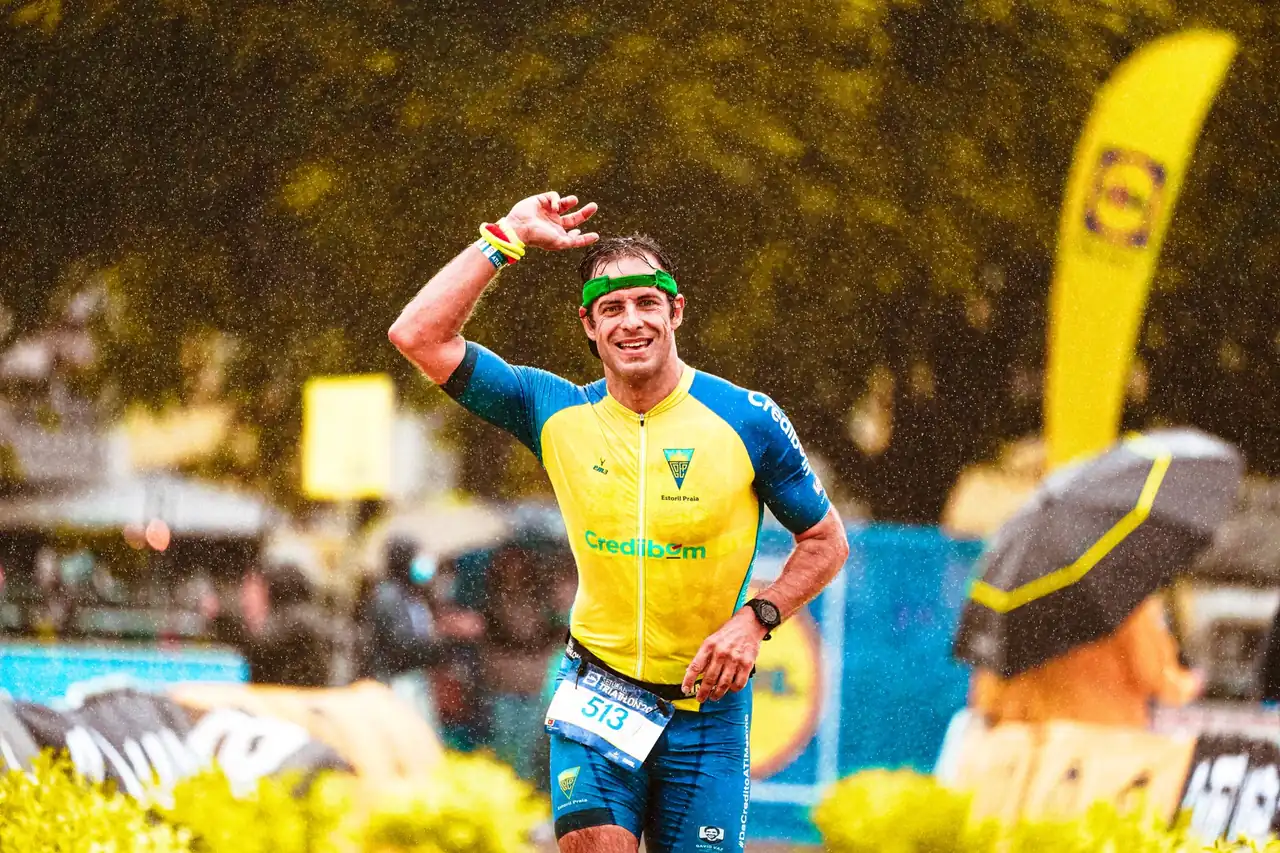
The start of the 2025 San Silvestre Vallecana is organized into corrals to avoid bottlenecks and distribute thousands of runners according to the time they proved when registering. The logic is simple and strict: each athlete enters through a specific street, with a wristband that marks their group, and only then gains access to the point assigned to them on Concha Espina, next to Plaza de los Sagrados Corazones.
That system is no small detail or logistical whim. In a race that brings together more than 40,000 participants between the popular race and the international one, the order of entry works like the gate of a dam: if it fails, the mass overflows. That is why the organization separates corrals, schedules, and access points with almost millimetric precision, and leaves a rule that admits no interpretation: without a wristband there is no access to the assigned corral.
How the start is distributed in the Vallecana
The popular race begins on December 31 starting at 4:50 p.m. and unfolds in several waves well into the evening. First come handbikes and athletics wheelchairs; then the runners with the fastest verified times; later, those arriving with intermediate paces, and finally participants with no time or slower marks. That ladder of starts allows each block to move at a reasonable pace and prevents the opening stretch from becoming an unmanageable crowd.
The corral system has become a hallmark of the race. It not only measures the sporting ambition of each runner, it also organizes the collective experience. In such a massive race, the first meters matter as much as the final clock: a bad initial position can force you to weave around people, lose rhythm, and start out too hard. The right corral reduces friction, improves safety, and makes the start cleaner.
The organization distributes access according to the verified time. Runners under 50 minutes enter through streets such as Padre Damián, with separate sections depending on their time. Those who prove times between 50 and 60 minutes gain access from Paseo de la Habana, while the 5:35 p.m. wave arrives via San Juan de la Salle. Participants with no time or with times of 60 minutes or more are grouped in the last starts, at 5:55 p.m. and 6:20 p.m., also with access via Padre Damián. That segmentation prevents a runner with a 40-minute mark and another with 65 from sharing the same starting tide.
The wristband that decides where you can enter
The time wristband is not a decoration or a race souvenir: it is the operational document that opens or closes each access point. Once the time is validated, the organization issues that identification, which indicates the assigned corral and the authorized entry. Without that wristband, access drops to the slowest corral, a measure designed to preserve order and leave no room for shortcuts.
In practical terms, the wristband summarizes the entire hierarchy of the start. It is used to filter runners, organize the flow, and avoid arguments at the barrier. It also reduces the margin for improvisation, because it forces each participant to arrive at the exact point corresponding to them. In a race of this size, visual control is just as important as chronological control. A clearly visible wristband is equivalent to a key; a missing wristband, to an unnecessary wait.
Experience from previous years shows that many people underestimate that detail and focus only on the start time. However, the clock is not enough. The distance between the correct access and the wrong one can be the difference between entering calmly or being left out of the ideal group. On a cold December afternoon, among costumes, nerves, and music, that small administrative gesture sets the tone for the whole race.
The schedules worth keeping clear
The time structure of the 2025 San Silvestre Vallecana is very well defined. At 4:50 p.m., handbikes and athletics wheelchairs start. At 5:00 p.m., runners with a verified time under 50 minutes set off. At 5:15 p.m., those between 50 and 60 minutes do so. Then comes the turn of the final popular waves, scheduled for 5:35 p.m., 5:55 p.m., and 6:20 p.m., for those without a verified time or with times over 60 minutes.
The international race, reserved for elite athletes, has a different and later schedule: 7:55 p.m.. That separation reinforces the dual nature of the event, with an early half that is festive and popular, and a second half that is more selective, almost like an athletic showcase. The change of pace between the two parts is striking, as if the city went from a neighborhood party to a high-voltage final in just a few hours.
The schedules matter not only for punctuality. They also define the pre-race flow, warm-up, and positioning inside the venue. Arriving with a margin avoids unnecessary tension, especially in an environment where thousands of people coincide with backpacks, warm clothing, costumes, and nerves. The start time is only the surface; beneath it lies the whole chain of movements that begins well before.
Accesses by street and waves of runners
The distribution of access points is one of the least flashy, but most decisive, keys to the Vallecana. The fastest runners, starting under 50 minutes, enter through different sections of Padre Damián, while the next group enters through Paseo de la Habana. The third wave uses San Juan de la Salle and the final starts return to Padre Damián to make room for runners without a time or with slower paces.
That division by streets allows the great bottleneck at the start to become several parallel channels. The result is more order, less pressure on the barriers, and a more logical distribution of the mass. The San Silvestre Vallecana cannot be understood without that urban design, because the city adapts to the race just as a stadium adapts to a final: each gate serves a precise function and each runner finds their place in a larger mechanism.
In practice, arriving at the correct entrance avoids long waits and awkward backtracking. It also reduces the last-minute improvisation so common in mass events. Those who enter through the assigned street not only respect the rules, they also protect the pace of everyone else. Organization by access points is a form of sporting courtesy, and at the same time a technical necessity.
Start, finish, and route of a race that crosses Madrid
The popular race starts on Concha Espina Street, in the area of Plaza de los Sagrados Corazones, and finishes on Candilejas Street, at the corner with Tiempos Modernos, next to Vallecas Stadium. The international race also starts from the same axis, although its finish is inside the stadium. That 10-kilometer route has turned the Vallecana into a kind of urban corridor between two temples of Madrid football, with an entire city looking on from both sides.
The course is famous for its favorable profile. For much of the route, the runner moves along a slight downhill that invites you to loosen the legs and let yourself go. But the race reserves a final bill on Avenida de la Albufera, where the terrain toughens and fatigue becomes visible in the strides. The decisive part is not always the fastest; in this race, the final climb weighs more than many earlier kilometers.
That contrast explains much of the myth of the San Silvestre Vallecana. It begins with the sparkle of the mass start and ends with the strain of Vallecas, where the crowd pushes and the body is already counting every meter. Between the two points, tradition, speed, and spectacle mix together, a combination that has made the race one of the most recognizable events on the Spanish calendar.
What it means to run well positioned in a mass start
In a race of this size, positioning well is not an aesthetic matter, but a functional one. The runner who enters the correct corral starts with people at a similar pace, encounters fewer obstacles, and can build their effort better from the first kilometer. By contrast, those who place themselves behind or ahead of their group usually experience a more chaotic start, with sudden braking, overtakes, and abrupt changes of rhythm.
The Vallecana also adds an emotional component that makes it more delicate. It is not an anonymous event or just another winter race. There is music, costumes, cameras, spectators on the sidewalks, and a certain sense of farewell ritual. In that context, the start feels more joyful than it really is. Celebration does not eliminate discipline; it needs it to work.
There is also a safety issue. Thousands of people moving at the same time, at different paces and on a narrow avenue in some stretches, require each phase to be ordered. Classification by verified times helps avoid clashes between very different levels and helps ensure that the first half of the race does not become an involuntary obstacle course. In such huge events, logistics matter as much as physical condition.
The international race and the weight of the elite
The international race is reserved for athletes with very demanding marks and starts at 7:55 p.m. Its structure is simpler, with a single start, but its sporting interest is enormous. The pace set by the best runners completely changes the reading of the night and turns the final kilometers into a duel of the highest level, in contrast to the more collective spirit of the popular race.
The coexistence of both races on the same day reinforces the uniqueness of the San Silvestre Vallecana. First comes the city in costume, with thousands of popular runners, and then the elite takes over, almost on a different stage. It is a clean transition, very Madrid at its core: noise, order, and a certain urban epic renewed every December 31. One race, two atmospheres, and a single route as the backbone.
For fans, that duality has added value. The popular race fuels the atmosphere and participation; the international one highlights sporting prestige. Together they explain why the Vallecana is not just a year-end race, but an event with its own identity within the calendar. The system of corrals and access points is part of that identity, even if it sometimes goes unnoticed among costumes and confetti.
The effect of misunderstanding the access point
Confusing the entrance or not carrying the correct wristband can create a small chaos that then lingers throughout the afternoon. Those who arrive late to their assigned access point, or try to enter through an unauthorized section, risk being reassigned to the slowest group. That changes the competitive context, alters the warm-up, and can even force an awkward start from a position farther back than desired.
The Vallecana does not forgive those slips much because its sheer volume of participants means every decision has an echo. A runner who positions themselves badly not only harms themselves; they also complicate the flow of those behind. Start discipline is, in reality, a form of collective respect. In a race this big, every mistake multiplies.
That is why the organization insists so much on prior time validation and wristband distribution. It is not bureaucracy, but a way of turning a human mass into a legible pack. That difference is felt, in practical terms, from the very first meter. And in such a popular race, the first meter is almost a declaration of intent.
A start designed so Madrid doesn’t fall apart at the seams
Beyond the individual runner, the architecture of the start responds to an urban need. Madrid hosts the race on an afternoon when the city is already in New Year’s Eve mode, with traffic, last-minute shopping, and movement across all neighborhoods. Separating corrals, schedules, and access points prevents the race from spilling into the city uncontrollably and helps keep the operation relatively smooth.
The organization of the 2025 San Silvestre Vallecana is better understood if viewed as choreography. Each wave enters the stage with its own music, its assigned street, and its wristband in sight. The sum of those pieces turns a potentially chaotic start into a recognizable, almost ritual mechanism. Order is part of the spectacle, even if it often disguises itself as a mere formality.
In the end, that explains why so many people look up the San Silvestre Vallecana 2025 starting corrals every year. They do not only want to know what time it starts; they want to move precisely within an event where time, street, and position determine the full experience. In a race that celebrates the end of the year on asphalt, the start is already half the story.
The last image before crossing Vallecas
The scene has something of a compressed postcard. One runner adjusts their wristband, another checks the watch, someone puts the costume over the technical shirt, and on the sidewalk the cold December air cuts the face like thin paper. Everything is set for the race to begin without setbacks and for each corral to do its job. The San Silvestre Vallecana lives on that mix of order and celebration, of discipline and spontaneity.
That balance explains its endurance. The race grows not only because of tradition, but because it knows how to manage a crowd without losing its popular pulse. The corrals, the access streets, the wristband, and the schedules are not bureaucratic appendages: they are the invisible infrastructure that sustains the most recognizable image of December 31 in Madrid. And in a race like this, sometimes what is invisible is what best supports the emotion.
That is why the starting point matters as much as the finish. Those who position themselves well, enter where they should, and arrive on time not only run better: they truly take part in the script of one of the great events of Spanish running. The city provides the stage, the organization draws the path, and each runner takes their place in a production that has become part of the country’s emotional calendar.



How to prevent thigh chafing: causes and real solutions

Women’s running windbreakers: seven jackets and how to choose

Do more workouts get rid of soreness? A guide for runners

Jaén Half Marathon 2026: Record 3,800 Runners Registered

Men’s short running tights: how to choose the right pair

World Triathlon confirms data breach involving medical data

Izan Edo targets podium at Miyazaki World Cup

María Pérez ranks ninth in World Athletics’ 2026 top ten

Dos Santos, Duplantis and Sawe: World Athlete of the Year finalists

San Silvestre Vallecana 2026: 42,000 places, prices and start times

 Races4 months ago
Valencia Half Marathon 2027: date and registration

 Races4 months ago
Valencia Marathon 2026: entry, ballot and course

 Reviews and Comparisons4 months ago
Asics Gel-Roadmiles 3 for men: review and current price

 Reviews and Comparisons4 months ago
Asics Gel Sonoma 8 Gore-Tex: complete analysis for trail and rain

 Sneakers4 months ago
Saucony Endorphin Pro 4: full review and verdict

 News5 months ago
Strava API 2026: what changes for clubs, challenges and runner apps?

 Reviews and Comparisons5 months ago
Nike Alphafly 3: opinions, sensations, and real key points

 Reviews and Comparisons4 months ago
Under Armour running shoes review 2025-2026: models and key features

 Sports Equipment4 months ago
Shoe sizes in cm: a clear guide to getting the right fit for your footwear

 Sneakers3 months ago
Skechers GO RUN Consistent 2.0 analysis: comfort and limits

 News5 months ago
Valencia Marathon 2026 route: key tips to train and run better

 Sneakers4 months ago
Adidas Adizero Boston 13 for men: review and verdict