News
Elche Half Marathon 2026 route: start, finish, and course layout
Start, finish, and profile of the Elche 2026 course: a flat, urban, and fast half marathon among palm trees and asphalt.

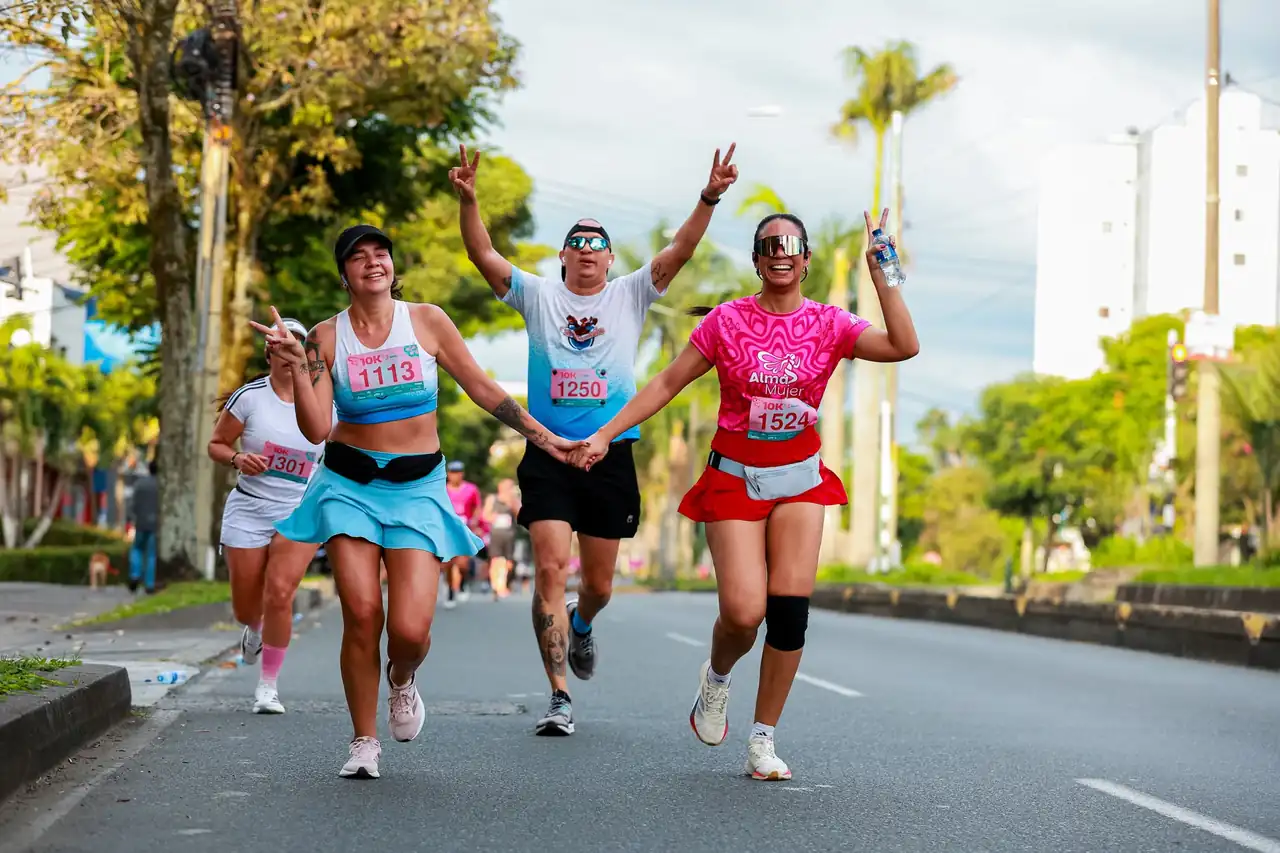
The course of the Elche Half Marathon 2026 retains the hallmark of a historic race: a start in the area around Paseo de la Estación, a finish at the same point, and an urban route designed to sustain pace from the very first meters. The organizers set the start for 9:00 a.m. on Sunday, March 22, 2026, and the official distance is 21 kilometers and 97 meters, a figure that preserves the classic essence of the half marathon. The race also shares the day with a 10K and concentrates much of its appeal in the city as a race setting, with wide streets, orderly traffic flow, and asphalt that encourages consistency.
A quick reading of the route leaves a clear idea: this is a half marathon to be run steadily, without the punishment of a harsh elevation gain or the tension of a capricious profile. The interest lies in the context, not only in the distance. Elche brings a very marked identity, with the Palm Grove as a backdrop and a start-finish area that concentrates atmosphere and logistics along the same urban axis. For anyone looking for concrete references about the course, the important thing is not only where it starts, but what kind of race it offers: an asphalt race, certified over its length, built for pace and with room for those who want to chase a personal best or simply cover the distance confidently.
Start and finish on Paseo de la Estación
The start and finish share the same location on Paseo de la Estación, a detail that simplifies race day for runners and companions alike. That same point marks the beginning of the effort and the end of the loop around the city, something that always adds logistical clarity and reduces unnecessary changes. The start is set for 9:00 a.m., a usual time for March races in the province of Alicante, when daylight is already on hand but the heat still does not weigh on the asphalt.
That kind of start creates a very recognizable scene: an avenue with grouped runners, contained nerves in the seconds before the gun, and an opening section of the race that usually serves to settle the pace. In an urban circuit like this, the first kilometer matters almost as much as the last. Anyone who starts too fast may pay the price when the bends, turns, and denser crowds appear in some sections; anyone who takes the opening calmly usually finds better continuity once the pack stretches out and the stride becomes smoother.
The finish, once again on Paseo de la Estación, reinforces the idea of a closed, compact race that is easy to understand. There are no long transfers or scattered finishes. Everything happens along the same urban axis, and that helps the race retain the feel of a major popular event without losing order or clarity. The course’s clarity is one of its greatest virtues, especially for those making their debut at the distance or traveling from outside the city and needing a predictable experience.
An urban course with a city feel
The route unfolds along some of the most representative streets of Elche and turns the city into a large road circuit. This is not a scenic stroll without competitive tension, but a half marathon that aims to blend atmosphere, heritage, and performance. The formula works because Elche does not present itself as a backdrop, but as an active part of the route: palm trees, avenues, changes of perspective, and stretches that reveal a living city with volume and personality.
The profile is mostly flat, although that does not mean it is a mathematically level course without nuances. As in almost all urban races, there are small rises, turns, and changes of direction that demand attention and technique. These are not major obstacles, but they are details that separate a well-managed race from one that is too impetuous. In practice, the runner senses a feeling of continuity that makes it easier to find cadence, a valuable quality when the goal is to sustain half-marathon pace for a little over 21 kilometers.
Asphalt dominates from start to finish, so the course behaves like a fast race, with stretches where footing is clean and the stride transition feels stable. In a race like this, consistency matters more than surges. Runners who know how to read the terrain usually make better use of the city section, because the race rewards fine control of effort and is less punishing than other more rolling half marathons. That combination of urban, flat, and homogeneous explains much of its popularity among recreational runners and experienced athletes.
The Palm Grove and the race’s identity
If there is one element that sets the Elche Half Marathon apart from other asphalt half marathons in Spain, it is the relationship between the race and the historic Palm Grove. The route enters a unique urban landscape, with that sea of palm trees seeming to filter the light and soften the city noise. Running there does not have the coldness of an anonymous loop; it has texture, a certain visual breathing that accompanies the effort and leaves very recognizable images with each arm swing.
That setting does not turn the race into a trail or a countryside profile. Its essence remains urban and paved, but the landscape adds a layer of identity that carries a lot of weight in the overall experience. For many runners, this is the kind of route they remember afterward because of a mix of physical sensation and visual memory: the straightaway, the sound of the crowd, the mild March air, and the sequence of palm trees outlined against the sky. The city is not just crossed; it is experienced as the race unfolds.
The organizers have built a very strong brand around that idea. Elche rightly takes pride in a race tied to its athletic history and its most recognizable landscape. Hence the course is measured not only in kilometers, but also in atmosphere. The runner who arrives looking for a fast half marathon finds a race suited to that; the one arriving in search of an experience with character also discovers a circuit with its own personality, difficult to confuse with any other on the national calendar.
Which type of runner gets the most out of the course
The route favors those who run with economy of effort. This is not a circuit for improvising, but for managing. Flat profiles, however kind they may seem, are often demanding when it comes to pace control because the lack of major elevation changes invites you to run faster than you should. In Elche, that is especially noticeable among runners who start carried by the excitement of the atmosphere and later need to stabilize their heart rate so they do not lose momentum in the final stretch.
It also benefits those looking for a road half marathon with enough flow to work on personal bests without relying on a race designed exclusively for elites. The official distance of 21,097 meters, combined with the urban surface, gives recreational runners a useful benchmark for gauging their fitness. It is a race that requires an aerobic base, some tolerance for sustained pace, and the ability to maintain efficient posture when fatigue begins to tighten the shoulders, neck, and stride.
For first-timers at the distance, the route offers an added advantage: it is easy to read and presents no extreme surprises. That does not eliminate the natural toughness of a half marathon, which always means dealing with the wall around kilometer 18 or 19, but it does reduce uncertainty. This is a circuit where the challenge is more mental than technical. Knowing that the terrain is supportive is reassuring; knowing that the effort will depend above all on the pace you have been able to maintain from the start is reassuring too.
Pacing keys in a flat half marathon
The Elche route invites a uniform pacing strategy. In a circuit like this, abrupt changes usually cost more than they give back. The best approach is usually to start controlled, look for clean sensations in the first kilometers, and avoid letting the adrenaline of the atmosphere disrupt the plan. The half marathon is not won by brave starts, but by runners who know how to arrive intact at the final third.
When the road does not punish you with long climbs, fatigue accumulates in other ways: muscle tension, accelerated breathing caused by overpacing, and support fatigue from repeating the same movement over and over. A homogeneous circuit requires a cool head, because the body takes longer to signal trouble and, by the time it does, it may already be too late to correct. That is why Elche tends to suit runners who can manage steady paces and understand the half marathon as an exercise in precision, not just endurance.
The finish, with the line in the same place as the start, also has a very powerful symbolic value. The return to Paseo de la Estación closes a perfect circle and leaves the runner with a sharp image: they have crossed the city, passed through its most recognizable streets, and finished where they started, body tired and mind better aware of every kilometer than before. That feeling of return, almost of symmetry, is part of the race’s appeal and of its sporting memory as well.
A race with history and plenty of continuity
The Elche Half Marathon is not defined only by its 2026 edition. Its real weight lies in continuity: it was born in 1968 and over the years has built a singular reputation, to the point of being recognized as one of the oldest half marathons in the world. That fact is not just an archival ornament. It explains why the course, start, and finish carry so much weight: each edition adds another layer to a long story, supported by the city and by a running community that has turned it into a fixed appointment.
When a race reaches that level of maturity, the course stops being just a route and becomes part of the story. Runners do not ask only about distance or elevation; they want to know what feeling the circuit leaves, how effort is distributed, what kind of streets dominate, and whether the atmosphere helps sustain the pace. In Elche, the answer is fairly consistent: fast asphalt, urban atmosphere, and a very recognizable identity. Three ingredients that, together, explain why the race continues to have so much traction.
The 2026 edition maintains that logic. It does not introduce a course that breaks with what came before, but an updated version of a formula that works: city, asphalt, and heritage. From a journalistic and sporting point of view, that matters because it places the race in a very specific corner of the national calendar. It does not aim to resemble a huge mass marathon or a mountain-profile half marathon. Its value lies elsewhere: in offering a solid, well-defined experience that is easy for anyone to understand who wants to test themselves over 21 kilometers.
What the course leaves in the runner’s memory
Some routes are forgotten the next day and others stay with you because of the way they breathe. Elche belongs more to the second group. The combination of urban streets, palm trees, shared start and finish, and a classic distance creates a race with its own image. The runner not only remembers the time, but the feeling of having crossed a city that supports without getting in the way, that shows itself without disguise, and that lets you run.
The value of the circuit lies in its balance. It is fast enough to chase good times, iconic enough to leave a mark, and stable enough for tactical management to make sense. It offers neither unnecessary drama nor special technical demands. It does require, as always in a half marathon, discipline, patience, and the ability to keep your form when breathing becomes rougher and the asphalt seems to stretch a few extra meters longer than expected.
That is why the course of the Elche Half Marathon 2026 is of such interest to both recreational runners and veterans. For some it provides a clear benchmark; for others, a setting with history and character. And for everyone, it proposes the same thing: run 21 kilometers and 97 meters in a city that has made its half marathon a central part of its sporting identity. In a calendar full of similar races, that combination of history, route, and landscape still makes the difference.



How to prevent thigh chafing: causes and real solutions

Women’s running windbreakers: seven jackets and how to choose

Do more workouts get rid of soreness? A guide for runners

Jaén Half Marathon 2026: Record 3,800 Runners Registered

Men’s short running tights: how to choose the right pair

World Triathlon confirms data breach involving medical data

Izan Edo targets podium at Miyazaki World Cup

María Pérez ranks ninth in World Athletics’ 2026 top ten

Dos Santos, Duplantis and Sawe: World Athlete of the Year finalists

San Silvestre Vallecana 2026: 42,000 places, prices and start times

 Races4 months ago
Valencia Half Marathon 2027: date and registration

 Races4 months ago
Valencia Marathon 2026: entry, ballot and course

 Reviews and Comparisons4 months ago
Asics Gel-Roadmiles 3 for men: review and current price

 Reviews and Comparisons4 months ago
Asics Gel Sonoma 8 Gore-Tex: complete analysis for trail and rain

 Sneakers4 months ago
Saucony Endorphin Pro 4: full review and verdict

 News5 months ago
Strava API 2026: what changes for clubs, challenges and runner apps?

 Reviews and Comparisons5 months ago
Nike Alphafly 3: opinions, sensations, and real key points

 Reviews and Comparisons4 months ago
Under Armour running shoes review 2025-2026: models and key features

 Sports Equipment4 months ago
Shoe sizes in cm: a clear guide to getting the right fit for your footwear

 Sneakers3 months ago
Skechers GO RUN Consistent 2.0 analysis: comfort and limits

 News5 months ago
Valencia Marathon 2026 route: key tips to train and run better

 Sneakers4 months ago
Adidas Adizero Boston 13 for men: review and verdict