News
Sweating too much while running: heat, salts, and signs to watch for more
Sweating while running is usually normal, although sometimes it reveals heat, dehydration, or a medical condition.

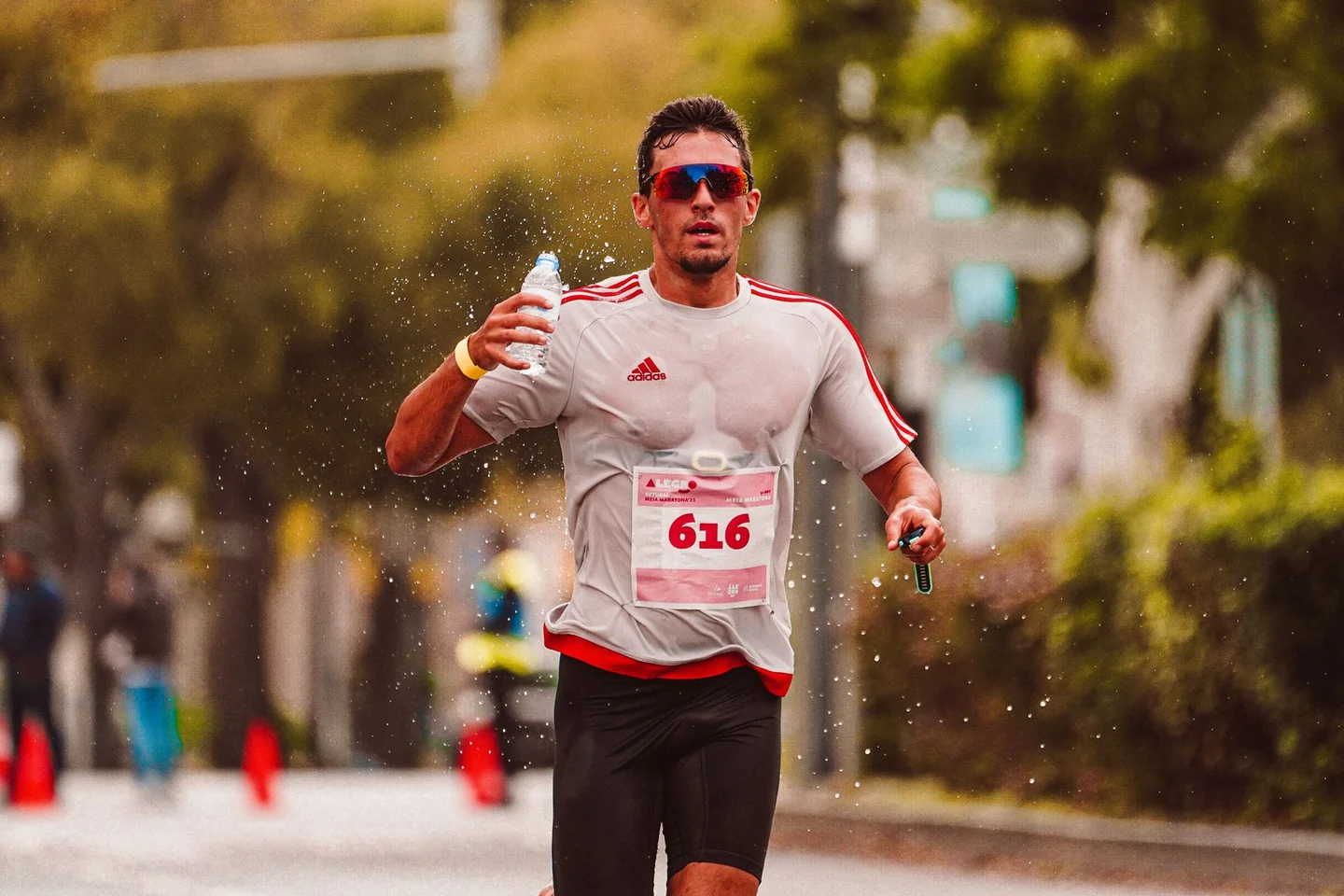
Imagen: RUN 4 FFWPU / Pexels
Finishing a run soaked doesn’t usually say anything bad about fitness. In running, sweat is the body’s cooling system: a necessary response so that internal temperature doesn’t shoot up when the muscles are producing heat at full speed. The more intense the effort, the harder that mechanism works, and for many runners the shirt turns dark before the breathing has found its rhythm.
Excessive sweating while running can be perfectly normal, but it’s also worth reading it in context. Heat, humidity, training duration, body weight, genetics and even some medications change the picture a lot. What matters is not comparing how much falls from the forehead, but understanding whether the body is dissipating heat as it should or whether the loss of fluids and salts is starting to take its toll.
Sweat is not the runner’s enemy
Sweating is a central part of thermoregulation. When body temperature rises, the nervous system activates the sweat glands and releases fluid onto the skin. As it evaporates, that sweat carries heat outward, just like a breeze dries clothes on a line. Without that mechanism, the body would overheat quickly during a race, a set of hills or a long run under the sun.
In running, there’s also a well-known paradox: the most trained runners usually start sweating earlier. Not because they’re worse off, but because their body anticipates effort better and starts cooling the engine more efficiently. Early sweating is, many times, a sign of training adaptation and not a symptom of weakness. The body learns, like a finely tuned radiator, to open valves before the heat reaches uncomfortable levels.
This explains why two people running the same route can end up with very different sensations. One barely notices a damp shirt; the other looks like they’ve been through a light rain. The difference isn’t always in the quality of training. Body mass, body surface area, biological sex, heat acclimation, age and genetic inheritance all play a role. Some bodies have a more active gland network and others concentrate sweat in specific areas, like the scalp, back, chest or armpits.
When it falls within normal
Sweating a lot during a one-hour session often falls within expected ranges. Under usual conditions, many people lose between 0.8 and 1.4 liters per hour, although the figure can fall short in summer or rise quite a bit during long efforts and in humid environments. In extreme cases, some athletes easily exceed 2 liters per hour. The visible amount is impressive, but by itself it doesn’t signal a problem.
The key lies in the relationship between sweat production and evaporation. When the air is dry, sweat evaporates better and cools more effectively. When humidity is high, that liquid runs down the skin without cooling as much, and the runner feels like they’re sweating inside and out at the same time. That’s why a 10K in July can feel much harder than a half marathon in February, even if the pace is similar and the base training is the same.
Perception also changes depending on the time of day. An early-morning run usually feels less punishing than a session at midday, but the difference isn’t explained only by the thermometer. The sun, the heat stored in the asphalt, the ambient humidity and the lack of wind turn the city into a kind of open-roof oven. In those conditions, sweating isn’t overdoing it: it’s surviving the effort.
What can make you sweat more than usual
Sweating doesn’t depend only on training. Stress, caffeine, spicy food, certain painkillers, some antidepressants, migraine medications and issues such as thyroid disorders, diabetes or feverish illnesses can increase perspiration. Even a bad night’s sleep can amplify the feeling of heat and make the body respond more nervously to effort.
In sport, there are also two very different scenarios. One is abundant but expected sweating, the kind that appears when running in the heat or pushing the pace. The other is hyperhidrosis, excessive sweating that can happen even at rest or during light activities and often affects the hands, feet, armpits, face or scalp. It’s not the same to finish soaked after a half marathon as it is to wake up with damp palms for no apparent reason.
When perspiration appears disproportionately, with dizziness, palpitations, rapid weight loss, unusual fatigue or a thirst that won’t go away, the problem is no longer aesthetic or about comfort. There may be dehydration, mineral imbalance or a medical cause that deserves evaluation. The difference between a body that’s well cooled and one that’s at its limit is sometimes subtle, but the consequences are not.
The real loss isn’t water, but what it carries inside
Sweat carries mineral salts, not just liquid. Sodium is the most important in this context, followed by potassium, magnesium, calcium and chloride in varying amounts. The exact composition depends on the person, training level, diet and environmental conditions. That’s why two runners who lose the same volume of sweat don’t always lose the same amount in mineral terms.
That detail explains a big part of the slump that appears in long races. It’s not just about drying out on the outside. Plasma loss reduces circulating blood volume, the heart has to work harder to maintain the same pace and the perception of effort rises as if someone had added weight to the shoes. With less sodium available, hydration also stops being as efficient, and a drink without salts can fall short when training really gets tough.
In runners who sweat a lot, the signs are usually pretty recognizable: white salt marks on clothing, stinging skin, the need to drink frequently and a body weight that drops quickly after effort. Weighing yourself before and after training helps gauge the loss, because one kilo less on the scale usually represents around one liter of fluid. That figure, on a long run, stops being a minor detail.
The impact on performance and perceived effort
A very sweaty runner doesn’t necessarily perform worse, but they can tire sooner if they don’t replace what’s lost properly. Dehydration makes heart rate rise, body temperature take longer to stabilize and the legs feel heavier as the kilometers go by. The running form becomes less fluid, the stride loses elasticity and the pace is maintained at a higher internal cost.
In addition, the dampness of clothing and skin has a far from minor mental effect. The shirt sticking to the body, the rubbing under the armpit, the salt drying on the forehead or neck and the constant trickle down the back can make the session feel harder than the watch suggests. The discomfort isn’t only psychological; it also alters the perception of heat and can push the runner to ease off too early.
In long races, the risk multiplies. The longer the duration, the greater the exposure to temperature, the greater the water loss and the more compensation work the body has to do. Sweat stops being just a mark on the shirt and becomes an outstanding debt. If replacement doesn’t keep up, fatigue, headache, dizziness, cramps or a hollow feeling appear and force the pace down sharply.
What actually helps in practice
Management starts before you go out for a run. Arriving already dehydrated, sleeping poorly or overdoing the coffee turns any outing into an extra climb. Drinking regularly throughout the day, avoiding going out thirsty and adjusting training to the least punishing hours of summer are simple decisions, but they have more impact than many flashy remedies.
During the effort, fluid should be taken with judgment. In sessions under an hour and in mild weather, water may be enough. In longer efforts, with heat or if sweating is marked, electrolytes become important, especially sodium. It’s not about drinking without measure, but about replacing in a proportionate way. The idea that more water is always better falls apart quickly when sweat carries salts away and the body starts losing internal balance.
Afterwards, it’s worth recovering weight and sensations, not just refilling the bottle. A quick shower helps lower temperature, lightweight breathable fabrics reduce irritation and clothes that are too tight make rubbing worse on already damp skin. On very hot days, light colors absorb less radiation and can make a real difference in comfort during the session.
It also matters what you shouldn’t do: don’t copy another runner’s hydration, because sweat rate varies a lot from person to person. Nor does it help to obsess over drying sweat at all costs. The body needs that mechanism to cool itself; the goal is not to eliminate it, but to prevent it from turning into an excessive loss of fluids and minerals.
When it’s worth consulting and not normalizing everything
Heavy sweating deserves attention when it appears out of context. If it happens even at rest, comes with palpitations, tremors, weight loss, prolonged fever, sleep changes, night sweats in bed or a disproportionate feeling of exhaustion, it no longer fits neatly with the logical response to exercise. At that point, the suspicion stops being athletic and becomes medical.
It’s also worth looking closely if perspiration changes suddenly. A runner who has always sweated moderately and suddenly ends up soaked with easy workouts, without increased load or extreme heat, deserves a more careful review. The thyroid, some drug treatments and certain hormonal disorders may be behind it, and excessive sweating is sometimes the first visible clue of something broader.
By contrast, if sweating appears mainly in summer, on hills, during intervals or in races with high humidity, the body is most likely doing its job. The correct reading is not to look at the shirt and panic, but to interpret the whole picture: temperature, pace, duration, hydration, subjective feeling and recovery afterward. In running, sweat is a signal. The hard part, and the useful part, is knowing what it’s saying.
A gesture as uncomfortable as it is useful in training
Sweat during a run has a bad reputation because it’s visible, noticeable and stains, but its function is essential. Without it, the body would lose thermal control long before reaching the finish line. What distinguishes a well-adapted runner is not that they sweat little, but that their system manages heat with fewer jolts and that fluid and salt replacement matches the effort.
That’s why the soaked shirt doesn’t tell the whole story. Sometimes it points to a hard session; other times, to good adaptation; other times, simply, to a humid and heavy morning. What matters is the physiological context: how much is lost, how the heart responds, how energy feels and whether the body regains balance afterward. In that calm reading, sweat stops being a nuisance and becomes a precise clue to the internal work that supports every stride.
Deep down, running and sweating are part of the same language. One drives the other, regulates it and gives it away. The key isn’t to avoid it, but to understand when it’s a normal response, when it’s amplified by heat or fatigue and when it may be hiding an alteration that shouldn’t be ignored.
Este artículo contiene enlaces de afiliado: si compras a través de ellos, se genera una pequeña comisión sin coste adicional para ti. Más información.



How to prevent thigh chafing: causes and real solutions

Women’s running windbreakers: seven jackets and how to choose

Do more workouts get rid of soreness? A guide for runners

Jaén Half Marathon 2026: Record 3,800 Runners Registered

Men’s short running tights: how to choose the right pair

World Triathlon confirms data breach involving medical data

Izan Edo targets podium at Miyazaki World Cup

María Pérez ranks ninth in World Athletics’ 2026 top ten

Dos Santos, Duplantis and Sawe: World Athlete of the Year finalists

San Silvestre Vallecana 2026: 42,000 places, prices and start times

 Races3 months ago
Valencia Half Marathon 2027: date and registration

 Races3 months ago
Valencia Marathon 2026: entry, ballot and course

 Reviews and Comparisons4 months ago
Asics Gel-Roadmiles 3 for men: review and current price

 Reviews and Comparisons4 months ago
Asics Gel Sonoma 8 Gore-Tex: complete analysis for trail and rain

 Sneakers3 months ago
Saucony Endorphin Pro 4: full review and verdict

 News5 months ago
Strava API 2026: what changes for clubs, challenges and runner apps?

 Reviews and Comparisons5 months ago
Nike Alphafly 3: opinions, sensations, and real key points

 Reviews and Comparisons4 months ago
Under Armour running shoes review 2025-2026: models and key features

 Sports Equipment4 months ago
Shoe sizes in cm: a clear guide to getting the right fit for your footwear

 Sneakers3 months ago
Skechers GO RUN Consistent 2.0 analysis: comfort and limits

 News5 months ago
Valencia Marathon 2026 route: key tips to train and run better

 Sneakers4 months ago
Adidas Adizero Boston 13 for men: review and verdict