News
How many kilometers is a half marathon and what does it require
The test that divides so many runners demands 21.097 km, a tactical, physical, and mental challenge with a history of its own.

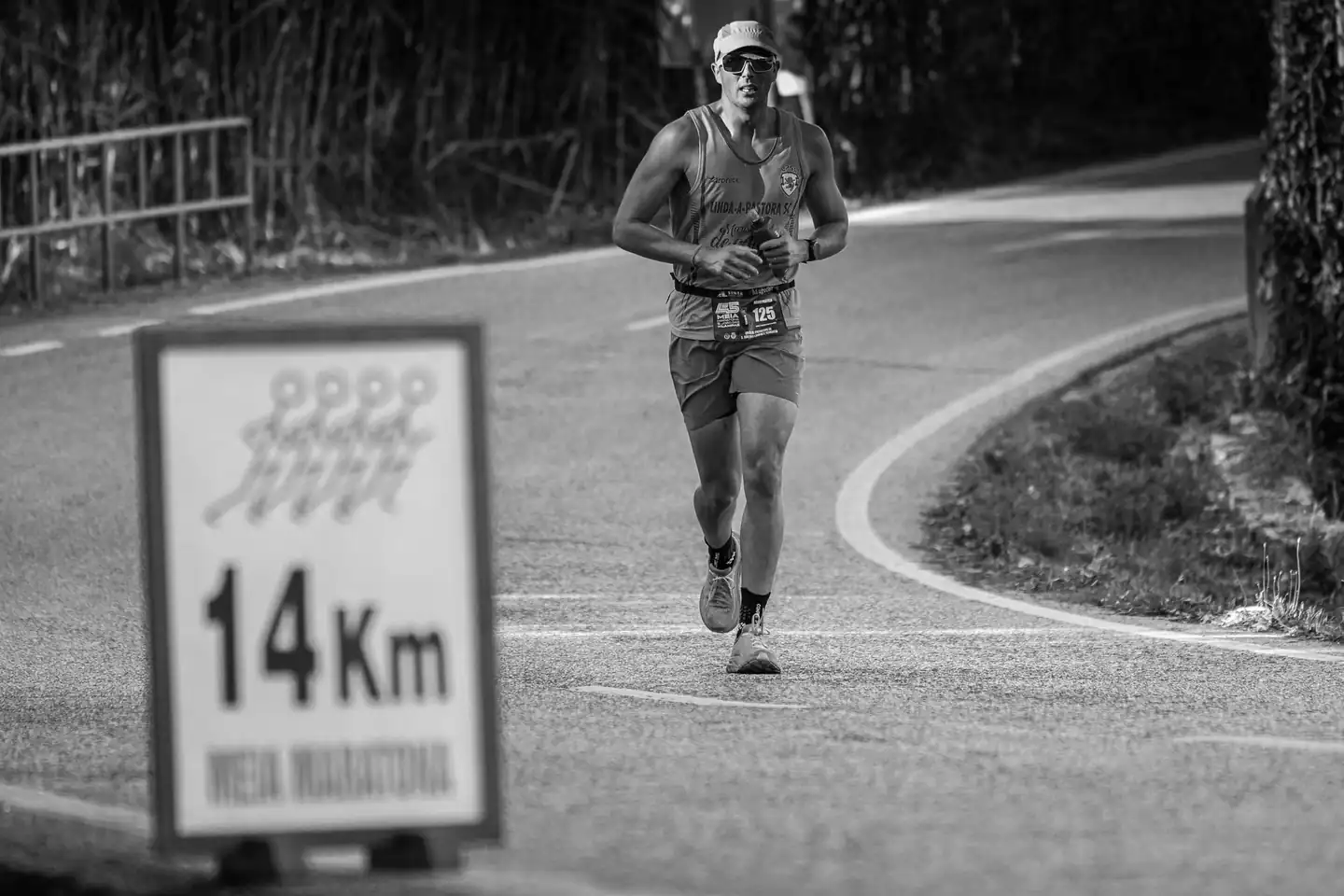
The half marathon measures 21.097 kilometers, an official distance that equals exactly half of a marathon and has become the major entry point to distance races for thousands of runners. It is not an arbitrary round number: those 21,097 meters are the result of an international certification that gives stability to times, records, and comparisons between races around the world.
That course demands more than fast legs. It calls for endurance, pace control, well-tuned nutrition, and a tolerance for effort that already separates the casual runner from someone beginning to approach running with ambition. That is why the half marathon is so appealing: it is not an extreme distance, but it also does not forgive improvisation.
The official figure and why it is not just 21 kilometers
The regulated distance is 21.097 kilometers, even though people commonly refer to it as 21K or just 21 kilometers. That difference of 97 meters is not trivial in competitive practice, because in athletics, certified measurements matter as much as the stopwatch. The precise figure allows a time achieved in one city to be compared with another on the other side of the world without any ambiguity.
On road races, courses are measured using official procedures and not visual estimates. That precision explains why a half marathon is not simply a half marathon by geometric intuition, but a standardized event within the global calendar. Accuracy protects sporting validity and also gives meaning to a runner’s progression, making it possible to move from a 10K to a 21K with a clear and universal reference.
In Spain, as in the rest of the international circuit, the expression half marathon coexists with 21K, 21 km, and half marathon. All refer to the same distance, but the full and correct version is 21,097 meters. In effort terms, that distance usually takes between one hour and a little over two hours for most recreational runners, placing it in a very particular range: long enough to empty you out, short enough not to break you completely if you manage the day well.
From Marathon to Athens to the modern 21K route
The foundational myth of endurance still carries weight in a runner’s imagination. The marathon was born linked to the Battle of Marathon and the legend of Pheidippides, but the half marathon is a more modern creation, born from the expansion of road racing and the need to offer a demanding distance that is more accessible than the 42.195 kilometers of the queen event.
Its popularity grew because it solves a very attractive equation: it requires serious preparation, but does not demand the same prolonged commitment as a full marathon. It is a sporting frontier with a certain magnetism. Those who complete it often feel they have crossed a threshold, that of endurance that has been built and not merely intuited. That is why many popular races use it as the central distance of their biggest events.
At heart, the half marathon works like a true test. A 10K still allows you to hide poor pacing; a marathon, by contrast, harshly punishes any previous mistake. The 21K sits in between, with a very appealing balance: enough to force you to think about every kilometer, yet still manageable for someone who trains regularly. It is a distance of strategy rather than impulse.
What it means in practice to run 21.097 kilometers
Completing a half marathon is not just about enduring. The body has to sustain a moderate intensity for quite a long time, and that requires a solid aerobic base. It also demands running economy, a technical form that does not waste energy on unnecessary movements. Every extra stride, every overly aggressive start, every hydration dip is paid for later.
Runners tackling the 21K for the first time often discover that mileage is not the only decisive factor. Temperature, elevation, humidity, a fast start, aid stations, and the ability to stay calm when the legs begin asking for mercy also matter. The half marathon is a test of resource management, almost like driving with a limited tank: the one who wins is not the one who pushes hardest at the beginning, but the one who still has some fuel left at the end.
That is why so many training plans emphasize weekly endurance, but also consistency. You do not need to train like an elite runner to finish it, though it does help to build weeks that teach the body to keep moving for more than an hour without falling apart. In the half marathon, fatigue arrives in layers rather than in one brutal hit. First the pace drops, then the posture worsens, and after that the small mental voids appear. The race does not break all at once: it gradually loosens.
The pace that defines the distance
The 21.097 kilometers force you to run with your head. Those who start too fast usually discover that the second half charges interest. A sustainable pace is almost always better than a brilliant first half followed by a collapse later on. That logic is not only sensible, it is also measurable: to break two hours, for example, you need to sustain about 5 minutes and 41 seconds per kilometer. To finish in 1 hour and 45 minutes, the average is around 4:59 per kilometer.
Those numbers show the nature of the distance very well. It is neither a long sprint nor a relaxed journey. The half marathon lives in threshold territory, where effort remains high but still controllable. That is why runners quickly learn to calculate sensations, heart rates, and splits. The watch helps, but the body’s memory matters more than it seems.
That is also why pacing strategy changes a lot depending on the runner’s profile. A debutant usually benefits from a conservative start and a steady second half. An experienced runner may aim for negative splits, meaning running the second half a little faster than the first. In both cases, the idea is the same: do not spend energy too early. The distance is too long to pay for early enthusiasm with high interest.
Why the half marathon attracts so many runners
The event has an almost perfect balance between challenge and feasibility. For many people, 10 kilometers are no longer enough as an emotional and sporting challenge, but the full marathon requires much greater logistics and training load. The half marathon fills that middle space and does so with an added advantage: it lets you test yourself without having to live for months for a single race.
That accessibility explains its growth in cities with a strong running culture. It also helps that it has a clear, recognizable, and easy-to-communicate format. The 21K are easy to remember, easy to explain, and ambitious enough for the finish line to have symbolic value. It is a distance that sounds serious without sounding impossible. And in mass sport, that matters a lot.
In addition, the half marathon fits very well into the schedule of a runner balancing work, family, and everyday life. It does not necessarily require elite volumes, but it does demand discipline. That gives it a special dignity: it is not an improvised event, but it also does not require a monastic lifestyle. In practice, it has become a bridge distance for those who want to move up a step without making the full leap to the marathon.
The weight of history and the great 21K cities
Today’s major half marathons function as showcases of urban athletics. Cities like Valencia, Bogotá, Barcelona, Berlin, and New York have turned this distance into both a sporting and cultural product. The runner is not only competing against the clock; they are also crossing avenues, neighborhoods, bridges, and stretches that say something about the place. The race becomes a map and the city, the backdrop for the photo.
That urban component is part of the distance’s success. A 21K can bring together elite runners and first-timers on the same course, with more manageable logistics than a massive marathon. The half marathon has something of a festival and something of an exam. The start is usually compact, the pace spreads out into groups, and the finish leaves a mix of relief and pride that is very hard to confuse with anything else.
In Spain, moreover, the distance has gained prestige thanks to the quality of many courses and the density of participants. Major road races have become more professional, and the half marathon increasingly appears as a central goal for recreational runners, not just as a step before the marathon. It is a distance with its own stature now, with identity, calendar, and narrative.
What you train for to arrive well at 21.097 kilometers
Half marathon preparation revolves around endurance, but not just running more. It also matters to sustain quality sessions, learn to regulate intensity, and get the body used to prolonged effort without losing too much efficiency. Long runs are important, yes, but so are easy runs, pace changes, and basic strength work to handle mechanical load.
In practice, many runners need more patience than heroics. The 21K rewards consistent weeks and punishes chaotic training. Continuity matters more than isolated gestures. A runner who strings together reasonable sessions, enough rest, and gradual progression usually arrives in better shape than someone trying to compensate with a wild last-minute workout.
Technique also matters. Keeping an efficient posture, avoiding overstriding, and maintaining a stable cadence can save valuable energy in the final stretch. Over a long distance, the body charges for even the smallest waste. The half marathon is something like fine mechanics: it is not enough to have an engine, you have to make the engine last.
Nutrition, hydration, and the famous final stretch
Pre-race fueling and in-race hydration can change the outcome. In a 21K, runners usually need available fuel, especially if the effort is going to approach or exceed an hour and a half. The most common mistake is not eating too much, but arriving depleted or improvising with products the body does not know. The stomach, like the legs, has memory too.
During the race, most half marathons offer water stations and, in some competitions, isotonic drinks. For runners taking more than 90 minutes, it can make sense to use gels or some other source of quick carbohydrates, always tested beforehand. The key is not to try new things on race day, but to repeat what already works. In endurance, digestive comfort is worth gold.
The final stretch is where all of that shows. Between kilometer 16 and the finish, the half marathon stops being a sum of good and bad sensations and becomes an honest conversation with the body. If hydration was poor, effort gets harder. If the pace was too fast at the start, the legs empty out. If planning was sensible, there is room to push or, at the very least, to hold the pace with dignity. That is where the race’s story is decided.
What sets the 21K apart from other popular distances
The 5K rewards speed; the 10K, a mix of pace and endurance; the marathon, extreme endurance. The half marathon sits between those three logics, which is why it is so interesting. In it, pure speed matters less than the ability to maintain a demanding intensity without collapsing. It is a test of balance, almost a moving scale.
For many recreational athletes, the 21K becomes the distance where the concept of race pace is finally truly understood. It is not enough to start fast or to endure by instinct. You need to read your body, recognize the moment to stop chasing seconds and start defending them. The half marathon teaches you to race with craft.
It also has a psychological advantage: runners can picture themselves doing it more easily than a marathon. The distance is still serious, but it is not as overwhelming. That explains why so many people choose it as their first major goal. The sense of achievement is enormous, and at the same time the preparation usually fits real life better. It is a demanding event, yes, but not a calendar sentence.
The race that marks a before and after
The half marathon often leaves a lasting emotional mark. Those who finish it remember the pace they held, the kilometer where they doubted, the point where the body began speaking louder, and the finish line, almost always, as a boundary that seemed farther away than it ultimately was. Some distances are run; others, like this one, are learned.
Its success is explained not only by the figure of 21.097 kilometers. It is explained by what it represents: a gateway to serious endurance, an event that demands respect, and a very reliable thermometer of current fitness. It is a distance long enough to say something and short enough to repeat. That combination has made it central to contemporary running.
In times of crowded schedules, GPS watches, and metrics everywhere, the half marathon still keeps a very human quality. It measures the ability to sustain oneself, not to show off. It measures patience, consistency, and the management of effort. And above all, it measures how a runner faces themselves when comfort runs out. That is why 21.097 kilometers still have such power: because they are not just another number, but a complete test of the modern runner.



How to prevent thigh chafing: causes and real solutions

Women’s running windbreakers: seven jackets and how to choose

Do more workouts get rid of soreness? A guide for runners

Jaén Half Marathon 2026: Record 3,800 Runners Registered

Men’s short running tights: how to choose the right pair

World Triathlon confirms data breach involving medical data

Izan Edo targets podium at Miyazaki World Cup

María Pérez ranks ninth in World Athletics’ 2026 top ten

Dos Santos, Duplantis and Sawe: World Athlete of the Year finalists

San Silvestre Vallecana 2026: 42,000 places, prices and start times

 Races3 months ago
Valencia Half Marathon 2027: date and registration

 Races3 months ago
Valencia Marathon 2026: entry, ballot and course

 Reviews and Comparisons4 months ago
Asics Gel-Roadmiles 3 for men: review and current price

 Reviews and Comparisons4 months ago
Asics Gel Sonoma 8 Gore-Tex: complete analysis for trail and rain

 Sneakers3 months ago
Saucony Endorphin Pro 4: full review and verdict

 News5 months ago
Strava API 2026: what changes for clubs, challenges and runner apps?

 Reviews and Comparisons5 months ago
Nike Alphafly 3: opinions, sensations, and real key points

 Reviews and Comparisons4 months ago
Under Armour running shoes review 2025-2026: models and key features

 Sports Equipment4 months ago
Shoe sizes in cm: a clear guide to getting the right fit for your footwear

 Sneakers3 months ago
Skechers GO RUN Consistent 2.0 analysis: comfort and limits

 News5 months ago
Valencia Marathon 2026 route: key tips to train and run better

 Sneakers4 months ago
Adidas Adizero Boston 13 for men: review and verdict