News
How many kilometers is the San Silvestre: distances and routes
The San Silvestre races vary greatly depending on the city: from children’s routes to urban races and demanding trail runs.

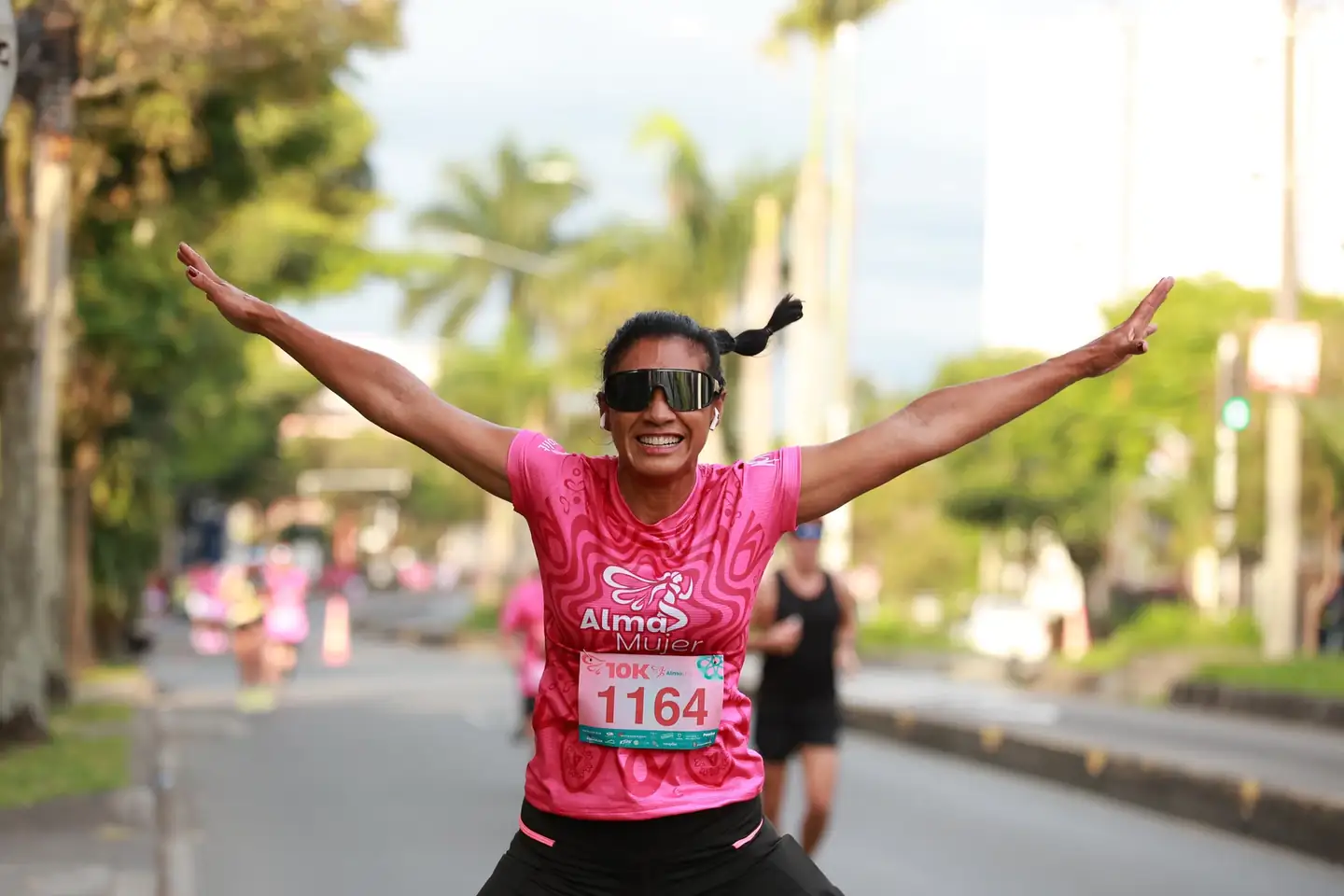
The distance of a San Silvestre race is not fixed. Under that same name, there are short races for families, urban races of 5 or 7 kilometers, and classic 10-kilometer courses, such as Madrid’s Vallecana, as well as trail formats that can stretch to 16 kilometers or more in mountain settings.
The key lies in the organizing municipality and the type of race. In Spain, the San Silvestre has become a Christmas label for saying goodbye to the year by running, but each town designs its own route, with distances intended for very different audiences. That is why the question has no single answer: the San Silvestre can range from 350 meters to 16 kilometers, depending on the specific event.
The most common distances in Spanish San Silvestre races
On the popular December 31 calendar, the most repeated distance is usually 10 kilometers, because it fits the tradition of major urban races and attracts both veteran runners and those looking for a manageable effort. The San Silvestre Vallecana in Madrid is the best-known example: its popular race covers 10 kilometers and has become a national benchmark for atmosphere, level, and participation.
But that standard does not apply to all cities. Many local San Silvestre races reduce the challenge to open the door to more people and make routes of 5 kilometers, 7 kilometers or even 3 kilometers easier. In others, the program is split into several events: a main distance for adults, a shorter version for amateur runners, and different children’s races ranging from a few hundred meters to 1.5 kilometers.
This distribution follows a very clear logic: the San Silvestre is not just a race, but a year-end event, almost a sporting ritual. On the same day, runners chasing a personal best, neighbors who head out for a jog without checking the clock, and children finishing the last effort of the school year can all coexist amid applause. The distance, in reality, is part of each race’s character.
The San Silvestre Vallecana, the 10-kilometer benchmark
When people talk about San Silvestre in Spain, the most recognizable image is still Madrid. The popular Vallecana race is 10 kilometers long and finishes in the Vallecas district, with a course that combines wide straight sections, a huge crowd, and a profile favorable to fast running. It is no coincidence that it has been one of the country’s largest races for years.
That 10-kilometer route has become a kind of standard measure in runners’ minds. It is short enough for many amateurs to attempt, but long enough to require at least some preparation and pace control. In practice, 10 kilometers are usually the reference distance for a serious urban San Silvestre.
There are also differences between the popular and elite versions at some venues. In Madrid, the elite competes over 10 kilometers, while other local races may choose slightly shorter or more festive circuits. The name San Silvestre does not define the distance; it defines the time of year and the spirit of the race. The course is decided by each organizer.
Urban San Silvestre races of 5, 7 and 3 kilometers
Outside the major capitals, 5 kilometers is probably the most widespread distance in year-end races. It is an achievable figure for occasional runners and serious enough for those who want to push themselves without facing an overly long effort. Manzanares El Real, for example, includes a 5-kilometer Urban Race within its San Silvestre Trail and Urban event.
Other towns opt for 7-kilometer courses, an intermediate distance that preserves the popular atmosphere without becoming extremely short. Errenteria, in its 23rd San Silvestre, offered a full 7-kilometer version and a shortened 3-kilometer one, as well as a children’s race. This distribution clearly shows how the distance is adapted to the municipality’s profile and expected turnout.
The 3-kilometer race works as an entry point. It does not require the same effort as a classic 10K and allows more people to join without obsessing over the stopwatch. In many cities, that short version has become the most social option: people run, walk part of the route, and experience the day as a small sporting parade at the end of the year.
Children’s races are usually much shorter
In San Silvestre events with a broad program, minors have specific routes adapted to their age. The most common examples range from 350 meters for the youngest to distances of 1.1 kilometers and 1.5 kilometers for children’s categories. In Manzanares El Real, the toddler race was 350 meters, while the children’s groups completed 1.1 and 1.5 kilometers.
This design is not anecdotal. It responds to safety, participation, and sports education criteria. At those ages, the distance must be short, easy to understand, and simple for organizers to manage, avoiding excess and making the experience enjoyable. Children’s races are not about times, but about participation and building a habit.
In addition, including children turns the San Silvestre into a neighborhood event in the broadest sense of the word. Parents, grandparents, and neighbors mingle in an atmosphere that feels more like a civic celebration than a strict competition. In these cases, the distance matters less than the scene: small bibs, still-clean sneakers, and the finish line as a symbolic reward for the departing year.
Trail versions completely change the equation
Not all San Silvestre races are on asphalt or in urban settings. Some are held in natural environments and add the trail label, which increases the challenge and completely changes the type of effort required. In Manzanares El Real, the mountain race reached 16 kilometers, passing through places such as the Ermita de la Peña Sacra, Collado del Perro, Canto Cochino and the Puente de la Foca.
This kind of route introduces elevation gain, uneven terrain and a technical load that does not appear in urban races. The 16 kilometers stop feeling like a flat figure and instead are measured in time, elevation gain and muscle fatigue. In a year-end trail race, every kilometer weighs more, because the mountain does not forgive an overenthusiastic start.
That is why it is important to distinguish between an urban San Silvestre and a trail San Silvestre. They share the date, the atmosphere and the name, but they do not demand the same thing from runners. One can be completed with lightweight shoes and pace control; the other requires more respect for the terrain, especially when the route includes paths, climbs and descents that punish the legs even over moderate distances.
How to choose the right distance without looking only at the name
The San Silvestre label can be misleading if you assume all races are the same. The actual distance determines the type of experience: a 5-kilometer race can be manageable even for someone who does not train daily, while 10 kilometers already require more endurance and control. In the mountains, 16 kilometers can be tougher than a road 10K.
The mental pace changes too. A short route lets you enjoy the atmosphere without pacing yourself for too long; a longer one forces you to manage your effort, especially if there are hills or densely packed sections. In popular races, the excitement of the start can carry more than one runner away, and that has consequences later. Distance does not just measure meters; it also organizes the mind.
That is why the most useful way to read a San Silvestre is to look at three things at once: kilometers, course profile, and race format. A flat 5K on wide streets is not the same as a 7K with out-and-back sections or a 16K on mountain trails. The name is identical; the experience is not.
Why some San Silvestre races have become so short
Short distances are not a sign of lesser importance, but a strategy to broaden participation. In many cities, the San Silvestre works as an open sporting celebration, and shortening the course allows less experienced people, entire families, or participants who simply want to end the year with a symbolic activity to take part. Accessibility matters as much as the challenge.
In addition, a short race makes municipal management, safety, and coexistence with everyday urban activity easier. Fewer kilometers usually mean fewer traffic closures, less exposure to prolonged cold, and simpler logistics. During the Christmas season, that efficiency matters. Not every town can afford, or needs, a large mass-participation 10K.
There is also a cultural reason. The San Silvestre has become a social ritual, and not every ritual needs to be long to be meaningful. In some municipalities, a 3- or 5-kilometer route is enough to bring together different generations and give meaning to the last day of the year. The value lies in the collective scene, not in the exact number on the bib.
What running a San Silvestre really means for a recreational runner
For a recreational runner, the distance of a San Silvestre is almost always a matter of balance. If it is too short, it can become just a footnote. If it is too long, it risks becoming a trap for someone who starts without preparation. Between 5 and 10 kilometers is usually the most logical balance point for most urban races.
For someone more experienced, those same kilometers are read differently. A 5K can work as a speed test, a 7K as a sustained effort, and a 10K as a more serious date, almost a small calendar race before the year ends. In trail running, the benchmark changes completely: 16 kilometers in a place like La Pedriza have a different physical and mental dimension.
Distance, in short, is not just a number. It is a way of organizing the sporting month of December. Those looking for atmosphere usually feel comfortable with short formats; those seeking a more recognizable challenge tend to aim for the 10K; those who prefer the mountains will find a different story in trail races, rougher and more beautiful at the same time. The San Silvestre is a family of races, not a single event.
The number that repeats most and the one that changes most
If one had to choose a dominant figure, it would be 10 kilometers. It is the classic distance, the one that made the great year-end races famous and the one that best fits the popular image of the San Silvestre. But the most surprising fact is not that one, but the variety that exists under the common name.
In Spain, you can find courses of 350 meters for the toddler category, 1.1 and 1.5 kilometers for children, 3 kilometers for shortened versions, 5 and 7 kilometers in many urban races, and 16 kilometers in a mountain trail. The San Silvestre changes size depending on the place, as if each city adjusted the mold to its own way of saying goodbye to the year.
That range explains why the question about the kilometers cannot be answered briefly without nuance. The San Silvestre can be a short stroll with a bib, a neighborhood race, a reference 10K, or a mountain day out. The name unites, but the distance separates. And that is precisely part of its appeal: it allows almost anyone to find their own version of the last day of the year.
A year-end finish measured in meters, streets and hills
The San Silvestre has earned its place on the calendar because it blends sport, tradition, and celebration with uncommon flexibility. There is no single number of kilometers, but rather a wide range that goes from a children’s kilometer to a demanding trail, passing through the most popular urban distances. That diversity has made it one of the most recognizable events in popular athletics in Spain.
Seen as a whole, distance stops being a technical detail and becomes a sign of identity. There are San Silvestre races to run fast, to finish with family, to debut without fear, and to say goodbye to the year among hills and nature. That is why, before thinking about the race’s name, it is worth looking at the course: that is where the real answer lies. The kilometers tell the story of each San Silvestre.



How to prevent thigh chafing: causes and real solutions

Women’s running windbreakers: seven jackets and how to choose

Do more workouts get rid of soreness? A guide for runners

Jaén Half Marathon 2026: Record 3,800 Runners Registered

Men’s short running tights: how to choose the right pair

World Triathlon confirms data breach involving medical data

Izan Edo targets podium at Miyazaki World Cup

María Pérez ranks ninth in World Athletics’ 2026 top ten

Dos Santos, Duplantis and Sawe: World Athlete of the Year finalists

San Silvestre Vallecana 2026: 42,000 places, prices and start times

 Races4 months ago
Valencia Half Marathon 2027: date and registration

 Races4 months ago
Valencia Marathon 2026: entry, ballot and course

 Reviews and Comparisons4 months ago
Asics Gel-Roadmiles 3 for men: review and current price

 Reviews and Comparisons4 months ago
Asics Gel Sonoma 8 Gore-Tex: complete analysis for trail and rain

 Sneakers3 months ago
Saucony Endorphin Pro 4: full review and verdict

 News5 months ago
Strava API 2026: what changes for clubs, challenges and runner apps?

 Reviews and Comparisons5 months ago
Nike Alphafly 3: opinions, sensations, and real key points

 Reviews and Comparisons4 months ago
Under Armour running shoes review 2025-2026: models and key features

 Sports Equipment4 months ago
Shoe sizes in cm: a clear guide to getting the right fit for your footwear

 Sneakers3 months ago
Skechers GO RUN Consistent 2.0 analysis: comfort and limits

 News5 months ago
Valencia Marathon 2026 route: key tips to train and run better

 Sneakers4 months ago
Adidas Adizero Boston 13 for men: review and verdict