News
How many km is the San Silvestre and what should you know before running it
Spain’s most famous year-end race has a fixed distance, but its route and start times hide useful details.

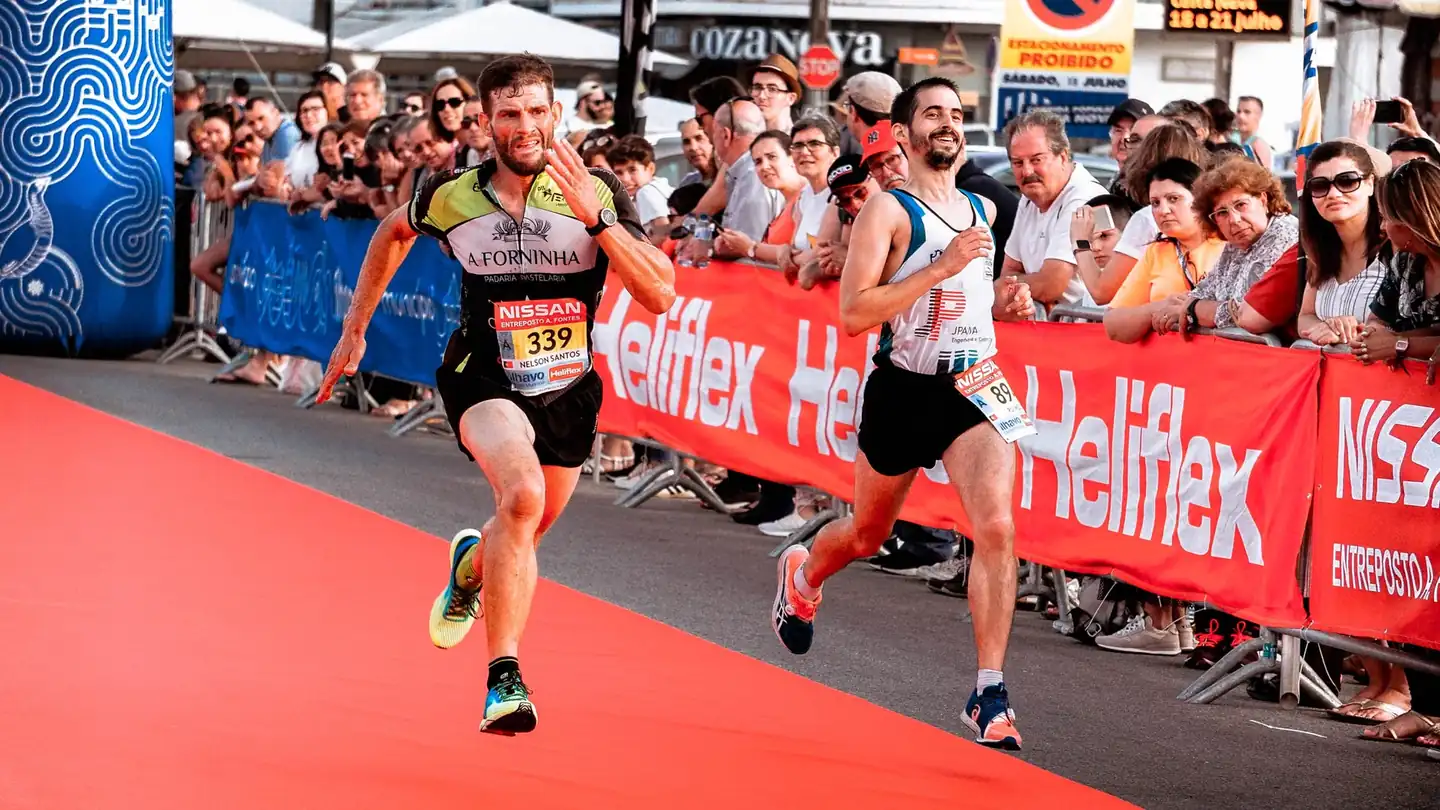
Imagen: RUN 4 FFWPU / Pexels
The best-known San Silvestre in Spain is 10 kilometers long, an official distance that places it in the realm of fast, accessible, and very массовe races. In Madrid, the Vallecana has established itself as the great benchmark: an urban, certified route full of atmosphere that every December 31 brings together thousands of runners between the Concha Espina area and the Vallecas neighborhood.
Not all San Silvestre races are identical, but when people talk about the race in the singular, they almost always mean the San Silvestre Vallecana, the event that has turned the end of the year into a kind of athletic festival. Its usual distance is 10 km, although in different cities there are versions with slightly shorter courses or courses adapted to the local environment. Even so, the standard that dominates the conversation, the one that appears in the standings and best sums up the race, is this: ten kilometers of asphalt, crowds, and stopwatch.
Ten kilometers that have made history
The distance is no accident or decorative detail. The 10 km strike a very attractive balance between effort and accessibility: they are enough to demand pace, tactics, and some preparation, but not so much as to make the experience something reserved for specialists. That is why the San Silvestre has won over recreational runners, licensed athletes, and first-timers with the same ease with which a crowded square becomes a stage.
In Madrid, the San Silvestre Vallecana was born in 1964 and over time went from being a local event to one of the most prestigious 10Ks on the international calendar. The growth has been enormous. Organizers once set the participant limit at 42,000, and in some editions that figure has been nearly reached, a number that better than any slogan explains the race’s social dimension. The distance is the same, but the experience changes completely when you run in a human tide.
The popular race shares the spotlight with the elite, and that coexistence gives the event a very distinctive identity. It is not just about adding up kilometers, but about running through a Madrid that transforms for a few hours into a circuit with the smell of winter, the sound of sneakers, music on the sidewalks, and costumes that appear like little flashes of carnival in the middle of December. In a city that usually looks ahead, that afternoon everything revolves around one very specific route.
Why the 10 km distance fits this race so well
Ten kilometers are a very appealing threshold for recreational runners. It takes little to tackle them confidently, but also enough to notice every pacing mistake. That is why this distance works so well in a year-end race: it is the exact size to close the season with a time, a celebration, or both at once.
In sporting terms, the 10K is a very rewarding distance for gauging sensations. Those who arrive with a training base can aim for a specific time; those who do not can approach it as a controlled challenge; and those going for the atmosphere can enjoy it without the course feeling endless. The San Silvestre turns that versatility into a spectacle, because the same route accommodates runners aiming to break 40 minutes and others who simply want to cross the finish line smiling.
In addition, the Vallecana format is designed to organize the start according to verified times and time waves. That reduces part of the usual chaos in a mass event and helps each participant find a reasonable space within their level. The distance alone would just be a number; what makes it special is the way it is organized and the urban setting in which it takes place.
The actual route: from Concha Espina to Vallecas
The San Silvestre Vallecana is run on an urban, certified 10 km course, with the start on Concha Espina Street, next to Plaza de los Sagrados Corazones, and the finish near Vallecas Stadium, on Candilejas Street. The race passes through very recognizable parts of Madrid and goes along roads that sound like a sporting postcard: Serrano, Puerta de Alcalá, Alcalá, Cibeles, Paseo del Prado, Neptuno, Atocha and, in the final section, Ciudad de Barcelona, Albufera, and the streets of the Vallecas neighborhood.
The route also has a feature that affects the effort: several stretches are run in the opposite direction to normal traffic. That feeling of going against the flow, with the city open and without cars, adds a very distinctive texture to the race. The runner is not just covering meters; they are crossing a city that seems to have been cleared to let them through.
The most forgiving part is usually at the start, where the atmosphere helps you fly a little more than you should. Then the passage through the center offers a powerful mix of aesthetics and mental demand. And when the race heads into Vallecas, the crowd support and the feeling of entering home for many local runners completely change the perception of effort. It is not just a start and finish line: it is a city story written in two acts.
The question of the distance and the detail many overlook
The short answer is simple: the San Silvestre Vallecana is 10 km. But it is worth adding the nuance because not all races using the San Silvestre name have exactly the same format. In Spain there are more than 200 races of this type on December 31, and in each town the course is adapted to the streets, permits, capacity, and local tradition. Some are 5 km, others 8, and others come close to the classic 10 km.
That is why the distance becomes a kind of compass, but not a single label. If the reader is thinking about Madrid, the correct figure is clear: 10 km. If they look at the full map of Spanish San Silvestre races, they will find a family of races united by the same date and spirit, although with different distances. The Vallecana is the most visible pattern, not the only variant.
That nuance also helps explain why so many people look for the exact distance before signing up or planning the race. Knowing whether it is 5, 8, or 10 km changes the preparation, pace, and even the chosen clothing. In a year-end event, where full schedules and cold weather are common, the difference between one distance and another is not minor: it can decide whether the race is approached as a serious effort or as a festive outing.
Start, finish, and waves: a very regulated 10K
The race’s popularity has forced logistics to become a science. In the Vallecana, the start is organized in waves, with staggered times beginning at 4:50 p.m. for handbikes and racing wheelchairs and continuing in different blocks from 5:00 p.m. onward, according to verified times and each runner’s estimated finish time. That structure is not just a bureaucratic detail: it is what allows a gigantic race to remain manageable.
The finish in Vallecas reinforces the symbolic character of the race. The runner starts from an area associated with more institutional Madrid and crosses very central parts of the capital before ending up in a neighborhood with a strong identity, a large crowd, and a long historical relationship with the event. That contrast gives the 10 km a very clear narrative: from urban breadth to neighborhood warmth.
In a race like this, every minute counts, but not only for the clock. It also matters for entering the right wave, collecting bibs on time, lining up without stress, and avoiding a start that is too slow or too hectic. The distance is fixed; the experience is not. And there, organization matters almost as much as the legs.
What changes between racing for a time and running for fun
The 10 km of the San Silvestre are experienced very differently depending on the goal. Those chasing a personal best usually view the course as a sequence of paces, small recoveries, and acceleration zones. Those going to enjoy it usually pay more attention to the surroundings, the costumes, and the atmosphere. Both perspectives are legitimate and, in fact, coexist within the same race with a naturalness that few mass events achieve.
In such a crowded 10K, the first kilometer usually requires patience. The excess adrenaline, the music, and the density of runners can make you start faster than you should. Then comes the city center, with its mix of beauty and pace traps, and later the final section, where fatigue becomes noticeable if the initial excitement was paid for too dearly. The distance seems short on paper, but the race punishes every lapse in judgment.
For recreational runners, precisely for that reason, the San Silvestre has so much personality. It does not demand the toughness of a half marathon, but it does require a very clear pact with pace. It is long enough for a bad decision to have consequences, and short enough for emotion not to fade away. That combination explains why so many choose it to say goodbye to the year.
A tradition replicated throughout Spain
The San Silvestre name has become a nationwide sporting tradition. Every December 31, races are held in dozens upon dozens of Spanish towns and cities, with variations that change distance, profile, and format. The Vallecana dominates in visibility and participation, but it did not come from nowhere: it is part of a broader tradition that blends popular festivity, the Christmas calendar, and street athletics.
The remote origin lies in the São Paulo race, created in 1925 and considered the pioneer of the phenomenon. From there, the idea spread to other cities around the world. In Spain, the first San Silvestre with continuity was Galdakao’s, and the Vallecana eventually became the reference thanks to its scale, its route, and its ability to attract both elite runners and amateurs. The 10 km distance became almost a common language, though not an exclusive one.
That success also explains why the question of how many kilometers the San Silvestre is does not have a single universal answer. There is a general answer and a precise answer. The general one: it is a race held on the last day of the year, associated with a festive atmosphere. The precise one, in Madrid: it is 10 km. Both coexist because they describe different levels of the same tradition.
The ideal route to close the year without improvising
Understanding the distance helps you read the race more clearly. The Vallecana’s 10 km are not a walk in the park, but they are not a wall either. They are a test of pacing, order, and common sense. Those who know the route understand that the start favors enthusiasm, that central Madrid demands concentration, and that the stretch toward Vallecas calls for mental endurance, not just physical.
It also helps to know that the race is certified, that the start is divided into corrals, and that the environment can influence things much more than in a smaller race. Visual landmarks change every kilometer, and with them, the way you run changes too. The distance is stable; the scenery is not. And that is part of the charm.
That is why the San Silvestre cannot be reduced to a number. The 10 km are the base, yes, but beneath them lies a mix of history, city, mass participation, and a very recognizable sports culture. Each edition once again shows that a simple distance can acquire enormous depth when tradition, crowds, and a date full of symbolism surround it. In Madrid, the end of December takes the shape of a race and always begins with the same figure.
The exact figure that sums up an event unlike any other
The San Silvestre Vallecana is 10 kilometers long, and that fact explains much of its success. The distance is serious enough to measure fitness and, at the same time, friendly enough for the recreational runner to take it on as a manageable challenge. That duality, reinforced by a very recognizable urban route, has made it one of the most beloved events on the calendar.
The best way to think of it is as a 10K with its own personality. Not only because of the number, but because of the whole scene: the city, the date, the atmosphere, the staggered start, and the finish in Vallecas. A few kilometers can be just a measurement, or they can be a collective tradition. In this case, they are both at once.
That is why the question about the distance has such a short answer and, at the same time, so much context. Yes: Madrid’s San Silvestre is 10 km. But behind that figure is a race that has grown into a year-end symbol, a showcase for recreational running, and one of the most recognizable sporting images in Spain.



How to prevent thigh chafing: causes and real solutions

Women’s running windbreakers: seven jackets and how to choose

Do more workouts get rid of soreness? A guide for runners

Jaén Half Marathon 2026: Record 3,800 Runners Registered

Men’s short running tights: how to choose the right pair

World Triathlon confirms data breach involving medical data

Izan Edo targets podium at Miyazaki World Cup

María Pérez ranks ninth in World Athletics’ 2026 top ten

Dos Santos, Duplantis and Sawe: World Athlete of the Year finalists

San Silvestre Vallecana 2026: 42,000 places, prices and start times

 Races3 months ago
Valencia Half Marathon 2027: date and registration

 Races3 months ago
Valencia Marathon 2026: entry, ballot and course

 Reviews and Comparisons4 months ago
Asics Gel-Roadmiles 3 for men: review and current price

 Reviews and Comparisons4 months ago
Asics Gel Sonoma 8 Gore-Tex: complete analysis for trail and rain

 Sneakers3 months ago
Saucony Endorphin Pro 4: full review and verdict

 News5 months ago
Strava API 2026: what changes for clubs, challenges and runner apps?

 Reviews and Comparisons5 months ago
Nike Alphafly 3: opinions, sensations, and real key points

 Reviews and Comparisons4 months ago
Under Armour running shoes review 2025-2026: models and key features

 Sports Equipment4 months ago
Shoe sizes in cm: a clear guide to getting the right fit for your footwear

 Sneakers3 months ago
Skechers GO RUN Consistent 2.0 analysis: comfort and limits

 News5 months ago
Valencia Marathon 2026 route: key tips to train and run better

 Sneakers4 months ago
Adidas Adizero Boston 13 for men: review and verdict