News
Hydration belt or vest: which one is best depending on the distance already
Distance, heat, and the material you’re transporting decide which option works best on each trip.

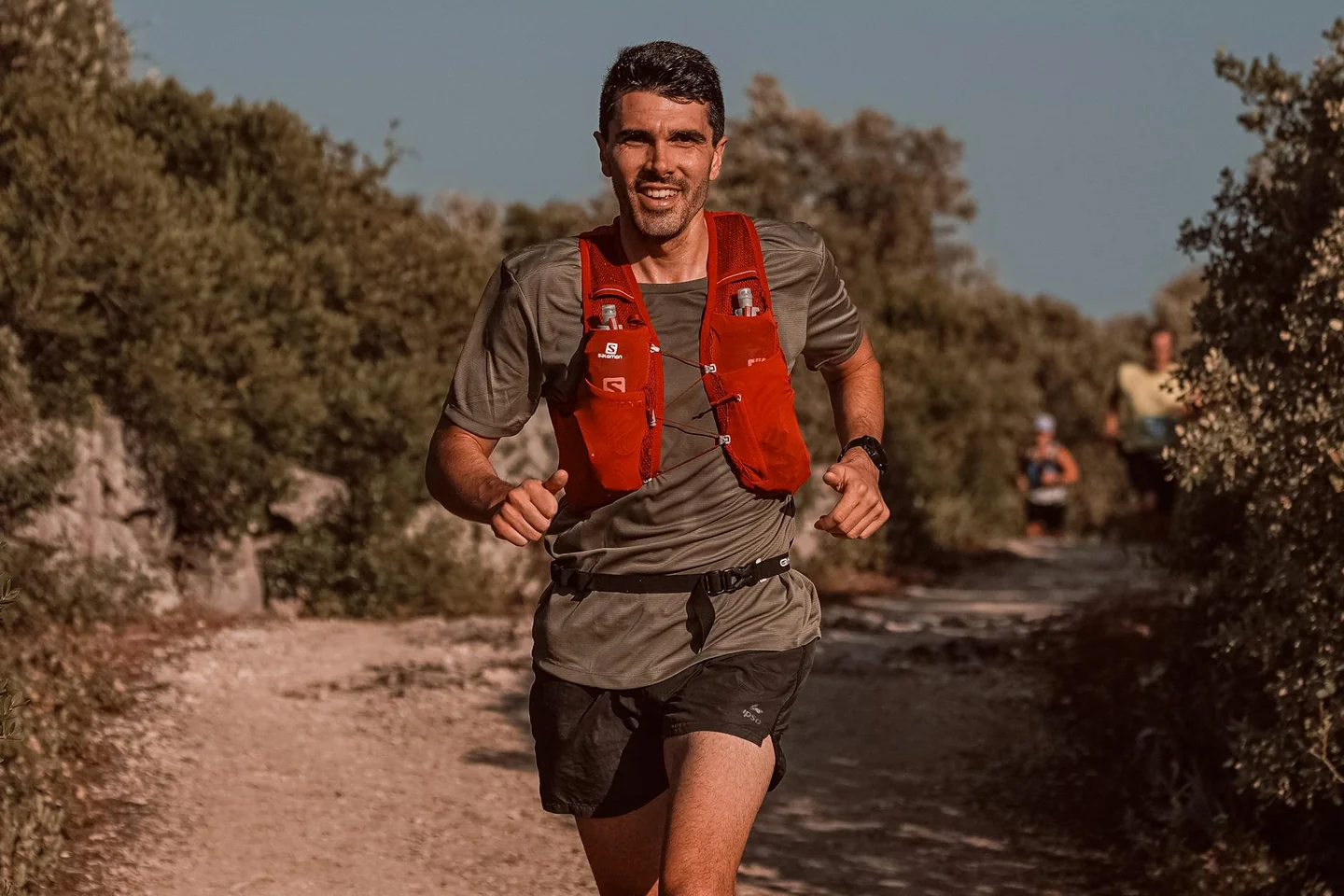
Imagen: RUN 4 FFWPU / Pexels
The real difference between a belt and a hydration vest is not in the name, but in the kind of outing that awaits you. On short routes with few items, the belt wins for simplicity. When the distance grows, the elevation gain bites, or the route demands water, food, and a bit of warmth, the vest offers an autonomy the belt can’t match.
The choice also affects the running motion. A well-fitted belt is barely noticeable if the load is light; a vest distributes the weight better and keeps everything from concentrating at the waist. That’s why the decision usually depends less on fashion and more on three very specific factors: how long the outing lasts, how much water is needed, and what safety margin the route requires.
Distance matters more than aesthetics
For outings of around 5 to 10 kilometers, the belt is usually enough if you only need to carry your phone, keys, and, at most, a small bottle or a gel. Its logic is that of minimalism: less volume, fewer pieces, less feeling of being weighed down. On urban pavement and on simple routes, that lightness is especially appreciated because it doesn’t force you to change your stride or arm swing.
The problem appears when the outing stops being short. On a run of 15, 20, or 25 kilometers, the runner starts thinking about hydration not as an extra, but as part of the pace. If it’s hot, there are few fountains, or the terrain has climbs and descents, the belt quickly falls short. Water weighs, takes up space, moves around, and in a reduced space every centimeter counts as if it were gold.
That’s exactly where the vest makes sense, because it allows the load to be distributed between shoulders, chest, and back. It’s not just about carrying more things; it’s about carrying them with less mechanical conflict. The runner doesn’t have to fight the bounce of a bottle or the pull of an overloaded pocket, and over long distances that translates into fewer interruptions and fewer adjustment gestures in the middle of the effort.
In trail running, this difference is even more visible. Technical routes, uneven ground, and temperature changes make equipment stop being an accessory and become part of the strategy. Carrying a thin jacket, salts, a headlamp, or a small first-aid kit is not overkill in the mountains; it’s basic prudence. There the belt can serve as support, but the vest is usually the central piece.
Capacity and weight distribution: what really changes
The capacity of a belt usually ranges between 1 and 3 liters, although in practice not all of that volume is used with the same comfort. The number matters less than the distribution. When the load is concentrated at the waist, the body notices it sooner when running fast, going uphill, downhill, or changing pace. If it’s filled too much, the belt starts to bounce and the feeling of movement appears like a constant drop on the back of your neck.
The vest, on the other hand, usually offers between 3 and 12 liters, with more compact models for training and others more generous for long runs or ultras. That difference is not only due to the outer size, but to the internal design. A well-designed vest makes it possible to separate hydration from the rest of the gear, something very useful when the runner wants to grab a gel without stopping or stash a windbreaker without emptying half a pocket.
That weight distribution even changes the perception of effort. With the belt, the gear pulls more on the lower back and forces you to check the fit often. With the vest, the pressure is spread out and the load visually feels less present. It doesn’t disappear, of course, but it stops feeling like a lump centered in one specific spot and starts moving with the torso.
The difference is clearer when running with two 500 ml soft flasks. In a belt, that weight can sit very close to the hip and move if the fit isn’t perfect. In a vest, the same flasks are placed on the chest or the straps, where access is quick and the center of gravity is better balanced. That stability is worth more than it seems when the route adds up the kilometers.
Hydration: soft flasks, reservoir, and running habits
There is no universally better system for drinking during a run. Some runners prefer to know exactly how much is left in each flask, and others want to drink through a tube without interrupting their stride. The choice between a soft flask, a back reservoir, or a small bottle depends on habit, distance, and the type of route. Ease of use matters as much as capacity.
Soft flasks, common in vests, usually hold between 250 and 600 ml each. They’re practical because they let you see the liquid level, refill quickly, and alternate between water and electrolyte drink. They also make hydration more visible and controlled. Their downside is simple: they require taking it out, drinking, and putting it back, a minimal but real sequence that the runner repeats many times.
The back reservoir, with capacities of 1.5 to 2 liters, favors continuity. It lets you drink without taking your eyes off the trail and without removing anything from the vest. It’s a very useful solution on long, hot routes or routes with few aid stations. In exchange, it’s harder to tell how much is left, it’s more difficult to clean, and it doesn’t offer the same flexibility when it comes to mixing different liquids or refilling quickly at a water point.
The belt, for its part, usually relies on a small bottle or a front or rear bottle holder. That setup works well when the outing doesn’t require carrying too much liquid. It can also be enough in training sessions where the runner knows there will be fountains nearby or will be back at the car soon. The limit appears when real autonomy is needed. There, the reduced design stops being a virtue and becomes a brake.
When the belt still makes perfect sense
The belt is not obsolete; it simply belongs to a different kind of run. It’s a very effective solution for someone running 30, 45, or 60 minutes, for someone who doesn’t want to carry more volume than necessary, or for someone who prioritizes quick access to small items. In the city, it’s especially comfortable because it goes on and comes off in seconds and doesn’t require adapting clothing or torso fit.
It also works well in repetitive training, where the runner knows the route and knows exactly where they’ll drink. In those cases, a belt avoids excess gear and reduces the temptation to be prepared for every imaginable scenario. That sobriety has value, especially for runners who still don’t feel comfortable with more structured solutions or who prefer to head out with a feeling of maximum freedom.
Its strong point is immediacy. Phone, keys, a gel, and a small bottle fit without having to open complex compartments. In quality sessions, intervals, or short runs, that simplicity avoids fiddling with zippers and minimizes distractions. The body, after all, appreciates when the gear disappears from the mental field.
Now, even within the world of belts there are important differences. Not all fit the same way or distribute the load in the same manner. Models with elastic fabric and a good anti-slip band handle movement better, while stiffer ones tend to fall short when the waist changes volume due to breathing, sweat, or the running posture itself. Fit, more than price, is usually what decides whether a belt ends up being used or stays in a drawer.
When the vest stops being an excess and becomes a tool
The vest becomes the obvious choice when the outing stops being short or predictable. In the mountains, on long runs, in trail marathons, or on routes with heat and elevation gain, the ability to carry more liquid and more useful gear completely changes the experience. It doesn’t just offer more capacity; it also improves organization. What is used most is in front, within reach, without forcing the runner to stop.
Front access is one of its great advantages. Flasks, gels, salts, tissues, or even a small headlamp can be placed in chest and shoulder compartments. That reduces the need to rummage around in the back, which is where a belt starts to show its limits. On a long climb or a technical descent, stopping to take something out from the back breaks the rhythm in a way that’s very hard to ignore.
The vest also holds up better as the kilometers go by. When the body gets tired, any annoying detail gets amplified. A small bounce starts to feel big, a poorly placed seam rubs more, and a badly secured bottle becomes a constant distraction. A well-fitted vest smooths out those problems, as long as the size is correct and the fastening system keeps the load close to the body.
There’s another important nuance: the vest isn’t only for running. On mixed outings, light traverses, or mountain days where walking and jogging alternate, its usefulness increases even more. It allows you to carry a thermal layer, some food, and a water reserve without turning the outing into an expedition. For runners training in the Valencian Community and moving between coast, inland, and mountains, that versatility fits especially well with temperature changes and uneven routes.
Fit, bounce, and chafing: the detail that ruins a good purchase
A good hydration system shouldn’t force you to think about it every few minutes. If the belt rides up, twists, or squeezes too much, the run fills with small corrections that are as tiring as a bad aid station. The same happens with a poorly chosen vest: if it bounces on the back or compresses the chest, the whole thing loses its point no matter how generous the capacity is.
The key is stable contact with the body. In the belt, that depends mainly on the elastic band and on the load not being unbalanced. In the vest, the front closures, size, torso shape, and content distribution all come into play. An oversized vest can move as much as a belt that’s too loose; one that’s too small can press on the chest or limit breathing.
Chafing usually appears when moisture, heat, and movement work together. Sweat, salt, and friction form a familiar mix for any distance runner. That’s why breathable materials and soft edges matter more than they seem to in a store. On paper everything may seem comfortable; at kilometer 18, the story changes.
The difference between comfort and annoyance is usually felt in modest details: the position of a seam, the height of a pocket, the ability to adjust the load without taking the gear off. On long outings, those small gestures matter more than the liter count. The best system is not the one that boasts about capacity, but the one that disappears while you run.
Price, real use, and the trap of buying more than necessary
The market offers belts from around 20 euros and compact vests from a little over 40 or 50 euros, with more technical models easily exceeding 100 euros. Price helps organize the options, but it shouldn’t be the only criterion. An expensive belt that fits poorly is still uncomfortable; a modest vest that’s well thought out can perform far better than expected.
In practical buying, it’s worth looking first at real use. If most outings are an hour long and water can be left in the car, at a fountain, or at an aid station, paying for large capacity doesn’t add much. If, on the other hand, training usually takes you into the mountains, into hot areas, or on long routes without support, saving liters is false economy. Time ends up correcting those decisions.
The industry has pushed many runners to buy in stages: first a belt, then a small vest, then a more technical one. That’s not always a mistake. Sometimes that evolution reflects the athlete’s own progression. Someone who goes from urban runs to mountain outings needs a different load logic, and the body notices it right away. The question is not which product looks better, but which one better matches the runner’s reality.
It’s also worth looking at the type of gear being carried. Carrying only a bottle and a phone doesn’t require the same thing as carrying a windbreaker, headlamp, salts, a thermal blanket, and food. Each item adds a small percentage of complexity, and that whole set completely changes how the accessory behaves. The usual mistake is buying while thinking about an idealized outing, not the routes that are actually done.
The right choice starts with the route, not the store
The belt works best when the outing is short, the weight is minimal, and quick access matters more than autonomy. It’s a simple, effective, and sufficient piece of gear for many training sessions. For running comfortably with little on you, it remains a very valid solution, especially on pavement or on familiar routes.
The vest, on the other hand, gains ground when the run demands more water, more gear, and more stability. Over long distances, in the mountains, or on hot days, its ability to distribute weight and organize contents makes it a much more complete tool. It doesn’t replace the belt in every case, but it does cover a wider range of use.
The right decision usually comes from looking at the route coldly: kilometers, elevation gain, temperatures, water points, and essential gear. From there, the equipment stops being an impulse buy and becomes a logical extension of the effort. In running, as in almost everything important, what seems like an accessory ends up influencing the result more than is admitted at first.
Choosing well is not about carrying more, but about carrying just enough with the least possible friction. That’s where the difference lies between running with a feeling of burden and running with a reasonable, almost silent autonomy that lets you focus on the essential: moving forward.
Este artículo contiene enlaces de afiliado: si compras a través de ellos, se genera una pequeña comisión sin coste adicional para ti. Más información.



How to prevent thigh chafing: causes and real solutions

Women’s running windbreakers: seven jackets and how to choose

Do more workouts get rid of soreness? A guide for runners

Jaén Half Marathon 2026: Record 3,800 Runners Registered

Men’s short running tights: how to choose the right pair

World Triathlon confirms data breach involving medical data

Izan Edo targets podium at Miyazaki World Cup

María Pérez ranks ninth in World Athletics’ 2026 top ten

Dos Santos, Duplantis and Sawe: World Athlete of the Year finalists

San Silvestre Vallecana 2026: 42,000 places, prices and start times

 Races3 months ago
Valencia Half Marathon 2027: date and registration

 Races3 months ago
Valencia Marathon 2026: entry, ballot and course

 Reviews and Comparisons4 months ago
Asics Gel-Roadmiles 3 for men: review and current price

 Reviews and Comparisons4 months ago
Asics Gel Sonoma 8 Gore-Tex: complete analysis for trail and rain

 Sneakers3 months ago
Saucony Endorphin Pro 4: full review and verdict

 News5 months ago
Strava API 2026: what changes for clubs, challenges and runner apps?

 Reviews and Comparisons5 months ago
Nike Alphafly 3: opinions, sensations, and real key points

 Reviews and Comparisons4 months ago
Under Armour running shoes review 2025-2026: models and key features

 Sports Equipment4 months ago
Shoe sizes in cm: a clear guide to getting the right fit for your footwear

 Sneakers3 months ago
Skechers GO RUN Consistent 2.0 analysis: comfort and limits

 News5 months ago
Valencia Marathon 2026 route: key tips to train and run better

 Sneakers4 months ago
Adidas Adizero Boston 13 for men: review and verdict