News
What is the iliotibial band and why does it make so many runners miserable
Lateral knee pain when running has a typical pattern: signs, biomechanical causes, and treatment options.

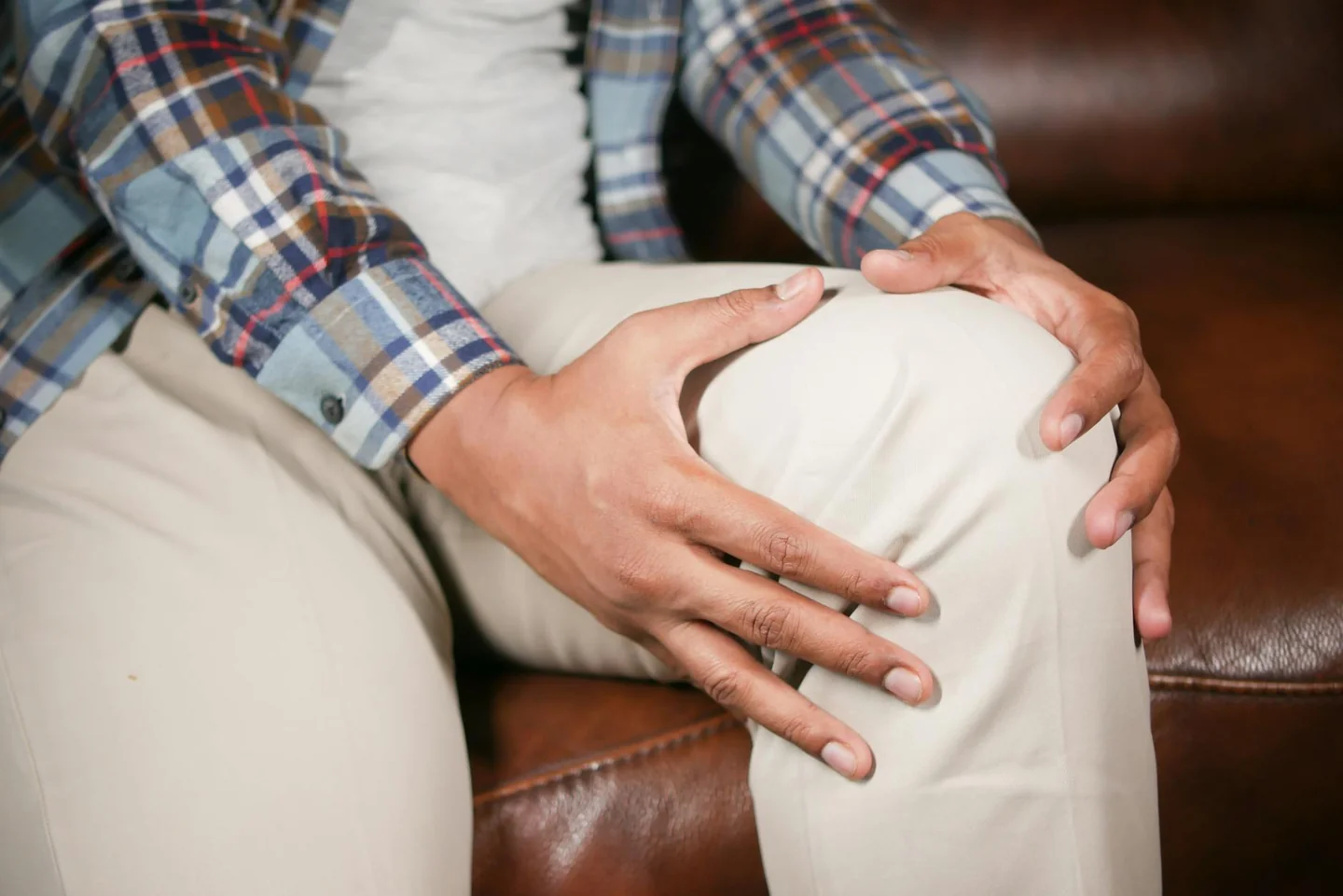
Imagen: Towfiqu barbhuiya / Pexels
Pain on the outer part of the knee that appears during running usually has a very specific origin: the repeated friction of the iliotibial band over the lateral area of the femur. In runners, this condition is associated with one of the best-known overuse injuries in recreational athletics, capable of cutting a long run short as if someone had suddenly turned the volume of the body down.
It is not just an isolated annoyance. When that rubbing is repeated, the tissue becomes irritated, inflammation appears, and the stride starts to feel uncomfortable, first during pace changes, then on descents and, later, even when walking after the effort. Understanding what lies behind the problem helps distinguish it from other causes of lateral knee pain, which do not always behave the same way.
What happens in the lateral area of the knee
The iliotibial band is a fibrous, resistant strip that runs along the outer side of the thigh from the hip to the tibia. It is not a muscle in itself, but a taut extension of the fascia lata, strongly influenced by the tensor fasciae latae and by the balance of the hip musculature. In running, this structure acts like a stability cable that helps control the movement of the leg.
The problem appears when, due to repeated load or an unfavorable mechanics, that band increases pressure on the lateral femoral condyle, a bony prominence located on the outer part of the knee. The result is a picture of friction and irritation that can begin subtly, with a feeling of rubbing or tightness, and end in a sharp pain that forces you to stop.
The logic of the injury is very much one of wear and tear: the longer the combination of mileage, fatigue and lateral tension is maintained, the easier it is for the tissue to become inflamed. That is why it usually appears in long-distance runners, although it is also seen in cyclists, hikers or in people who increase their load too quickly. The terrain, technique, footwear and hip strength form a silent sum that eventually takes its toll.
How the pain presents in runners
The most characteristic symptom is a localized pain on the outer part of the knee that appears at a similar distance or time into the workout. Many runners describe it at first as a tolerable discomfort, but one that grows with the miles until it becomes a sharp stab that forces them to slow down or stop.
There is a very useful detail for recognizing it: it usually gets worse on descents and in sections of greater mechanical demand. Going downhill increases the stabilizing work and makes the friction in the lateral area more evident. In some cases the pain disappears with immediate rest, only to return as soon as activity is resumed. That cyclical pattern is one of the most telling signs.
Snapping or a feeling of jumping may also appear when flexing and extending the knee, especially in more irritating cases or when the tissue is especially tight. It does not always indicate severity, but it does suggest that the area is reacting more intensely. The pain is usually very precise when pressing on the lateral side of the knee, something that helps distinguish it from other more diffuse problems.
Why it appears and what factors favor it
There is no single cause. The injury is usually the result of several factors happening at the same time: excessive load, lack of muscular adaptation, hip weakness, marked foot pronation or even a difference in leg length. In real runners, there is almost never a simple explanation; what is usual is a chain of small tensions that line up at the worst possible moment.
Weakness of the gluteus medius deserves special mention. When this muscle does not control pelvic drop well during the stride, the knee tends to collapse slightly inward and the iliotibial band works harder than it should. That overload is not always noticeable during normal walking, but it does show up when miles accumulate or when running tired.
Downhills, trail running and sudden changes in volume also increase the risk. Repeated downhill running increases eccentric demand and lateral tension. Likewise, moving from short workouts to long runs without enough progression leaves the area without time to adapt. The body accepts consistency well; it protests when asked to shift gears.
The type of foot strike can influence it, although it should not become the automatic explanation for every knee pain. Excessive pronation alters the rotation of the leg and can favor the knee working in a less efficient position. Even so, the foot rarely acts alone: what really matters is the whole kinetic chain, from the hip to the ankle.
How the diagnosis is reached
The diagnosis is mainly clinical. The runner’s history usually gives many clues: lateral pain that appears while running, worsens with load and eases with rest. That pattern, together with the physical examination, makes it possible to suspect the injury with fairly good accuracy without needing complex tests in every case.
During the examination, tenderness is sought on pressure over the lateral side of the knee, near the lateral femoral condyle. The tension of the band and the mobility of the hip and pelvis are also assessed. In some cases the Ober test is used, a maneuver designed to check whether the fascia lata and the iliotibial band are too tight and limit adduction of the leg.
MRI does not always confirm the condition. It is often used more to rule out other causes than to demonstrate this injury, because the findings may be normal or not very striking. It makes sense when the pain does not quite fit, when there is effusion, locking, instability or suspicion of meniscus, plica or popliteus tendon injury. In a runner’s knee, making the distinction well avoids unnecessary treatments.
The differential diagnosis includes some conditions that can look quite similar: lateral meniscus, synovial plicae, irritation of the femoropatellar area or lateral tendon problems. That is why the sports context and the exact location of the pain are so important. The injury is not understood from an image alone; it is understood through the combination of symptoms, load and examination.
What treatments are used and what role rest plays
The first goal is to reduce irritation. If the runner keeps forcing the area during the inflammatory phase, the tissue enters a cycle of rubbing and pain that delays recovery. The usual approach is to temporarily reduce or modify running and replace part of the work with lower-impact activities, such as easy cycling, elliptical training or swimming, always according to tolerance.
Total rest can bring relief, but it is not always the best option if it lasts too long. Losing fitness makes the return harder and can make the comeback abrupt. That is why an intelligent adjustment of load is usually preferred, with a relative pause in the stimuli that trigger pain and continuity of movement within safe limits.
Local cold and topical anti-inflammatories are often used in the most recent or irritated phases. Applying ice for 10 to 15 minutes, two or three times a day, helps control pain in some cases. Anti-inflammatory gels can be a temporary support, although they do not by themselves solve the mechanical origin of the problem. They are one piece, not the whole picture.
When inflammation is marked and the condition is recent, infiltrations are sometimes considered to relieve the area quickly. Their usefulness is mainly symptomatic and they can have a diagnostic role in expert hands, but they do not correct the underlying cause. If the runner returns without changing the load or the mechanics, the pain tends to come back like a tide that never really left.
Physiotherapy and strength work as the core of management
Physiotherapy makes a lot of sense when the goal is to decompress the area and improve tissue mobility. Sports massage, myofascial release techniques and some electrotherapy resources can help reduce local sensitivity. They are not a magic wand, but they are a way of bringing some calm back to a structure that lives too tense.
Stretching the iliotibial band, as it is popularly understood, has limited reach. The lateral anatomy of the knee does not make it easy to stretch directly and effectively. In contrast, working the hip and trunk musculature can change the distribution of forces. The gluteus medius, gluteus maximus and core control matter much more than is often believed.
Strength is not a decorative add-on. It is a central part of recovery and relapse prevention. A runner with better pelvic stability and better leg control generates less inward knee collapse and reduces the friction work on the outer side. The idea is not to make the body rigid, but to make each stride cost less mechanical energy.
In the progressive return, it is also worth reviewing load errors: too many consecutive kilometers, rapid increases in volume, downhill repeats or weeks with little recovery. The practical rule of not increasing mileage by more than 10% per week remains a useful reference, although it does not replace individual judgment. What matters is that the load rises like a staircase, not like a leap.
How long it takes to improve and when it becomes more concerning
Recovery time varies a lot depending on how long the runner has been carrying the pain and how much their training has changed. Recent cases usually respond better than those that have been established for weeks or months. The more chronic the problem, the more likely it is that the tissue has developed fibrosis or persistent tension that slows improvement.
In mild cases, the discomfort may decrease in a few weeks if the load is adjusted well and the hip is strengthened. In more stubborn cases, the process takes longer and requires more patience. The key point is not only that the pain disappears, but that the knee once again tolerates the repetitive running motion without setting off the alarm at the same distance as always.
There are signs that make you think of something else: joint locking, clear instability, significant effusion, pain at rest or symptoms that do not fit the classic lateral and mechanical pattern. In those cases it is advisable to broaden the study because the knee is a structure rich in possible diagnoses and not all outer-side discomfort is the same. Confusing a friction injury with a meniscal problem, for example, can lead to wrong decisions.
When conservative treatment is not enough
Surgery is exceptional, but it exists. It is reserved for persistent cases in which the pain continues despite correcting load, strength and inflammation, or for cases in which the cause is not only functional but also structural. Sometimes there is marked fibrosis, bone spurs or space-occupying lesions that reproduce the same pattern of lateral pain.
Classic open lengthening techniques have become less common in some settings because they can alter the band tension too much or leave unwanted biomechanical sequelae. That is why less aggressive approaches have been developed that seek to release the friction point without unnecessarily compromising leg function. In athletes, that balance between relieving pain and preserving power is decisive.
The current trend favors more selective procedures, with less tissue aggression and faster recovery. Even so, surgical indication is not common and requires very careful assessment. Most runners improve without needing to go that far, as long as the injury is identified in time and the cocktail of factors feeding it is corrected.
How to reduce the risk of relapse when returning to running
The return to training should not feel like a switch. After an episode of lateral knee pain, the sensible thing is to reintroduce running gradually, keeping an eye on downhills, faster paces and accumulated volume. The body needs to check that the area tolerates the movement without inflaming again at the first sign of fatigue.
It also helps to review the overall running pattern. A slightly higher cadence, a less aggressive stride and better hip stability can reduce lateral stress on the knee. It is not about turning every runner into a biomechanics manual, but about removing those small levers in the movement that multiply friction unnecessarily.
The most useful preventive work is often boringly consistent: hip strength, a stable trunk, sensible load progression and respect for recovery. Faced with the temptation to look for a single solution, the injury reminds us of a fairly classic truth in running: almost always, the one who manages the details best wins. In a knee battered by friction, every detail counts as if it were an extra kilometer.



How to prevent thigh chafing: causes and real solutions

Women’s running windbreakers: seven jackets and how to choose

Do more workouts get rid of soreness? A guide for runners

Jaén Half Marathon 2026: Record 3,800 Runners Registered

Men’s short running tights: how to choose the right pair

World Triathlon confirms data breach involving medical data

Izan Edo targets podium at Miyazaki World Cup

María Pérez ranks ninth in World Athletics’ 2026 top ten

Dos Santos, Duplantis and Sawe: World Athlete of the Year finalists

San Silvestre Vallecana 2026: 42,000 places, prices and start times

 Races4 months ago
Valencia Half Marathon 2027: date and registration

 Races4 months ago
Valencia Marathon 2026: entry, ballot and course

 Reviews and Comparisons4 months ago
Asics Gel-Roadmiles 3 for men: review and current price

 Reviews and Comparisons4 months ago
Asics Gel Sonoma 8 Gore-Tex: complete analysis for trail and rain

 Sneakers4 months ago
Saucony Endorphin Pro 4: full review and verdict

 News5 months ago
Strava API 2026: what changes for clubs, challenges and runner apps?

 Reviews and Comparisons5 months ago
Nike Alphafly 3: opinions, sensations, and real key points

 Reviews and Comparisons4 months ago
Under Armour running shoes review 2025-2026: models and key features

 Sports Equipment4 months ago
Shoe sizes in cm: a clear guide to getting the right fit for your footwear

 Sneakers3 months ago
Skechers GO RUN Consistent 2.0 analysis: comfort and limits

 News5 months ago
Valencia Marathon 2026 route: key tips to train and run better

 Sneakers4 months ago
Adidas Adizero Boston 13 for men: review and verdict