News
Kilian Jornet height and weight: real measurements and physical profile
Measurements, physique, and key traits of a runner built for the mountains and the most demanding ultras.

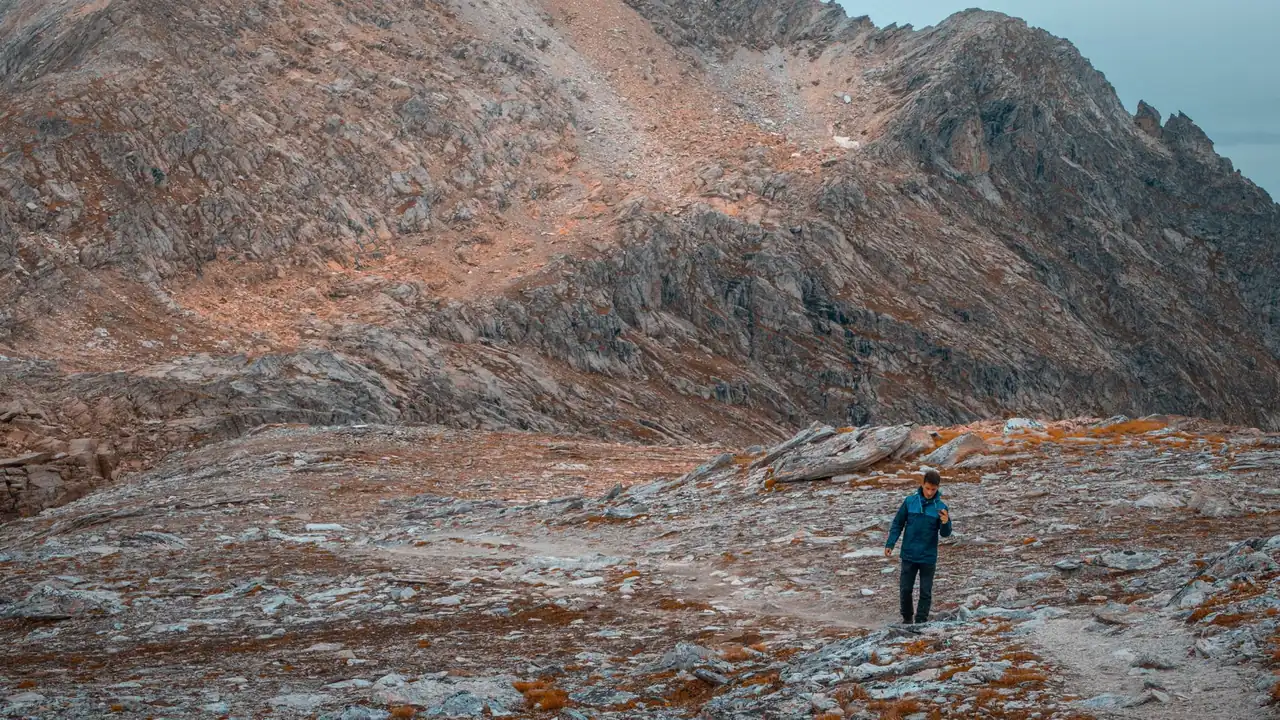
Kilian Jornet is 1.71 meters tall and weighs around 58 kilos, a very light combination for an endurance athlete who has built his legend among peaks, snow, and broken trails. His build is impressive not for volume, but for efficiency: little dead weight, springy legs, and an exceptional ability to sustain long efforts at altitude.
Beyond the raw figure, his body explains much of his dominance in trail running and ski mountaineering. Low body mass, a modest body-fat percentage, and outstanding adaptation to prolonged effort paint the portrait of an athlete who turns movement economy into a competitive advantage. In his case, the relationship between height and weight is not a biographical curiosity: it is a central piece of his performance.
A very fine-tuned physique for climbing, descending, and repeating
At 1.71 meters, Jornet is of average height, but his weight, close to 58 kilos, gives him a lightness that is uncommon even in mountain athletics. In disciplines where every gram counts, that balance has enormous value. Climbing with less mass reduces energy cost; descending with a compact, reactive body makes control easier on technical terrain, where the ground changes texture as if it were an unstable board.
His build follows a clear logic: he is not built like a track-distance runner or a gym climber, but like someone who moves better the less the body gets in the way between him and the terrain. In the mountains, performance comes from a sum of invisible details: short stride, good cadence, downhill traction, and enough musculature not to lose precision when fatigue begins to distort the perception of effort.
Jornet’s height does not give him an advantage by itself, but his weight does fit what a sport demands in which gravity is always working against you. In ultradistance events, especially at altitude, every extra kilo is carried for hours. That is why his physique has so often been read as just another tool of the trade, like a headlamp, a minimal pack, or a well-chosen pair of mountain shoes.
What the numbers really say about his body
The most repeated figures in profiles and biographies match: 171 centimeters and about 58 kilos. A lung capacity of 5.3 liters and a body-fat percentage around 8% have also been cited, data that help explain why his engine seems so finely tuned. This is not about turning the runner into a mathematical formula, but about seeing how certain proportions favor a very specific type of effort.
In mountain sports, lightness is not enough. An extremely lean athlete may be fast on flat ground and still struggle on technical descents or during long days of cold and altitude. Jornet has stood out precisely because his body is not fragile, but functional. His physique conveys that rare combination of fine texture and rough resilience, like a thin rope that holds more than it seems.
Body-fat percentage also matters because in mountain races the available energy and the ability to tolerate long efforts depend, in part, on how the body manages its reserves. Eight percent is low, but not exotic in an elite athlete. What matters is that this figure fits a history of high-volume training, adaptation to cold, experience at altitude, and a discipline that has remained constant for years.
Height in a sport where the terrain calls the shots
On the track, height can be read as a more visible variable; in the mountains, by contrast, the terrain relativizes almost everything. A tall runner may struggle in very technical sections because of leverage and control, while a more compact one can gain agility on narrow trails, ridges, or rocky descents. Jornet has turned that compactness into a virtue: his body seems designed to bend, react, and stay out of the way.
The mountains reward those who use less energy for the same task. That depends not only on weight, but also on style, technique, and the ability to stay calm when the heart rate rises. Jornet has said on different occasions that training is not, for him, a mechanical obligation, but a way of exploring. That philosophy helps explain why his physique cannot be separated from the way he moves and thinks.
His light build does not stop him from taking on brutal efforts. In fact, in the high mountains, where the lack of oxygen punishes every movement, the compact body becomes a more visible advantage. Less mass means less oxygen demand for movement. In an environment where the air becomes scarce, that difference can feel like taking off an invisible backpack.
Why his weight has drawn so much attention
Interest in Kilian Jornet’s weight does not come from superficial curiosity. In endurance sports there is a long-standing obsession with the relationship between weight and performance, especially when it comes to long climbs, ultras, or high-altitude ascents. Jornet embodies that ideal of an athlete who seems almost ethereal, yet capable of sustaining paces that drain many much heavier rivals.
His case, however, should not be confused with the idea of a body driven to extremes arbitrarily. In him, thinness is neither an aesthetic whim nor a pose, but the result of prolonged adaptation to a very specific sport. Body economy is part of the job. A lighter ultrarunner not only climbs better; he can also punish the joints less on certain sections and keep a bit more freshness for the second half of a race.
The other side is obvious: lightness requires great care with nutrition, recovery, and energy balance. Jornet has said on several occasions that he racks up enormous training volumes throughout the year. That implies high caloric expenditure and meticulous management of available energy. Behind such a finely tuned physique lies a machine that does not allow neglect for very long.
What his anatomy reveals about elite trail running
Jornet’s case helps explain something important in modern trail running: there is no single ideal body, but there are clear trends. Uphill, lightness tends to help; downhill, stability; in long efforts, metabolic efficiency; and on technical mountain terrain, coordination. His profile brings together many of those pieces without exaggerating any of them. That moderation is perhaps the great paradox of the champion: he seems extreme, but his physique follows a sober logic.
In long races, the body does not work like a linear locomotive. It wears down, cools off, overheats, empties its glycogen stores, and starts up again. In that back-and-forth, a runner with contained mass usually pays less of a toll for each positive elevation gain. Jornet has also built his career across different settings, from mountain races to long-haul alpine projects. That variety has shaped a versatile physique, closer to that of an explorer than a pure specialist.
His anatomy does not explain everything, but it does help us understand why he has been so competitive in ascents and mountain ultras. Talent is often mentioned, and rightly so; even so, in his case talent rests on a body structure that fits effort like a key in a very specific lock.
Height, weight, and performance: a relationship that cannot be read in isolation
Talking about Kilian Jornet’s height and weight without context would lead to a shallow reading. Two runners with the same height can have very different profiles depending on muscle density, injury history, acclimatization, or the kind of mountain they tackle. Jornet stands out because his body has found exceptional synchronicity with his discipline. It is not just a matter of numbers, but of how those numbers work together.
In prolonged effort, body weight has a direct relationship with energy cost, but height has a more nuanced influence. A tall runner can generate long strides and some mechanical advantage on certain surfaces; a more compact one can gain agility and control. On terrain where precision matters as much as power, the balance often tilts toward the second profile. Jornet has taken that logic to the highest level without losing the ability to sustain extremely long days.
The mountains, moreover, punish any excess. Mud, loose rock, ice, or steep gradients do not negotiate. That is why lighter bodies often feel more comfortable, as long as they retain enough strength. His is not a fragile body, but light and robust at the same time, a less common combination than it may seem from the outside.
The public image of an athlete who does not need to impose himself
His image has also helped cement that idea of lightness. Jornet does not project the classic figure of a champion overflowing with muscle. His bearing is understated, almost silent. That appearance fits a personality he has described as unsociable and deeply connected to nature, reading, and time alone. His body seems to hold the same economy as his way of being in the world.
In interviews and profiles, he often appears as someone who rejects excess, both in life and in sport. That aesthetic coherence reinforces the perception that his physique is an extension of his philosophy. Where others seek volume, he seeks mobility; where others aim to look strong, he prioritizes feeling functional. Efficiency matters more than appearance.
There is also a cultural component. Jornet has become a global reference and, with that, his body has been dissected like that of any sports figure of influence. His height and weight have become part of the trail-running fan’s collective imagination, almost as if they were a sufficient explanation for feats that, in reality, depend on decades of work, experience, and reading the terrain.
A useful number, but not the whole secret
At 1.71 meters and 58 kilos, Kilian Jornet can be better defined, but not confined. These are numbers that explain part of the picture, not the whole thing. Behind them lies an unusual ability to tolerate effort, an intimate relationship with the mountains, and a sporting history in which consistency has been more decisive than any isolated attribute.
In sport, the body matters. A lot. But it matters differently depending on the discipline. In Jornet’s case, the combination of average height, low weight, and enormous efficiency seems like the perfect answer to an environment where climbing is hard, descending demands precision, and every outing can turn into a long conversation with the slope. His physique is not just a number; it is a finely tuned adaptation to the landscape that made him famous.
That is why, when his measurements are cited, they should be read as just one more key within an exceptional sporting biography. The mountains do not reward the biggest. They reward the one who moves best in them. Jornet, with his compact body and outsized endurance, has turned that truth into an unforgettable career.
Este artículo contiene enlaces de afiliado: si compras a través de ellos, se genera una pequeña comisión sin coste adicional para ti. Más información.



How to prevent thigh chafing: causes and real solutions

Women’s running windbreakers: seven jackets and how to choose

Do more workouts get rid of soreness? A guide for runners

Jaén Half Marathon 2026: Record 3,800 Runners Registered

Men’s short running tights: how to choose the right pair

World Triathlon confirms data breach involving medical data

Izan Edo targets podium at Miyazaki World Cup

María Pérez ranks ninth in World Athletics’ 2026 top ten

Dos Santos, Duplantis and Sawe: World Athlete of the Year finalists

San Silvestre Vallecana 2026: 42,000 places, prices and start times

 Races4 months ago
Valencia Half Marathon 2027: date and registration

 Races4 months ago
Valencia Marathon 2026: entry, ballot and course

 Reviews and Comparisons4 months ago
Asics Gel-Roadmiles 3 for men: review and current price

 Reviews and Comparisons4 months ago
Asics Gel Sonoma 8 Gore-Tex: complete analysis for trail and rain

 Sneakers3 months ago
Saucony Endorphin Pro 4: full review and verdict

 News5 months ago
Strava API 2026: what changes for clubs, challenges and runner apps?

 Reviews and Comparisons5 months ago
Nike Alphafly 3: opinions, sensations, and real key points

 Reviews and Comparisons4 months ago
Under Armour running shoes review 2025-2026: models and key features

 Sports Equipment4 months ago
Shoe sizes in cm: a clear guide to getting the right fit for your footwear

 Sneakers3 months ago
Skechers GO RUN Consistent 2.0 analysis: comfort and limits

 News5 months ago
Valencia Marathon 2026 route: key tips to train and run better

 Sneakers4 months ago
Adidas Adizero Boston 13 for men: review and verdict