News
Madrid Runs for Madrid 2025: the shirt and everything it reveals
The September race brings together 10,000 runners, a central route, and an official shirt with symbolic weight.

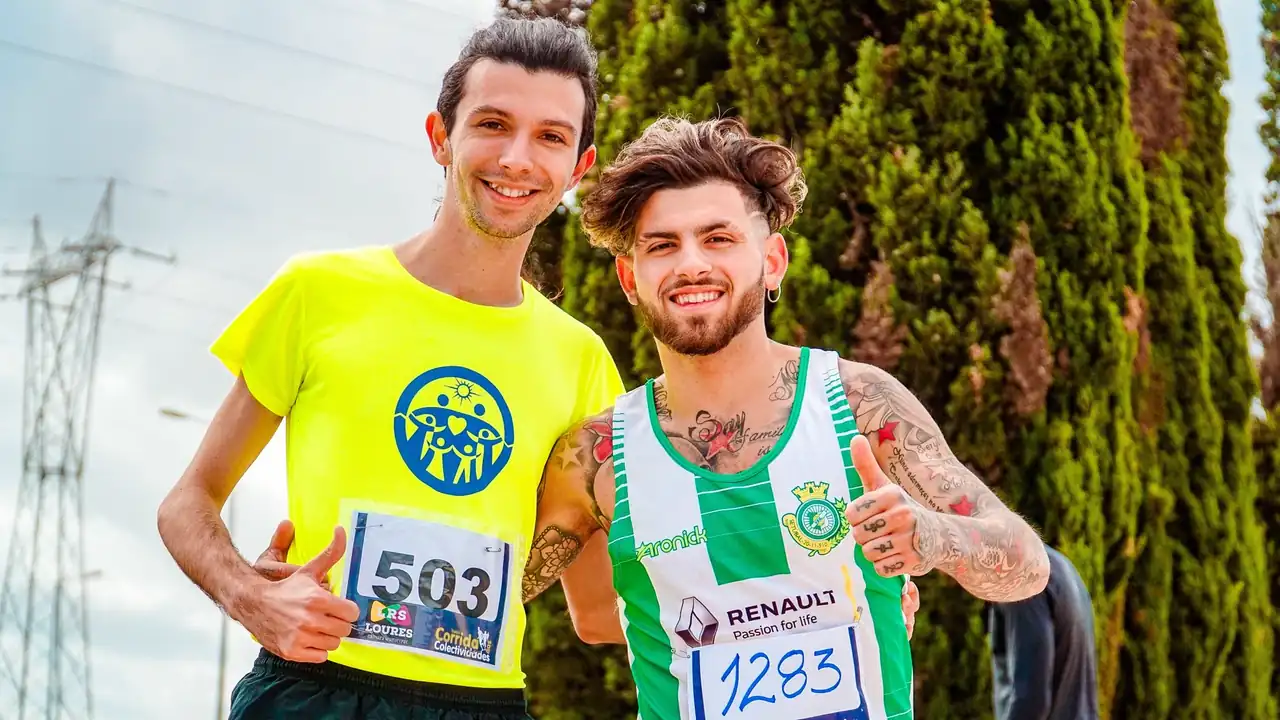
The official Madrid Corre por Madrid 2025 T-shirt has become one of the most sought-after items of this edition, not only for its practical value at the start, but also for what it represents in an event that blends sport, the city, and collective memory. In a popular race, the garment is not just an accessory: it serves as a sign of belonging, as a keepsake from a specific morning, and as a visible part of an event that turns the asphalt into a sea of colors.
The 2025 edition arrived marked by an unusual symbolic weight. The organizers framed the event as a Special Hispanidad Edition, with a 10-kilometer route through the city center, 10,000 bib numbers, and a charitable component that donated one euro from each registration to the Association of Terrorism Victims. In that context, the official T-shirt became associated with a day of shared identity, massive participation, and a tangible reminder for those who crossed the finish line on Paseo de Camoens.
A garment that sums up the race
A T-shirt from a popular race is rarely designed only for running. It also speaks about the event, the year, and the story surrounding it. In Madrid, the 2025 shirt is linked to an event that brought together runners from 43 countries and turned the streets between Bravo Murillo and Parque del Oeste into a sports runway as diverse as the city itself. That is why interest in the garment is not only about aesthetics, but also about its status as a souvenir and a symbol of participation.
Anyone who puts on that T-shirt during the race enters a very familiar scene: that of the popular runner seeking a balance between performance, comfort, and belonging. In events with such social weight, the official kit ends up being almost a flag. The fabric, the cut, and the visibility of the garment matter, of course, but so does the story it carries. In this edition, that story was written in the language of Hispanidad, solidarity, and the pride of a well-established urban race.
Interest in the shirt also grows because the Madrid race takes place early in the autumn calendar, when many runners regain their rhythm after the summer. The official garment then ends up working as the first mark of the sporting season, a season opener that smells of still-warm asphalt, of training sessions being organized again, and of that subtle nerves of mass starts.
What is known about the 2025 edition
The race was held on September 21, 2025 at 9:00, starting in the Bravo Murillo area and finishing on Paseo de Camoens. The 10-kilometer course passed through some of the most recognizable points in central Madrid and brought together a maximum of 10,000 participants. The organizers also set a minimum age of 18 years old on the day of the race, a relevant detail for those who follow these popular races closely.
On the financial side, registration was divided into two phases. The first, for bib numbers 1 to 5,000 or until June 30, cost 17.60 euros, with a 2-euro charitable donation. The second phase, from bib number 5,001 to 10,000 or starting June 30, rose to 19.60 euros, also keeping that donation. These figures help explain the profile of a high-demand urban race, where the official T-shirt is usually part of the value package perceived by the participant, along with the bib number, refreshments, and final classification.
The event was organized by MAPOMA, promoted by the Madrid Foundation for Sport, and supported by Ibercaja as the main sponsor. Beyond the names involved, the underlying message was clear: the race wanted to present itself as a sporting celebration with cultural meaning, not as a simple late-summer 10K. That perspective is also reflected in the way the T-shirt is integrated into the overall event, as a visible part of an edition with its own narrative.
What runners usually look for when they see the shirt
The first question is rarely technical, even if it seems that way. Before talking about sizing, cut, or material, many runners want to know whether the garment will be comfortable to run in, whether it goes well with the bib, and whether it will still be useful for training afterward. In a 10-kilometer urban race, the official T-shirt is usually a lightweight garment, designed to serve a dual purpose: perform on race day and stay in use for workouts and training sessions weeks later.
Durability matters because a race T-shirt is not bought like just any garment. Its purpose does not end at the finish line. Many end up as the shirt for easy runs, track intervals, or relaxed Sunday outings, when the runner wants to carry a bit of the atmosphere experienced in the race. That is why, in an event as crowded as Madrid Corre por Madrid, the shirt is not only practical, but also emotional and meant for long-term use.
Visibility matters too. Mass races are like a river: from far away it all looks like the same flow, but each shirt helps distinguish groups, clubs, paces, and small sporting tribes. In Madrid, where the urban landscape already provides plenty of visual stimulation, the official garment joins the overall choreography and makes the scene easier to read. It is a minor detail only in appearance; in reality, it helps organize memory.
The start, the finish, and the value of the image
Bravo Murillo as the starting point and Camoens as the finish create a very Madrid-specific narrative. From the first meters, the race moves through broad avenues and recognizable spaces, with the passage along Castellana, Plaza de Colón, Puerta de Alcalá, Gran Vía, and Princesa forming a succession of moving postcards. In that context, the official T-shirt gains extra visibility: it appears in photos, in videos, in the public’s gaze, and in the runner’s memory, who, at the end, is still wearing it wet with effort and pride.
That visual component is crucial in a popular race. Major urban races are told as much by images as by times. The T-shirt acts as a collective signature; at the start, it unifies; during the race, it identifies; at the finish, it certifies the experience. And if the route also passes through places as meaningful as the Castellana axis or the Camoens area, the garment becomes tied to a very specific version of the city: the one that lets itself be run through and is seen while running.
Aesthetics also shape the later conversation. Often, the official T-shirt ends up appearing on social media, in group photos, or in the closets of those who keep garments as mementos. This is no small whim: for the popular runner, race clothing often becomes a personal archive. Each shirt preserves a date, a route, and a physical sensation that does not always remain on the watch.
Hispanidad, solidarity, and a garment with a story
The 2025 edition had a nuance that helps explain why the shirt attracted more attention than usual. The Hispanidad theme gave the race a broad, almost choral cultural framework that set it apart from other events on the Madrid calendar. The idea of unity between Spain and Latin America, the celebration of a shared language, and the diversity of accents gave meaning to a race that wanted to present itself as more than just a sporting event.
Within that narrative, the T-shirt performs an almost editorial role. It does not need to be flashy or copy obvious symbols to carry meaning. It is enough for it to be linked to a specific edition, a charitable cause, and a day on which thousands of runners shared the same urban circuit. The garment reminds us that a popular race is also a form of collective representation, a scene where the city recognizes itself for a moment.
The charitable component adds another layer. The one-euro-per-bib donation to the AVT does not make the shirt a charitable item in itself, but it does give it context. Anyone wearing it is not just wearing a technical garment; they are wearing a sign of participation in a day with social impact. That dimension, increasingly present in major popular events, strengthens the link between sport and citizenship, between running and belonging to a shared narrative.
What it means for runners and for collectors
In races of this size, the T-shirt can have two different lives. The first is the most obvious: the runner uses it, washes it, and brings it out again for training. The second is that of the participant who keeps it as a souvenir, along with the bib, the medal if there was one, and perhaps a finish-line photo. In both cases, the garment acts as a time capsule, an object that condenses the effort of a morning and the identity of a specific edition.
There is something almost handmade in that way of preserving the experience. The race no longer exists when the city returns to its routine, but the shirt remains. Folded in a drawer or hanging on a rack, it keeps the echo of shared meters, refreshments, music, road closures, and the applause of a crowd that, at times, turns the start into a small urban celebration. It is portable memory, as light as the fabric and as durable as remembrance.
It also has value for clubs, associations, and groups of friends who run together. In a race with 10,000 bib numbers, the shirt helps create a block image, a kind of human mosaic in which each runner adds a piece. For those looking for a group photo, color and visual uniformity have real weight. That is why the official garment has become an expected element, especially in a race with such a strong presence of popular runners from the Madrid community.
What this edition leaves on the Madrid calendar
The 2025 edition confirmed that Madrid Corre por Madrid holds a place of its own on the capital’s calendar. It competes not only for dates or participants; it competes for meaning. Its T-shirt, the central route, the tribute to Hispanidad, and the charitable tone form a mix that distinguishes it from other more neutral urban 10Ks. Madrid offers many races, but few condense so clearly the feeling of leaving summer behind by running through historic avenues with a specific story on your shoulders.
That is why the attention given to the official T-shirt is not a collector’s whim or a secondary detail. It is a way of reading the race. The garment connects logistics with emotion, the functional with the symbolic, and race day with everything that comes afterward: the return to training, the saved photo, the conversation with friends, and the feeling of having taken part in one of those mornings when the city lets itself be run through without losing its character.
In the end, this edition’s shirt is worth both for what it covers and for what it tells. It covers the runner’s torso on a September morning and tells a story of 10 kilometers, 10,000 bib numbers, a charitable cause, and a city that wanted to see itself in sport’s mirror. That combination explains why a simple garment ends up being, in fact, a central part of the experience.



How to prevent thigh chafing: causes and real solutions

Women’s running windbreakers: seven jackets and how to choose

Do more workouts get rid of soreness? A guide for runners

Jaén Half Marathon 2026: Record 3,800 Runners Registered

Men’s short running tights: how to choose the right pair

World Triathlon confirms data breach involving medical data

Izan Edo targets podium at Miyazaki World Cup

María Pérez ranks ninth in World Athletics’ 2026 top ten

Dos Santos, Duplantis and Sawe: World Athlete of the Year finalists

San Silvestre Vallecana 2026: 42,000 places, prices and start times

 Races4 months ago
Valencia Half Marathon 2027: date and registration

 Races4 months ago
Valencia Marathon 2026: entry, ballot and course

 Reviews and Comparisons4 months ago
Asics Gel-Roadmiles 3 for men: review and current price

 Reviews and Comparisons4 months ago
Asics Gel Sonoma 8 Gore-Tex: complete analysis for trail and rain

 Sneakers3 months ago
Saucony Endorphin Pro 4: full review and verdict

 News5 months ago
Strava API 2026: what changes for clubs, challenges and runner apps?

 Reviews and Comparisons5 months ago
Nike Alphafly 3: opinions, sensations, and real key points

 Reviews and Comparisons4 months ago
Under Armour running shoes review 2025-2026: models and key features

 Sports Equipment4 months ago
Shoe sizes in cm: a clear guide to getting the right fit for your footwear

 Sneakers3 months ago
Skechers GO RUN Consistent 2.0 analysis: comfort and limits

 News5 months ago
Valencia Marathon 2026 route: key tips to train and run better

 Sneakers4 months ago
Adidas Adizero Boston 13 for men: review and verdict