News
Photos of the Santa Pola Half Marathon 2025: visual guide
Images, atmosphere, and key scenes from the 2025 Santa Pola race: where to find them and what they show.

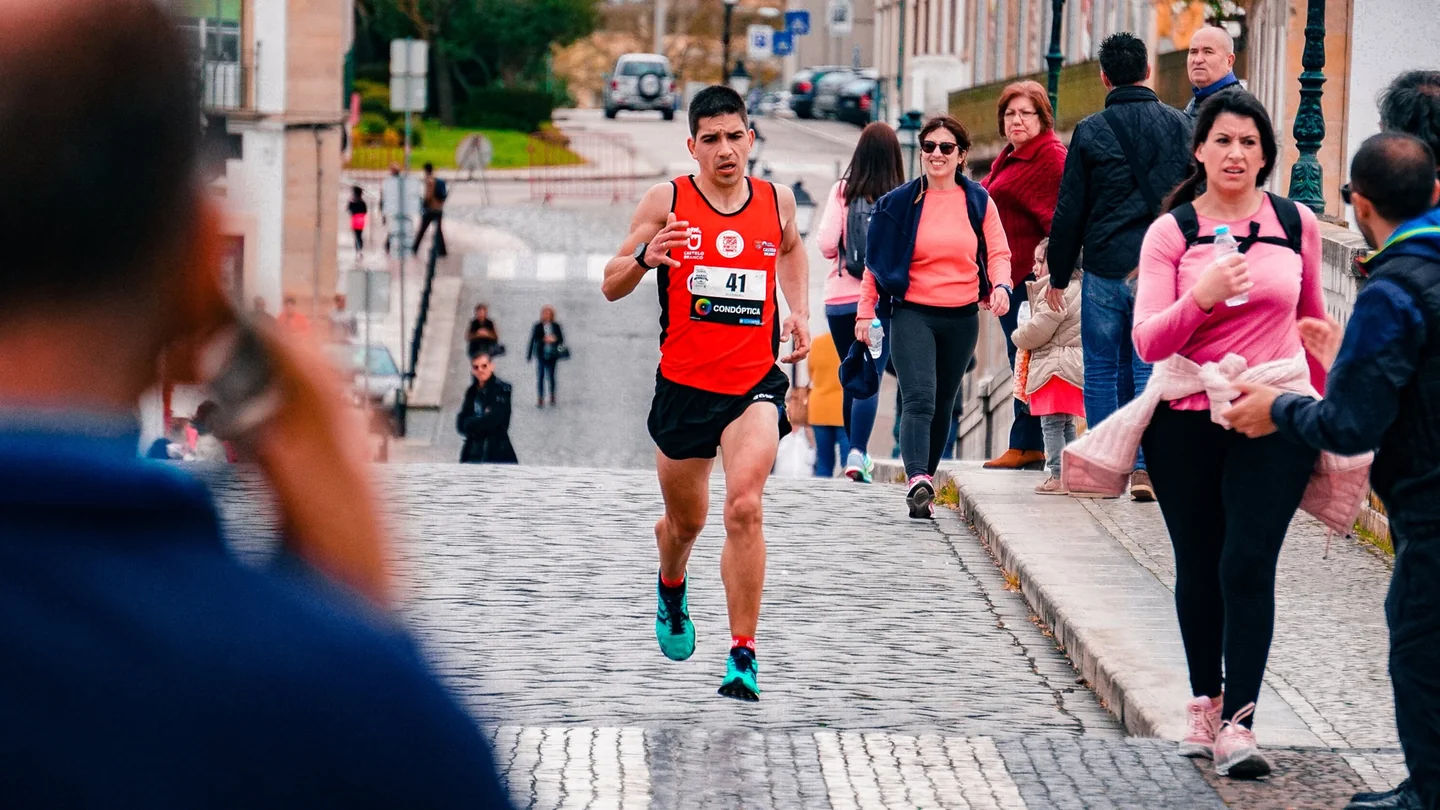
The photos of the Santa Pola half marathon 2025 summarize better than any report the strength of a race that blends coastline, speed, and a crowd. In a single image, you can fit the promenade, the January light, the effort on the face, and the murmur of an event that has earned its own place in the Spanish calendar.
The 2025 edition, held on January 19, left scenes very familiar to any running fan: compact packs in the first kilometers, runners clinging to the pace set by the pacers, spectators pressed against the barriers, and that sense of open sea that turns the course into a very photogenic setting.
A race that is better understood in images
Santa Pola works very well in photography because the route offers an unusual contrast: on one side, the toughness of the effort; on the other, a clean, bright, Mediterranean setting that softens the scene. The result is a race in which the runner’s expression and the landscape balance each other without competing.
In 2025, the event once again confirmed why so many people look for images of it after crossing the finish line. It is not just about seeing who won or what time was recorded. The photos help relive the cadence of the start, the almost military order of the field in the first meters, and the change in expression when the body starts to demand answers. That visual storytelling is part of the event’s charm.
The International Half Marathon Villa de Santa Pola has a very defined identity: marathon-like in its ambition, popular in its atmosphere, and fast in its design. That is why the photo galleries show not only athletes, but a mix of sports tourism, serious competition, and collective celebration. In January, the Alicante coastline becomes a kind of open amphitheater for running.
The journalistic value of the image in Santa Pola
A good race photo is not limited to freezing a foot in the air or a partially visible bib. In Santa Pola, the ideal image usually tells several things at once: the running posture, the concentrated expression, the cheering crowd, the clear sky, and the Mediterranean gleam in the background. That combination provides context without needing words.
The 2025 edition was especially well captured during the start and the opening stages of the race, where the density of the pack creates a very powerful visual texture. Also notable are the scenes in which the pack stretches out and each runner begins to occupy their own space. There, photography finds an almost cinematic change of pace.
In the finish-line images, another essential part of the story appears: the mix of relief, pride, and exhaustion. These are portraits that weigh more than a stopwatch. There are crooked smiles, arms raised to the sky, downcast looks, and the occasional expression of sheer weariness. All of that is part of the visual memory of the event and explains why these galleries are so widely shared on social media.
What usually appears in the race galleries
The most sought-after photos usually focus on four very clear scenes: the start, the coastal stretch, the aid station, and the finish. The start captures the initial energy, with compact groups and a joyful tension that lasts only a few seconds. The coastal stretch, by contrast, offers wide backgrounds and a clean aesthetic that favors wider shots.
The aid station adds humanity to the narrative. A cup of water, a trembling hand, a brief pause, or a fleeting conversation with a volunteer say a lot about the real dimension of the race. They are also useful images for understanding how the event unfolds beyond the big names and official times.
The finish line usually concentrates the most intense photographs. There, fatigue and celebration mix, and each runner seems to compress weeks or months of preparation into a few seconds. In a half marathon like Santa Pola, where the course encourages fast paces, that arrival has a particularly expressive quality.
A course designed to look good on camera
The Santa Pola course has something that greatly benefits photographers and media outlets: breadth, clarity, and visual continuity. It is not a closed, gloomy route, but one where natural light and the sea horizon help define the runners more clearly. The body stands out sharply against an easy-to-read background.
The start and finish usually attract most of the attention, but the rest of the course offers very usable scenes. The straight sections allow front-facing effort to be captured, the side angles show the athlete’s profile, and the promenade provides a depth that rarely goes unnoticed. In sports photography, those elements are worth gold.
The race is fast and flat, and that also influences the images. A course without major climbs shows a smoother stride, more orderly packs, and progress that is easier to understand visually. Photography on flat terrain allows the runner to be the true protagonist, without unnecessary distractions.
The moments that best capture the essence of 2025
The 2025 edition was marked by a large turnout and a very visible international atmosphere, two factors that enrich any gallery. In the photos, you can see the diversity of shirts, running styles, and the small private rituals each runner brings with them: a gesture before starting, an embrace at the finish, a knowing look with another participant.
The presence of high-level athletes also stands out, adding competitive tension to the images. Scenes at the front of the race are usually more austere, more focused, almost silent. The contrast with the photos of the mass field creates a complete story of the event, from the elite to those who simply want to finish feeling good.
The crowd is another protagonist that the photos should not overlook. Parents with children, groups of friends, neighbors on the sidewalk, and volunteers at specific points all build the background atmosphere. Often the energy of the stands, though understated, gives the images a vibration that no pose can manufacture.
What to look for in a good photo selection
A useful selection of images should show variety, not just repeated bib numbers. It is worth having wide shots to understand the scale of the event, medium shots to read the race tension, and close-ups capable of capturing the runner’s emotional state. Without that balance, the coverage falls flat.
Sequence also matters. A strong gallery tells a story: it starts with preparation, moves through the start, pauses at the mid-race effort, and ends with the finish. That visual continuity helps the reader understand the whole day and gives them the feeling of traveling through the race with the participants.
In Santa Pola, light is everything. That is why the best photos take advantage of the natural color of the sea, the white of the bibs, and the vivid tones of technical shirts. The result is usually a clean, highly legible image with an almost coastal feel that sets this half marathon apart from other urban races on the calendar.
Why this race generates so much visual interest
The Santa Pola Half Marathon has a rare combination: tradition, massive participation, and a very recognizable aesthetic. In a sport where many races look alike, here the reader immediately identifies the setting. A single image of the promenade or the lead group is enough to know where it is.
That visual recognition also explains why image searches increase around the event. Runners, family members, photographers, and media outlets want to recover the atmosphere of the day, compare their own experience with others’, and preserve a piece of memory that a results list cannot contain. The photos fulfill that role with almost documentary precision.
In addition, the race has a strong emotional component. For some, it is the big winter goal; for others, an athletic escape by the sea; for many, an annual appointment. The images inherit that emotional value and turn it into something more lasting than a simple result.
Photo searches and what they reveal about the runner
Anyone looking for images of this race usually does not want to see only the podium. They want to recognize themselves in the event, remember a face, a stretch of the course, a moment of suffering, or a brief burst of joy at the finish. Sports photography works like proof of passage: it says I was there and I lived it this way.
In 2025, that need for visual memory was especially evident because the race continued to establish itself as one of the major references in national running. The greater the prestige of a race, the greater the symbolic value of its photographs. They are not mere illustrations, but part of its living archive.
Social media amplifies that effect. One runner shares an image of their finish, another shows the group they trained with, a third uploads the photo of the sea in the background. The race multiplies into small fragments, and each one preserves a different version of the same day.
Santa Pola, a sports postcard by the Mediterranean
Some races seem made to be seen, and Santa Pola is among them. The combination of coastline, mild winter weather, a city fully engaged with the event, and a course designed for fast running creates a very recognizable athletic postcard. The image functions almost like a signature of identity.
In the photos of the 2025 edition, you can see that mix of organizational precision and spontaneous emotion that defines the race. There is no unnecessary artifice: there are runners, asphalt, sea, volunteers, spectators, and a rhythm that moves forward without fanfare. The beauty lies precisely in that visual honesty.
That is why Santa Pola galleries are consulted so often after the race. They serve to keep memories, celebrate personal bests, recognize friends, and understand why a half marathon can become a small cultural event. Sport, when photographed well, also tells a city’s story.
The visual memory of an edition that is already part of the story
The photos of the Santa Pola half marathon 2025 are not just a complement to the results list. They are the most human part of the event, the part that shows the color, the breathing, and the pulse of a full day. Without them, the race would lose an important part of its public presence.
The 2025 edition confirmed that this race does not live only on its times or its fame. It also lives on the way it is seen, shared, and remembered. Each image adds another layer to the story of a race that is already part of the emotional calendar of Spanish running.
And there lies its journalistic strength: transforming a measured effort in kilometers into a sequence of scenes that anyone can recognize. A bib bent by the wind, a stride at dawn, a gesture of fatigue at the finish, a smile by the sea. Sometimes, a whole race fits into that.



How to prevent thigh chafing: causes and real solutions

Women’s running windbreakers: seven jackets and how to choose

Do more workouts get rid of soreness? A guide for runners

Jaén Half Marathon 2026: Record 3,800 Runners Registered

Men’s short running tights: how to choose the right pair

World Triathlon confirms data breach involving medical data

Izan Edo targets podium at Miyazaki World Cup

María Pérez ranks ninth in World Athletics’ 2026 top ten

Dos Santos, Duplantis and Sawe: World Athlete of the Year finalists

San Silvestre Vallecana 2026: 42,000 places, prices and start times

 Races4 months ago
Valencia Half Marathon 2027: date and registration

 Reviews and Comparisons4 months ago
Asics Gel-Roadmiles 3 for men: review and current price

 Races4 months ago
Valencia Marathon 2026: entry, ballot and course

 Reviews and Comparisons4 months ago
Asics Gel Sonoma 8 Gore-Tex: complete analysis for trail and rain

 Sneakers3 months ago
Saucony Endorphin Pro 4: full review and verdict

 News5 months ago
Strava API 2026: what changes for clubs, challenges and runner apps?

 Reviews and Comparisons5 months ago
Nike Alphafly 3: opinions, sensations, and real key points

 Reviews and Comparisons4 months ago
Under Armour running shoes review 2025-2026: models and key features

 Sports Equipment4 months ago
Shoe sizes in cm: a clear guide to getting the right fit for your footwear

 Sneakers3 months ago
Skechers GO RUN Consistent 2.0 analysis: comfort and limits

 News5 months ago
Valencia Marathon 2026 route: key tips to train and run better

 Sneakers4 months ago
Adidas Adizero Boston 13 for men: review and verdict