News
Popular races in the Community of Madrid: calendar and key points
Dates, race types, and the complete map of Madrid running to organize the season.

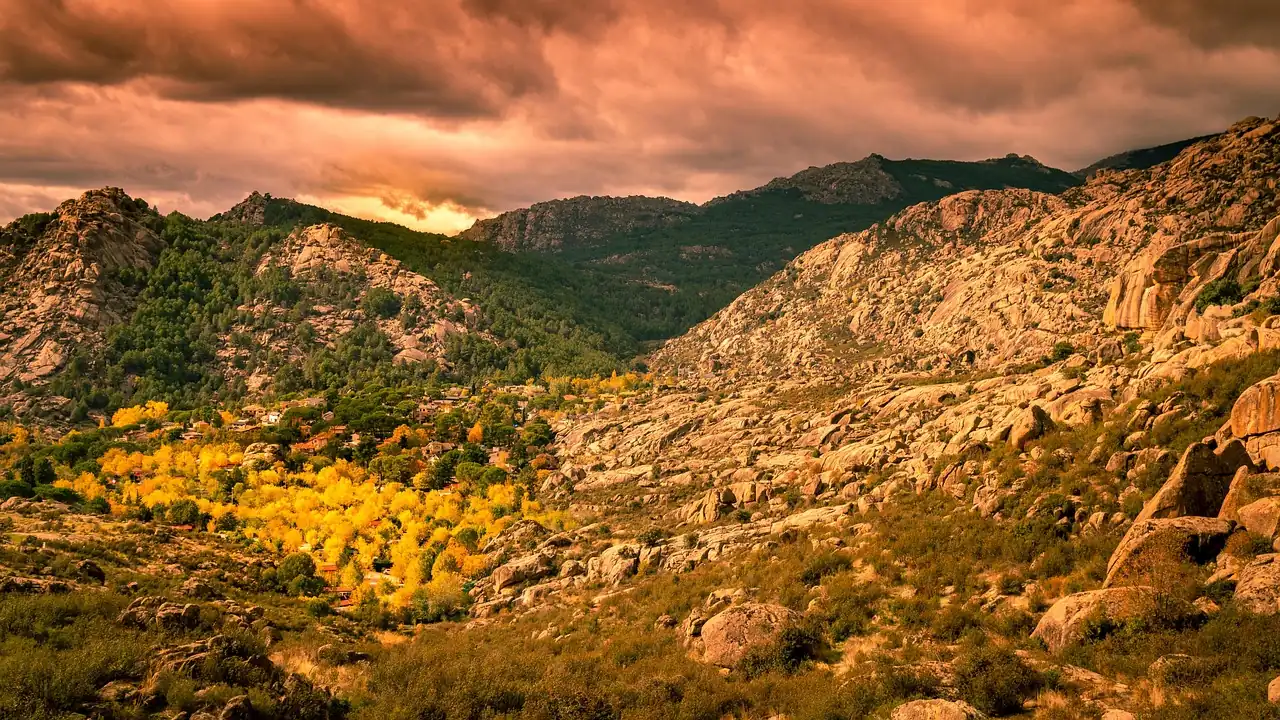
Imagen: rperucho / Pixabay
The Community of Madrid maintains one of the densest running calendars in Spain, with urban, charity, mountain, and mixed-format races spread throughout the year. In the capital and in municipalities across the region, major road-racing events coexist with neighborhood courses, night races, long-distance challenges, and events designed for very different audiences, from beginners to highly experienced runners.
The appeal lies not only in the quantity, but in the variety and in the way these races map out the territory. Madrid city concentrates the most visible dates, but the real pulse of the calendar extends toward Cercedilla, Alcobendas, Buitrago, Guadarrama, Miraflores, Vallecas, Vicálvaro, and San Sebastián de los Reyes. This mix turns the region into a kind of sports atlas in which each weekend can have a different texture.
A calendar that goes far beyond central Madrid
The recent evolution of Madrid’s calendar has moved toward a more orderly organization in the urban center, with fewer races interfering with mobility in the most sensitive areas and with a more balanced distribution between the capital and the rest of the region. In 2026, the schedule includes everything from neighborhood popular races to major year-end events, as well as marathons, duathlons, trail races, and endurance events that require a careful look at the map.
The overall picture is clear: Madrid remains a stronghold for recreational runners, but it no longer depends solely on the great avenues. The season has fragmented into layers. There are spring events that take advantage of good weather, summer races that are more demanding because of the heat, and autumn and winter races that bring road running and Christmas tradition back into the spotlight. That distribution gives the runner’s year an almost musical rhythm.
The capital retains its magnetism for obvious reasons. A run through the center, passages through emblematic neighborhoods, and the presence of races with huge popular appeal create instantly recognizable images. However, the Community of Madrid offers something even more interesting for frequent runners: the possibility of choosing between very different settings without leaving the region. One Sunday can mean an urban half marathon and the next a trail race with elevation gain and mountain air.
What sets Madrid’s races apart from those in other regions
Madrid running has a very distinctive personality shaped by the contrast between city and mountains. Not only because of altitude or the profile of some routes, but because of the coexistence of mass-participation races, charity initiatives, and very local events that preserve an almost neighborhood-festival identity. That combination rarely appears with such strength in other regions.
In Madrid city, races with recognizable starts and finishes carry a lot of weight, supported by major urban arteries and broad participation. Outside the M-30, by contrast, routes with a different kind of rhythm appear. The municipalities of the mountains and the Henares corridor offer more varied courses, with hills, mixed terrain, and a different sense of closeness. It is not just sport; there is also geography, festive calendar, and local life.
Another very Madrid-like feature is the presence of races with a strong social dimension. Several events are linked to health, inclusion, biodiversity, or support for specific groups. This has meant that, in practice, popular racing in Madrid often functions as a civic act as well as a sporting one. The bib number does not just measure kilometers; it also signals belonging, neighborhood, cause, or community.
Spring marks the most intense start
Between April and June, much of the most visible action is concentrated. It is the part of the year when the calendar gains density and when many races take advantage of milder temperatures, more daylight, and a city not yet punished by the heat. The Madrid half marathon and marathon often sit at the center of the conversation, but around them many other 5K, 10K, and 21K events take place.
The region also features races with very different profiles, such as the Women’s Race, the Tree Race, the Environmental Race through Casa de Campo, or the Children Without Cancer charity race. Madrid’s spring mixes personal bests, social visibility, and a festive atmosphere, with runners who want to compete and others who simply want to be part of the human landscape filling the streets.
There is also a contagion effect. When the calendar kicks into gear, the city seems to respond with more movement in parks, tracks, and sidewalks. Occasional runners find a good moment to make their debut, while regular runners build sensations before the most demanding part of the year. In that phase, Madrid behaves like a central station: everything seems to pass through it.
Summer reduces the volume, but not the intensity
The summer season does not disappear from the map, although it demands more selectivity. Races that survive the heat usually rely on early start times, night formats, or routes that offer some shade, elevation, or a departure from hard pavement. In Madrid city and in the mountains, summer often leaves very different scenes, from neighborhood races to night trail running.
During this stretch, events such as the Tree Race, the Environmental Race, or the Rayism Race appear, along with night races in mountain municipalities and endurance runners who dare to tackle longer formats. The night becomes an ally and the atmosphere changes completely: less scorching asphalt, more breeze, more silence between strides, and a light sense of adventure that the cold months do not have.
That balance between caution and challenge is especially relevant in a region where the heat can hit hard. The runner looking for races in summer usually prioritizes moderate distances or routes with better ventilation. In that context, Madrid’s popular races act as a kind of natural filter: not all of them withstand the summer, but those that do gain a character of their own.
Autumn brings the spotlight back to neighborhoods and the mountains
September, October, and November are months of return for much of the calendar. Temperatures drop, average performance improves, and runners reappear with more ambition. Madrid city fills up again with familiar races, but the spotlight is shared with other towns that take advantage of the good moment to place their races on the regional map.
In this stretch, standout events include the Biodiversity Race in Rivas-Vaciamadrid, the El Cañaveral Popular Race, the La Elipa Festival Popular Race, the Company Race, Ponle Freno, or major mountain routes such as the Gran Trail Peñalara. Madrid’s autumn is a season of precision: the weather helps, the calendar becomes more organized, and the races begin to clearly separate urban profiles from mountain ones.
Neighborhood races also gain importance as expressions of identity. Districts and municipalities recognize themselves in their circuits, their crowds, and their names. That explains why these races continue to attract so much interest even when they do not draw gigantic numbers. Closeness makes up for scale. The runner does not just participate; they also recognize themselves in the streets they run through.
Year-end events sustain the tradition
In December, Madrid becomes an almost ritual setting for recreational runners. The Vallekas San Silvestre remains the most visible symbol, but it is not alone. The Getafe San Silvestre, the Company Race, and other closing events reinforce a deeply rooted tradition: saying goodbye to the year with a bib number, atmosphere, and streets filled with thousands of people.
These races have value beyond the clock. They function as a collective ceremony. There are costumes, families, groups of friends, club shirts, and a shared sense of farewell that turns the last day of the year into a kind of festive boundary. In Madrid, running on December 31 is no longer a rarity; it is an established urban custom.
The power of these events explains why the region keeps appearing each year among the focal points of Spanish running. Winter races maintain continuity, and often help close the circle of a season that began several months earlier. Between start and finish, an entire year of training, everyday life, and small obsessions is organized. As simple as that, and as complete as that.
Trail, mountains, and long formats: the other Madrid that also competes
The Community of Madrid is not limited to the city or to urban racing. The mountains open the door to mountain races, stage races, alpine marathons, ultra-endurance events, and routes that replace asphalt with trails, forest tracks, and elevation changes. Cercedilla, Valdemanco, Guadarrama, Lozoyuela, and Miraflores de la Sierra are names that frequently appear on that more technical map.
The Madrid Alpine Marathon, the Cross of the Dehesas, the Iberika Trail, or the Gran Trail Peñalara represent a different way of understanding competition. Here the clock matters, but so does the terrain. The runner has to read the ground, regulate effort, and live with slopes that turn each section into a negotiation. It is not just about running; it is about managing yourself.
This dual system, urban and mountain-based, greatly enriches the regional offering. Popular runners find very different races without leaving Madrid, and that makes the community function as a complete platform for the race calendar. Few territories allow such an easy leap from the bustle of the city to the slow breathing of the mountains.
The solidarity dimension remains a hallmark
The social side of Madrid’s calendar has real weight, not a decorative one. Many races are associated with health, inclusion, medical research, environmental protection, or support for vulnerable groups. That orientation has given the popular circuit an extra layer of meaning. People run to improve their times, yes, but also to support campaigns and give visibility to issues that normally slip by in urban routine.
That component explains why so many Madrid races attract very diverse audiences. There are club runners, families, companies, students, and groups who come out of commitment to a specific cause. The diversity of the bib reflects the diversity of the city. Madrid, in this area, has managed to make popular running not just a sporting event, but a shared space with civic value.
The relationship between sport and solidarity also helps explain public loyalty. Some races stand out not for their toughness or technical prestige, but for the emotional bond they create. The route may be simple, but the memory it leaves is often strong. In a huge city, these small gestures carry a lot of weight.
How to read the calendar without getting lost among so many options
The best way to understand Madrid’s schedule is to separate it by territory, distance, and type of terrain. The city concentrates the large volume of 5K, 10K, and 21K races, while the mountains and some peripheral municipalities contribute mountain, trail, and endurance events. That map helps avoid confusing what seems similar but is not: running a city 10K is not the same as tackling a race with elevation gain and loose dirt.
It is also worth paying attention to the time of year. Spring and autumn usually offer the most balanced conditions; summer requires more caution; winter reserves the most symbolic events. Madrid’s calendar has seasons with character. Each one requires participation to be approached from a different angle, whether performance, atmosphere, or pure enjoyment of the route.
In journalistic terms, the most relevant fact is not just how many races there are, but how they are distributed. The region has built an offering that responds to different audiences and, at the same time, maintains a common thread: the runner as a visible part of the city. That is the great key to the Madrid phenomenon.
A region where running is no longer just a sport
Popular races in the Community of Madrid function as a social cross-section of the region. They reveal which neighborhoods are active, which municipalities support civic participation, which causes mobilize thousands of people, and how the city adjusts its pace to make room for the stride. Sometimes the street becomes a circuit; other times, the circuit brings life back to the street.
That is probably the greatest value of Madrid’s calendar: its ability to combine competition, identity, and coexistence. Not everything revolves around the fastest times or the most eye-catching bibs. Continuity, memory, and the way an entire community recognizes itself through running also matter. Madrid has made running a familiar part of the landscape, and that is noticeable both in the capital and in its municipalities, where each race adds another piece to a map that never stops moving.
The season, in truth, never fully ends. When one race closes, another is already appearing on the horizon. And between one and the next, the real story of Madrid running is built: a large city, a broad region, and a calendar that lives not from a single event, but from many small Sunday battles.



How to prevent thigh chafing: causes and real solutions

Women’s running windbreakers: seven jackets and how to choose

Do more workouts get rid of soreness? A guide for runners

Jaén Half Marathon 2026: Record 3,800 Runners Registered

Men’s short running tights: how to choose the right pair

World Triathlon confirms data breach involving medical data

Izan Edo targets podium at Miyazaki World Cup

María Pérez ranks ninth in World Athletics’ 2026 top ten

Dos Santos, Duplantis and Sawe: World Athlete of the Year finalists

San Silvestre Vallecana 2026: 42,000 places, prices and start times

 Races4 months ago
Valencia Half Marathon 2027: date and registration

 Races4 months ago
Valencia Marathon 2026: entry, ballot and course

 Reviews and Comparisons4 months ago
Asics Gel-Roadmiles 3 for men: review and current price

 Reviews and Comparisons4 months ago
Asics Gel Sonoma 8 Gore-Tex: complete analysis for trail and rain

 Sneakers3 months ago
Saucony Endorphin Pro 4: full review and verdict

 News5 months ago
Strava API 2026: what changes for clubs, challenges and runner apps?

 Reviews and Comparisons5 months ago
Nike Alphafly 3: opinions, sensations, and real key points

 Reviews and Comparisons4 months ago
Under Armour running shoes review 2025-2026: models and key features

 Sports Equipment4 months ago
Shoe sizes in cm: a clear guide to getting the right fit for your footwear

 Sneakers3 months ago
Skechers GO RUN Consistent 2.0 analysis: comfort and limits

 News5 months ago
Valencia Marathon 2026 route: key tips to train and run better

 Sneakers4 months ago
Adidas Adizero Boston 13 for men: review and verdict