News
Race for Inclusion 2025: route, time and road closures in Madrid
Madrid prepares a charity event starting in Orense, with thousands of runners and traffic disruptions in several districts.

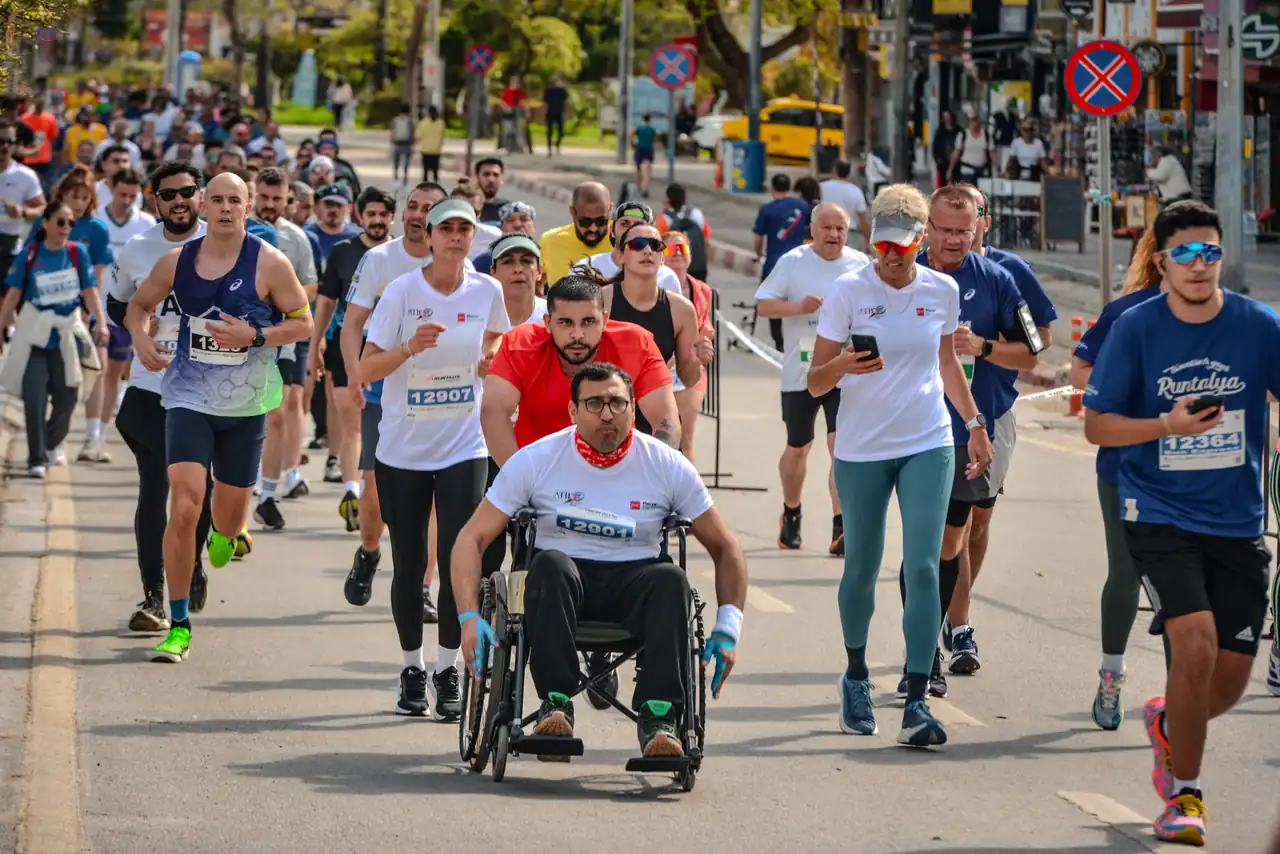
The Race for Inclusion 2025 will once again set Madrid in motion with a wave of bib numbers, road closures, and a message that goes beyond the stopwatch. The event, driven by the Spanish Paralympic Committee and Generali, is scheduled for June 1 between 9:00 a.m. and 12:30 p.m., with the start and finish on Orense Street, next to the intersection with Hernani. Organizers expect up to 9,500 runners, a figure that makes this one of the major popular events of Madrid’s spring.
The race was born in 2008 and has grown into a showcase for inclusive sport, with the presence of athletes with and without disabilities and a route designed to show the city from a different perspective. This year it also adds a 5-kilometer distance, a significant new feature that broadens the range of participants and reinforces its profile as a popular, accessible race with a street-level spirit. The expected atmosphere will be that of major urban race days: runners warming up, volunteers on the corners, diverted traffic, and an environment that is transformed for a few hours into a sports circuit.
An event that blends mass sport and social visibility
The Race for Inclusion is not just an athletic event. Its real weight lies in its symbolism: it advocates for the full participation of people with disabilities in sport and public life, without separating competition from its social dimension. That combination explains why it has become established in Madrid and why it draws interest beyond the running world. The race has its own identity, with the street turned into a shared space and a story that is repeated every year, yet never feels routine.
At the 2025 edition, the launch press conference made that approach clear. Generali stressed the boost the race gives to Paralympic sport and the value of placing the start and finish near its headquarters in the capital. The Spanish Paralympic Committee, meanwhile, once again highlighted the importance of giving visibility to athletes with disabilities inside and outside elite competitions. Revenue from bib sales also supports youth development projects, a detail that gives depth to a race that might otherwise seem like just another fixture on the calendar.
Behind the festive side there is a very specific structure. The race supports the Generali Paralympic Prospects Team, an initiative that facilitates access to high-level sport for boys and girls with disabilities across Spain. According to data released at the presentation, the editions held up to 2024 had contributed €290,000 to this program. From 2025 onward, moreover, 100% of the money raised from children’s registrations will go to the childhood projects of The Human Safety Net Foundation. These figures explain why this event is as much a sports event as a long-term project.
Route, start, and the new importance of the 5-kilometer race
The 2025 route once again places the epicenter in Orense, an urban area closely tied to the financial and office district, but one that on Sunday wakes to a different rhythm. The start and finish, set on Orense Street at the Hernani intersection, bring together runners, family members, and organizers in a point that works as both a visual and logistical hub. The new 5K expands access for less experienced runners or for those seeking a shorter distance without giving up the atmosphere of a major event.
The route through the districts of Tetuán and Chamberí places the race along a very recognizable urban corridor for anyone who knows Madrid. The course uses broad roads and avenues with strong symbolic and practical weight, such as Raimundo Fernández Villaverde, Bravo Murillo, Filipinas, Cea Bermúdez, Reina Victoria, General Perón, and sections of the Paseo de la Castellana. That combination of major arteries and central streets gives the event a powerful, almost cinematic visual scale, but it also requires a serious and well-coordinated mobility operation.
The fact that the course extends through densely connected areas means the event is understood not only as a race, but as a multi-hour urban operation. Starting at 8:30, closures were already planned on the affected roads, while the stretch of Orense from Raimundo Fernández Villaverde and Reina Mercedes was closed from 5:00 a.m. to 1:30 p.m., approximately. In journalistic terms, that means the race does not just occupy Sunday morning; it alters the city’s traffic map from before dawn.
Affected streets and mobility changes in the capital
The information released by Madrid City Council and the mobility teams leaves little room for improvisation. The list of roads with restrictions includes Orense, Raimundo Fernández Villaverde, Glorieta de Cuatro Caminos, Bravo Murillo, Plaza de Juan Zorrilla, Avenida de Filipinas, Cea Bermúdez, Plaza de Cristo Rey, Paseo de San Francisco de Sales, Avenida de Pablo Iglesias, Avenida de la Reina Victoria, Avenida del General Perón, and the Paseo de la Castellana between Nuevos Ministerios and Plaza de Castilla. This is not just a small localized cut: it is an urban corridor with a real impact on travel, surface public transport, and access to garages or homes.
The timings were also described as approximate because they may vary depending on what the police operation determines. That nuance is important: on days like this, street life changes minute by minute. A group of runners passing through can extend the closure of a roundabout, a buildup of pedestrians can force diversions to remain in place, and a street that seemed to have reopened can close again because of the crowd density. For a few hours, the city learns to breathe at a different pace.
There were also warnings about impacts on taxi stops near the route, something common when a race starts from a point with so much departure and arrival traffic. The closest areas cited were Raimundo Fernández Villaverde, 73, Paseo de la Castellana, 79 and 110, Orense, 1 and 11, and other stops on General Perón. In an event with thousands of participants, fine-grained mobility matters just as much as the major traffic closure: the small detour, the canceled stop, or the delayed access are all part of the everyday impact of an event of this size.
A race with 9,500 runners and the logistics of a big city
The forecast of 9,500 popular runners places the Race for Inclusion among Madrid’s major urban events. That number speaks not only to popularity; it also explains the need for a broad operation, from Municipal Police and Mobility Agents to extra signage and control at sensitive points. In races like this, success is measured not only by finish times or participation, but by the city’s ability to absorb the event without the experience turning into chaos.
The organizers’ message is clear on one point: the priority is road and pedestrian safety. Madrid embraces the race as a celebration, but also as a challenge of coexistence between sport and traffic. Temporary road closures, access management, and coordination of pedestrian flows are the backbone of a morning that, from the outside, may seem simple, but in reality depends on hundreds of small decisions. A barrier here, a turn there, a closure extended by a few minutes, an officer redirecting vehicles.
That kind of operation often goes unnoticed when it works well. And precisely for that reason it deserves attention. The race relies on logistics that allow thousands of people to share space with minimal friction. The image it leaves in the city is that of a great human corridor moving through avenues normally dominated by cars, traffic lights, and haste. For a few hours, the city’s center of gravity shifts and the asphalt becomes a civic stage.
The value of a race that speaks of inclusion without lowering the sporting standard
One of the keys to this event’s success is that it does not turn inclusion into a mere slogan. It integrates it into a real competition, with distances, schedules, a course, and broad participation. The result is a race that does not soften the sporting component, but uses it to broaden the message. That mix of demand and accessibility gives it credibility and prevents the event from being perceived as a purely symbolic act.
The presence of figures such as Gustavo Nieves and Abel Antón at the presentation reinforces that idea. The point is not to put famous names on display just to decorate the photo, but to anchor the event in a recognizable athletic tradition. The race is thus connected to the world of Spanish athletics, but from a broader perspective, where the track does not separate, but brings together. And that nuance matters at a time when many popular races compete for attention with increasingly flashy formats.
In a city accustomed to major marathons, half-marathons, and themed races, the Race for Inclusion holds a unique place because its story does not depend on spectacle alone. It depends on something harder to sustain: consistency between what it proclaims and what it organizes. If it speaks of inclusion, it must make room for different runner profiles. If it defends Paralympic sport, it must support it with funding and visibility. If it takes over the street, it must do so responsibly. And so far, that equation has been its main strength.
What this edition leaves on Madrid’s running map
The 2025 edition confirms that the Race for Inclusion is no longer a marginal date on the calendar, but an established reference within Madrid’s running scene. Its impact is felt in participation, institutional attention, and the urban footprint it creates each year. It is also seen in the way it invites people to look at the city: not as a static backdrop, but as a living structure that can reserve its main avenues for a shared cause.
At this time of year, Madrid strings together concerts, festivals, shoots, and sporting events, and the race fits into that mosaic with its own personality. In contrast to the noise of other events, this one keeps a clear identity: that of a popular race that brings together sport, inclusion, and urban mobility in one morning. In a calendar saturated with options, it does not need to overstate its message. It is enough for it to take to the street, bring thousands of people together, and remind us that a city is also measured by how well it can share its space.
The Race for Inclusion 2025 thus leaves behind an image that is hard to mistake: an avenue taken over by runners, volunteers, and spectators, a start on Orense that orders Sunday morning, and a route that turns Madrid into both track and grandstand. It is not just another race. It is one of those events that, when they end, leave behind more than times and rankings: they leave an open conversation about who can run, who can watch, and who has a place on the starting line.
You may also like: Generali Race for Inclusion 2025 in Madrid: key facts and details.



How to prevent thigh chafing: causes and real solutions

Women’s running windbreakers: seven jackets and how to choose

Do more workouts get rid of soreness? A guide for runners

Jaén Half Marathon 2026: Record 3,800 Runners Registered

Men’s short running tights: how to choose the right pair

World Triathlon confirms data breach involving medical data

Izan Edo targets podium at Miyazaki World Cup

María Pérez ranks ninth in World Athletics’ 2026 top ten

Dos Santos, Duplantis and Sawe: World Athlete of the Year finalists

San Silvestre Vallecana 2026: 42,000 places, prices and start times

 Races4 months ago
Valencia Half Marathon 2027: date and registration

 Races4 months ago
Valencia Marathon 2026: entry, ballot and course

 Reviews and Comparisons4 months ago
Asics Gel-Roadmiles 3 for men: review and current price

 Reviews and Comparisons4 months ago
Asics Gel Sonoma 8 Gore-Tex: complete analysis for trail and rain

 Sneakers4 months ago
Saucony Endorphin Pro 4: full review and verdict

 News5 months ago
Strava API 2026: what changes for clubs, challenges and runner apps?

 Reviews and Comparisons5 months ago
Nike Alphafly 3: opinions, sensations, and real key points

 Reviews and Comparisons4 months ago
Under Armour running shoes review 2025-2026: models and key features

 Sports Equipment4 months ago
Shoe sizes in cm: a clear guide to getting the right fit for your footwear

 Sneakers3 months ago
Skechers GO RUN Consistent 2.0 analysis: comfort and limits

 News5 months ago
Valencia Marathon 2026 route: key tips to train and run better

 Sneakers4 months ago
Adidas Adizero Boston 13 for men: review and verdict