News
Carrera Santurce Bilbao 2025: route and key features of the course
The classic Basque route runs along the left bank of the Nervión and ends beside the Guggenheim, with a fast profile.

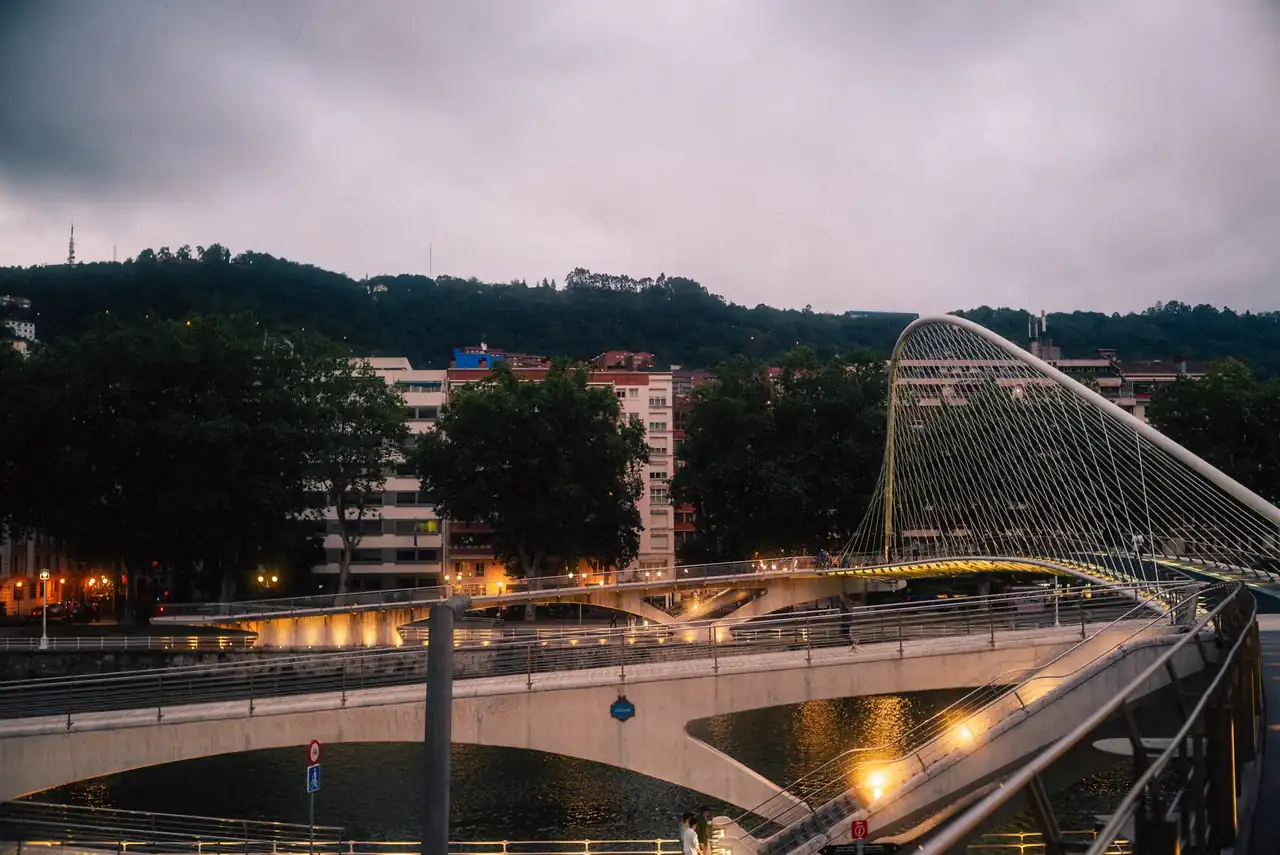
The route of the international race From Santurce to Bilbao preserves one of the most recognizable scenes in the Basque popular racing calendar intact: the start in Santurtzi, the crossing along the left bank of the Nervión, and the finish in the modern heart of Bilbao, next to the Guggenheim Museum. In its 2025 edition, the race once again presents itself as a fast, very well-attended asphalt race full of symbolism, with a distance that the different organizers place between 14 and 15.4 kilometers depending on the published measurement.
The event is set for Sunday, November 30, 2025 at 11:00 and brings together thousands of runners on a course that combines local history, club atmosphere, and a highly photogenic urban finish. The start is located near the Mikel Trueba municipal sports center, while the finish appears in the Guggenheim area or, according to the reference consulted, at Pío Baroja Square and the Uribitarte promenade; in both cases, the end takes place in the very center of Bilbao and very close to its architectural icons.
A route that links port, estuary, and city
The essence of this race lies in the journey, not only in the finish. From Santurtzi, the race moves toward Bilbao following the banks of the Nervión and linking municipalities that are part of the working-class and seafaring identity of the area: Portugalete, Sestao, and Barakaldo appear as natural stepping stones in a journey that, in the local imagination, recalls the fish sellers who went back and forth between the port and the Bilbao markets.
This narrative component turns the course into something more than a simple line on the asphalt. It runs through a collective memory, with a geography that blends the proximity of water, the activity of the towns on the left bank, and the gradual entrance into the big city. For the recreational runner, the race offers a simple reading: an orderly start, a very manageable middle section technically, and a final stretch where the scenery becomes more urban, more recognizable, and also more symbolic.
The sports organization links it to the athletic tradition of the territory and to a calendar in which this type of event still retains special force. It is not a half marathon or a distance intended for major official track times; it is a popular mid-distance race, made to sustain a lively pace without the psychological strain of a longer distance. Its appeal lies in the combination of accessibility and character.
Start in Santurtzi and first reading of the course
The race begins at the Mikel Trueba municipal sports center, a point that the event has turned into a reference for bringing participants together before the human flow gets underway. The start, scheduled for 11:00, comes with autumn temperatures that often require caution in the first part and a very quick shedding of layers once the body warms up.
The first meters usually have the value of a reset: the pulse of the group, the nerves of a mass start, the need to position oneself without losing comfort. In races like this, that initial moment can feel like a wide avenue opened before thousands of people, but in reality it is a tacit contract among runners: each one looks for their rhythm while the pack stretches out and settles. Since the course is entirely on asphalt, it makes the effort easy to read.
The start from Santurtzi does not have the roughness of other courses with serious elevation changes or dirt sections. That helps the recreational runner think less about avoiding obstacles and more about managing sensations. The start can be fast, yes, but the race punishes overexcitement with the same elegance with which it rewards consistency: on a route like this, running hard from the first kilometer usually takes its toll before entering Bilbao.
Portugalete, Sestao, and Barakaldo as the backbone
The passage through Portugalete, Sestao, and Barakaldo shapes the heart of the route. These are towns that act as a hinge between the seafaring start and the metropolitan finish. This is not a decorative itinerary, but a recognizable sequence for anyone who knows the left bank: streets, bridges, avenues, and urban edges that accompany the runner with an almost cinematic continuity.
In that intermediate zone, the race gains stability. The profile has been described by organizers and specialized media as very flat, an ideal condition for sustaining steady paces and for recreational runners to find a muscularly friendly race. The absence of major climbs is one of its main attractions, because it allows running with a sense of fluidity that is uncommon in other urban races in the area.
The scenery is not uniform, and that is part of its value. The estuary sets the visual tone, but so does the succession of neighborhoods, access roads, and stretches of converted industrial fabric. What in other contexts would be a simple straight crossing here acquires its own texture: that of a runner advancing along a strip where working memory, urban evolution, and athletic landscape coexist. That is the kind of visual backdrop that makes a race unforgettable after crossing the finish line.
Entering Bilbao and finishing in front of the Guggenheim
The final approach to Bilbao changes the scale of the race. The city asserts itself with more recognizable architecture, greater crowd density, and the kind of landmarks that turn a sporting effort into a postcard. Euskalduna Palace, the Guggenheim surroundings, and the Uribitarte or Pío Baroja area introduce a much more urban finish, more open to applause and more photogenic.
It is here that the route acquires a modern dimension. The passage from Santurtzi to Bilbao visually sums up a transition between two eras and two sensibilities: that of the port and that of the cultural city; that of the working-class memory and that of the titanium icon. Finishing in front of the Guggenheim gives the race a powerful ending, because the finish line does not only mark a time, it also orders a story.
The finish is usually smooth, without excessive technical complications, something that fits the race’s overall philosophy. For the runner, that last stretch works like a curtain slowly opening. One moves from the concentration of effort to awareness of the surroundings, from pace calculation to the emotion of recognizing the finish line. And in a popular race, that transition is almost as important as the clock.
Distance, profile, and pace: a race to run smartly
The published distance ranges from 14 to 15.4 kilometers depending on the sources consulted, although in practice it is clearly a mid-distance event. Whatever the exact figure of the official measurement in each edition, the sporting message is the same: it is a long race for a 10K, but still manageable for those who handle efforts lasting a little over an hour with ease.
That nuance is important because it explains much of the event’s success. It does not require a strategy as sophisticated as a half marathon, but it does call for more attentive pace management than a 5K. The runner who goes out too fast pays for it in the middle section, right where the course, seemingly friendly, starts to weigh on you through accumulation rather than isolated difficulty. It is the classic mistake on flat races: they seem easy until they drain you from within with a simple sum of kilometers.
The asphalt also invites you to choose lightweight but stable gear. Although the race does not require any special technical decision, many runners opt for fast training shoes or hybrid models if they want a lively effort without sacrificing comfort. The terrain is kind, but the length of the route and the late-November weather make it advisable not to confuse speed with extreme lightness. The race rewards stride economy and consistency.
Registration, bibs, and organizational framework
The race often sells out part of its entries quickly, a sign of how deeply rooted it is in Bizkaia. In the information consulted, two different maximum participation figures appear, with references to 2,500 bibs in one source and more than 3,000 runners in another, which reflects that the event has been growing and that the organization has handled different estimates and quotas depending on the moment of publication. In any case, the number of athletes is clearly high for a popular race of this kind.
It has also been reported that registration was open until just a few days before the race or, in other references, until November 27, 2025 online and until November 25 in person. Bib pickup was located at the municipal sports center and, in another institutional source, at the caretaker’s hut next to the Palacio de Oriol. This coexistence of data shows the importance of always checking the official information for the specific edition, because interest in the race means the logistical details change and are updated frequently.
The organization is run by the Santurtzi Athletics Club, with the collaboration of the municipalities of Santurtzi and Bilbao and, according to another reference, with sponsorship from local entities and media outlets. That institutional and social support explains why the race has survived so strongly over time. It is not only a sporting event: it is also a collective custom, a morning set aside in the calendar to take over the road with running shoes instead of cars.
Why this race remains a northern classic
Its value lies not only in tradition, but in the way that tradition adapts to the expectations of today’s recreational runner. Today, people look for accurately measured routes, comfortable starts, clear logistics, and a finish line with personality. The From Santurce to Bilbao race fulfills those four requirements and adds an element other races cannot manufacture: the power of the local story.
The popularity of the event is also understood through its balance between competition and togetherness. There are experienced runners who use it to push hard, but also many participants who experience it as a sports celebration, with clubs, fan groups, and circles of friends filling the atmosphere with human color. That social ecosystem turns each edition into something broader than a race: it is a representation of neighborhood, city, and fandom united by the same finish line.
Moreover, the finish in Bilbao provides no small visual incentive. Crossing the final arch in such a recognizable setting gives immediate meaning to the effort. The Guggenheim, the estuary, and the urban promenade function as an author’s signature on the experience. In that sense, the race has something of a bridge between two worlds: that of seafaring Santurtzi and that of contemporary Bilbao, between nostalgia and the present, between inherited narrative and today’s athletics.
The legacy of a crossing that is already part of the calendar
The 2025 edition confirms that the race still retains its symbolic weight intact. It needs no gimmicks to draw attention: its linear route, monumental finish, and a history told for decades with the same simple pulse of well-established things are enough. That is why every November it naturally takes its place again, as if the whole city recognized that on that Sunday it is time to run from the left bank to the museum.
In an increasingly crowded calendar, where events multiply and formats change, these kinds of races endure because they offer a clear experience. The race goes from one point to another with purpose, without unnecessary embellishment, and leaves the runner with the feeling of having crossed an authentic slice of the territory. Few things describe the value of popular running better than that: leaving a town with history and finishing in a city looking to the future, with the estuary as the thread and the asphalt as witness.
If popular athletics needs races with identity, this is one of them. The crossing between Santurtzi and Bilbao does not just measure kilometers; it also measures belonging, memory, and a very Basque way of understanding effort: without fanfare, with consistency, and with a finish line earned step by step, following the water’s edge until the city appears ahead.



How to prevent thigh chafing: causes and real solutions

Women’s running windbreakers: seven jackets and how to choose

Do more workouts get rid of soreness? A guide for runners

Jaén Half Marathon 2026: Record 3,800 Runners Registered

Men’s short running tights: how to choose the right pair

World Triathlon confirms data breach involving medical data

Izan Edo targets podium at Miyazaki World Cup

María Pérez ranks ninth in World Athletics’ 2026 top ten

Dos Santos, Duplantis and Sawe: World Athlete of the Year finalists

San Silvestre Vallecana 2026: 42,000 places, prices and start times

 Races4 months ago
Valencia Half Marathon 2027: date and registration

 Races4 months ago
Valencia Marathon 2026: entry, ballot and course

 Reviews and Comparisons4 months ago
Asics Gel-Roadmiles 3 for men: review and current price

 Reviews and Comparisons4 months ago
Asics Gel Sonoma 8 Gore-Tex: complete analysis for trail and rain

 Sneakers3 months ago
Saucony Endorphin Pro 4: full review and verdict

 News5 months ago
Strava API 2026: what changes for clubs, challenges and runner apps?

 Reviews and Comparisons5 months ago
Nike Alphafly 3: opinions, sensations, and real key points

 Reviews and Comparisons4 months ago
Under Armour running shoes review 2025-2026: models and key features

 Sports Equipment4 months ago
Shoe sizes in cm: a clear guide to getting the right fit for your footwear

 Sneakers3 months ago
Skechers GO RUN Consistent 2.0 analysis: comfort and limits

 News5 months ago
Valencia Marathon 2026 route: key tips to train and run better

 Sneakers4 months ago
Adidas Adizero Boston 13 for men: review and verdict