News
Races in Santa Cruz de Tenerife: schedule and key points for 2026
Calendar and context of the race events in Santa Cruz de Tenerife for 2026, with the most notable dates.

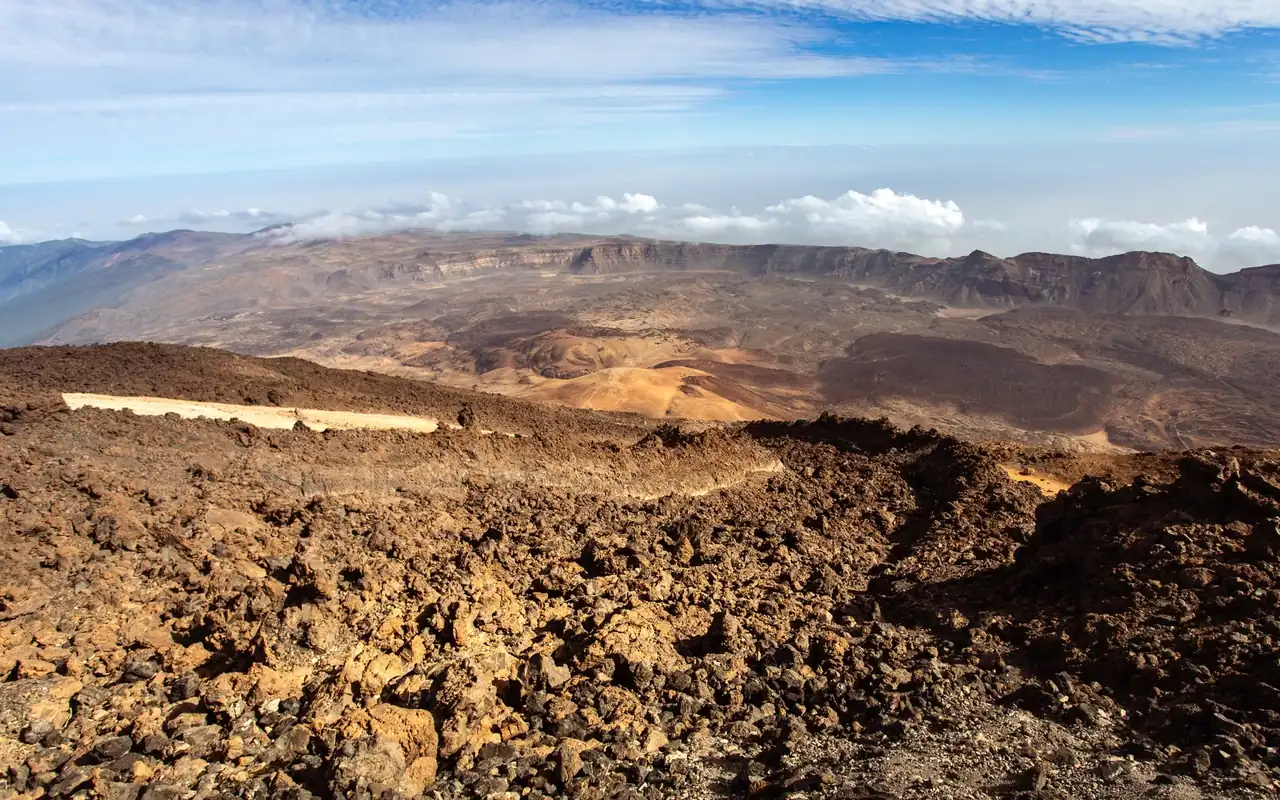
Santa Cruz de Tenerife is not only home to tourism, mild weather, and volcanic landscapes: it also supports a calendar of events that combines road running, cross country, mountain races, triathlon, and obstacle courses with an unusually high density for a single province. In 2026, the recorded offering exceeds seventy university and sports events in the Tenerife area, with a particularly visible presence in municipalities such as La Laguna, La Orotava, Adeje, El Rosario, Tacoronte, and Arona.
The overall picture is clear: running in Tenerife means alternating fast routes along the coast with leg-burning circuits in higher areas, nighttime stretches, and neighborhood popular races that still carry a great deal of social weight. The runner looking at Santa Cruz de Tenerife finds a territory small in kilometers but rich in variety, and that explains why the calendar is split between short 5-kilometer races, 8- and 10-kilometer distances, local half marathons, and more demanding mountain routes.
A calendar with much more than road running
The province offers a sporting mosaic that is not limited to the classic city race. In the first dates of summer and the start of autumn, popular cross country, trail running, vertical races, and triathlons appear, along with hybrid formats such as aquathlons and obstacle races. This range reflects an athletic culture closely tied to the terrain: here, the profile of a route, the wind, and the humidity matter as much as the stopwatch.
Far from emptying the calendar, summer acts as a concentration season. In July and August, many short and popular events are grouped together, while September and October open the door to longer or more technical races. The result is a living circuit, where local runners find almost continuous opportunities and visitors discover that Santa Cruz de Tenerife functions as a map of micro-scenarios for competing and for running for pure enjoyment.
The popular races that set the pace of the province
Among the most attractive events are the urban and popular races, which remain the backbone of the calendar. The Our Lady of Hope Popular Race, in El Rosario, appears on July 18 with 5 kilometers, while the 8K Orotava-Hospiten adds another fast road reference. They are joined by events such as the Arafera Night Race, the Christ Popular Race in La Laguna, and the 5K Correayo Tenerife, confirming the importance of short distances in the province.
These events have value beyond the bib number. They are races that often attract beginners, club runners, and participants looking to test themselves without the toughness of a major half marathon or a full marathon. The 5-kilometer distance appears frequently because it allows very different profiles to take part, from those chasing a time to those who simply want to end the summer with a measurable and accessible effort.
There is also a social component that should not be overlooked. Many of these races are linked to local festivals, neighborhoods, or patron saints, which makes them a blend of sport and community. The atmosphere is usually friendly, with routes that pass through recognizable urban areas and spectators cheering from the sidewalks as if the event were just another celebration on the municipal calendar.
The mountains and trail running are gaining ground on the island
If road racing organizes part of the calendar, the mountains give it character. Events such as Trail Las Fuentes, Los Lomos Trail, Brutaltrail 16K, and Santa Cruz Extreme show that the island has established itself as a favorable environment for trail running. Distances usually range between 8 and 25 kilometers, with some longer variants that already demand more specific preparation.
The appeal is not only in the distance. Running in Tenerife means climbing, descending, and climbing again over terrain where the landscape changes within minutes. The volcanic terrain creates routes that punish quads and ankles, but also offer open sea views, dirt tracks, narrow trails, and pine forest areas that completely change the feeling of the race. That gives Tenerife trail running a very recognizable identity: it is tough, scenic, and highly dependent on smart pacing.
Vertical and elevation races, such as the Vertical of Güímar or the Las Cabezas Time Trial Ascent, add another nuance. Here the effort is concentrated into very few kilometers, but with a gradient that turns every step into a negotiation with gravity. These are races that are not easy to understand from afar; you have to be there to grasp how a short climb can leave a bigger mark than a much longer route.
Municipalities that concentrate the sporting offering
The activity is distributed quite evenly, although some municipalities stand out for volume and continuity. La Laguna appears repeatedly in the calendar with events such as Cross de Bajamar, Trail Las Fuentes, Cross Las Gavias, OCR Mencey Night Race, or the Christ Popular Race. It is a key hub because it combines an urban center, a coastal area, and quick access to more demanding routes.
La Orotava and its surroundings also hold an important place, both for the traditional 8K and for other events that take advantage of the northern relief of the island. El Rosario, Arafo, Tacoronte, Candelaria, and Arona complete a map where almost every region contributes a race with its own character. This distribution prevents the calendar from depending on a single center and helps build a provincial identity, not just a municipal one.
In the metropolitan area, the capital, Santa Cruz de Tenerife, is also gaining presence, especially with obstacle races, urban events, and more modern formats. That mix between city and nearby mountains is one of the territory’s great strengths: in less time than another province requires, you can go from a wide avenue to a rugged climb or a ravine.
Dates, distances, and paces that are worth reading carefully
The 2026 calendar shows a very clear pattern. In July, 5-, 6-, 8-, and 10-kilometer races abound, while August adds more variety with cross country, open-water crossings, triathlon, and nighttime events. September opens the door to more serious distances, with the K21 Laurisilva Tacoronte and other routes that already enter half-distance territory or more technical trail running.
In October, the spotlight falls on mountain races and events that require a finer effort-management strategy. Santa Cruz Extreme appears with several distances, from 10 to 42 kilometers, making it one of the most ambitious proposals on the provincial calendar. Running 10 kilometers with elevation gain is not the same as tackling a mountain marathon: the logistics, nutrition, and reading of the terrain change completely.
The presence of short and middle distances is good news for recreational runners. It makes it possible to build a season with realistic goals, chain races together without breaking the rhythm, and choose events according to the time of year. In a province like this, where heat, humidity, and wind can alter sensations in a matter of minutes, strategy matters just as much as fitness.
Universities, centers, and the academic map of Santa Cruz de Tenerife
Outside the purely sporting sphere, the province also has a significant university offering. The reference information points to five centers and universities that add up to 74 university degree programs in Santa Cruz de Tenerife. There is one public university, one private university, one public affiliated center, and two private affiliated centers, creating a more extensive academic ecosystem than might appear at first glance.
That fact coexists with another reality that is very useful for the reader: Santa Cruz de Tenerife is not an isolated province, neither in studies nor in sport. Just as a student can choose between different degrees and institutions, a runner can choose between many races and surfaces. The logic is similar: variety, specialization, and decisions that depend on each person’s profile, although in the case of running the terrain plays a much more visible role than the academic record.
The comparison helps explain why Santa Cruz de Tenerife often appears in practical information searches. The user wants to know what is available, where it is, and what kind of offering exists. In racing, that means dates, distances, and formats; in education, degrees, universities, and centers. In both cases, the province stands out for the combination of diversity and concentration.
What sets Tenerife apart within the Spanish calendar
There are provinces with a high number of races and others with a clear specialization. Tenerife combines both. The agenda includes road running, cross country, mountain races, obstacles, swimming, and multisport, something that is not always seen with such continuity in a small island territory. The result is a calendar that requires careful reading of each event before registering, because two events close together in date can demand radically different efforts.
The environment also shapes the type of runner who tends to perform best. On the road, consistency and the ability to sustain pace over short stretches usually make the difference. In the mountains, the best all-round runner is not necessarily the fastest, but the one who manages climbs best, handles downhill technique, and recovers between changes in gradient. Tenerife’s terrain rewards adaptation, a quality as valuable as pure speed.
That is why the races in Santa Cruz de Tenerife have gained their own identity within the Spanish calendar. They are not just events on a list; they are routes with personality, rooted in neighborhoods, hillsides, ravines, and coasts that make each bib number recognizable. In the same province, one race can feel festive, another harsh, and another almost alpine. That contrast is part of the appeal that sustains demand year after year.
A small territory with an expanding sports offering
The figure of 74 university degree programs in the province does not tell the whole story, but it does point to a broad educational offering. The same goes for the sports calendar: the dates published for 2026 do not exhaust the island’s reality, but rather establish a provisional map that shifts with the season, local festivals, and the organization of each event. In popular sport, the agenda is rarely static.
Between June and November, much of the competitive activity is concentrated, and that creates a sequence that many runners already recognize: summer for fast and popular races, autumn for more selective races and more technical terrain. That cadence shapes the season, almost like a heartbeat. The province runs to the rhythm of its relief, its municipalities, and a sporting tradition that keeps growing without losing its local flavor.
In the end, Santa Cruz de Tenerife offers something uncommon: a province where studying, competing, and moving around the territory share the same logic of proximity and diversity. For those who look at the calendar, that translates into options. For those who run, it is a constant invitation to change terrain without leaving the same map. And that is precisely the great advantage of this Atlantic destination: it does not force you to choose between quantity and variety, because it often delivers both at the same time.
The province brings together popular races, trail running, cross country, and mountain events with a very distinctive personality, and that is why it continues to occupy a prominent place in the national calendar. Between the sea, the trade winds, and the lava, each edition adds a different nuance to a sporting scene that never stops moving.



How to prevent thigh chafing: causes and real solutions

Women’s running windbreakers: seven jackets and how to choose

Do more workouts get rid of soreness? A guide for runners

Jaén Half Marathon 2026: Record 3,800 Runners Registered

Men’s short running tights: how to choose the right pair

World Triathlon confirms data breach involving medical data

Izan Edo targets podium at Miyazaki World Cup

María Pérez ranks ninth in World Athletics’ 2026 top ten

Dos Santos, Duplantis and Sawe: World Athlete of the Year finalists

San Silvestre Vallecana 2026: 42,000 places, prices and start times

 Races4 months ago
Valencia Half Marathon 2027: date and registration

 Races4 months ago
Valencia Marathon 2026: entry, ballot and course

 Reviews and Comparisons4 months ago
Asics Gel-Roadmiles 3 for men: review and current price

 Reviews and Comparisons4 months ago
Asics Gel Sonoma 8 Gore-Tex: complete analysis for trail and rain

 Sneakers4 months ago
Saucony Endorphin Pro 4: full review and verdict

 News5 months ago
Strava API 2026: what changes for clubs, challenges and runner apps?

 Reviews and Comparisons5 months ago
Nike Alphafly 3: opinions, sensations, and real key points

 Reviews and Comparisons4 months ago
Under Armour running shoes review 2025-2026: models and key features

 Sports Equipment4 months ago
Shoe sizes in cm: a clear guide to getting the right fit for your footwear

 Sneakers3 months ago
Skechers GO RUN Consistent 2.0 analysis: comfort and limits

 News5 months ago
Valencia Marathon 2026 route: key tips to train and run better

 Sneakers4 months ago
Adidas Adizero Boston 13 for men: review and verdict