News
Running and public transport: combined routes so you don’t get fried already
The combination of running and traveling by bus or subway is gaining ground in the city for its time savings, practicality, and efficiency.

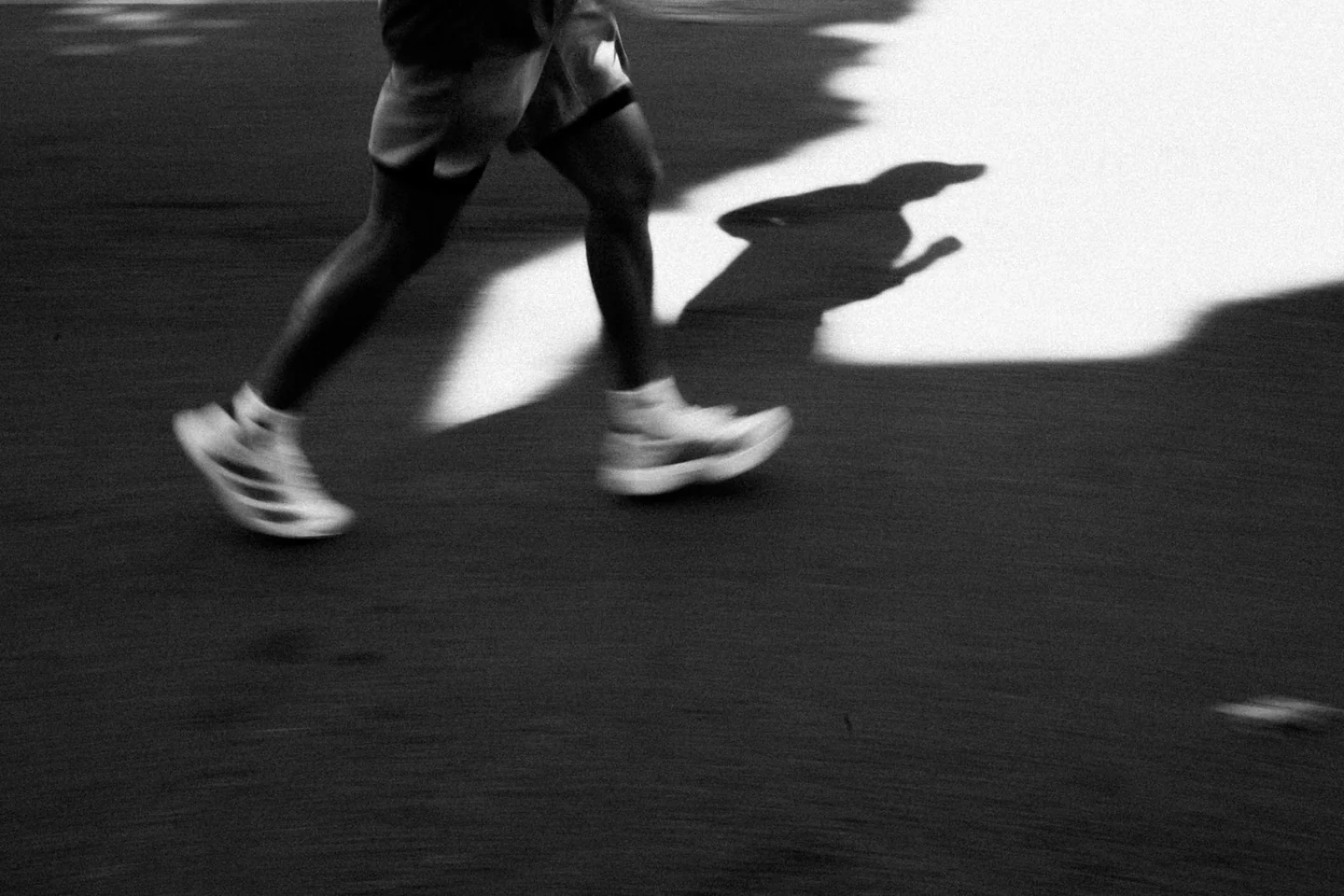
Imagen: Mathias Reding / Pexels
In many cities, running is no longer just training: it can also be an effective way to get around. The idea is appealing for its simplicity. You leave home in your trainers, cut down the trip to the stop, or replace an entire stretch of the bus or metro, and turn a routine journey into a useful block of the day. On short and medium trips, that mix of running and public transport can save minutes, avoid waiting, and, along the way, add exercise without stealing time from the rest of the day.
The appeal is not about competing in sport against a train or a bus, but about what usually gets left out of the calculation: access points, transfers, waiting, and walks to the station. That is where a gentle run, even at modest paces, can cut real time. That logic explains why this kind of travel has gone from being an urban anecdote to a small everyday strategy in dense cities, where every traffic light and every platform are part of the equation.
When the route changes shape
The line between training and transport blurs as soon as distance stops being linear. A 25-minute metro ride can become 35 if you add walks to the entrance, a long wait, a transfer, and another walk on the way out. By contrast, running at a comfortable pace of 5:00 or 5:30 per kilometer can make that same journey shorter if the destination is several kilometers away and the network does not connect directly. The runner does not always win, but the difference is no longer anecdotal.
That nuance explains why many urban trips are more favorable for someone moving fast on foot or running than for someone dependent on an itinerary with intermediate stops. Cities are measured not only in kilometers, but in friction: stairs, doors, validations, dead time, forced routes. Running, in that context, acts like a straight line drawn over a map full of curves. It does not erase urban complexity, but it does simplify it for a few minutes.
The experience changes even more during rush hour. In a saturated network, waiting can throw off any calculation. By contrast, a steady run has something of a metronome about it: the body moves forward, the breathing settles, and the route stays under control. It is not about running faster than public transport in the abstract, but about taking advantage of the autonomy the body offers in the face of the system’s variability.
The real time calculation
The main argument in favor of running to get around the city is the total door-to-door time. What matters is not so much what the display on a line says as how long it takes a person to leave the building, get to the stop, wait, get on, get off, and walk again to the destination. That sum of small fragments, almost invisible when you look at a route on a map, is what usually tips the balance.
On routes between 2 and 8 kilometers, especially if the goal is to cross central areas or a poorly connected stretch, running can be competitive. A popular pace of between 5:00 and 6:00 per kilometer already puts the runner in a very reasonable scenario for many urban trips. At faster paces, below 5:00, the advantage grows; at gentler paces, the value still lies in consistency and in the absence of waiting. The key is that you do not need a brilliant time for the numbers to work out.
There is also a little-discussed psychological factor: the perception of time shrinks when you move continuously. At a station, five minutes feel like a long stretch; running, five minutes are barely a change of pace. That subjective difference matters because urban mobility is not just a transport problem, but one of mental energy. The runner arrives with the feeling of having solved something, not of having endured it.
The city as an uneven track
Running in an urban environment is nothing like running on an empty avenue or training on a measured circuit. The city forces improvisation. A traffic light breaks the stride, a narrow sidewalk reduces the margin, a corner with traffic forces you to slow down, an entrance to a station adds stairs. That irregularity has a practical reading: the body learns to adapt to the terrain, to brake, to restart, and to keep attention on a changing environment.
The less friendly side is there too. Moving on foot or running in the city requires more attention to the surroundings than a jog in the park. There are crossings, vehicles, bikes, pedestrians, poor pavement, and areas with little visibility. That is why the mix of running and public transport works best when the route is familiar or when it is planned with some caution. Urban efficiency should not be confused with going to the limit or turning the trip home into an obstacle course.
In fact, the comfort of this practice depends a lot on the route. There are wide streets where you can run without tension, and there are passages with so many interruptions that any advantage fades away. In cities like Valencia, with broad avenues and reasonable connections in certain areas, the equation can be favorable in some neighborhoods and much less so in others. Not all routes respond the same way, and that is part of the charm: the city forces you to read the map like a small puzzle.
More than saving time: a way to combine habits
One of the underlying reasons this formula is gaining followers is that it brings two routines together in one. Someone who runs on the way back from work or after class does not need to set aside another block to train later. The trip already exists; what changes is the way of doing it. That integration has enormous value in busy weeks, on days with little room, or in stages where consistency matters more than heroics.
The idea is not new, although it has become more visible with the rise of active mobility. Walking and running as part of the daily journey fit with a more efficient urban logic that is less dependent on the car. Over medium distances, they also help reduce the feeling of wasted time. A trip to the metro, a wait, another walk… all of that can become a single, continuous block, with a certain physical and mental usefulness.
There is an interesting side effect: your relationship with the city changes. A runner who moves this way starts to notice slopes better, shortcuts, the busiest areas, traffic lights that do not line up well, and streets where a stride flows more easily. The city stops being just a backdrop and becomes a tactical map. It is not romanticism; it is spatial memory applied to a very specific routine.
The practical side that is usually forgotten
The efficiency of running with public transport depends as much on the body as on logistics. Clothing, shoes, the backpack, and even the weather completely change the experience. Running with a heavy backpack can reduce comfort, but it also avoids depending on a second trip to pick things up. That is why many journeys are solved with minimal planning: leaving what is not needed at the office, carrying only the essentials, and accepting that, sometimes, practicality matters more than aesthetics.
The type of footwear also matters. Light, stable trainers make the urban stretch easier, but it is worth avoiding the mistake of thinking that any model works for everything. If the route mixes asphalt, stairs, and changes of pace, cushioning and fit matter more than in a controlled run. Chafing, moisture, or heat can turn a short trip into a long annoyance if those details are not taken into account.
Hydration and visibility are not accessories either. In summer, carrying water or planning the schedule can make all the difference; at night, a light-colored garment or some reflective element improves safety. Public transport adds another useful component: it makes it possible to shorten the total distance without requiring excessive continuous effort. That combination is precisely what makes the practice reasonable for a recreational runner, not just for someone with endurance or experience.
What the runner gains and what the city gains
From an individual point of view, the gain is clear: less dead time and more useful movement. Running an urban stretch helps maintain fitness, activate circulation, and fit exercise into days when the schedule is tight. It can also lower the mental barrier to going out for a run, because the first step is no longer a separate session, but a necessary trip. That subtlety changes adherence to the practice a lot.
For the city, the effect is broader. If part of short trips is done on foot or running, even partially, pressure is reduced on some transport nodes and lighter mobility is encouraged. Public transport remains essential for long journeys, but the runner adds flexibility where the network does not reach with precision. It does not replace the bus or the metro; it complements them.
There is also a cultural level. Running to get around breaks the idea that sport lives in isolation, reserved for a specific hour or a closed track. The stride enters daily life, mixes with the office, with shopping, with the way home. And that crossing between exercise and city is increasingly in tune with the way large urban areas organize time: everything happens in layers, everything competes for minutes, everything calls for solutions that do not slow the day down.
The limits of an appealing idea
Not every journey should become a race, and not every runner should assume they will always come out ahead. There are trips where public transport is clearly better because of distance, comfort, or safety. There are also days when fatigue, heat, or rain make any attempt to run in a hurry unwise. The usefulness of this practice is not in its drama, but in its ability to adapt.
In addition, the body does not always respond the same way. A runner used to urban asphalt may feel more strain in the calves, soleus, and feet if they overuse these trips as a permanent substitute for training. One thing is to integrate active commuting into the week, and another is to turn every trip into a disguised effort. The line between functional habit and overload exists, even if it sometimes goes unnoticed.
Nor is it wise to idealize the urban environment. Road safety, air quality, and pedestrian density are variables that matter. On days with heavy traffic or in areas with narrow sidewalks, a route that in theory seems brilliant can become uncomfortable. The best decision is still the most sensible one for that specific day, not the most eye-catching or the one that looks best on a shared map.
A form of mobility that is already part of the urban landscape
The combination of running and public transport fits into a way of life that is increasingly common in big cities: moving intelligently, not resignedly. Sometimes it means arriving earlier; other times, arriving at the same time but with better feelings; other times, simply not depending on the next train as if the whole day were in the hands of someone else’s schedule. The real gain lies in autonomy, efficiency, and the feeling that the body can also solve everyday problems.
That is why this practice has stopped being a charming oddity and has become a fairly logical urban tool. It does not replace public transport, but it does make the route less rigid. And in a city where minutes count as much as kilometers, that flexibility is worth almost as much as speed. The runner does not always win the race against the metro, but they usually win something more interesting: margin, control, and a smarter use of time.



How to prevent thigh chafing: causes and real solutions

Women’s running windbreakers: seven jackets and how to choose

Do more workouts get rid of soreness? A guide for runners

Jaén Half Marathon 2026: Record 3,800 Runners Registered

Men’s short running tights: how to choose the right pair

World Triathlon confirms data breach involving medical data

Izan Edo targets podium at Miyazaki World Cup

María Pérez ranks ninth in World Athletics’ 2026 top ten

Dos Santos, Duplantis and Sawe: World Athlete of the Year finalists

San Silvestre Vallecana 2026: 42,000 places, prices and start times

 Races3 months ago
Valencia Half Marathon 2027: date and registration

 Races3 months ago
Valencia Marathon 2026: entry, ballot and course

 Reviews and Comparisons4 months ago
Asics Gel-Roadmiles 3 for men: review and current price

 Reviews and Comparisons4 months ago
Asics Gel Sonoma 8 Gore-Tex: complete analysis for trail and rain

 Sneakers3 months ago
Saucony Endorphin Pro 4: full review and verdict

 News5 months ago
Strava API 2026: what changes for clubs, challenges and runner apps?

 Reviews and Comparisons5 months ago
Nike Alphafly 3: opinions, sensations, and real key points

 Reviews and Comparisons4 months ago
Under Armour running shoes review 2025-2026: models and key features

 Sports Equipment4 months ago
Shoe sizes in cm: a clear guide to getting the right fit for your footwear

 Sneakers3 months ago
Skechers GO RUN Consistent 2.0 analysis: comfort and limits

 News5 months ago
Valencia Marathon 2026 route: key tips to train and run better

 Sneakers4 months ago
Adidas Adizero Boston 13 for men: review and verdict