News
San Silvestre Salmantina 2025: route, times, and key details
The event retains its major urban circuit, with four starts and a 10-kilometer route through Salamanca.

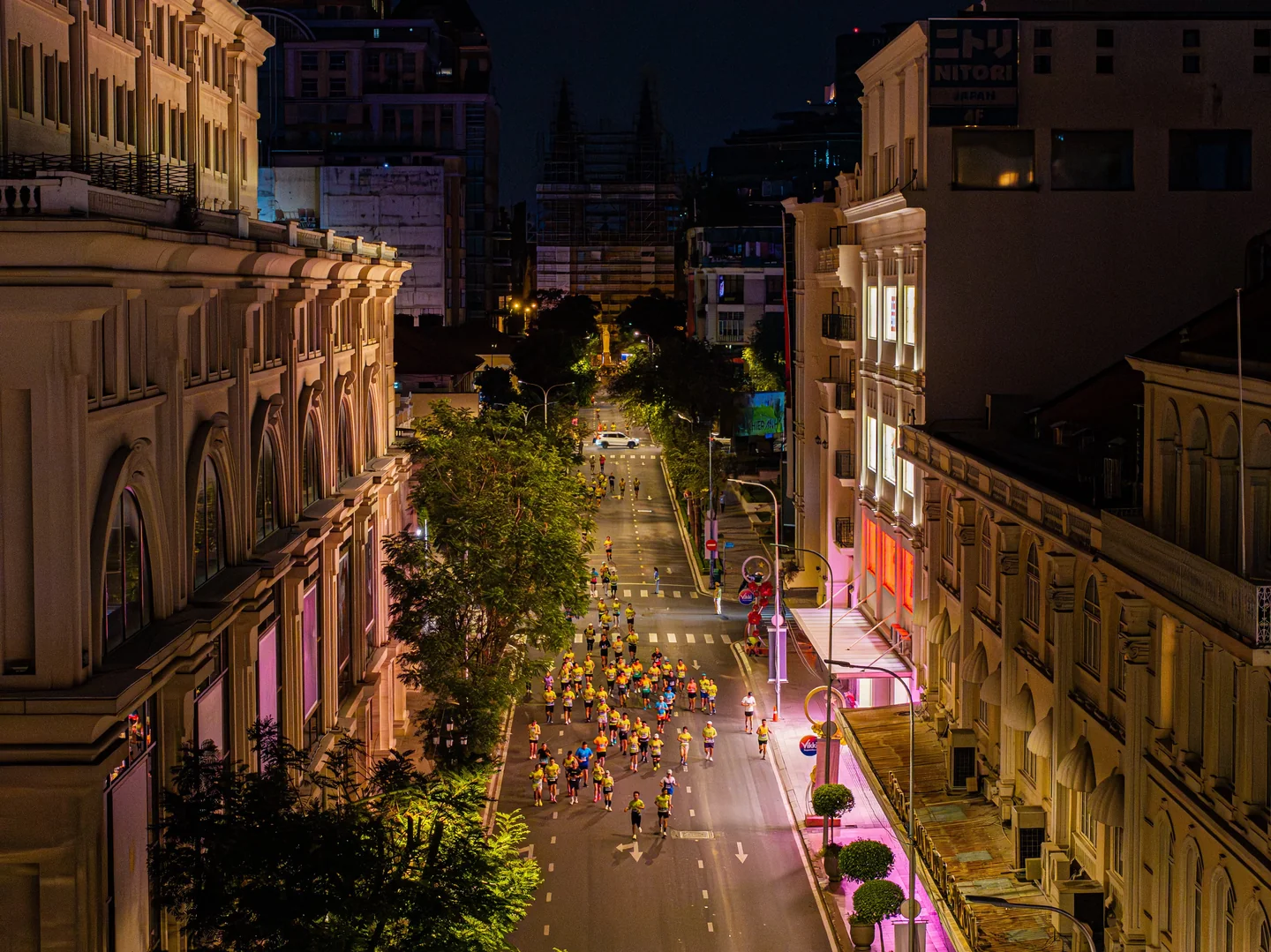
The 2025 San Silvestre Salmantina will once again draw a big loop through Salamanca, with the start and finish at Paseo de San Antonio and a full 10-kilometer course that blends the historic center, bridges, wide avenues, and highly recognizable return sections for local runners. The race, now a benchmark event on the Christmas calendar, keeps a route designed to sustain the flow of thousands of athletes without breaking the city’s festive rhythm.
The official route retains its urban and scenic signature: it passes through landmarks such as Plaza Mayor, Calle Zamora, the Roman Bridge, Rúa Antigua, and Avenida de Portugal, before closing the loop again at Paseo de San Antonio. That combination explains much of its appeal. It is not just a fast race or a costume party; above all, it is an itinerary that shows Salamanca at running pace and turns the city into a living circuit.
A course that turns Salamanca into a runner’s loop
The 2025 edition keeps a very recognizable structure for those who know this race: a large urban loop of 10,000 meters for the older categories and three shorter routes for younger runners, with staggered starts to avoid bottlenecks. The organizers have opted for a classic, efficient, and easy-to-follow setup, something essential in an event that brings together more than 7,000 participants and mobilizes thousands of people among runners, families, and spectators.
The heart of the course is in the center of Salamanca, but the race does not remain confined to the historic district. The route opens along Paseo de San Antonio and Canalejas, heads toward Plaza de España and Mirat, turns through Puerta de Zamora and Calle Zamora, enters Plaza Mayor, and continues via Poeta Iglesias, San Pablo, and Rector Esperabé before crossing the Roman Bridge. That first block has an obvious symbolic value: it brings together the city’s most monumental image with the competitive logic of a well-measured popular race.
After that, the route expands along Paseo del Progreso, Glorieta de la Charrería, Sánchez Fabrés Bridge, and Glorieta de los Milagros, linking up with La Palma, Cuesta de Oviedo, Balmes, and Plaza de la Merced. It is a stretch with the feel of a mid-distance urban course, where the runner senses the race opening and closing like a chord. There are no long empty straights or neutral landscapes; every turn has a reference point and every kilometer leaves a different snapshot.
The key streets of the 10K and why they matter
The central stretch of the course has a very clear reading for anyone looking for a fast time or simply trying to understand where the pace can change. The sequence Veracruz, Libreros, Plaza de San Isidro, Rúa Antigua, Compañía, and Plaza de las Agustinas places participants in a historic passageway, narrow in some sections and visually very intense. That kind of street-running demands attention: it is wise to save energy, read the turns well, and not trust the apparent smoothness of the terrain.
From there, the map widens again with Ramón y Cajal, Paseo de San Vicente, Paseo de Carmelitas, Avenida de Villamayor, and Avenida de Portugal. These are roads that usually handle the pack more comfortably, with space to sort out positions and maintain the effort. In such a crowded race, that alternation between narrow sections and wide avenues is part of the script; it shapes the group’s breathing and prevents the race from becoming a simple compact procession.
The closing section through Paseo de la Estación, Avenida de Comuneros, Plaza del Alto del Rollo, Paseo del Rollo, and Plaza de Cuatro Caminos brings runners back to a more urban and less ornamental setting, almost like a final low note before the finish. From there, the return to Paseo de San Antonio is not just the finish line, but the confirmation of a complete lap around the city. The geometry of the route is designed so that Salamanca is seen, felt, and remembered.
Four starts to organize a sea of runners
The 2025 race keeps four different routes, an essential formula for managing massive participation without mixing schoolchildren and adults in the same funnel. Race A, of 1,070 meters, is reserved for under-10s and starts at 11:30. Race B, of 1,500 meters, starts at 11:50 for under-12s. Race C, of 2,250 meters, also in youth and cadet format, starts at 12:10 for under-14s and under-16s. Race D, the main event, covers the 10 kilometers and gets underway at 12:30.
That staggered schedule is no minor administrative detail. In races with a large field, the order of starts determines safety, fluidity, and even the spectator experience. A clean start avoids stoppages, protects the youngest runners, and allows the main race to unfold with some continuity. In Salamanca, moreover, the tradition of this San Silvestre has established a format that fans can almost recite from memory, like recognizing the notes of a song that returns every December.
The start and finish at Paseo de San Antonio serve as the common axis of the whole day. From there, both event control and the relationship with the urban surroundings are organized. Runners enter and leave from the same place, but they do not see the same city each time around: the race changes texture depending on the time, the crowd density, and the wave of costumes, which in this event is never a secondary decoration.
What changes in 2025 and what remains untouched
The big new feature of this edition is leaving the Castilla y León regional calendar. That move opens the door to broader participation and helps explain part of the demand that sold out bib numbers in just six days. The organizers have thus sought to reinforce the open character of the race, without losing the Salamancan identity that has made it a fixed date for runners from within and beyond the region.
The prize system and the competitive profile of the main race have also been strengthened. The winners of category D are awarded a prize of 2,000 euros, and if the winner is Spanish, an additional 1,500 euros is added. That structure places the event in an interesting position: it preserves the popular atmosphere, while also maintaining a clear incentive for high-level athletes looking for an end-of-year race with sporting and financial reward.
What remains intact is the role of the street as a stage. Salamanca does not disguise its identity for this race; it uses it. Plaza Mayor, Calle Zamora, the Roman Bridge, and Rúa Antigua do not appear as mere tourist references, but as active parts of the effort. In the San Silvestre Salmantina, heritage does not watch from the outside: it runs inside the pack.
Prizes, costumes, and the race’s double face
The main race awards cash prizes to the top five finishers in both the men’s and women’s categories, with a scale that rewards both victory and consistency at the front. In addition, group costumes and other creative formats keep a distinctly Spanish San Silvestre spirit alive. In this event, the playful side does not dilute the sporting side; it amplifies it. The race embraces two simultaneous readings, and that is where much of its magnetism lies.
Prizes for costume groups and the presence of photographs, short stories, and other event-linked contests reflect a deeply rooted idea in the city: ending the year by running does not have to mean running in silence. The public wants to see effort, yes, but also ingenuity, gentle irony, and a sense of shared celebration. On the street, that balance is clear. A serious runner and a group dressed to make people smile can share the same kilometer without the race losing sporting value.
That dual nature explains why the route matters so much. It is not enough to say it is 10 kilometers through Salamanca. What matters is how the sections connect, which areas offer more space, where the historic center tightens up, and when the race enters its return stretch. The route is the invisible script that gives meaning to the spectacle, both for those competing at a high pace and for those who just want to finish feeling good and with a year-end photo.
What runners can expect in each section
The first stretch, from San Antonio to Plaza de España and Mirat, usually works as a positioning phase. That is where paces are sorted out, references are found, and the initial enthusiasm is kept from costing too much later. Anyone who starts too fast may pay for it later in the form of fatigue. Anyone who holds back too much may find themselves too far behind when the course stretches toward the historic center.
The Plaza Mayor and San Pablo area is probably the most recognizable for the general public, but not always the most comfortable to run. The presence of curves, visual crossings, and narrow passageways demands concentration. After that, the Roman Bridge and Paseo del Progreso open a more continuous sequence, with the feeling of entering a transition stretch where the legs appreciate a bit more spatial clarity. It is a race of changes, not of a single linear landscape.
In the final part, as the route approaches Comuneros, Alto del Rollo, and Cuatro Caminos, the course reveals its most physical side. There the runner feels the accumulated weight of the avenues, the sequence of turns, and the long series of urban landmarks. It is not an epic climb or a high-mountain finish, but it is a section that punishes a lack of pace and rewards good effort management. The return to Paseo de San Antonio, in that context, feels both like relief and celebration.
The importance of a recognizable route for a mass race
Year-end races live from a delicate mix: they need to be popular without descending into disorder, eye-catching without losing seriousness, and open without sacrificing safety. The San Silvestre Salmantina has established a route that answers that equation quite convincingly. The circuit is wide enough to sustain thousands of bibs, yet also emblematic enough for the race to have a clear identity on the national calendar.
The fact that bib numbers sold out so quickly confirms that interest does not depend solely on sporting results. Ritual also matters. Some runners want to compete, others want to end the year with friends, and others simply use the race as a way of seeing Salamanca from a different angle. The route unites them all under the same logic: start from the same point, cross a city full of history, and return after 10 kilometers with the feeling of having taken part in something bigger than a mere sum of times.
That is why the race map carries so much informational weight. It is not just a list of streets; it is a reading of the event. The succession of avenues, bridges, squares, and alleyways orders the behavior of the human tide that fills Salamanca every December 28. And although each runner will experience the race differently, the course will remain the same shared skeleton, the backbone that supports the atmosphere, the memory, and the tradition.
An event that measures Salamanca in kilometers and in memory
The 2025 San Silvestre Salmantina arrives with a familiar route and, precisely because of that, a valuable one. Continuity gives it identity, but does not make it overly predictable. Each edition changes with the context, the level of the participants, the city’s response, and the way the public takes over the sidewalks. In races like this, the map does not merely point out streets: it organizes the collective memory of an entire day.
The result is a race that speaks of sport, but also of urban design, tradition, and coexistence. Salamanca offers a monumental setting without ceasing to be functional for a major popular event, and that combination is not always easy to find. The 2025 route confirms that the city has taken on that responsibility naturally: runners pass through places any visitor would want to photograph, but they do so at a pace that demands legs, head, and some skill in reading the pack.
In the end, the great virtue of the route is its balance. It has history, it has width, it has technical sections, and it has a recognizable finish. And above all, it has a rare virtue on the Christmas calendar: it lets the runner feel they are running inside the city, not merely through it. In such a deeply rooted event, that nuance is almost everything.



How to prevent thigh chafing: causes and real solutions

Women’s running windbreakers: seven jackets and how to choose

Do more workouts get rid of soreness? A guide for runners

Jaén Half Marathon 2026: Record 3,800 Runners Registered

Men’s short running tights: how to choose the right pair

World Triathlon confirms data breach involving medical data

Izan Edo targets podium at Miyazaki World Cup

María Pérez ranks ninth in World Athletics’ 2026 top ten

Dos Santos, Duplantis and Sawe: World Athlete of the Year finalists

San Silvestre Vallecana 2026: 42,000 places, prices and start times

 Races4 months ago
Valencia Half Marathon 2027: date and registration

 Races4 months ago
Valencia Marathon 2026: entry, ballot and course

 Reviews and Comparisons4 months ago
Asics Gel-Roadmiles 3 for men: review and current price

 Reviews and Comparisons4 months ago
Asics Gel Sonoma 8 Gore-Tex: complete analysis for trail and rain

 Sneakers4 months ago
Saucony Endorphin Pro 4: full review and verdict

 News5 months ago
Strava API 2026: what changes for clubs, challenges and runner apps?

 Reviews and Comparisons5 months ago
Nike Alphafly 3: opinions, sensations, and real key points

 Reviews and Comparisons4 months ago
Under Armour running shoes review 2025-2026: models and key features

 Sports Equipment4 months ago
Shoe sizes in cm: a clear guide to getting the right fit for your footwear

 Sneakers3 months ago
Skechers GO RUN Consistent 2.0 analysis: comfort and limits

 News5 months ago
Valencia Marathon 2026 route: key tips to train and run better

 Sneakers4 months ago
Adidas Adizero Boston 13 for men: review and verdict