News
San Silvestre Vallecana 2024 standings: results and times
Official results, records and times from the Madrid event: podiums, marks and the popular race.

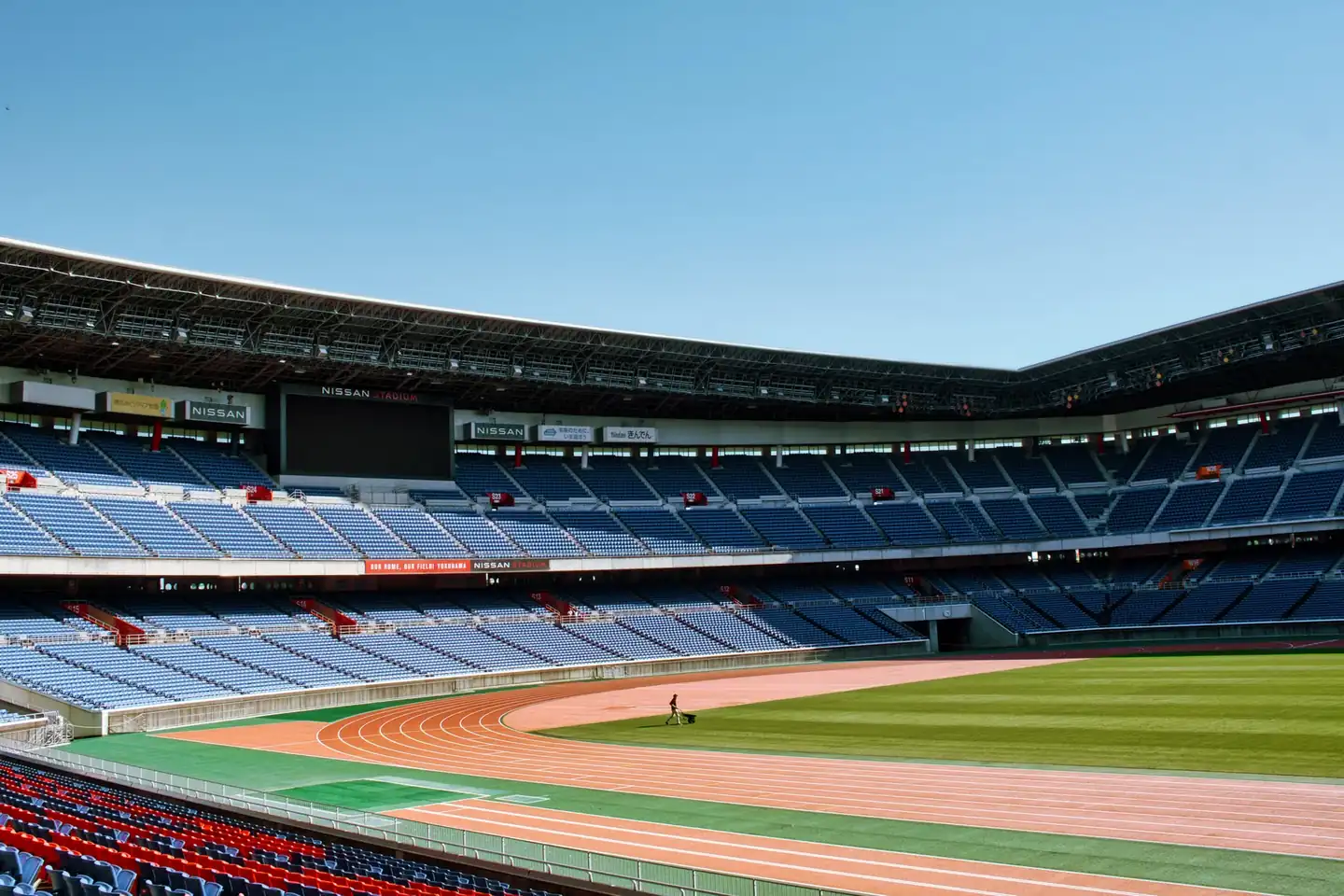
The 60th San Silvestre Vallecana left behind one of those nights that are effortlessly filed away in the memory of athletics. Madrid said goodbye to 2024 with a race huge in participation, fast at elite level, and loaded with symbolism in the popular event, where tens of thousands of runners crossed the city amid the end-of-year cold, the roar of the stands, and that singular mix of competition and urban celebration. The spotlight, as often happens in this race, was not only on the winner, but on the full set of times that shape the story of December 31.
The results of the 2024 San Silvestre Vallecana painted a clear picture: Berihu Aregawi and Marta García dominated the international race with top-level performances, while Mohamed Massat and Esther Ramos prevailed in the popular race. The day also confirmed the pull of an event that once again filled Vallecas and brought together more than 40,000 runners, with an atmosphere that turns every bib into a scene and every stride into a small personal or sporting victory.
A historic edition marked by pace and records
Berihu Aregawi won the men’s international race in 26:32, a time that also broke the event record. It was not a comfortable or shared victory, but a dry, millimeter-precise duel, with Jacob Kiplimo finishing in the same time and Adel Mechaal completing the podium in 27:38. The outcome was decided in the final meters, almost like a frozen frame, with two elite runners pushing hard inside a boiling Estadio de Vallecas.
The result had an immediate consequence for the race archive: the event record now belongs to Aregawi, a benchmark that places this edition among the fastest in recent history. Beyond the statistic, the sporting reading is clear. The San Silvestre Vallecana remains a showcase where the road 10K is presented in its purest form, with high pace, brief tactical reading, and a level of demand that leaves no room for distractions. The crowd experiences it as a celebration; the athletes, as an open-air exam.
In the women’s race, Marta García delivered a victory of enormous symbolic and sporting value in 31:19. The Spaniard beat the great favorite, Ruth Chepngetich, who was second in 31:32, while Águeda Marqués completed the podium in 31:34. The most powerful fact is not just the win, but the context: García became the first Spanish runner to win the race since 2008, breaking a long drought that gives her name special weight in the event’s history.
The international women’s and men’s races, two races within the same night
The international San Silvestre Vallecana works as a barometer of prestige. It is not just a fast race; it is an event with its own identity, where the end of the year is measured in splits, pace changes, and a final straight that often decides more than the entire previous stretch. In 2024, the men’s elite took that logic to the limit. Aregawi and Kiplimo crossed almost together, an image that says more about the toughness of the duel than any isolated stopwatch. Mechaal’s third place added a local layer to a race dominated by world-class names.
In the women’s race, the outcome had a different nuance. Marta García not only won; she did so against an athlete with enormous pedigree like Chepngetich, which gives the victory a very solid competitive dimension. The 31:19 mark also reinforced the feeling that Madrid can offer year-end performances of a very high standard without losing the popular character of the event. The Vallecana rarely chooses between excitement and quality; in this edition, it once again delivered both at the same time.
There was also room for notable performances beyond the podium. The presence of Rosa Mota, winner in 1991, provided another historic note: the Portuguese athlete broke the world best for a runner over 65 years old, with 38:23. Details like that help explain why the race goes beyond the pure result. The Vallecana is a meeting of generations, a shared street between elite speed and the perseverance of those who turn asphalt into memory.
The popular race, Vallecas’s great heartbeat
Before the elite race, Madrid was already running. The popular race opened the day with massive participation and the kind of energy that explains the event’s loyalty. Mohamed Massat Bouzahar took the men’s victory in 29:07, ahead of Nicolás Cuestas, a two-time champion and event record holder, who clocked 29:16, and Adrián de la Orden, third in 29:57. In the women’s race, Esther Ramos won in 34:38, followed by Paula García Pérez in 35:17 and Cristina Giurcanu in 35:44.
In the popular race, times matter, but they do not explain everything. The Vallecana of thousands of runners is experienced with a different logic: the waves, the music, the compact start, the gradual arrival into a neighborhood that is completely transformed for a few hours. There is not a single story, but thousands. Some compete for personal bests, others for sensations, others for tradition, and many simply to end the year with a finish line that feels like a collective postcard. The standings organize; the atmosphere explains.
The 2024 edition maintained that duality with a total figure of 42,000 participants, split between the popular and international races. That scale helps explain why the San Silvestre Vallecana is much more than a simple 10-kilometer race. It is an urban phenomenon, a December ritual, and a kind of physical summary of the year that is ending. Whoever crosses the finish line is not just completing a course; they are taking part in a gesture shared by an entire city.
What the 2024 times say about the level of the race
The 26:32 men’s time and 31:19 women’s time place this edition at a very high level. In a 10-kilometer road race, those marks require a delicate combination of power, aerobic capacity, and tactical awareness. Legs alone are not enough; they have to be managed. That is why the results from this edition also serve as a snapshot of the race’s current moment: the Vallecana continues to attract athletes capable of running fast in a far-from-easy setting, with atmosphere, pressure, and a demanding finish.
The comparison with the previous men’s record underlines the quality of the duel between Aregawi and Kiplimo. When two runners arrive together and leave the benchmark behind, the race stops being just a result and becomes an episode of major historical value. In the women’s race, Marta García’s win is equally meaningful because of the symbolic weight it carries: 16 years had passed since a Spaniard last raised her arms in the international Vallecana. That gap turns her victory into more than a statistic.
The popular race also has to be read with the same attention. Massat Bouzahar won in 29:07, a time fit for a very serious race, and Esther Ramos did so in 34:38, two marks that show how the Vallecana popular race combines very different levels of participation without losing competitiveness. The event remains accessible in spirit, but demanding in execution. It is that balance, difficult to copy, that sustains its prestige.
How a classification is built on a night like this
The standings of an event like this are not read just from top to bottom. Minimum gaps, group behavior, the final stretch, and the ability to respond when the street is already full of noise all matter too. In the men’s elite race, the practical tie between Aregawi and Kiplimo reflected a race of constant tension. In the women’s race, the García-Chepngetich-Marqués sequence produced a clearer outcome, but one that was equally demanding. These are details that make the difference between a clean victory and a win remembered for years.
In the popular race, the leading times coexist with a much broader universe of runners who arrive in waves, each with their own story. That is why references to the top positions do not exhaust the news value. Knowing who won matters, but so does understanding what kind of race produces those times and why the Vallecana standings are consulted so closely when December 31 ends. The race is famous for being massive because it is, but also because it offers data that can be compared, measured, and remembered.
The organization of the day also usually reinforces the clarity of the result. The staggered start, the finish around Vallecas, and the timing system allow the official times to have immediate value. It is no accident that so many runners look up their result as soon as the race ends. On a night so full of stimuli, the classification works as the cold, exact version of a very hot experience. It brings order where there had been music, shouts, high heart rates, and a city in motion.
The standout names that left their mark in Madrid
Berihu Aregawi cemented his status as a decisive runner. His victory was not just a line in the record books; it was a display of control in a tight finish and of speed at exactly the right moment. Jacob Kiplimo, for his part, once again showed why he is one of the great names in contemporary distance running, while Adel Mechaal confirmed his ability to fight in high-pressure settings and stay on the podium of an international classic.
In the women’s field, Marta García delivered an emphatic statement that goes beyond the time. Her 31:19 was not only an excellent mark; it was the end of a very long wait for Spanish athletics in this race. Ruth Chepngetich offered the kind of resistance expected from a great favorite, and Águeda Marqués completed an afternoon of high quality with a third place that reinforces her competitive growth. In a 10K like this, every position carries its own weight, because the race offers no breathing room or easy second readings.
The popular race also produced recognizable names and well-defined results, with Massat Bouzahar and Esther Ramos at the front. Although media attention usually goes to the elite, the popular race sustains the day’s overall narrative. It is the flow that feeds the event and what makes the Vallecana retain that air of a shared occasion, closer to a great athletics gathering than to an isolated competition. Without that base, the race would lose part of its identity.
Why the Vallecana standings draw so much attention
Some races are checked out of curiosity, and others are consulted with the same attention as a year-end report. The San Silvestre Vallecana belongs to the second group. Its standings matter because they summarize a very broad universe: elite performance, popular participation, history, atmosphere, and tradition. Each edition leaves behind a set of times that serves as a comparison point for runners, clubs, coaches, and fans who follow international distance running closely.
In 2024, interest was even greater because it was the 60th edition, an anniversary that adds symbolic depth to the result. Aregawi’s and García’s marks were not read in a vacuum, but within a framework with memory. The race is not new in any sense. It has been a year-end benchmark for decades, and that is why every classification adds a page to a book that is already very heavy. In that context, a record, a Spanish victory, or a podium decided by hundredths carries value beyond the statistic.
Madrid, in the end, has grown accustomed to saying goodbye to the year by running. The lights, the cold, the asphalt, and the music create a setting of their own. And at the center of that setting, the 2024 results left a simple, powerful truth: the San Silvestre Vallecana remains a race of enormous level, enormous pull, and enormous memory. Whoever looks at the times will see results; whoever looks at the whole will see a tradition that is still alive, fast, and fully relevant.



How to prevent thigh chafing: causes and real solutions

Women’s running windbreakers: seven jackets and how to choose

Do more workouts get rid of soreness? A guide for runners

Jaén Half Marathon 2026: Record 3,800 Runners Registered

Men’s short running tights: how to choose the right pair

World Triathlon confirms data breach involving medical data

Izan Edo targets podium at Miyazaki World Cup

María Pérez ranks ninth in World Athletics’ 2026 top ten

Dos Santos, Duplantis and Sawe: World Athlete of the Year finalists

San Silvestre Vallecana 2026: 42,000 places, prices and start times

 Races4 months ago
Valencia Half Marathon 2027: date and registration

 Races4 months ago
Valencia Marathon 2026: entry, ballot and course

 Reviews and Comparisons4 months ago
Asics Gel-Roadmiles 3 for men: review and current price

 Reviews and Comparisons4 months ago
Asics Gel Sonoma 8 Gore-Tex: complete analysis for trail and rain

 Sneakers4 months ago
Saucony Endorphin Pro 4: full review and verdict

 News5 months ago
Strava API 2026: what changes for clubs, challenges and runner apps?

 Reviews and Comparisons5 months ago
Nike Alphafly 3: opinions, sensations, and real key points

 Reviews and Comparisons4 months ago
Under Armour running shoes review 2025-2026: models and key features

 Sports Equipment4 months ago
Shoe sizes in cm: a clear guide to getting the right fit for your footwear

 Sneakers3 months ago
Skechers GO RUN Consistent 2.0 analysis: comfort and limits

 News5 months ago
Valencia Marathon 2026 route: key tips to train and run better

 Sneakers4 months ago
Adidas Adizero Boston 13 for men: review and verdict