News
2026 Spanish Athletics Championship qualifying standards
All the marks, categories, deadlines and requirements for competing in Spain’s national athletics championships in 2026.

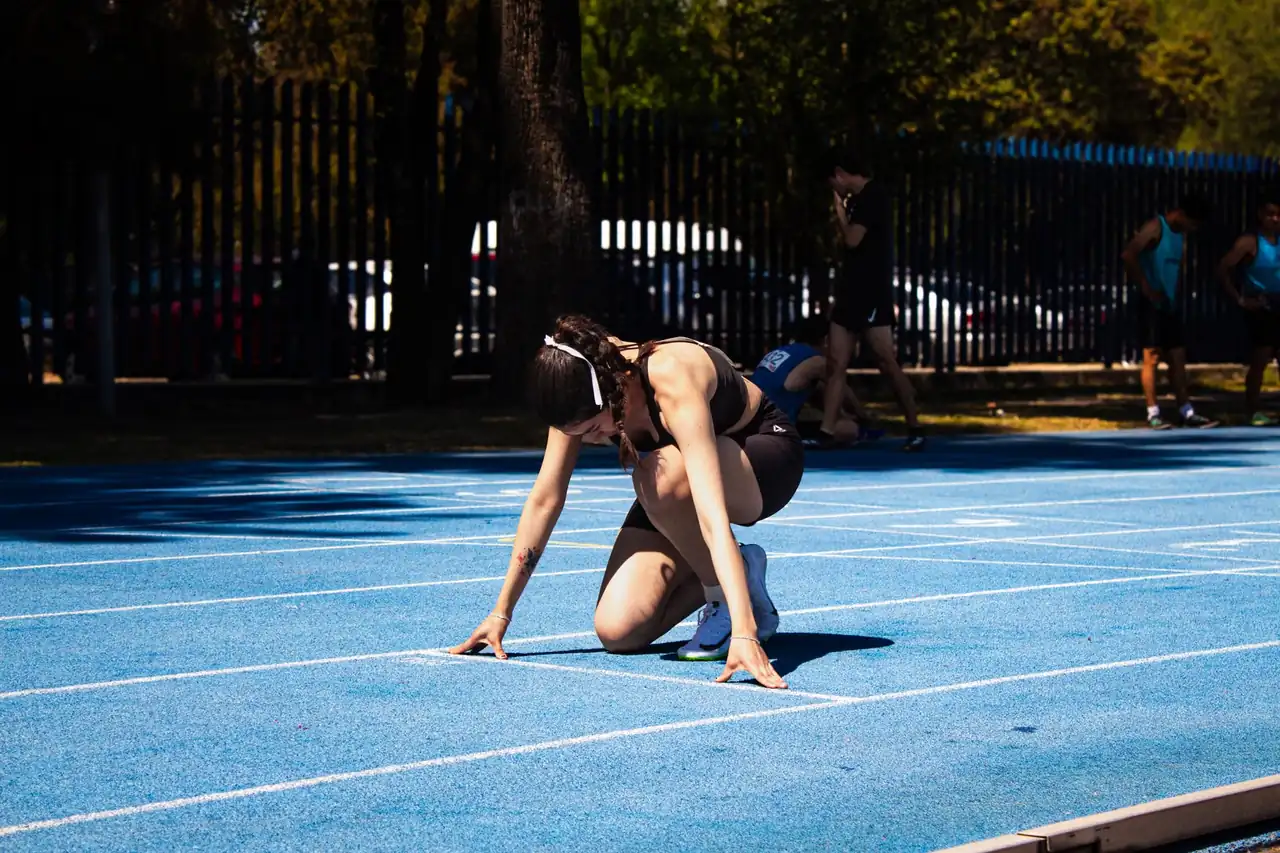
The Royal Spanish Athletics Federation has already set the qualifying marks for many of the 2026 Spanish Championships. Standards change according to age group, event and competition format, so there is no single requirement for the entire calendar. The difference between an open senior championship, an under-23 national event or an under-16 meeting may amount to several tenths, metres or hundreds of points.
Running fast or exceeding a distance in training is not enough to qualify. The mark must be achieved at a recognised competition, within the authorised period and under the relevant technical rules. A valid RFEA licence, a certified venue and compliance with competition regulations matter just as much as the time shown on the clock.
How the 2026 qualifying standards are organised
National standards are divided by age group and discipline. The senior category includes athletes born in 2003 or earlier, while under-23 applies to those born between 2004 and 2006, under-20 to athletes born in 2007 and 2008, under-18 to those born in 2009 and 2010, and under-16 to those born in 2011 and 2012.
Sporting age is determined by the category that applies to the athlete during the competition. This detail can alter the relevant benchmark when the calendar approaches the end of a season. The RFEA also recognises under-14, under-12, under-10 and under-8 categories, together with the masters system, divided into five-year bands from M35 and F35.
The published standards distinguish between times, distances and scores. Races use official timing; jumps and throws require certified measurement, while decathlon and heptathlon qualification depends on the total score across the combined events. A single performance is not treated in the same way as a result achieved at an uncertified facility.
Senior Spanish Championship standards
In the senior category, the 100 metres standard is 10.50 seconds for men and 11.75 for women. The 200 metres require 21.15 and 24.15 seconds respectively. The 400-metre standards are 46.75 and 54.00, while the 800 metres stand at 1:47.50 for men and 2:06.00 for women.
The middle-distance standards remain demanding: 3:42.00 in the men’s 1,500 metres and 4:20.00 in the women’s event. In the 5,000 metres, the marks are 13:45.00 and 15:55.00. Hurdles also differ by distance and gender: 14.25 seconds in the men’s 110-metre hurdles and 13.80 in the women’s 100-metre event, alongside 51.75 and 1:00.00 in the 400-metre hurdles.
For the 3,000-metre steeplechase, the senior standards are 8:37.50 for men and 10:25.00 for women. The national programme also includes the 10,000 metres, although the available information indicates that the exact entry benchmark may depend on the specific call and the regulations published for each championship.
The high jump standards are 2.10 metres for men and 1.77 for women. Pole vault requires 5.35 and 4.00 metres; long jump, 7.65 and 6.35; and triple jump, 15.60 and 13.00. In the throws, the standards are 16.75 and 14.25 metres in shot put, 54.00 and 47.00 in discus, 63.00 and 58.00 in hammer, and 69.00 and 47.00 in javelin.
The senior combined events complete the programme with 7,200 points in the decathlon and 5,200 in the heptathlon. In the 10-kilometre race walk, the marks are 41:15 for men and 47:00 for women. The half-marathon race walk standard was still listed as pending in the available information, so no definitive figure should be assigned to it.
Under-23 requirements
The under-23 category acts as a bridge between development and senior competition. The 100-metre standard is 10.75 seconds for men and 12.05 for women. The 200 metres require 21.75 and 24.85, while the 400 metres require 48.00 and 56.25. In the 800 metres, the limits are 1:50.25 and 2:11.00.
The gap remains visible in the longer events. The 1,500 metres stand at 3:50.00 for men and 4:35.00 for women, and the 5,000 metres at 14:25.00 and 17:20.00. In the steeplechase, the standards are 9:10.00 in the men’s 3,000 metres and 11:10.00 in the women’s event.
Under-23 field-event standards include 2.04 and 1.68 metres in the high jump, 4.95 and 3.55 in pole vault, 7.40 and 5.85 in long jump, and 14.70 and 12.00 in triple jump. In the throws, shot put requires 14.30 metres for men and 12.25 for women; discus, 44.00 and 41.50; hammer, 51.00 and 47.00; and javelin, 59.00 and 40.00.
The under-23 decathlon standard is 6,450 points and the heptathlon standard is 4,300. In race walking, the 10-kilometre marks are 46:30.00 for men and 55:15.00 for women. These figures show that the move to the senior level is not uniform, with particularly clear differences in sprinting, throwing and combined events.
Under-20 and under-18 standards
In the under-20 category, the 100-metre standards are 10.85 seconds for men and 12.30 for women. The 200 metres require 22.00 and 25.20, while the 400 metres require 48.75 and 57.10. The 800-metre marks are 1:52.50 and 2:15.00, and the 1,500-metre standards are 3:54.00 and 4:45.00.
The under-20 programme also includes the 3,000 metres, with standards of 8:17.00 for men and 10:10.00 for women. In the 3,000-metre steeplechase, the marks are 9:25.00 and 11:55.00. The 110- and 100-metre hurdles are set at 15.00 seconds for both sexes, while the 400-metre hurdles require 56.00 and 1:05.50.
Under-20 field-event standards are 1.95 metres for men and 1.68 for women in the high jump. Pole vault stands at 4.70 and 3.45; long jump at 7.10 and 5.70; and triple jump at 14.50 and 11.85. Shot put requires 14.25 and 11.50 metres, discus 44.00 and 38.00, hammer 55.00 and 46.00, and javelin 56.50 and 37.00.
In under-18, the 100-metre marks are 11.05 seconds for men and 12.25 for women. The table continues with 22.40 and 25.25 in the 200 metres, 49.75 and 57.75 in the 400, and 1:55.00 and 2:15.50 in the 800. The 1,500-metre standards are 4:02.00 and 4:47.00, while the 3,000-metre standards are 8:45.00 and 10:20.00.
This age group uses a 2,000-metre steeplechase, with standards of 6:00.00 for men and 7:20.00 for women. The high jump requires 1.93 and 1.65 metres; pole vault 4.25 and 3.40; long jump 6.80 and 5.70; and triple jump 13.90 and 11.85. The men’s octathlon is set at 5,900 points and the women’s heptathlon at 4,500.
What is required in under-16
The under-16 category follows a programme adapted to the age group. Sprint events include the 100 and 300 metres, with standards of 11.45 and 36.75 seconds for men, and 12.55 and 41.30 for women. In the 600 metres, the marks are 1:26.00 and 1:37.50; in the 1,000 metres, 2:40.00 and 3:03.00.
The 3,000-metre standards are 9:08.00 for men and 10:30.00 for women. In hurdles, the 100-metre events require 14.50 and 15.20, while the 300-metre hurdles are set at 41.50 and 46.25. The steeplechase programme covers 1,500 metres, with marks of 4:33.00 and 5:17.50.
Under-16 field events include 1.81 metres in the men’s high jump and 1.63 in the women’s event. Pole vault requires 3.75 and 3.15; long jump 6.35 and 5.50; and triple jump 12.95 and 11.45. In the throws, shot put stands at 14.00 and 11.50 metres, discus at 47.00 and 36.00, hammer at 45.50 and 44.50, and javelin at 46.00 and 37.00.
Under-16 race walking includes 3- and 5-kilometre events. The standards are 14:20 and 24:45 for men, and 15:20 and 26:30 for women. In the combined events, the men’s octathlon requires 4,350 points and the women’s exathlon 3,400. According to the available information, these marks must be achieved before May 24, 2026.
Indoor season calendar and deadlines
The winter season includes several national championships. The senior indoor championship is scheduled for Valencia from Feb. 27 to March 1, with a qualifying period running from Nov. 1, 2025, to Feb. 15, 2026. The under-23 event takes place in Sabadell on Feb. 7 and 8, with marks accepted until Jan. 25.
The under-20 indoor championship is scheduled for Sabadell on March 21 and 22, with a deadline of March 8. The under-18 event will be held in Antequera on March 14 and 15, and its qualifying period ends on March 1. Each category therefore has its own administrative timetable, meaning a valid mark for one call may not automatically apply to another.
Indoor championships use different entry quotas depending on the event. The 60 metres, 60-metre hurdles, 200, 400 and 800 metres, 1,500 and 3,000 metres have different participation limits, while field events and combined events normally involve smaller groups. A minimum can provide direct entry, but places may also be filled through a repêchage system when the call allows it.
Road, track and result certification
Road events require particular attention to course measurement. For a result to count toward qualification, the course must be certified and comply with the technical conditions. The available information states that the elevation change must not exceed 1 in 1,000, a criterion designed to prevent an excessively favourable course from distorting comparisons between athletes.
The stated qualifying window for the 10-kilometre, half-marathon and marathon events runs from Jan. 1, 2025, to March 1, 2026. A race date alone does not guarantee that a time will count: course certification, race control and inclusion in the official calendar also matter.
On the track, electronic timing is normally required to validate performances. In horizontal jumps, wind must remain within the regulatory limits. A wind-assisted mark can be excellent athletically but still fail to count as a qualifying standard. This difference between performance and an officially ratified mark often causes confusion when results are reviewed.
Licence, kit and identification
Participation requires a valid RFEA licence at the time of entry and competition. The athlete must also be free of any sanction preventing participation. Identification in the call room may be completed with a photo licence, national identity card, foreign resident card, driving licence or passport.
Competition kit is not a minor detail. Athletes must appear in the official clothing of their club or federation, and the referee may prevent participation or disqualify anyone who does not comply. National-team clothing is reserved for international competitions unless a specific call states otherwise.
Shoes and spikes must also comply with World Athletics Technical Rule 5. Maximum spike length depends on the applicable regulations for the venue and event. In a championship where hundredths separate qualification from elimination, checking equipment before entering the call room can prevent a problem unrelated to physical condition.
The difference between a minimum and a guaranteed place
Achieving the published standard does not always mean that a place is automatic. Each championship may set a maximum number of athletes and use a performance list, repêchage system or ranking order. It is therefore important to distinguish between the qualifying mark and final confirmation of entry.
The process varies according to the age group and event. Some disciplines accept a fixed number of athletes; others fill the fields until the planned quota is reached. The date of the performance, the validity of the result and the athlete’s position on the national list may matter when several competitors present identical or very similar marks.
Repêchage should not be understood as a second universal minimum. It is a selection mechanism dependent on available places and the rules of the call. An athlete just outside the standard may be admitted if spaces remain, but does not have the same certainty as someone who meets the direct mark within the authorised period.
What athletes should check before entering
The first check is the age category. The next is the exact event, because a mark in the 5,000 metres does not replace the standard for the 3,000, and an indoor result does not automatically transfer to outdoor competition. The calendar and call determine which disciplines are open and which results are accepted.
The second check concerns where the result was achieved. A competition included in the official calendar offers more certainty than a controlled training session or an event without certified officials and timing. On the road, the course must also have the required certification; on the track, the venue must meet the relevant technical conditions.
The final check is administrative: licence, entry, identification, kit and deadline. In championships with limited quotas, waiting until the final week leaves little room to correct a validation problem. Athletics measures performance in seconds and centimetres, but qualification also depends on a chain of procedures that must be complete.
A season shaped by precision
The 2026 standards outline a demanding national calendar differentiated clearly by age. From the 10.50-second senior men’s 100 metres to the 4,350 points required in the under-16 octathlon, each figure is intended to organise participation and preserve the competitive level of the championships. It is not only about running faster: the performance must be achieved in the right setting and under a common rule.
For athletes, the season resembles a track with several bends: preparation, competition, validation and entry. A strong performance opens the door, but that door remains open only when the result is official, the deadline is still active and the documentation is correct. In 2026, this combination of performance and administrative precision will again determine who reaches the starting line at Spain’s national championships.
You may also like: Minimums for the 2025 Spanish Athletics Championships: key points and figures.



How to prevent thigh chafing: causes and real solutions

Women’s running windbreakers: seven jackets and how to choose

Do more workouts get rid of soreness? A guide for runners

Jaén Half Marathon 2026: Record 3,800 Runners Registered

Men’s short running tights: how to choose the right pair

World Triathlon confirms data breach involving medical data

Izan Edo targets podium at Miyazaki World Cup

María Pérez ranks ninth in World Athletics’ 2026 top ten

Dos Santos, Duplantis and Sawe: World Athlete of the Year finalists

San Silvestre Vallecana 2026: 42,000 places, prices and start times

 Races3 months ago
Valencia Half Marathon 2027: date and registration

 Races3 months ago
Valencia Marathon 2026: entry, ballot and course

 Reviews and Comparisons4 months ago
Asics Gel-Roadmiles 3 for men: review and current price

 Reviews and Comparisons4 months ago
Asics Gel Sonoma 8 Gore-Tex: complete analysis for trail and rain

 Sneakers3 months ago
Saucony Endorphin Pro 4: full review and verdict

 News5 months ago
Strava API 2026: what changes for clubs, challenges and runner apps?

 Reviews and Comparisons5 months ago
Nike Alphafly 3: opinions, sensations, and real key points

 Reviews and Comparisons4 months ago
Under Armour running shoes review 2025-2026: models and key features

 Sports Equipment4 months ago
Shoe sizes in cm: a clear guide to getting the right fit for your footwear

 Sneakers3 months ago
Skechers GO RUN Consistent 2.0 analysis: comfort and limits

 News5 months ago
Valencia Marathon 2026 route: key tips to train and run better

 Sneakers4 months ago
Adidas Adizero Boston 13 for men: review and verdict