News
Tigers Running Club at Juan Carlos I: location, hours, and levels
The Madrid location, along with Juan Carlos I, organizes groups by level, in-person training sessions, and a growing running community.

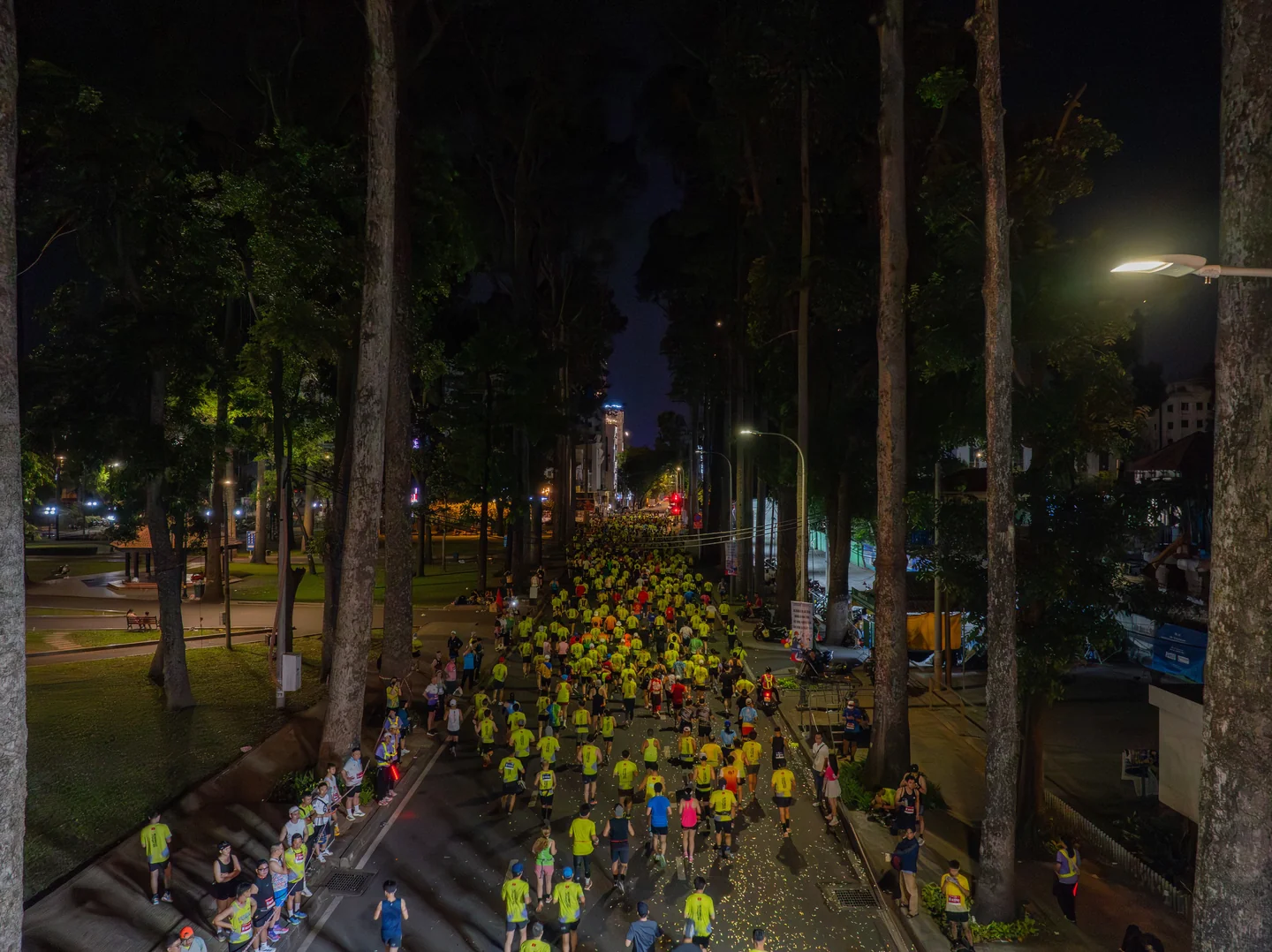
Tigers Running Club established a second home for group training in Madrid with the opening of its headquarters linked to Juan Carlos I Park, a space designed for running by levels, sharing routines, and turning the neighborhood into a meeting point for those seeking consistency rather than flashiness.
The location, at Maestra Felisa Lozano Street, 10, places the project a short distance from the park and in an area very well connected to the northeast of the capital. The proposal is not limited to going for a run: it organizes schedules, different runner profiles, and a collective dynamic that has shaped a community with its own identity.
A headquarters that expands Madrid’s running map
Tigers’ arrival in the Juan Carlos I area was neither a decorative gesture nor a simple replica of its Retiro headquarters. It meant expanding a model that had already found traction in Madrid: in-person training sessions organized by level, a steady schedule, and a club culture that combines demanding effort, support, and social life around sport.
This growth fits a very visible trend in urban running. More and more runners are not looking only for a track or a treadmill, but for a place with structure, references, and company. In that context, Juan Carlos I serves as a broad and comfortable setting for working on paces, progressions, and easy runs without the pressure of major competitive circuits or the anonymity of running alone.
The headquarters also helps explain how running clubs in Madrid have evolved. The classic format of a group going out for a jog once a week has given way to a more diverse offering, with beginner, intermediate, and training groups aimed at half marathons and marathons. The difference is not minor: it better organizes runners and reduces the feeling of being dragged along, something crucial for those entering the sport with doubts or for those who want to progress methodically.
Schedules, levels, and a club logic that organizes training
The visible information about the Juan Carlos I Park headquarters points to a clear structure: running training groups by level. That idea, simple as it may seem, is often what makes the difference between a chaotic space and a useful community. A beginner who is just starting to string minutes together does not run the same as someone preparing for 42 kilometers, and Tigers organizes that reality without forcing artificial uniformity.
In the running world, grouping by level is not an empty label. It allows effort to be adjusted, loads to be better distributed, and motivation to be sustained. The novice runner needs accessible references; the more advanced runner needs stimuli that do not leave them behind. The Juan Carlos I headquarters works precisely in that middle ground where support matters as much as the training itself.
The club’s website also mentions a wide range of services and lines of work, from running initiation to the basic and intermediate level block, as well as more ambitious preparations for half marathons and marathons. Alongside that, there are strength, functional training, and even specific activities such as Women in Motion or athletics for children, a breadth that helps show that the project is not defined by a single hour of jogging, but by a network of sports habits.
The Juan Carlos I headquarters, in this sense, serves a very specific function: bringing the club closer to another area of Madrid and offering a recognizable physical point around the park. For many runners, that proximity matters almost as much as the technical content. Having a fixed place, easy to find and associated with a stable routine, turns training into a more tangible and less volatile commitment.
The value of a broad setting for running without rushing
Juan Carlos I is a particularly useful place for group training because it combines space, accessibility, and a variety of surfaces. It does not have the historical magnetism of Retiro, but it does have a scale that favors long runs, looser intervals, and a sense of freedom that many runners appreciate when they need room to build an aerobic base.
In that landscape, Tigers finds a setting that fits group work well. Large parks, with open paths and clear reference points, reduce the feeling of confinement and make it easier for a coach or a group to set paces without turning the effort into a chaotic race. The experience feels less rigid and closer to the idea of progressing over time, not in a hurry.
That detail is not minor for runners’ health. Training in an open and regular environment makes it easier to control stride, monitor heart rate, and maintain a cadence that does not depend on traffic lights, narrow sidewalks, or crowds. In a sport where impact and repetition matter so much, the space also trains the body.
The exact location also makes something very valuable in practice easier: getting there, training, and returning to routine without excessive logistical cost. The headquarters is in a spot that connects well with the city and the park, and that helps the habit survive gray days, traffic, and laziness. In running, what gets repeated is almost always what ends up staying.
A community measured in kilometers, but also in bonds
The club’s message insists on an idea that appears again and again among those who have tried it: more than a runners’ club. The phrase sounds ambitious, but in this case it is supported by a fairly concrete reality. Tigers is presented not only as a place to accumulate kilometers, but as a social structure where runners find support, continuity, and a certain sense of belonging.
That explains why its recent history includes not only training sessions, but also trips, events, and shared activities. In endurance sports, community acts as a kind of invisible scaffolding. It does not do the work for you, but it holds you up when motivation drops, when the first aches appear, or when the goal seems too far away on an ordinary Tuesday.
The Juan Carlos I headquarters inherits that logic and brings it into a new space. The presence of a visible group, with known schedules and a defined place, encourages a dynamic that many runners seek without knowing how to put it into words: leaving behind the solitude of individual training without falling into a uniform or overly competitive routine. The balance, in these cases, lies in the mix of order and closeness.
Tone also matters. The club’s communication blends energy, its own identity, and a fairly recognizable image, with a vocabulary that appeals to shared effort and internal loyalty. That language works because it does not promise miracles or shortcuts; it sells, if one can use that verb, a culture of persistence. And running, which punishes improvisation, often rewards exactly that.
Which type of runner fits this headquarters best
The headquarters linked to Juan Carlos I seems designed for a very broad profile, but especially useful for those who need structure without rigidity. The runner who is just starting finds an environment less intimidating than a road race; the one who already runs regularly has more fine-tuned groups; the one preparing a half marathon or marathon enters a dynamic where volume and consistency can go a long way.
At the same time, the club offers activities that go beyond pure running training. The presence of functional work, strength training, and programs aimed at different stages or groups suggests a more complete view of the runner. That fits a growing consensus in sport: running better does not depend only on running more, but on maintaining a stronger physical base and a less fragile body.
There is another important aspect: the social dimension. Not everyone comes to running for performance. Some do it for health, others for mental disconnect, others because they need a routine to break inertia. In a headquarters like this, the coexistence of different paces and goals broadens the chances of staying. And staying, in a club, is usually the best sign that something works.
The fact that the club opened this second headquarters in 2023 also provides context for its expansion. It was not an isolated experiment, but a bet on extending a way of understanding running to another area of the city. The location at Juan Carlos I responds to a clear urban logic: bringing the club experience closer to runners who do not necessarily live or train in the Retiro or city center axis.
How the Tigers brand has become established in Madrid
Founded in 2015, Tigers Running Club has been building a recognizable identity in Madrid’s running ecosystem. The formula combines regular training, presence at different venues, and a club narrative that has managed to grow without losing a certain sense of closeness. It is not an improvised structure or a group that appears only when there is a popular race; its strength lies in continuity.
The Juan Carlos I headquarters joins the ones in Retiro and Madrid Río, which suggests a very clear territorial expansion strategy. In editorial terms, that is relevant because it shows how running clubs have moved beyond being small neighborhood hubs to become urban networks with several operating bases. The runner no longer joins just a group; they become part of an ecosystem.
The club’s content offering also fuels that expansion. There are references to training, companies, trips, and events, signs that the project has evolved into something broader than a mere track or park session. That does not make the club anything other than running, but it does place it on the map of sports communities that build identity around practice, not around product.
In the case of Juan Carlos I, that identity is reinforced by the physical visibility of the space. A venue or a concrete base helps the brand stop being an abstract idea and become a place you can walk to, with a backpack, with running shoes, and with the feeling that an hour of shared effort begins there. Territory, when chosen well, also communicates.
What this headquarters reveals about urban running today
Tigers’ expansion into Juan Carlos I offers a broader reading of the state of running in Spain. The urban runner no longer seeks to improve times alone. They want an environment that organizes the week, a group that pulls them out of monotony, and a space where sport does not feel like an isolated obligation, but like a reasonable part of daily life. Community matters almost as much as the stopwatch.
A shift is also visible in the relationship with parks. Before, they were mainly places to run. Now they function as nodes of sports culture, places where levels, ages, and goals intersect. Juan Carlos I, on that map, acts as a useful piece because of its size and the possibility of sustaining regular training without the tension sometimes imposed by more closed asphalt routes.
The Tigers case also shows that a club’s success depends not only on offering sessions, but on creating a recognizable experience. Clear schedules, logically located headquarters, level-based groups, and a shared narrative build trust. In a sport as individual as running, that trust is the fuel that keeps the habit burning when the light of initial enthusiasm fades.
For that reason, the Juan Carlos I headquarters should not be read as just another address in Madrid. It is proof that organized running continues to find fertile ground when it knows how to blend with the city, use parks intelligently, and offer enough structure for each runner to find their place without losing the feeling of moving with others.
Tigers’ consolidation in the Juan Carlos I area neatly summarizes the evolution of social running in Madrid: less improvisation, more community; less noise, more consistency; less grandiloquent rhetoric, more shared kilometers. And in that silent but effective formula, it becomes clear why so many runners end up making a park their second home.
Este artículo contiene enlaces de afiliado: si compras a través de ellos, se genera una pequeña comisión sin coste adicional para ti. Más información.



How to prevent thigh chafing: causes and real solutions

Women’s running windbreakers: seven jackets and how to choose

Do more workouts get rid of soreness? A guide for runners

Jaén Half Marathon 2026: Record 3,800 Runners Registered

Men’s short running tights: how to choose the right pair

World Triathlon confirms data breach involving medical data

Izan Edo targets podium at Miyazaki World Cup

María Pérez ranks ninth in World Athletics’ 2026 top ten

Dos Santos, Duplantis and Sawe: World Athlete of the Year finalists

San Silvestre Vallecana 2026: 42,000 places, prices and start times

 Races4 months ago
Valencia Half Marathon 2027: date and registration

 Races4 months ago
Valencia Marathon 2026: entry, ballot and course

 Reviews and Comparisons4 months ago
Asics Gel-Roadmiles 3 for men: review and current price

 Reviews and Comparisons4 months ago
Asics Gel Sonoma 8 Gore-Tex: complete analysis for trail and rain

 Sneakers4 months ago
Saucony Endorphin Pro 4: full review and verdict

 News5 months ago
Strava API 2026: what changes for clubs, challenges and runner apps?

 Reviews and Comparisons5 months ago
Nike Alphafly 3: opinions, sensations, and real key points

 Reviews and Comparisons4 months ago
Under Armour running shoes review 2025-2026: models and key features

 Sports Equipment4 months ago
Shoe sizes in cm: a clear guide to getting the right fit for your footwear

 Sneakers3 months ago
Skechers GO RUN Consistent 2.0 analysis: comfort and limits

 News5 months ago
Valencia Marathon 2026 route: key tips to train and run better

 Sneakers4 months ago
Adidas Adizero Boston 13 for men: review and verdict