News
Ash track: history, use, and sporting value
A journey on the cinder track: origin, sensations, measures, and the mark it left on Spanish athletics.

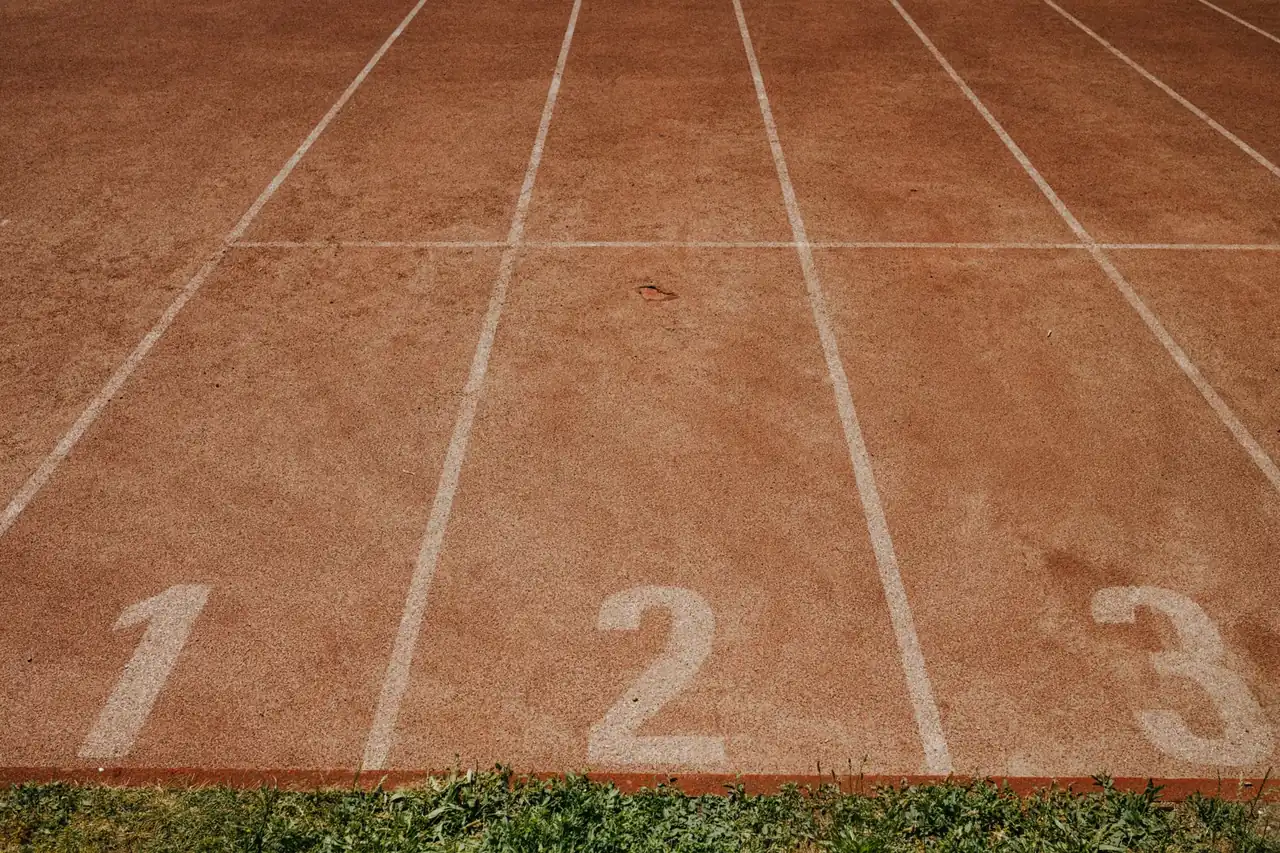
The ash track is not just an old surface: it is a different way of understanding athletics, more closely tied to the feel of the ground, the sound of the spikes, and the memory of a sport that grew before tartan dominated stadiums.
At the Complutense University of Madrid, that 1931 surface is still alive as a small open-air archive. There, every race reminds us that Spanish athletics was forged for decades on compacted earth, ash, and sweat, with records, training sessions, and achievements that still echo very clearly in the history of sport today.
A surface that marked an era
Ash was for years the most common material on many Spanish and European tracks. It was economical, easy to maintain, and offered a texture that, when well cared for, made it possible to run, jump, and throw with reasonable stability. Before the arrival of synthetic surfaces, it was the standard in universities, clubs, and modest stadiums.
Its presence was not due to added romanticism, but to material reality. Sports facilities for much of the 20th century were built with limited resources and with a very specific idea: athletics was possible without the need for sophisticated technology. Ash was resilient, absorbed part of the impact, and above all provided a common framework for several generations of athletes who learned there how to compete.
In Spain, those tracks were more than just a stage. They served as a school of habits, discipline, and craft. The body adapted to the terrain, and the terrain, in turn, demanded respect. There was no uniform softness like that of modern ovals, but there was a more direct relationship between stride and ground, between effort and the footprint left by each turn.
How one runs on ash and why it is remembered so much
Running on ash changes the experience in a very concrete way. The footfall is less elastic than on a modern track, traction varies depending on humidity and maintenance, and each curve demands extra attention. The athlete is not only competing against the clock; they must also read the state of the ground like someone looking at a map with invisible contours.
That looser texture makes the sensations richer and, at the same time, more demanding. The stride loses some bounce but gains honesty. Everything is felt more intensely. A clean plant, a correct turn, or a well-executed start are perceived immediately. That is why many veterans describe these tracks as places where one learns to run for real, not just to move fast.
The image is easy to recognize: fine dust rising on the straight, spikes biting into the surface, clothing covered in a gray veil at the end of the session. It is an almost tactile scene, one that needs no embellishment. In an era of ultralight materials and polished stadiums, the ash track retains an earthy, elemental, almost handcrafted character.
The Complutense, a venue that condenses athletic memory
The old track at the Complutense University of Madrid holds a singular place in the history of Spanish athletics. Inaugurated in 1931, it has seen entire generations of runners, jumpers, and throwers pass through. Its value lies not only in its age, but in its continuity: it remains a recognizable space where tradition has not been entirely broken.
That kind of facility functions like a sounding board. It does not just serve for competition or training; it also preserves the gesture of those who came before. In that sense, an ash track has something like a library without shelves: the marks of the past are still read there in the way people step, in the conversation before the start, in the way warm-ups are done beside the rails.
The Miguel de la Quadra-Salcedo Athletics Memorial has turned that memory into a living event. Race walkers, sprinters, throwers, veterans, and young athletes come together on the same day on a surface that is no longer the norm, but is still a symbol. The track is not presented as a relic, but as a venue with personality, capable of continuing to bring together very different athletes under the same code.
Race walking, throwing, and events that take on a different meaning
Race walking fits especially well on an ash track because the rhythm is perceived in a more human and intimate way. The sound of the steps, the cadence, and the concentration of the movement are more exposed, less hidden by the uniformity of a synthetic surface. Every change of pace can be seen and heard clearly.
Throwing events also take on another dimension. The circle, the flight of the implement, and the reception of the event seem more integrated into an environment where athletics retains a classical air. On an ash track, throwing sports are not perceived as an isolated discipline, but as part of a broader and almost ceremonial whole.
Short distances, such as the 100 or 300 meters, leave a very powerful visual imprint. The start, the drive, and the finish are easier to understand when the ground has not been smoothed by technology. There is a kind of elemental truth in watching an athlete accelerate on a base that returns all the work to the feet and legs without intermediaries.
A sports heritage that is also architectural
The preservation of these tracks is not only a matter of sentimental attachment. It is also part of defending athletic and architectural heritage. Many of these facilities were designed in an era when university sport, physical education, and urban identity coexisted very closely.
When an ash track disappears, it is not just a material that is lost. A way of competing, a spatial layout, and a way of relating to the public are erased. The distance between the stands and the street, between athlete and spectator, is often smaller, and that changes the atmosphere completely. Everything feels closer, more exposed, more communal.
In cities like Madrid, these venues help us understand how modern athletic culture was built. They were not grand stadiums or isolated temples, but places of everyday work. Schoolchildren, university athletes, specialists, and amateurs trained there, sharing dust, schedules, and a certain understated epic quality, without the need for big spotlights.
The technical value of a less forgiving surface
Ash forces technique to be sharpened. It is less forgiving of doubtful foot placement or disorganized starts. Efficiency becomes visible because the surface does not disguise mistakes. That is why many veteran coaches see it as a useful training ground, especially for learning coordination, body positioning, and balance while running.
Maintenance, moreover, greatly affects performance. A well-watered and compacted track can offer a fairly consistent response, while a dry, broken, or uneven track changes everything. That variability, far from being an incidental flaw, was part of athletic learning for decades. The athlete had to adapt to the environment, not the other way around.
In long-distance or middle-distance events, ash tends to feel heavier as the meters pass, which forces better management of effort. In sprinting, the start and step frequency become more important. In jumps and throws, the sense of precision also changes, because the overall environment does not convey the same rigidity as a modern facility.
From nostalgia to sporting meaning
Not all sports memory is nostalgia. In the case of the ash track, preserving the venue has both practical and cultural value. Keeping such a facility alive makes it possible to remember how athletics evolved, but it also offers a unique space for activities that seek a more direct connection with the history of sport.
The Quadra-Salcedo Memorial has understood this dual reading well. On one hand, it celebrates specific figures and revives essential names in Spanish athletics. On the other, it turns the track into a meeting place between generations, where the past is not displayed like a museum piece, but as a shared language. There, children mingle with veterans, recreational athletes with licensed competitors, and curious visitors with specialists.
That kind of coexistence is especially valuable at a time when many facilities tend to look alike. The ash track preserves its own identity. It does not compete with tartan in modernity, nor does it try to. Its strength lies elsewhere: in its singularity, in its texture, in the way it tells the story through each footfall.
How to recognize a genuine ash track
A real ash track has very specific traits. Its color usually ranges from dark gray to muted brown, with a look that is more earthy than uniform. The surface does not shine or offer the continuous finish of a synthetic material; instead, its granularity, small irregularities, and traces of moisture or wind are visible.
The edge of the lanes, the painted markings, and the relationship with the surroundings also change. In many old facilities, the track seems to blend into the university or urban landscape in a very natural way. There is no such abrupt visual cut as in modern stadiums, and that reinforces the feeling of being in a place with history.
For the observer, the most eloquent detail is usually the movement of dust. A simple quick step raises a faint cloud that hangs in the air for a few seconds. That small sign neatly sums up the character of the surface: it responds to effort, returns it, makes it visible. In a sense, the ash track does not just accompany the action; it also narrates it.
What it still says to athletics today
Modernity has not entirely erased the prestige of these tracks. On the contrary, in some contexts it has reinforced it. The more homogeneous contemporary surfaces become, the more the value of spaces that retain a marked personality is appreciated. Ash is not a residue of the past; it is a living part of athletic evolution.
Its persistence helps remind us that athletics was not born among light panels and cutting-edge sensors. It was born from the body in motion, repeated effort, and surfaces that demanded adaptation. That is why, when an ash track remains open, it does not act as decoration. It serves as a physical reminder of where this sport comes from and why watching it in its most bare form still moves us.
At the Complutense, that reminder is still standing. Each edition of the Memorial, each stride around the gray oval, and each throw in that setting return to athletics part of its original breathing rhythm. There are places that age, and others that become more readable as time passes. The ash track belongs to this second family.



How to prevent thigh chafing: causes and real solutions

Women’s running windbreakers: seven jackets and how to choose

Do more workouts get rid of soreness? A guide for runners

Jaén Half Marathon 2026: Record 3,800 Runners Registered

Men’s short running tights: how to choose the right pair

World Triathlon confirms data breach involving medical data

Izan Edo targets podium at Miyazaki World Cup

María Pérez ranks ninth in World Athletics’ 2026 top ten

Dos Santos, Duplantis and Sawe: World Athlete of the Year finalists

San Silvestre Vallecana 2026: 42,000 places, prices and start times

 Races3 months ago
Valencia Half Marathon 2027: date and registration

 Races3 months ago
Valencia Marathon 2026: entry, ballot and course

 Reviews and Comparisons4 months ago
Asics Gel-Roadmiles 3 for men: review and current price

 Reviews and Comparisons4 months ago
Asics Gel Sonoma 8 Gore-Tex: complete analysis for trail and rain

 Sneakers3 months ago
Saucony Endorphin Pro 4: full review and verdict

 News5 months ago
Strava API 2026: what changes for clubs, challenges and runner apps?

 Reviews and Comparisons5 months ago
Nike Alphafly 3: opinions, sensations, and real key points

 Reviews and Comparisons4 months ago
Under Armour running shoes review 2025-2026: models and key features

 Sports Equipment4 months ago
Shoe sizes in cm: a clear guide to getting the right fit for your footwear

 Sneakers3 months ago
Skechers GO RUN Consistent 2.0 analysis: comfort and limits

 News5 months ago
Valencia Marathon 2026 route: key tips to train and run better

 Sneakers4 months ago
Adidas Adizero Boston 13 for men: review and verdict