News
Turkey Race Ciudad Real: history, route, and key details
Ciudad Real’s Christmas race brings together thousands of runners, combines sport, schools, and a festive atmosphere, and gains prominence every year.

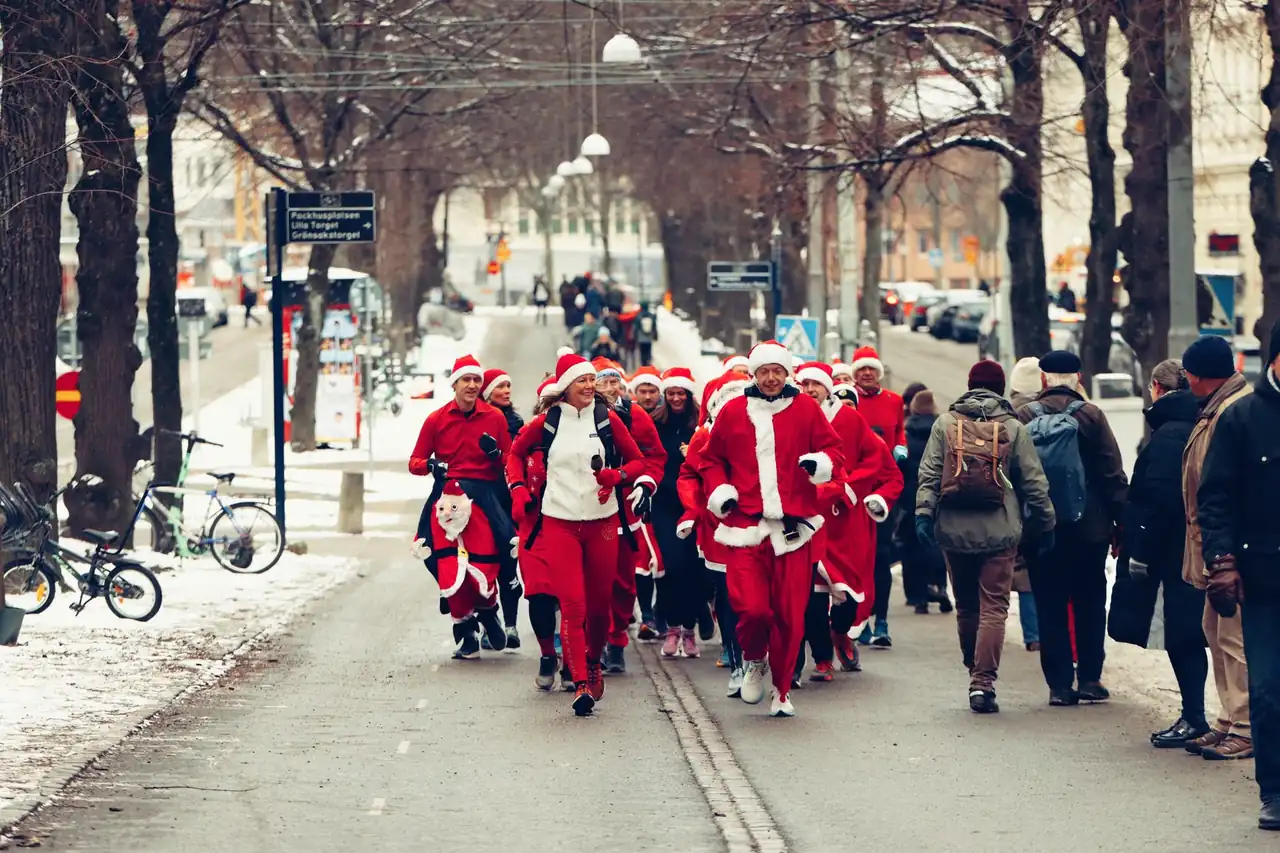
The Ciudad Real Turkey Race has become a fixed scene in the local Christmas calendar: elite athletes, schoolchildren, families, and the public mingle in Gasset Park to say goodbye to the year with an event that is no longer just a tradition, but a barometer of the city’s sporting pulse. In its most recent edition, the event once again came close to major-event numbers, with around 3,700 people in the race area and about 1,500 registered runners in the main race, in addition to more than 2,200 schoolchildren adding to the overall atmosphere.
That growth is no accident. The race has managed to preserve its popular character while also strengthening its prestige in regional and national athletics. The result is a competition that combines the ritual of the last day of the year with increasingly ambitious organization, more attractive prizes, schedule changes to better organize the morning, and participation that now attracts internationally renowned names. Few events on December 31 convey so clearly this mix of sport, celebration, and city.
A race with its own identity in the heart of Gasset Park
The park is much more than a setting: it works as a living backdrop where the pavement, the bare winter trees, and the voice of the public-address system create a very recognizable postcard. The race takes place around Gasset Park, a central space closely tied to the everyday life of Ciudad Real, which helps the public get there easily and allows the race to maintain that sense of shared celebration, almost a civic ritual, that fits so well with the end of the year.
The event’s evolution also explains much of its magnetism. Over the years it has grown in size, quality, and ambition. There were editions with around 200 licensed athletes in tougher times, others in which the traditional format was recovered, and later records that surpassed 3,500 participants. In the latest phase, organizational momentum has consolidated a race that now moves naturally between neighborhood closeness and competitive showcase.
For Ciudad Real, that duality has its own value. The race works as a winter calling card, a way of showing that the city also competes in its ability to bring people together. It is not just a run on December 31: it is an event that brings together different generations, clubs, schools, and runners who want to end the year with a bib on their chest and the sharp sound of shoes on the road.
From a popular origin to a showcase for regional athletics
The race’s recent history helps explain why it generates so much interest beyond the city. On its 50th anniversary, the organizers elevated it to national category and doubled the prize money, a gesture that confirmed an already visible evolution in the quality of the field. That edition was a turning point: not only because of the symbolic significance of half a century, but because it showed that the Turkey Race could aspire to be more than a beloved race; it could compete in appeal with other major year-end events.
Over the course of its editions, the race has brought together leading athletes and left images that are now part of Ciudad Real’s sporting memory. In 2024, for example, Chiki Pérez and Queralt Criado won. A year later, in the 52nd edition, the winners were Aferdi Abderrahmane and Criado herself, who retained the title with a time of 23:03. The men’s winner completed the nearly 7 kilometers in 20:14, a pace that speaks to the level now demanded of the favorites.
The presence of well-known names does not erase the popular stamp; it amplifies it. The race keeps one foot in the elite and the other in the street, in the group of friends, in the modest club, in the school that adds entrants to compete for team prizes. This mixed structure is one of its greatest strengths: it allows the sporting spectacle to coexist with local pride without either one overwhelming the other.
The numbers that explain its growth
The figures matter because they show the real scale of the phenomenon. In 2023, the event brought together more than 3,500 participants and surpassed a thousand in the senior category, with around 2,500 schoolchildren involved in the different activities. In 2024, participation records were spoken of again, and in 2025 the organizers raised the bar with around 3,700 people in total and more than 1,500 registered runners, two hundred more than the previous year.
That growth has both sporting and social significance. For a medium-sized city, sustaining an event with that response requires coordination between the City Council, the Castilla-La Mancha Athletics Federation, the Municipal Sports Board, volunteers, Local Police, and Civil Protection. The race functions like a precision machine on a day of peak festive concentration, when the rest of the city is also moving to the rhythm of shopping, family meals, and New Year’s Eve plans.
The public response also confirms a cultural shift. More and more people understand that running on the last day of the year is not an oddity for athletes, but a way of taking part in the city’s shared life. The bib ceases to be a symbol exclusive to performance and becomes a piece of identity. That explains why the finish line, the PA announcements, and the prize-giving have an almost ceremonial value for those who come to watch, even if they do not run.
A fast course, but with enough context to make it count
The main race has revolved in recent years around a course of nearly 7 kilometers, a distance demanding enough to create differences between high-level runners and, at the same time, accessible for those looking for an intense but not extreme year-end outing. It is not a marathon or a half marathon: its appeal lies precisely in that middle ground that makes it fast, easy to understand, and very television-friendly from the street.
The route through Gasset Park and its surroundings favors compact races, where changes of pace matter more than pure endurance. In practice, that produces an open competition, especially when some favorites drop out at the last minute. In 2020, for example, the absence of Juan Antonio Chiki Pérez and Ismael Quiñones, who had planned to run the San Silvestre Vallecana, left the men’s victory to Manuel Gutiérrez, with a time of 20:10. The women’s category was won by María José Pérez, with 21:49.
That kind of finish helps explain the race’s tactical nature. Pure speed is not everything; race reading, the ability to position well at the start, and the response when the group stretches out also matter. On a short, highly visible course, the runner cannot hide too much. Every burst is seen, every reaction too, and that gives the competition a very immediate tension for spectators.
Prizes, categories, and the role of schoolchildren
The organizers have steadily strengthened the financial side to raise the event’s level. In one of its recent editions, 35,000 euros were awarded in direct prizes for the main race and in recognitions aimed at schools, with 17,000 euros reserved for the main prizes and other incentives for the best-dressed runners. That combination reveals a very clear idea: the race rewards not only performance, but also participation and festive spirit.
Schools occupy a central place in that logic. Ciudad Real has understood the race as a way to connect sport and the school community, something that multiplies the event’s reach and gives it a very broad base. In 2025, more than 2,200 schoolchildren took part in the overall atmosphere, a figure that says a lot about the race’s ability to extend beyond the elite and become a true civic celebration.
The financial reward, moreover, is not limited to the leading positions. The prize system has helped broaden participation by clubs and organizations, and also introduced awards that add color and dynamism. Costumes, improvised groups, and jokes among teams are part of the landscape. However, behind that carefree air is a serious structure: timing, organized starts, medical support, federation control, and logistics that require a great deal of coordination in just a few hours.
The most recent edition: record, atmosphere, and international level
The 52nd Turkey Race left a particularly powerful image: around 3,700 people in the race area, a main start with prestigious athletes, and a general sense of a big race, the kind that cannot be improvised. The organizers spoke of records being broken and the presence of around thirty athletes of national and international level, as well as regular representatives from the popular road-race circuit.
Within that framework, the victories of Aferdi Abderrahmane and Queralt Criado confirmed the competitive tone of the day. Criado also managed to retain the title from the previous year, a detail that reinforces the idea of continuity and dominance in a race where repeating as winner is never easy. The second half of the course, with the group already stretched out, usually demands a combination of experience and resistance to the high pace that punishes any hesitation.
The edition also showed signs of organizational maturity. The Sports Councillor highlighted the efforts of volunteers, municipal staff, Local Police, and Civil Protection, along with the serving of broth, chocolate, and churros, an image as Christmas-like as it is characteristic of the event. In a race like this, the warmth does not come only from the effort; it also comes from the setting, the attention to runners, and that hospitality that helps make the end of the year feel like a shared scene rather than just a competition.
Why the race has gained weight in the Christmas calendar
The Turkey Race has found a formula rarely so well tuned: a fixed date, a recognizable course, a festive atmosphere, and a strongly local identity. That has protected it from indifference and placed it among the most anticipated December 31 events in Castilla-La Mancha. While other races rely almost entirely on performance, this one adds an emotional and social layer that makes it broader and more resilient over time.
It also helps that Ciudad Real has treated it as part of its public winter image. The City Council has promoted the recovery of the traditional format, strengthened the prize structure, and emphasized the role of sport as a tool for cohesion. The race does not live in isolation from the rest of the Christmas program; it interacts with it, opening and in some sense closing it, like a bell marking the passage of the last day of the year.
From a running perspective, that consolidation has value in itself. It is not common for a popular race to preserve its local roots while increasing its competitive density so much. The Turkey Race has achieved this thanks to a mix of tradition, renewal, and a very direct relationship with the city. That explains why each edition is followed with attention, why the results spark conversation, and why Gasset Park fills again with noise, cold, and anticipation every December 31.
What a tradition that is already competing in another league leaves behind
The greatness of the Turkey Race lies not only in its participation records or its list of winners. It lies in its ability to turn a winter morning into a choral scene where there is room for the athlete seeking a personal best, the schoolchild running for the first time, the family cheering from the barrier, and the neighbor watching the favorites pass with the same naturalness with which one follows a parade or a procession. Ciudad Real has made that sum into a recognizable tradition, and that is its greatest achievement.
On the Spanish running calendar, the race occupies a special place: it does not aim to be the longest or the toughest, but it is one of the liveliest. It has the pulse of races born from the street and the ambition of those meant to last. That is why, at the end of each year, it once again draws attention, new names, and more runners. And that is why, when the clock stops and the city is already looking toward the new year, there remains the feeling that the Turkey Race has found something harder than a winner: it has found a way to belong to the winter of Ciudad Real.



How to prevent thigh chafing: causes and real solutions

Women’s running windbreakers: seven jackets and how to choose

Do more workouts get rid of soreness? A guide for runners

Jaén Half Marathon 2026: Record 3,800 Runners Registered

Men’s short running tights: how to choose the right pair

World Triathlon confirms data breach involving medical data

Izan Edo targets podium at Miyazaki World Cup

María Pérez ranks ninth in World Athletics’ 2026 top ten

Dos Santos, Duplantis and Sawe: World Athlete of the Year finalists

San Silvestre Vallecana 2026: 42,000 places, prices and start times

 Races4 months ago
Valencia Half Marathon 2027: date and registration

 Races4 months ago
Valencia Marathon 2026: entry, ballot and course

 Reviews and Comparisons4 months ago
Asics Gel-Roadmiles 3 for men: review and current price

 Reviews and Comparisons4 months ago
Asics Gel Sonoma 8 Gore-Tex: complete analysis for trail and rain

 Sneakers4 months ago
Saucony Endorphin Pro 4: full review and verdict

 News5 months ago
Strava API 2026: what changes for clubs, challenges and runner apps?

 Reviews and Comparisons5 months ago
Nike Alphafly 3: opinions, sensations, and real key points

 Reviews and Comparisons4 months ago
Under Armour running shoes review 2025-2026: models and key features

 Sports Equipment4 months ago
Shoe sizes in cm: a clear guide to getting the right fit for your footwear

 Sneakers3 months ago
Skechers GO RUN Consistent 2.0 analysis: comfort and limits

 News5 months ago
Valencia Marathon 2026 route: key tips to train and run better

 Sneakers4 months ago
Adidas Adizero Boston 13 for men: review and verdict