News
Where are there running races in Valencia and which months have the most?
Valencia brings together its busiest calendar between autumn and the start of the year, with events for all profiles.

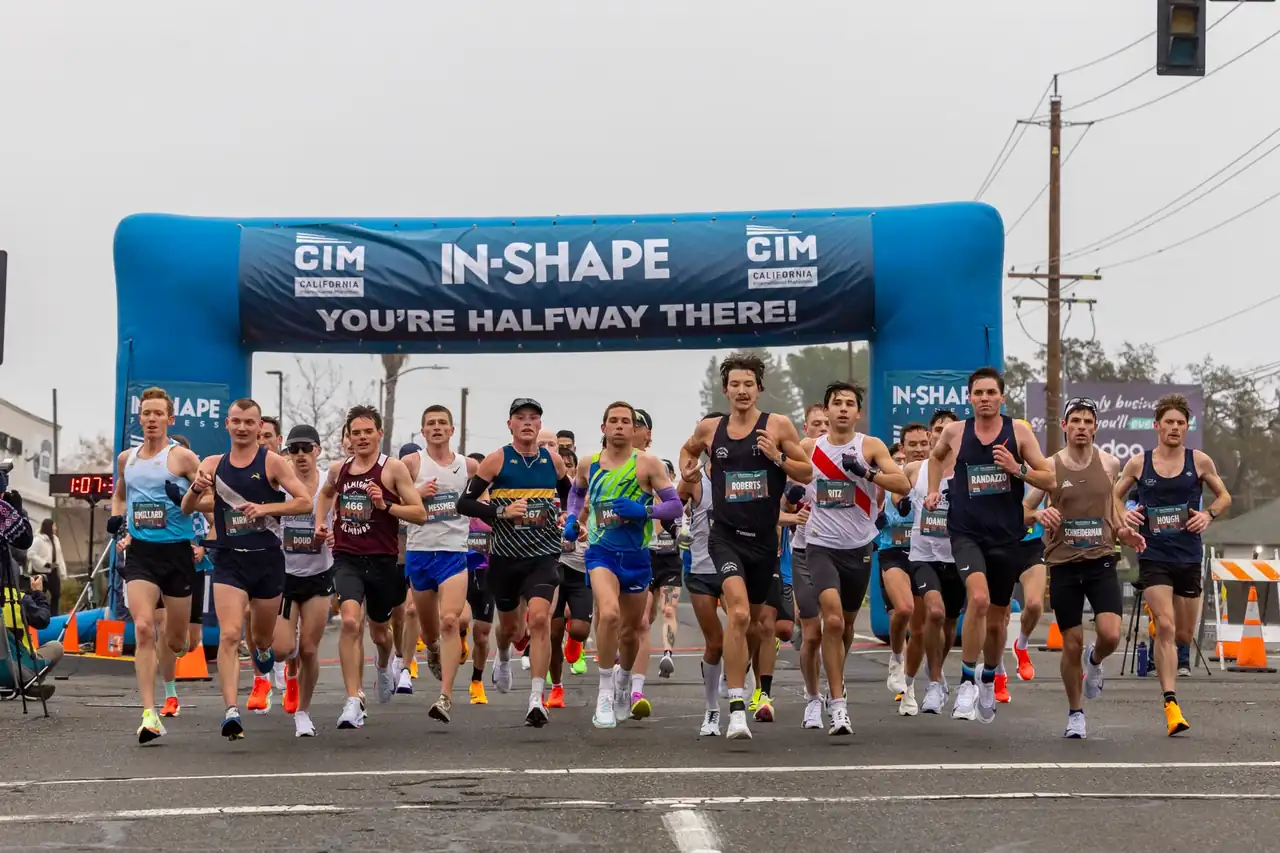
Valencia concentrates much of its running life between September and January, with a calendar that combines popular races, certified events, and major international dates. The city and its metropolitan area remain active on practically every weekend during that stretch of the year, with routes ranging from the urban center to the coast, from the Turia riverbed to surrounding neighborhoods and towns. For anyone looking to keep up with the schedule without losing the pulse of the season, the range is broad and very regular.
The short answer is that there are running races mainly in Valencia city and in dozens of municipalities across the province. The most visible calendar is organized around the city’s major events, but beneath that showcase lies a constant network of popular, night, charity, road, and trail races. That fabric explains why the province has become one of the Spanish territories with the highest density of races.
A province that lives running from autumn into winter
The bulk of the offering is concentrated in the mild months. In Valencia, the summer heat gives way to a particularly fertile period for racing: September opens the door to the first events of the season, October gathers very established races, and November and December put two major milestones on the table, the half marathon and the capital city marathon. That sequence is no accident. The climate, popular tradition, and the quality of the courses push the calendar toward the end of the year.
The most recognizable image is of the city hosting races with thousands of participants, but the full picture goes much further. In parallel, urban leagues, charity 5Ks, certified 10Ks, neighborhood circuits, and races in municipalities in the metropolitan area and nearby regions appear. In practice, that means runners can find options both for making a debut and for chasing a personal best, adding competitive volume, or simply keeping the habit of racing for almost the entire year.
The popular Valencian calendar works like a continuous mesh. When one race ends, the next is already appearing in the neighboring town. That continuity gives meaning to the term running city, not as a marketing label, but as a description of real use: there are road closures, aid stations, bibs, volunteers, and a running atmosphere with a frequency that few areas concentrate so naturally.
The main hubs of the Valencian calendar
Valencia city sets the pace, but it does not monopolize the scene. In the city, the most media-friendly events stand out, such as the 15K Nocturna, the half marathon, the marathon, the 10K Pas Ras al Port de València, the 10K Valencia Ibercaja by Kiprun, and the San Silvestre. These are races that attract runners from outside the city and, by sheer size, shape the conversation around the calendar. However, the map is completed by races from the urban circuit and by events in towns across the province that maintain a very distinct identity.
The municipalities in the metropolitan area and in regions such as l Horta, la Ribera, or la Safor sustain their own agenda. There you will find popular races of 5, 7, or 8 kilometers, neighborhood 10Ks, traditional walking loops, and events with a long local history. This combination means the province has a less concentrated offering around a few macro-events than it might seem from the outside. Frequent runners find alternatives of very different profiles without going too far.
The variety of surfaces also matters. It is not all flat, fast asphalt. There is night trail running in Cullera, the climb to the Molinos de Alcublas, mountain races in Nàvvares or Gilet, and cross-country races in more technical settings. This diversity broadens the range of searches and keeps the calendar from becoming monotonous. Anyone who wants to compete in Valencia can do so in the city, in the orchardlands, on the coast, or on hilly terrain, depending on the goal and the time of year.
What types of races appear most frequently
Popular 5K and 10K races remain the most common entry point. They are comfortable distances for many people, fit urban courses well, and allow for a wide range of profiles to take part. Across the province, walking loops, leagues, neighborhood circuits, and certified 10Ks are abundant. That base explains a large part of the calendar’s volume, because these are events that are affordable to organize, scalable in participation, and easy to integrate into local festivals or municipal sports programs.
Above that base are the half marathons and marathons, which attract more media and sporting attention. Valencia city has turned both distances into an international reference. The October half marathon and the December marathon act as magnetic hubs for the entire running ecosystem. Around them moves a market of training, travel, sports tourism, and parallel activities that extend the life of the event beyond race day.
Trail running and mountain races provide the counterpoint. Although asphalt dominates the conversation, the province also offers races on trails, with cumulative elevation gain and terrain that require a different reading of effort. That contrast is important because it breaks the idea of a rigid calendar. There are weeks when speed takes center stage, others when endurance rules, and others when technique on uneven terrain matters more than average pace.
Key months: how the season is organized
September usually works as the reopening of the running season. After the summer slowdown or reduced activity, street races return and the schedule begins to fill up strongly. In the calendar observed, events such as the Volta a Peu als Barris de Sant Marcel·lí i Sant Isidre, the 15K Nocturna, and other early-autumn races appear. It is a time of return: runners recover routines and cities once again see bibs, timing, and spectators on the sidewalks.
October is a particularly dense month. The schedule brings together events of very different kinds: a charity race, a 15-kilometer night race, the half marathon, and numerous regional events. That overlap is not an accident of scheduling, but a sign of a mature calendar. There is enough critical mass of participants to support several interesting races on nearby dates without one canceling out the other.
November and December are the biggest showcase. The marathon, the 10K Pas Ras al Port de València, and the San Silvestre concentrate the attention at the end of the season, while January opens the next cycle with the 10K Valencia Ibercaja by Kiprun. That continuity from one year to the next helps the province experience running not as an isolated phenomenon, but as a sequence of linked peaks of activity. In practical terms, the schedule never fully shuts down.
Valencia city and the province: two overlapping layers
The city works as the epicenter and the province as a support and expansion network. Runners who only focus on Valencia city miss a significant part of the landscape. In nearby municipalities and neighboring regions, events with tradition, loyal participants, and routes appear that sometimes offer less logistical pressure and more closeness to the territory. There the atmosphere can be more intimate, though no less competitive.
That dual layer is noticeable in how people register and prepare. Some races are massive and require advance planning because demand is high. Others, by contrast, keep a local tone and allow people to connect with each town’s sporting culture. Both layers coexist and feed each other. The province benefits from the capital’s international visibility, and the capital benefits from the density of its surroundings.
The result is a runner geography that is very easy to read on the calendar, but much richer in detail. There are races in city neighborhoods, in parks, on avenues, on seaside promenades, on orchard paths, and on mountain climbs. Runners do not just choose a distance; they choose landscape, terrain, and atmosphere. That is why Valencia is not understood as one big race, but as a set of connected settings linked by the same sporting culture.
What the distances say about Valencian runners
The preference for short and middle distances reveals a very popular base. The 5K and 10K dominate much of the calendar because they allow broad participation and fit well into municipal events. They are also useful for those who use competition as a fitness gauge throughout the year. They do not require the same long preparation as a half marathon, but they still retain the feel of real competition.
The 15-kilometer and half-marathon distances have another role. They are the natural transition between popular races and more serious endurance events. The 15K Nocturna and the Valencia half marathon have become reference points for measuring fitness, chasing a personal best, or enjoying a more complete experience without making the leap to the marathon. Their appeal lies in balance: enough challenge, but still with a physiological cost that is manageable for many amateur runners.
At the upper end of the calendar, the marathon and some mountain races add prestige and epic character. These are races that require more preparation and are usually reserved for those who already have a solid base. But their very presence raises the level of the whole, because they place Valencia on the national and international running map. The province offers not just quantity; it also offers sporting hierarchy.
The role of local circuits and neighborhood races
Popular circuits sustain the everyday life of the calendar. Without them, the ecosystem would lose depth. These are the races that fill Sundays in many towns, with familiar routes, club participation, families, and regular runners. In Valencia city, the urban circuit and neighborhood races have consolidated a very powerful culture of proximity, where sport blends with community life.
This type of race has value that does not always make the front pages. They allow people to debut, maintain continuity, run close to home, and recognize the surroundings while competing. They also help new generations approach running without the more demanding ritual of major events. The bib thus becomes a neighborhood element, almost as everyday as the local fair or procession.
In the province, the weight of the local calendar explains why there is always activity. Even if attention is concentrated on a few emblematic dates, the reality is much broader. Small races sustain the fabric, while big ones illuminate it. Between both layers, it becomes clear why searching for races in Valencia returns abundant results almost any week of the competitive year.
How to read a calendar without getting lost among so many options
The first filter is usually distance, but it should not be the only one. The type of surface, the schedule, the location, and the time of year matter just as much as the kilometers. A 15-kilometer night race in September is not the same as a neighborhood 10K in December or a summer mountain trail race. The Valencian agenda is broad precisely because it covers many runner profiles.
It is also worth looking at the context of the event. Some dates are part of a stable circuit, others are standalone races, and others respond to charity events or local festivals. That changes the atmosphere, the participation level, and the overall experience. In a certified race, the reference is usually the clock; in a village popular race, the surroundings may matter more than the time. They are not opposing worlds, but nuances of the same culture.
The province of Valencia offers a rare mix of density and variety. Few areas bring together urban races, night events, half marathons, marathons, trail races, and charity events with such regularity in the same geographic frame. That abundance requires reading the calendar with some patience, because behind each date there is a different purpose. It is not just about finding a race, but about understanding what kind of race fits each moment of the year.
A schedule that explains why Valencia runs almost all year long
The strength of the Valencian calendar lies not in a single race, but in the sum of many. Valencia city attracts global attention in autumn and winter, but the real value of the whole lies in persistence: neighborhoods, towns, clubs, organizers, and institutions keep alive an agenda that rarely stays empty. That makes the province especially fertile ground for anyone looking to compete frequently without leaving a reasonable radius.
The Turia city has built a sporting identity that is recognizable in Europe. Its urban circuits, the importance of the orchardlands, the proximity of the sea, and the strength of its major events mean that running is not an accessory, but part of the landscape. In parallel, the province adds scale, diversity, and continuity. The result is a map where there is always something going on: a neighborhood 5K, a night race, a trail race, a half marathon, or a major international event.
That is why, where there are running races in Valencia, the answer is rarely just one direction. You have to look at the city, but also the province; at autumn, but also winter; at asphalt, but also the mountains. In that overlap of settings lies the key to a calendar that does not just inform, but defines part of the sporting identity of an entire territory.



How to prevent thigh chafing: causes and real solutions

Women’s running windbreakers: seven jackets and how to choose

Do more workouts get rid of soreness? A guide for runners

Jaén Half Marathon 2026: Record 3,800 Runners Registered

Men’s short running tights: how to choose the right pair

World Triathlon confirms data breach involving medical data

Izan Edo targets podium at Miyazaki World Cup

María Pérez ranks ninth in World Athletics’ 2026 top ten

Dos Santos, Duplantis and Sawe: World Athlete of the Year finalists

San Silvestre Vallecana 2026: 42,000 places, prices and start times

 Races3 months ago
Valencia Half Marathon 2027: date and registration

 Races3 months ago
Valencia Marathon 2026: entry, ballot and course

 Reviews and Comparisons4 months ago
Asics Gel-Roadmiles 3 for men: review and current price

 Reviews and Comparisons4 months ago
Asics Gel Sonoma 8 Gore-Tex: complete analysis for trail and rain

 Sneakers3 months ago
Saucony Endorphin Pro 4: full review and verdict

 News5 months ago
Strava API 2026: what changes for clubs, challenges and runner apps?

 Reviews and Comparisons5 months ago
Nike Alphafly 3: opinions, sensations, and real key points

 Reviews and Comparisons4 months ago
Under Armour running shoes review 2025-2026: models and key features

 Sports Equipment4 months ago
Shoe sizes in cm: a clear guide to getting the right fit for your footwear

 Sneakers3 months ago
Skechers GO RUN Consistent 2.0 analysis: comfort and limits

 News5 months ago
Valencia Marathon 2026 route: key tips to train and run better

 Sneakers4 months ago
Adidas Adizero Boston 13 for men: review and verdict